Categories
Counterpoint

A licence to hack criminals could become a licence to hack competitors

For years, the standard advice to a company under cyberattack has been curiously one-sided: defend yourself, preserve the evidence, call the authorities — and do not strike back.

There were good reasons for that. Giving companies a licence to invade someone else’s computer systems risks hitting the wrong target, destroying evidence, violating another country’s sovereignty or turning a commercial dispute into something much more serious.

But there is another risk that has received rather less attention: what if the old rules simply leave the criminals with the advantage?

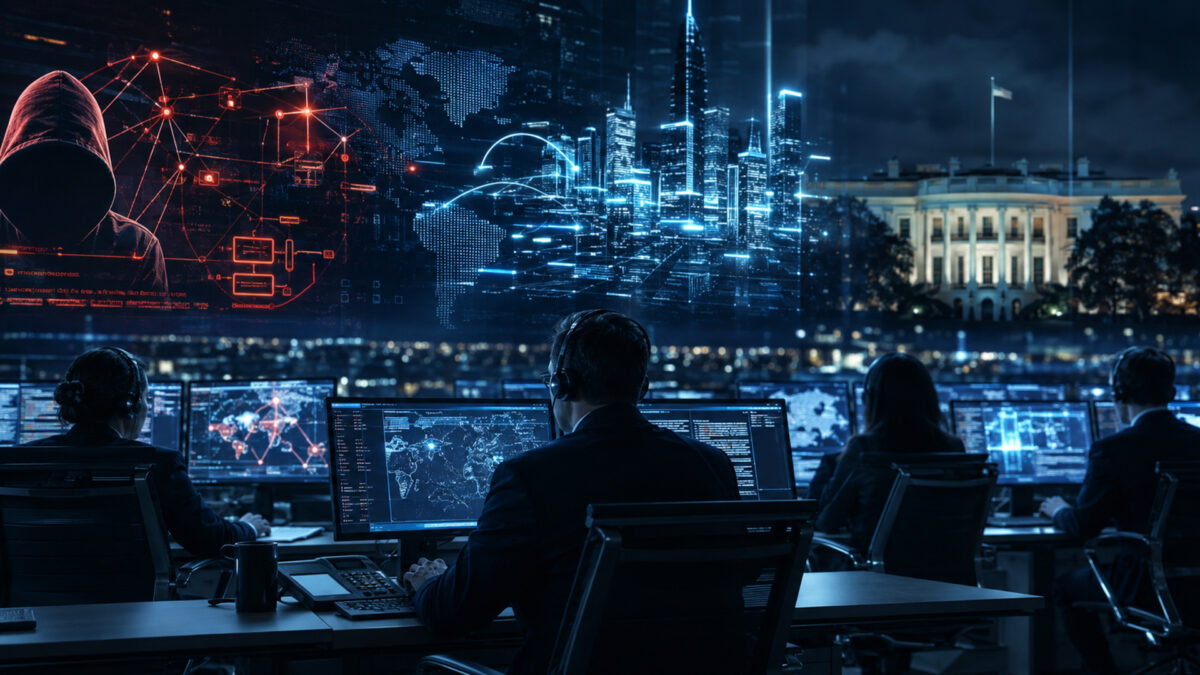
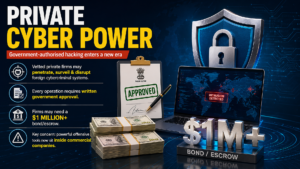
President Donald Trump’s administration has now taken a significant step towards answering that question. Under a presidential memorandum issued on August 12, vetted American companies will be allowed to participate in offensive cyber operations against foreign transnational criminal organisations.

That sounds, at first hearing, like the legalisation of corporate “hack back”. It is more constrained than that.

The operations are to be carried out under federal supervision. Participating companies must be vetted and contracted by the Justice Department or Department of Homeland Security. Individual operations require written approval. Companies may be required to maintain a bond or escrow of at least $1 million that can be forfeited for non-compliance.

Most importantly, the companies are not being handed a general licence to attack anyone they believe attacked them. They will act on behalf of, and under the authority of, the US government.

That distinction matters.

But so does the reason Washington believes such a program is necessary.

Cybercrime is no longer a peripheral law-and-order nuisance committed by clever teenagers in bedrooms. Large criminal networks now resemble multinational enterprises. They have specialists, infrastructure, customer-service operations, money-laundering networks and supply chains. Some sell ransomware as a service. Others run industrial-scale fraud centres.

The money involved is extraordinary. The FBI’s 2025 Internet Crime Report recorded more than one million complaints and reported losses exceeding $20 billion. Cyber-enabled fraud alone accounted for about $17.7 billion.

And the economics favour the attacker.

A criminal group may operate from a country unwilling or unable to arrest it. Its servers can be scattered across jurisdictions. Its members can hide behind layers of infrastructure, cryptocurrency wallets and stolen identities. By the time traditional international law-enforcement mechanisms begin moving, the criminals may have disappeared, reconstituted themselves under a different name or shifted their systems elsewhere.

A victim, meanwhile, is expected to remain almost entirely defensive.

Imagine a burglar repeatedly entering homes from a fortress across the border. The homeowners may install stronger locks, cameras and alarms. The police are allowed and empowered to investigate. Diplomatic requests can be sent to the country hosting the fortress. But nobody is permitted to disable the burglar’s getaway vehicles. That is roughly the imbalance Washington is trying to address.

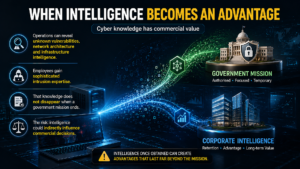
The argument for using private cyber companies is also practical. Some of the world’s deepest knowledge of malicious networks does not reside solely inside intelligence agencies. It sits inside cybersecurity companies, cloud providers, telecommunications companies and specialist threat-intelligence firms that encounter attacks every day.

Indeed, government already relies extensively on private companies to detect, understand and contain cyber threats. The new policy extends that partnership from seeing the attacker towards, in carefully approved circumstances, disrupting the attacker.

The idea is not as radical as it sounds. Governments routinely use private capability to fulfil public objectives. Defence contractors build weapons and operate sophisticated systems. Commercial satellite companies provide imagery used for national security. Private logistics firms support military operations. Banks help governments detect and freeze illicit finance.

The important question has never been whether private expertise may serve the state. It is who controls its use. And that is where the Trump plan deserves support — provided its safeguards survive implementation.

There must be a bright line between a company defending its own interests and a company carrying out an operation authorised by the United States. The presidential memorandum explicitly attempts to draw one: approved operations remain under government operational control, and each package must receive written authorisation before action is taken.

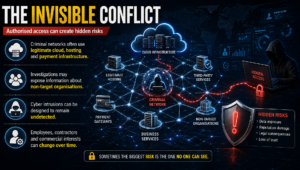
There are also obvious dangers. Cyber attribution is notoriously complicated. A server used by a ransomware gang may actually belong to an innocent business whose system has been compromised. Criminal infrastructure can share networks with legitimate users. An operation aimed at disabling a criminal network might have consequences in a third country.

And cyber operations can escalate. Destroying a criminal server sounds uncomplicated until the server sits inside a country that regards the intrusion as an infringement of its sovereignty. Matters become even more delicate when criminals enjoy informal protection from officials or operate in the grey space between organised crime and state interests.

These are reasons for strict government control, however — not necessarily reasons for permanent passivity.

An uncomfortable assumption rests behind much of the opposition to offensive cyber action: that restraint by the victim produces restraint by the attacker. However, there is little evidence that criminals operate according to that bargain.

A ransomware gang does not stop because its target obeys international cyber etiquette. A fraud compound does not close because investigators are waiting for paperwork to travel through several jurisdictions. Criminal organisations exploit precisely the gaps between national legal systems.

Deterrence requires consequences. The US government has already demonstrated how public-private cooperation can make criminal operations harder. During a recent US Justice Department “Disruption Week”, government agencies worked with private companies to disrupt scam accounts and financial infrastructure associated with transnational fraud operations.

The logical question is whether such cooperation should sometimes go further.

If intelligence identifies a foreign criminal network actively stealing millions of dollars from American citizens, and if an operation can disable its infrastructure without causing wider damage, should Washington really refrain merely because the technicians capable of carrying it out receive private-sector salaries?

That would confuse the identity of the operator with the legitimacy of the operation.

Legitimacy should instead come from lawful authority, defined targets, proportionality, oversight and accountability.

In all this is also a larger strategic lesson for other countries, including India.

Cybersecurity policy has traditionally been built around walls: stronger passwords, better authentication, improved backups, faster detection, safer software. All of these are indispensable. But walls alone have never been a complete security strategy.

Banks do not merely buy thicker vault doors; governments also pursue bank robbers. Countries do not merely reinforce their borders; they try to dismantle trafficking networks. Maritime security does not consist solely of making ships harder to hijack.

Yet in cyberspace, the victim has often been expected to absorb the attack, repair the damage and wait for a criminal justice system built around geography to catch an adversary who deliberately exploits geography’s disappearance.

Trump’s policy is an attempt to correct that asymmetry. It could go wrong. Poor oversight could turn a useful instrument into a dangerous precedent. Operations could be misdirected. Commercial incentives could distort judgement. Governments will therefore need exceptional transparency about the rules even when individual operations must remain secret.

But refusing to develop offensive options carries risks too. The deeper mistake would be to assume that the internet remains a place where governments can protect citizens using policing doctrines designed for crimes committed inside clearly defined territorial jurisdictions.

Cybercriminals have already moved beyond that world. The state must move beyond it as well. Private companies should never receive an unrestricted licence to wage cyberwar. But neither should governments refuse to use private capability simply because an old distinction between public authority and private expertise feels reassuring.

The proper principle is simpler: private capability, public authority and public accountability. If Washington can preserve all three, its experiment may prove not to be the beginning of a digital Wild West, but the beginning of a more credible form of cyber deterrence.

Categories
Beyond

Kevin Warsh faces rate-policy divide

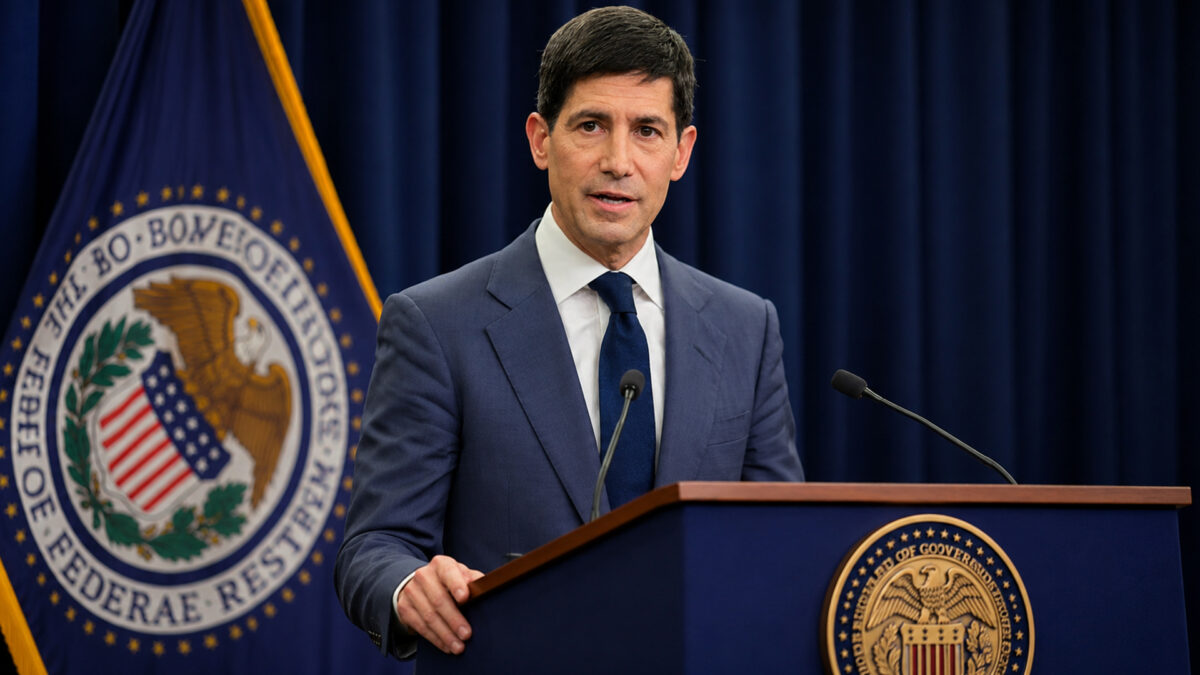
Kevin Warsh is facing an early and unusually difficult test as chairman of the US Federal Reserve, after a sharp split emerged within the central bank over interest rates and the best way to control inflation.

The Federal Open Market Committee (FOMC) kept the federal funds rate unchanged at 3.5% to 3.75% at its July 28-29 meeting. But the decision was far from unanimous. Three officials voted for a 25-basis-point rate increase, leaving the final vote at 9-3. It was the first time since 1993 that three Fed policymakers dissented in favour of a rate hike.

The disagreement puts Warsh, who took over as Fed chair earlier this year, in a challenging position. His immediate task is not simply to decide where interest rates should go, but also to keep policymakers working together while maintaining confidence in the US central bank.

Warsh has repeatedly stressed the importance of price stability and has adopted a more data-driven approach to monetary policy. After the latest meeting, he indicated that the Fed would remain focused on bringing inflation back towards its 2% target. The central bank has kept rates unchanged throughout 2026 so far, as policymakers weigh persistent inflation against the health of the labour market and wider economic risks.

The three dissenters wanted rates to rise immediately, reflecting concern that inflation remains too high. The majority, however, preferred to wait for more evidence before tightening monetary policy.

That difference matters because the US economy is presenting the Fed with competing signals. Economic activity remains relatively solid, while productivity and capital investment have been strong. At the same time, inflation remains above the Federal Reserve’s 2% goal. The central bank has also been monitoring the impact of energy prices, geopolitical tensions and other supply-side pressures.

For households and businesses, the Fed’s decision has wider implications. Higher interest rates can make borrowing more expensive for consumers and companies, while keeping rates higher for longer can weigh on investment and spending. A premature rate cut, on the other hand, could risk allowing inflation to remain stubbornly high.

Financial markets are therefore watching Warsh’s every signal. Investors are trying to determine whether the July decision represents a temporary pause or the beginning of a longer period of tight monetary policy.

The bond market has already reflected some of that uncertainty. Treasury yields have moved higher this year, while investors have been reassessing expectations for the path of US interest rates. The Fed’s own July monetary policy report noted that market expectations had shifted towards higher rates, with investors at the time pricing the federal funds rate at around 4% by the end of 2026.

Warsh’s communication style is also attracting attention. Rather than offering strong forward guidance about future rate moves, he has indicated that the Fed should allow incoming economic data and financial conditions to shape decisions. That approach gives policymakers more flexibility, but it can also leave investors with fewer clear signals about what comes next.

The challenge is particularly important because the Federal Reserve’s credibility depends not only on its decisions but also on its ability to present a coherent policy message. A visibly divided FOMC can make markets more uncertain and complicate the transmission of monetary policy.

The disagreement does not necessarily mean the Fed is in crisis. Policymakers have always held different views about inflation, employment and interest rates. But the size and direction of the July split make it an important moment for Warsh’s leadership.

The chairman will also have to balance competing pressures from outside the Fed. President Donald Trump has previously pushed for lower interest rates, while Warsh has sought to emphasise the central bank’s responsibility for price stability. Maintaining the Fed’s policy independence will therefore remain an important part of his job.

The July meeting also showed how difficult the current economic environment has become. Policymakers must assess inflation without ignoring employment, economic growth, financial markets and geopolitical developments. The Middle East conflict, in particular, has added uncertainty around energy prices and inflation.

The Fed’s internal split could also shape expectations for the dollar, US Treasury yields and global markets. Any signal that policymakers are leaning towards higher rates could strengthen the dollar and push borrowing costs higher worldwide, while a shift towards rate cuts could have the opposite effect. For investors, the focus will now remain on upcoming inflation and jobs data, as well as how Warsh manages differing views within the FOMC.

Categories
1 Minute-Read

Trump’s Fed Chair nominee Warsh promises independence

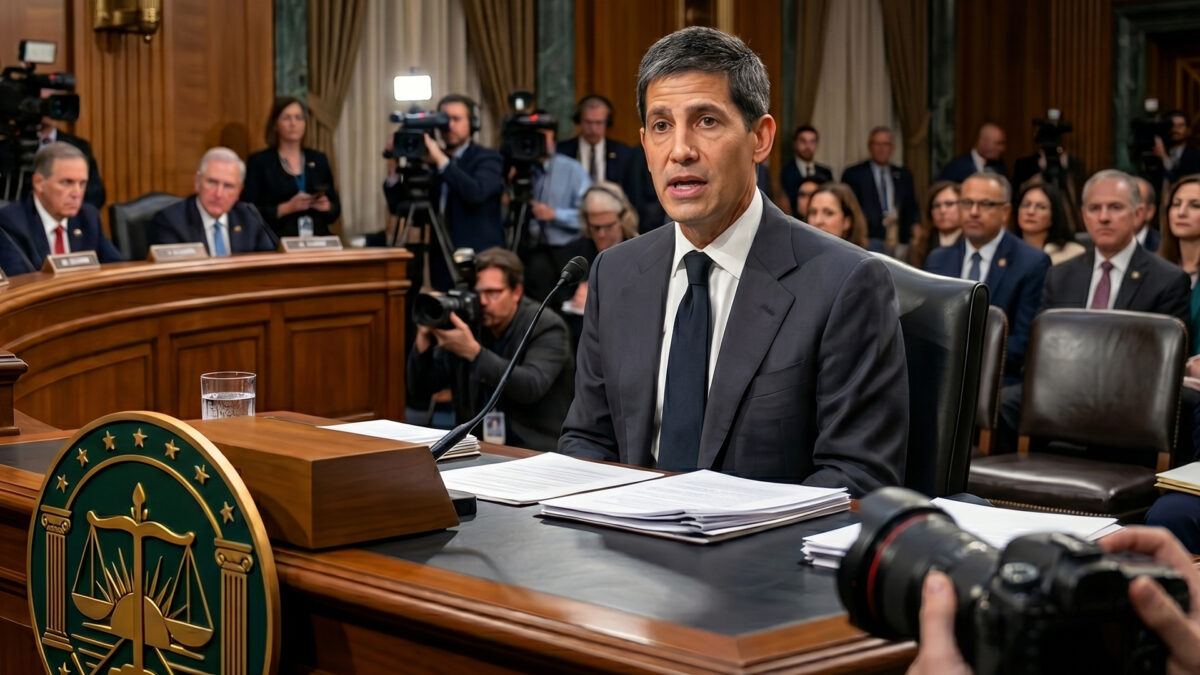
Kevin Warsh, US President Donald Trump’s nominee for Federal Reserve chair, told senators he would protect the central bank’s independence if confirmed.

During his Senate hearing, Warsh rejected criticism that he would follow Trump’s political agenda. He said interest-rate decisions would be based on economic data and long-term stability.

Warsh also criticised the Fed’s past handling of inflation, saying it must rebuild credibility. His nomination is being closely watched as the Federal Reserve plays a major role in controlling inflation, borrowing costs and guiding the US economy.

Categories
1 Minute-Read

Oil chiefs warn Trump on Iran war risks

Top US oil executives have warned Donald Trump that the ongoing tensions involving Iran could disrupt global energy markets and drive oil prices higher.

Industry leaders told US officials that the conflict may threaten tanker movement through the Strait of Hormuz, a critical route for global crude shipments. Any disruption in the waterway could tighten supplies and trigger prolonged volatility in energy markets. Crude prices have already surged amid fears of escalation.

Analysts say further instability in the Gulf region could worsen the supply outlook and push fuel costs higher worldwide, raising concerns over inflation and economic pressure for many oil-importing countries.

Categories
Leaders

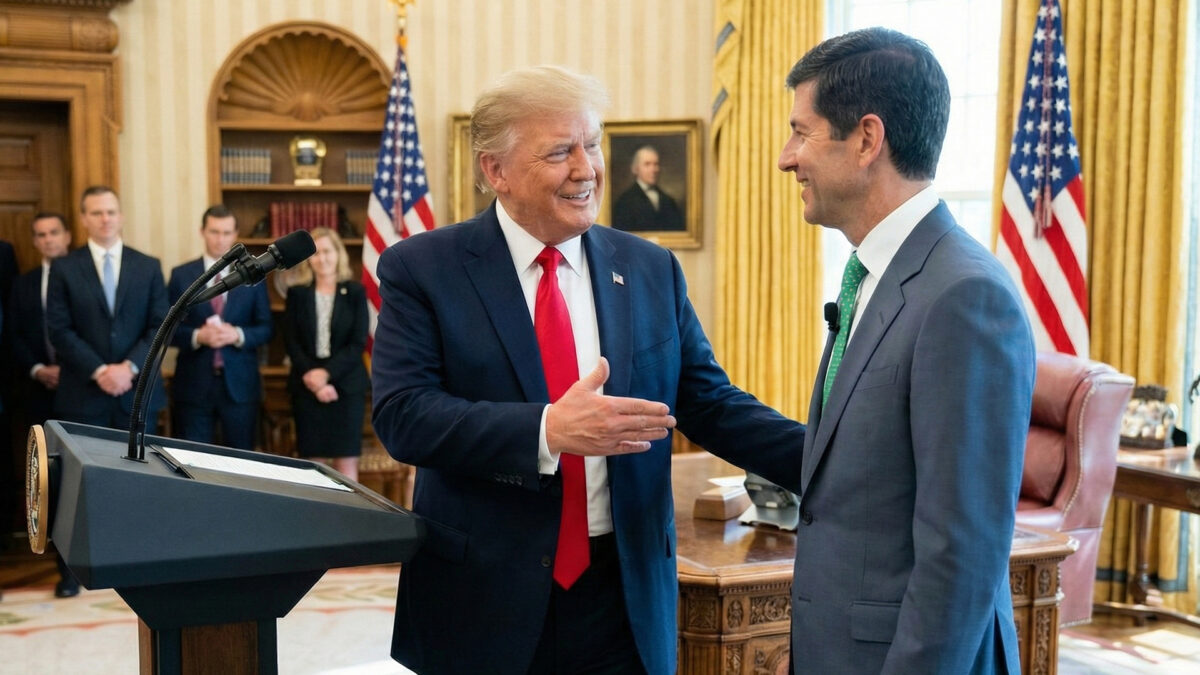
Trump to nominate Kevin Warsh as Federal chair

US President Donald Trump is expected to name Kevin Warsh as the next chair of the Federal Reserve, a move that could shape the future direction of America’s central bank. While the White House has not yet made a formal announcement, reports suggest the decision is imminent.

Kevin Warsh is not a new face in Washington or on Wall Street. He served as a Federal Reserve governor in the past and has long been seen as a serious contender for the top job. Known for his deep understanding of financial markets and monetary policy, Warsh has been close to the centre of economic decision-making during periods of crisis and recovery.

Trump has repeatedly expressed dissatisfaction with the current Fed chair, Jerome Powell, mainly over interest rate policy. The president has argued that rates should be cut faster to support economic growth. Powell’s term is set to end later this year, opening the door for new leadership at the central bank.

If confirmed, Warsh would step into the role at a sensitive time for the US economy. Inflation concerns have eased compared to previous years, but questions remain over growth, borrowing costs and global uncertainty. Investors and economists are closely watching how the next Fed chair might balance inflation control with the need to support jobs and expansion.

Financial markets reacted cautiously to reports of Warsh’s likely nomination. The US dollar strengthened slightly and bond yields moved higher, reflecting expectations that Warsh may take a more traditional and disciplined approach to monetary policy compared to some other potential candidates.

Supporters believe Warsh’s experience could bring stability and predictability to the Federal Reserve. They see him as someone who understands both government policymaking and market realities, which could help restore confidence during uncertain times.

However, the expected nomination has also revived concerns about political pressure on the central bank. Critics worry that Trump’s open criticism of the Fed could threaten its independence, a principle seen as crucial for maintaining long-term economic stability.

Warsh will need approval from the US Senate before taking charge. His confirmation hearings are likely to be closely followed, as lawmakers question him on interest rates, inflation, and the Fed’s independence.

Also Read: Tata Motors Q3 profit ₹705 cr, down 48%

Categories
Beyond

Trump ends Europe tariff threat after Arctic deal

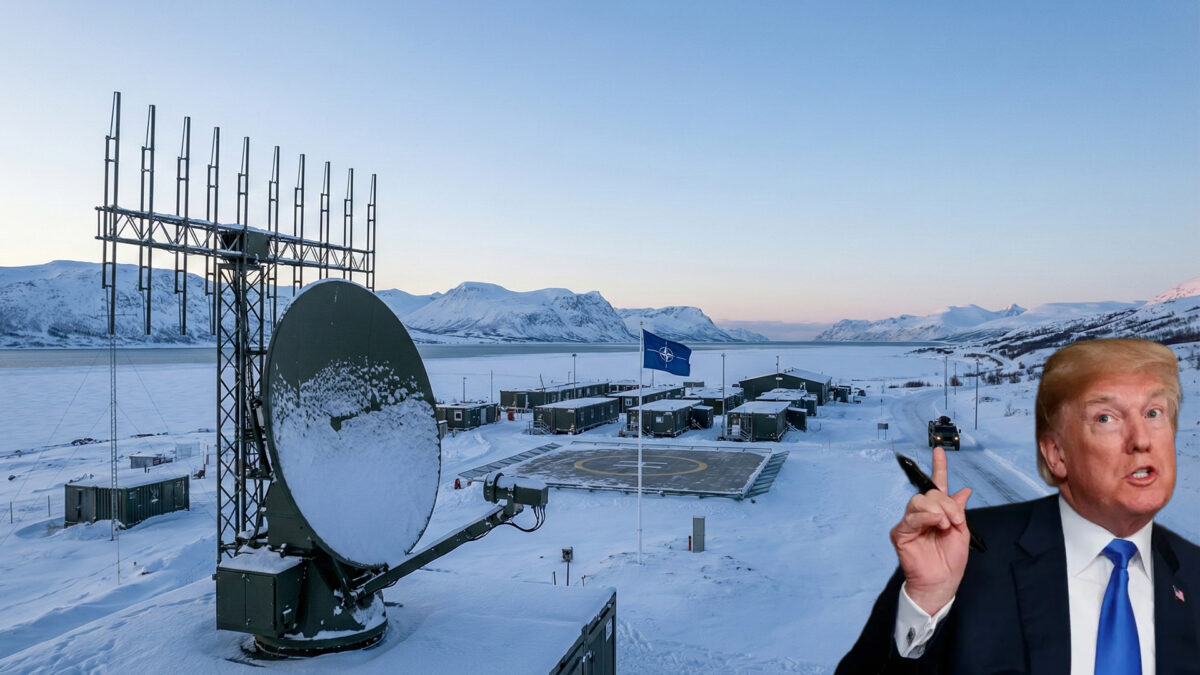
President Donald Trump announced on Wednesday that he is dropping planned tariffs on several European countries, following what he described as reaching a “framework of a future deal” with NATO on Greenland and Arctic security. Trump made the announcement at the World Economic Forum in Davos, Switzerland, where he has been attending discussions with world leaders.

Trump said the framework, agreed with NATO Secretary-General Mark Rutte, establishes a plan for cooperation on Arctic security and makes the previously threatened tariffs unnecessary. He framed the agreement as a major achievement for the US, describing it as a “very productive meeting” that could benefit both the US and its NATO allies.

Earlier, Trump had threatened tariffs on eight European countries to pressure them into accepting US influence over Greenland, a semi-autonomous territory of Denmark. While his earlier comments included unusual suggestions about acquiring Greenland, he emphasized in Davos that the US would not use military force and that the framework is focused on security cooperation, not sovereignty.

The announcement had a positive effect on global markets, with US stock indices rising after news of the tariff cancellation. Analysts said it eased fears of a trade confrontation between the US and European nations.

However, Denmark’s leadership rejected Trump’s interpretation of the agreement. Danish Prime Minister Mette Frederiksen stated that Greenland’s sovereignty is not negotiable and that any cooperation with the US would strictly focus on security in the Arctic. Greenland’s government also reinforced that the island is not for sale, reflecting long-standing European concerns over Trump’s earlier remarks.

Also Read: Coursera cofounder urges India to boost AI skills

Categories
Beyond

Trump pulls US out of 66 international organisations

US President Donald Trump has ordered to withdraw from more than 60 international organisations, including several UN agencies and the India–France-led International Solar Alliance (ISA), calling the memberships “redundant” and contrary to American priorities.

On Wednesday, Trump signed an executive order instructing US departments to immediately cease participation in and funding for 31 United Nations bodies and 35 non-UN organizations, according to a White House statement.

The affected entities cover areas including climate change, conservation, counterterrorism, and human rights, among others.

The Trump administration cited that these bodies operate in ways that conflict with US national interests, security, economic growth, or sovereignty. Participation in or funding for these entities will be halted to the extent allowed by law.

Among the bodies on the list is the International Solar Alliance, a global initiative led by India and France focused on climate action. Over 100 countries are signatories, with more than 90 having ratified full membership.

Speaking on X, US Ambassador to the UN Mike Waltz said the withdrawal ensures the United States will no longer “fund or participate in international organisations that do not serve, or actively work against, American interests.”

Secretary of State Marco Rubio added that the 66 organisations were found to be “redundant, mismanaged, poorly run, or pursuing agendas that conflict with the US mission, sovereignty, and prosperity.”

The United Nations confirmed it has received the list of organisations affected and said it will issue an official response on Thursday.

Trump’s move represents one of the most significant rollbacks of US involvement in multilateral institutions in recent years, and it is expected to have far-reaching implications for international cooperation on issues ranging from climate change to security and development.

Categories
Beyond

Trump eyes F-35 jets sale to Saudi Arabia

US President Trump plans to sell Saudi Arabia advanced F-35 fighter jets, days before Crown Prince Mohammed bin Salman’s White House visit.

Trump described Saudi Arabia as a “great ally” and said the sale is in line with strengthening US-Saudi ties. If completed, Saudi Arabia would become the first Arab country to acquire F-35 jets.

The deal raises concerns about maintaining Israel’s long-standing military edge in the Middle East. Israeli officials have warned that selling such advanced jets could trigger a regional arms race and weaken their aerial superiority.

The F-35, built by Lockheed Martin, is considered one of the most sophisticated fighter jets in the world, featuring stealth technology and advanced systems. Previous US administrations have ensured that arms sales to Arab nations do not compromise Israel’s qualitative military advantage.

The potential sale comes amid Trump’s broader Middle East strategy, which includes encouraging stronger relations between Arab nations and Israel under the Abraham Accords. Congress retains the power to block the sale, and the deal’s progress will be closely watched internationally.

Also Read: Trump’s tariff move boosts Indian tea, spices

Categories
Beyond

Trump drops tariffs to ease food prices

President Donald Trump has decided to remove tariffs on a range of imported goods, including beef, coffee, bananas, oranges, tomatoes, cocoa, tea, fruit juices and certain fertilisers. The goal is to help cut food prices for families who have been hit hard by rising grocery costs.

Many of these items are not produced widely in the United States, especially tropical fruits and coffee. Earlier, they carried tariffs of 10% to 50%, which increased their market prices. With the removal of these duties, officials expect imported foods to become cheaper.

Some tariffs will remain in place. For instance, tomatoes imported from Mexico will still face a 17% duty. But overall, the government believes the new policy will ease the financial burden on shoppers.

The move comes at a time when Americans have been voicing strong concerns about inflation and the high cost of daily essentials. Recent voting patterns also showed that economic worries remain a top priority for many households.

By cutting these tariffs, the administration hopes to reduce pressure on consumers, improve public confidence, and show that it is taking action to address rising living expenses.

Also Read: Trump adds 50,000 federal workers

Categories
Beyond

Trump adds 50,000 federal workers

The Trump administration has added 50,000 new federal employees, with the bulk of positions going to immigration and national security roles. Immigration and Customs Enforcement (ICE) received the largest share of these new hires.

Meanwhile, other federal agencies, including the IRS and the Department of Health and Human Services, are seeing hiring freezes and layoffs. Overall, the administration plans to cut about 300,000 civilian federal jobs, part of a broader effort to shift priorities toward enforcement and border security.

This hiring push reflects the administration’s focus on strengthening immigration enforcement while reducing workforce size in other domestic areas, signaling a significant realignment of federal staffing priorities.

Also Read: Prem Watsa announces next-gen leadership at Fairfax