Categories
Beyond

Crude oil surges above $108 as supply fears intensify

Crude oil prices have surged to their highest levels in months as worsening tensions in West Asia raise fresh concerns about global energy supplies. Brent crude climbed above $108 a barrel on Friday after gaining more than 6% in the previous session, while US West Texas Intermediate (WTI) also moved above $100. The sharp rally has brought the oil market back into focus for governments, central banks and investors around the world.

The latest jump has been driven mainly by concerns that fighting and attacks around important shipping routes could keep oil supplies restricted for longer. The Strait of Hormuz remains a major source of uncertainty, while developments involving Iran-backed Houthi forces around Yemen have added another risk to shipments through the Red Sea and the Bab el-Mandeb Strait.

Brent briefly reached around $110 on Friday before easing. Even after the retreat, prices remained close to four-month highs and were on track for a weekly gain of roughly 10%. That shows how quickly the oil market has changed from a period of relatively comfortable supply to one dominated by fears of shortages.

The situation is particularly important because the Strait of Hormuz is one of the world’s most important energy corridors. Any prolonged disruption can affect the movement of crude and refined products from the Gulf to major consuming countries in Asia and elsewhere. At the same time, attacks and security concerns around the Red Sea are making shipping more difficult and expensive.

Saudi Arabia has also faced disruption. Its oil production fell to 6.2 million barrels a day in August, the lowest level recorded this year, while crude exports fell to around 3.1 million barrels a day. The decline has added to concerns about how much spare supply is actually available if the current crisis continues.

The International Energy Agency has warned that the global oil supply outlook has become tighter. It expects the disruption to extend into 2027 if normal Middle East flows do not return. Global oil supply is now expected to decline more sharply than previously forecast, while inventories have also been falling rapidly.

India is among the economies closely exposed to the oil shock because it imports a large share of its crude requirement. Higher international crude prices increase the country’s import bill and can put pressure on the rupee. The Indian currency was trading near ₹95.70 against the US dollar on Friday, with traders reporting possible Reserve Bank of India intervention as oil prices climbed.

A weaker rupee makes imported crude more expensive in local currency, creating another layer of pressure on the domestic economy. Higher energy costs can eventually feed into transportation, manufacturing, aviation, logistics and other businesses.

The immediate impact is also being felt in financial markets. Indian shares fell sharply on Friday, with the Sensex and Nifty dropping to their lowest levels since June. Rising crude prices increased concerns about inflation and interest rates, while the 10-year government bond yield moved above 7%.

Oil producers, however, can benefit from higher crude prices. Shares of ONGC and Oil India gained on Friday as stronger oil prices are generally positive for upstream producers. The broader market faced pressure because investors were more worried about the impact of expensive energy on companies and consumers.

The oil rally is also changing the outlook for gold and silver. Precious metals usually attract investors during periods of geopolitical uncertainty, but higher crude prices can create a different environment when they fuel inflation and push bond yields higher.

Gold has recently come under pressure despite the Middle East crisis. A stronger dollar and rising yields have reduced the appeal of non-yielding assets. Silver has also weakened sharply, with prices falling more than gold as investors worry about the impact of higher energy costs on industrial demand. Money markets are watching whether the oil shock will force central banks to keep interest rates higher for longer.

This creates a complicated picture for precious-metal investors. Geopolitical tensions normally support gold because investors look for safe-haven assets. But if the same tensions push crude sharply higher and trigger a fresh wave of inflation, central banks may delay rate cuts or even consider tighter policy. Higher interest rates can weigh on gold and silver.

The US Federal Reserve is particularly important for global markets. US bond yields have risen sharply as investors reassess the inflation outlook. The US 10-year Treasury yield approached 5%, while markets have become more cautious about the possibility of monetary easing.

The next direction for crude will largely depend on how the conflict develops and whether shipping through key routes can return to normal. Any improvement in the security situation could quickly ease supply fears and bring prices lower. A further escalation, however, could push Brent towards even higher levels.

Some analysts have warned that Brent could move towards $120 if disruptions continue for an extended period. That possibility is particularly worrying for oil-importing economies because a sustained oil shock can affect inflation, currencies, interest rates, corporate profits and household spending at the same time.

The immediate market reaction may therefore be volatile, but the larger concern is how long crude remains above $100. If the price rise proves temporary, the economic impact could remain manageable. If it continues for months, governments, central banks, companies and consumers may all have to adjust to a significantly more expensive energy environment.


Categories
Beyond

Crude nears $100 as Iran conflict escalates

Crude oil prices moved sharply higher on Wednesday, with Brent crude briefly crossing the $100-a-barrel mark for the first time since July as the escalating US-Iran conflict raised fresh concerns about global oil supplies.

Brent crude futures climbed to around $100.19 a barrel before easing slightly, while US West Texas Intermediate (WTI) rose above $94 a barrel. The latest jump came as renewed attacks in the Middle East increased fears that the conflict could disrupt oil production, shipping and supplies from the region.

The oil market has been particularly sensitive to developments around the Strait of Hormuz, one of the world’s most important energy routes. The waterway has faced severe disruption since the conflict began, forcing traders and shipping companies to reassess the risks involved in moving crude through the region.

The situation worsened after Iran said it had attacked a US military base in Jordan following American strikes on Iranian vessels. Tehran also warned oil tankers operating near Kuwait and Bahrain and urged crews to leave their ships, adding another layer of uncertainty for the global energy market.

At the same time, Iran-backed Houthi forces in Yemen have intensified attacks on Saudi energy infrastructure. The attacks included the Jazan refinery, raising concerns about another important source of Middle Eastern oil supply and increasing pressure on alternative shipping routes through the Red Sea and the Bab al-Mandab chokepoint.

The developments have pushed traders to price in a larger geopolitical risk premium for crude. While oil prices had already been climbing because of the prolonged conflict, the latest attacks have increased concerns that the disruption could last longer than previously expected.

Data cited by Reuters showed that oil flows through the Strait of Hormuz had recently fallen below 2 million barrels per day, compared with roughly 8 million to 9 million barrels per day during a brief period before fighting resumed. The Strait is a crucial route for Middle Eastern energy exports, making any prolonged disruption a serious concern for oil-importing economies.

The rise in crude prices is also creating problems beyond the energy market. Higher oil prices can increase transportation, manufacturing and logistics costs, eventually feeding into consumer prices. That is raising concerns about inflation at a time when several major central banks are considering their next interest-rate moves.

Investors are now closely watching US inflation data due later this week. A sustained increase in energy prices could make it harder for the US Federal Reserve to ease monetary policy if inflation begins to accelerate again. Higher borrowing costs, in turn, could weigh on businesses, consumers and financial markets.

European markets have already felt some of the pressure, with shares coming under strain as investors assessed the potential impact of higher energy costs. The prospect of stronger inflation and higher interest rates has made investors more cautious, particularly in sectors that are sensitive to borrowing costs.

Airlines, transport companies, manufacturers and other fuel-intensive industries are likely to face higher operating costs if crude remains elevated. Consumers could also feel the impact through higher petrol, diesel and other energy-related expenses.

Oil-importing economies such as India are particularly vulnerable to a prolonged period of high crude prices. Higher import bills can put pressure on the country’s trade balance and inflation, while also increasing demand for dollars. That can put additional pressure on the Indian rupee.

The rise in crude has already been reflected in currency markets. The Indian rupee fell to ₹94.81 against the US dollar on Tuesday, its steepest decline in more than a month, with higher oil prices adding to concerns about the country’s import bill.

The wider concern is that the current oil shock may not be temporary. Analysts have warned that continued attacks on tankers or energy infrastructure could push prices significantly higher. Goldman Sachs has indicated that crude could move towards $120 a barrel if shipping disruptions intensify and exports remain constrained.

At the same time, additional production from countries such as the United States, Canada and Guyana could provide some relief to the global market. However, the International Energy Agency expects global oil supply to decline by about 4.3 million barrels per day in 2026, highlighting the difficulty of quickly replacing disrupted Middle Eastern supplies.

The oil market is therefore facing two competing forces: additional production outside the region on one side and rising geopolitical risks on the other.

Traders remain focused on developments in the Strait of Hormuz, Saudi energy infrastructure and the wider US-Iran conflict. Any sign of de-escalation could quickly ease crude prices, but further attacks on oil facilities or shipping could send them higher.

With Brent now testing the psychologically important $100 level, the next few days could be crucial for energy markets. A prolonged period above that threshold would not only increase fuel costs but could also complicate the global fight against inflation and influence decisions on interest rates, currencies and economic growth.

The immediate question for markets is no longer simply whether crude can touch $100. It is whether the geopolitical crisis will keep it there.


Categories
Beyond

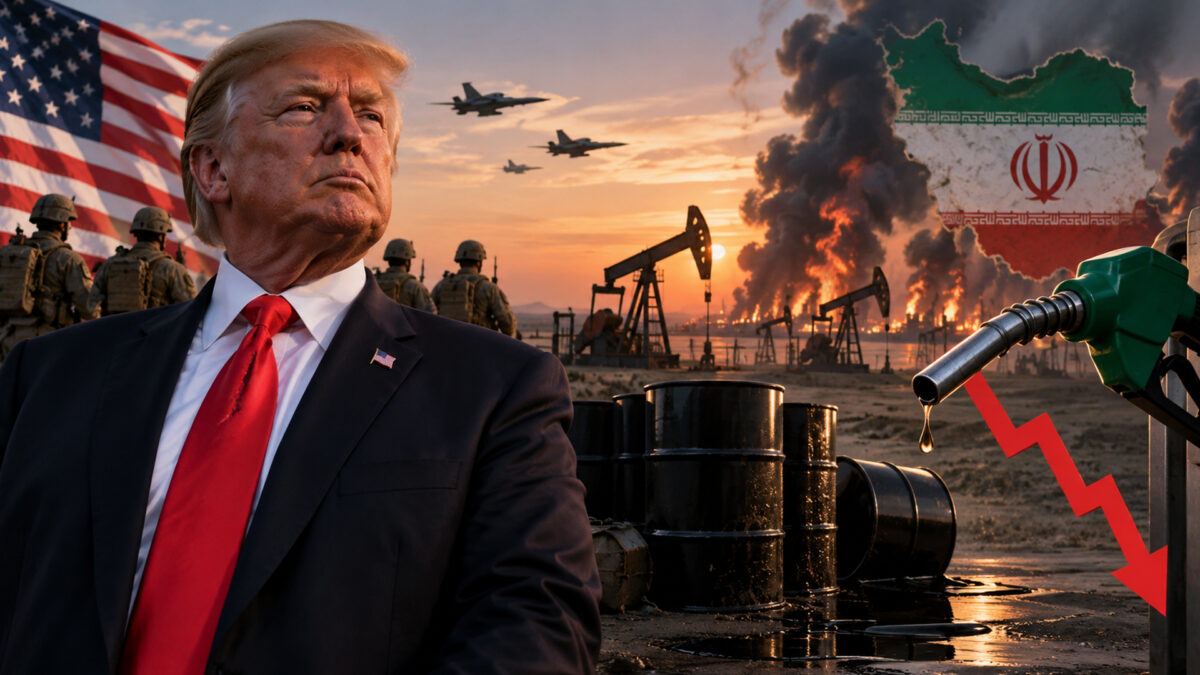
Trump predicts US gas prices could fall below $2

US President Donald Trump has predicted a dramatic fall in American gasoline prices, saying fuel could eventually become cheaper than $2 a gallon after what he described as a US victory in the war with Iran.

Trump made the claim as the Iran conflict continued to create uncertainty across global energy markets. He said oil prices would drop “precipitously” once the war was over and suggested that gasoline prices could first fall towards $3 a gallon before eventually slipping below the $2 mark.

The forecast is striking because US consumers are currently paying considerably more at the pump. Average gasoline prices have risen above $4 a gallon, meaning prices would have to fall by more than half for motorists to reach the level Trump has predicted.

The president has repeatedly connected the conflict with Iran to energy prices, arguing that a successful US campaign would eventually remove the supply risks that have pushed crude oil higher. He has also maintained that Iran must not be allowed to develop a nuclear weapon.

Trump’s comments come at a particularly sensitive time for the global oil market. Brent crude has been trading close to $100 a barrel, while US West Texas Intermediate crude has remained above $90. Traders have been closely watching developments in the Middle East because any disruption to oil production or transportation could have consequences far beyond the region.

One of the biggest concerns is the Strait of Hormuz, the narrow waterway between Iran and Oman through which a substantial share of the world’s oil supply passes. Any prolonged disruption to shipping through the strait could tighten global supplies and push crude prices higher.

Iran has warned that attacks on its energy infrastructure could trigger retaliation against US interests and energy facilities in the region. The threats have added to concerns about oil tankers, production facilities and shipping routes becoming targets as the conflict escalates.

The US has also stepped up pressure on Iran’s oil trade. American officials have threatened action against vessels involved in transporting Iranian crude, increasing the risks for companies and countries involved in the region’s energy trade.

For oil traders, the biggest question is whether the conflict will ultimately reduce or increase supply risks. A settlement could have the opposite effect of an escalation. If fighting stops and shipping routes become safer, some of the geopolitical premium built into crude prices could disappear.

That could bring oil prices down and eventually provide relief to consumers. But reaching $2-a-gallon gasoline would require a much larger and more sustained decline.

Crude oil is only one part of the price motorists pay at petrol stations. Refining costs, transportation, taxes and regional market conditions also influence gasoline prices. As a result, even a sharp decline in crude prices does not automatically translate into an equivalent fall in retail fuel prices.

The current gap between Trump’s prediction and actual prices therefore remains substantial.

Still, cheaper energy has been a recurring theme in Trump’s economic messaging. Lower gasoline prices would directly reduce household expenses for American drivers and could also lower transportation and production costs for businesses. A sustained decline in energy prices could, in turn, help ease inflationary pressures.

The impact would extend beyond the United States. Global crude prices influence the cost of fuel, transportation and several industrial commodities in oil-importing economies such as India. A prolonged fall in international oil prices could reduce India’s crude import bill and provide some relief to inflation, while a sharp increase would have the opposite effect.

China and other major economies would also be affected because of their large energy requirements. Global demand is another important factor that will determine where crude prices head once the immediate geopolitical uncertainty fades.

The oil market has already shown that prices do not always move in a straight line during geopolitical crises. Supply concerns can push prices higher, but expectations of weaker demand, alternative supply routes and production from countries outside the Middle East can limit those gains.

That makes the timing of Trump’s forecast important. His below-$2 gasoline prediction depends on the Iran conflict ending in a way that allows oil supplies and shipping to normalise. It would also require sufficient global production and relatively subdued demand.

If the conflict instead expands to involve more oil facilities, tankers or critical shipping routes, crude prices could move sharply in the opposite direction. In that scenario, the prospect of gasoline below $2 would move even further away.

Trump’s statement is best viewed as a political and economic forecast rather than an indication of an imminent collapse in fuel prices. The US president is presenting cheaper gasoline as a potential benefit of ending the Iran conflict, but the energy market remains highly sensitive to events on the ground.


Categories
Beyond

Oil prices drop 5% after US-Iran attack pause

Global oil prices fell sharply on Monday after the United States and Iran agreed to temporarily halt military attacks, raising hopes of a diplomatic breakthrough and easing concerns over potential disruptions to global crude oil supplies. The development triggered a broad sell-off in the energy market, with Brent crude and West Texas Intermediate (WTI) both posting their steepest single-day declines in weeks.

The latest correction came after several sessions of strong gains driven by fears that escalating tensions between Washington and Tehran could threaten oil production and exports from the Middle East. With both countries signalling a pause in hostilities, traders moved quickly to unwind positions that had factored in a significant geopolitical risk premium.

Brent crude, the international benchmark for crude oil prices, dropped nearly 5% to trade around $91 per barrel, while WTI crude also fell sharply to about $87 per barrel. The decline reversed a large part of last week’s rally, when crude prices surged amid concerns that the conflict could spill over into the broader Gulf region.

The Middle East accounts for a significant share of global oil production, making any military escalation in the region a major concern for energy markets. Investors had feared that continued attacks could disrupt supplies from key producers or threaten shipping through the Strait of Hormuz, one of the world’s busiest energy corridors. Nearly one-fifth of the world’s crude oil passes through the strategic waterway, making it vital to global energy security.

The temporary suspension of military strikes has eased those fears, at least for now. Although the agreement is not a formal ceasefire, it has reduced immediate concerns about supply disruptions and encouraged investors to shift their focus back to market fundamentals.

Energy analysts said the sharp decline in Brent crude prices reflects improving market sentiment rather than weakening demand. Over the past week, traders had added a substantial geopolitical premium to oil prices in anticipation of possible disruptions to exports from the region. Monday’s decline suggests much of that premium has now been removed following signs of de-escalation.

Market participants, however, remain cautious. Analysts warn that the situation remains fragile, and any renewed military action could quickly send oil prices climbing again. The conflict has not been resolved, and the current pause is viewed as a temporary step rather than a lasting peace agreement.

Apart from geopolitical developments, investors are also monitoring the global economic outlook. Stronger economic activity generally boosts demand for crude oil, while slowing growth can weigh on prices. This week, traders are expected to closely watch economic indicators from the United States and China, the world’s two largest economies, for fresh clues about future energy demand.

Another key factor influencing the global oil market is the production strategy of the OPEC+ alliance, led by Saudi Arabia and Russia. The producer group has maintained disciplined output cuts over the past several months to support prices despite concerns over slowing demand. Analysts believe any future changes to OPEC+ production targets could have a significant impact on the direction of crude oil prices.

For India, the world’s third-largest importer of crude oil, the latest decline comes as welcome relief. The country imports more than 85% of its crude oil requirements, making it highly sensitive to fluctuations in international oil prices. A sustained fall in Brent crude could help reduce India’s import bill, narrow the current account deficit and ease inflationary pressures.

Lower crude oil prices also have wider economic benefits. Industries such as aviation, logistics, shipping, manufacturing and chemicals rely heavily on petroleum products, and lower input costs can improve profitability. Reduced fuel costs may also help bring down transportation expenses, potentially easing the prices of several goods and services over time.

However, consumers should not expect an immediate reduction in petrol and diesel prices. Retail fuel prices in India depend on several factors, including international crude prices, exchange rates, taxes, freight costs and refining margins. Oil marketing companies typically assess these variables before making any revisions to pump prices.

Global equity markets responded positively to the easing geopolitical tensions, with investors viewing the development as a sign that a broader regional conflict may be avoided. At the same time, energy stocks faced pressure as falling oil prices are generally expected to reduce earnings for exploration and production companies.

Financial analysts believe volatility in the energy market is likely to persist over the coming weeks. While the pause in attacks has improved sentiment, the geopolitical situation remains unpredictable. Any breakdown in diplomatic efforts or fresh military escalation could quickly restore the risk premium that had supported oil prices in recent days.

The latest market movement highlights how closely crude oil prices, Brent crude, WTI crude, global energy markets, Middle East tensions, US-Iran relations, and oil supply concerns are interconnected. Even a temporary easing of hostilities was enough to trigger a sharp correction, underscoring the sensitivity of commodity markets to geopolitical developments.

For now, traders appear cautiously optimistic that diplomacy will prevail over conflict. If negotiations continue and tensions remain under control, oil prices may stabilise in the near term. However, with geopolitical uncertainty still looming over one of the world’s most critical oil-producing regions, the global crude oil market is expected to remain highly volatile, keeping investors, governments and businesses on alert.