
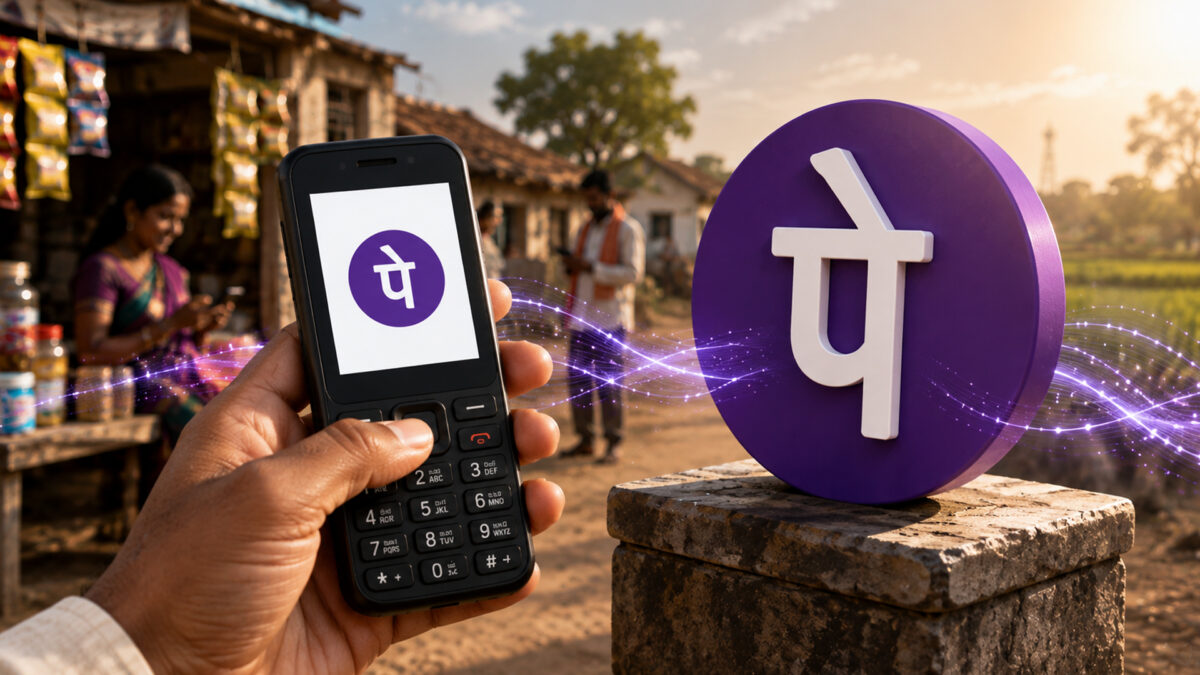
PhonePe has taken UPI payments beyond smartphones with the launch of PhonePe UPI 123Pay, allowing people using feature phones to make digital payments without an internet connection.
The move is aimed at more than 200 million feature-phone users across India who may not have smartphones or reliable access to mobile internet. With the new service, PhonePe wants to bring a much larger group of consumers into the country’s rapidly expanding digital payments network.
The service was launched on August 31 and allows users to send money, pay merchants and access basic UPI services using a feature phone. PhonePe said it is the first major third-party UPI application provider to extend its payment service to this segment at this scale.
Unlike conventional UPI apps, which depend on mobile data or Wi-Fi, PhonePe UPI 123Pay uses an SMS-based architecture. This means transactions can work even when users do not have mobile internet, including in areas where connectivity is limited.
The development could be particularly useful in smaller towns and rural areas, where feature phones remain popular because they are affordable, have longer battery life and are simpler to operate. It also gives people who do not want to upgrade to a smartphone an easier way to participate in digital payments.
PhonePe’s new service supports both peer-to-peer (P2P) and peer-to-merchant (P2M) payments. Users can transfer money to another person or make payments to businesses using mobile numbers or UPI IDs. Feature phones with cameras can also support QR-code scanning for merchant payments.
The service will initially be available on selected feature phones from manufacturers including Nokia, HMD, Lava and itel. PhonePe plans to expand support to additional handset makers as the service grows.
For a user accustomed to making payments through cash, the experience could be significantly different. A basic keypad phone can now be used for everyday digital transactions without needing an app store, smartphone or active data connection.
PhonePe is also trying to make the service easier for people who may not be familiar with digital payment systems. The company has introduced an AI-powered multilingual voice assistant that can guide users through activation and answer questions about UPI transactions.
The voice assistant supports English and 12 Indian languages. The move is particularly relevant for users who may find conventional app-based payment interfaces difficult to navigate or who are more comfortable using their regional language.
The initial service focuses on essential UPI functions. Users can transfer money, make merchant payments, check their bank balance and view transaction history. PhonePe plans to introduce additional features, including bill payments, mobile recharges and Aadhaar-based onboarding, at a later stage.
The launch is significant because India’s digital payment revolution has largely been driven by smartphones. UPI has made it possible for millions of people to pay for everything from groceries and transport to restaurant bills and utility services with just a few taps.
But that convenience has not reached everyone equally.
Millions of Indians continue to use feature phones, either because smartphones are too expensive, mobile data is unreliable or they simply prefer basic handsets. For these users, the absence of a smartphone has often meant staying outside the mainstream app-based payments ecosystem.
PhonePe is now attempting to close that gap.
The company’s chief executive, Sameer Nigam, has described the initiative as part of an effort to bring the “next 300 million users” into India’s digital economy. The focus, therefore, is not simply on adding another payment feature but on reaching consumers who have largely remained outside smartphone-based financial services.
The development also highlights how UPI is evolving beyond its original smartphone-focused model. UPI 123Pay itself is not new; the broader system was introduced to enable feature-phone users to access UPI services without internet connectivity. PhonePe’s entry brings one of India’s largest digital payments platforms into that space and could give offline UPI wider reach.
The development could also create new opportunities for developers. A small shop owner using a basic handset may no longer need to buy a smartphone simply to participate in digital payments. Customers using feature phones can similarly make payments without relying on cash.
However, adoption will depend on how simple and reliable the system proves to be. Digital payments require a high level of trust, particularly among first-time users. Ensuring that transactions are secure, easy to understand and dependable in areas with weak connectivity will be important for PhonePe.
The launch also comes as UPI continues to expand at a rapid pace. The payment system processed a record 24.51 billion transactions worth ₹29.82 lakh crore in August 2026, underlining how deeply digital payments have become embedded in India’s economy.
PhonePe’s latest move could now push that growth into a segment that has largely been left behind by the smartphone-led digital revolution.
For India’s more than 200 million feature-phone users, the message is straightforward: owning a smartphone or having mobile internet is no longer necessarily a requirement for making a UPI payment.
If the service gains traction, PhonePe UPI 123Pay could make digital payments more accessible across rural markets, smaller towns and communities where smartphone ownership and internet access remain limited. More importantly, it could bring millions of people one step closer to India’s increasingly digital financial ecosystem.