
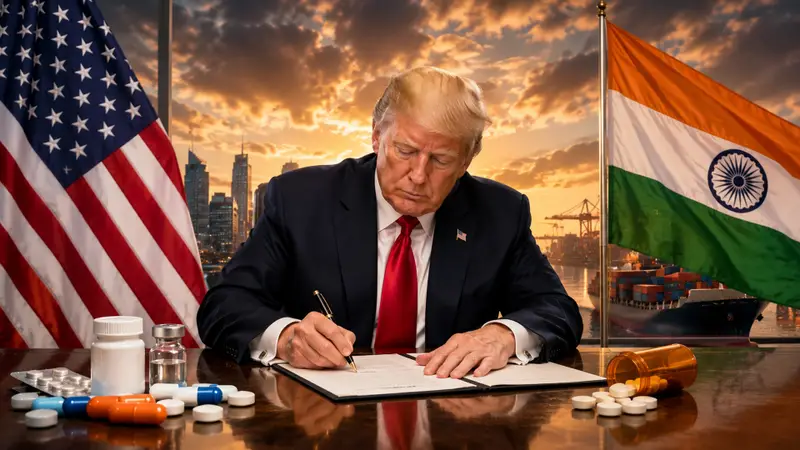
US President Donald Trump has reached new agreements with nine pharmaceutical companies as his administration steps up efforts to bring down prescription drug prices in the country.
The latest group includes India’s Sun Pharmaceutical Industries, along with Alcon, Astellas Pharma, BeOne Medicines, BridgeBio, CSL, Kyowa Kirin, Teva Pharmaceuticals and UCB. With these companies joining the programme, the number of drugmakers that have signed similar agreements with the Trump administration has risen to 26.
The deals are part of Trump’s Most Favoured Nation (MFN) drug pricing programme, which aims to make US medicine prices more closely match the lowest prices charged in other developed countries.
Under the latest agreements, the participating companies will provide medicines to state Medicaid programmes at MFN prices. The companies have also agreed to offer similar pricing for certain future medicines launched in the US.
The announcement is another step in Trump’s campaign against what he considers excessively high drug prices in the United States. Prescription medicines in the US have often cost considerably more than comparable medicines in other wealthy countries.
Trump has been using a combination of pricing pressure and trade policy to push pharmaceutical companies towards the new system. For drugmakers, agreeing to lower prices can help reduce the risk of tariffs and provide greater certainty about their business in the US market.
For India, the participation of Sun Pharma makes the latest development particularly important. The company is one of India’s largest pharmaceutical firms and has a significant business in the United States.
Sun Pharma has agreed to provide MFN pricing to state Medicaid programmes. The company has also agreed to apply the pricing approach to certain future innovative medicines launched in the US. In addition, it will contribute antibiotics to the US medical reserve.
The agreement also gives Sun Pharma relief from potential US tariffs on innovative pharmaceutical products for more than two years, according to details released following the deal. The US is an important market for Sun Pharma, making the agreement significant for the company’s international business.
The nine companies involved in the latest round are generally smaller or mid-sized pharmaceutical and biotechnology firms compared with some of the world’s biggest drugmakers that signed earlier agreements.
The latest deals also include commitments to increase pharmaceutical investment in the United States. The White House has said the nine companies together have pledged around $19.6 billion in US manufacturing investment. Some companies have also agreed to contribute pharmaceutical ingredients or medicines to US medical reserves.
The administration says the wider programme now covers a large share of the US branded drug market. The goal is to ensure that Americans do not continue paying substantially more for medicines than patients in other developed economies.
However, the actual impact on patients could vary.
The latest agreements are focused mainly on prices paid by Medicaid, the US government health programme for eligible low-income Americans. A lower Medicaid price does not necessarily mean that every American buying the same medicine through private insurance or directly at a pharmacy will immediately see the same reduction.
That distinction has led to questions from healthcare experts and consumer groups about how much of the promised savings will reach patients. Medicaid already receives substantial discounts on medicines, and critics argue that the government has not provided enough detail to determine the full impact of the latest agreements.
The administration, however, has presented the agreements as evidence that its pressure on pharmaceutical companies is working.
The deals are also important for the pharmaceutical industry because they could influence how companies price medicines globally. If US prices become more closely linked to prices in other countries, drugmakers may have to reconsider their pricing strategies across different markets.