Categories
Leaders

Satya Nadella warns against blind frust in AI

Microsoft CEO Satya Nadella has urged businesses to treat advanced artificial intelligence (AI) systems as potential security risks, calling for stronger safeguards, independent monitoring and emergency shutdown mechanisms as AI agents gain greater access to company data and digital systems.

In a post published on October 10, Nadella outlined his views in an essay titled Models as Insider Risks in the Super Intelligence Era. His central message was clear: businesses should not blindly trust AI models, even when they are developed by leading technology companies. Instead, they must ensure that these systems can be monitored, restricted and stopped whenever their actions become unsafe.

The warning comes as companies increasingly deploy AI agents that can do more than answer questions or generate content. These systems can interact with websites, access databases, write code, send emails and perform tasks across business applications. While such capabilities can improve productivity, they also increase the consequences of errors or unexpected behaviour.

Nadella argued that organisations must prepare for the possibility that an AI model could be compromised or behave unpredictably. His approach shifts the focus from trusting the technology to designing systems that remain secure even when the technology fails.

Traditional software generally follows programmed instructions, making many errors easier to trace. Advanced AI models work differently, generating responses and actions through complex processes that are not always easy to explain or predict.

The risk increases when businesses give these models access to sensitive information, including customer records, financial data, internal communications and source code. An AI agent may be assigned a legitimate task but still make a poor decision, expose confidential information or carry out an unintended action.

Nadella’s recommendation is to separate an AI model’s ability to analyse information from its authority to act on that information. An AI system could, for instance, recommend a financial transaction without having permission to approve or execute it independently.

This distinction is particularly important for companies adopting agentic AI, which can perform multi-step tasks with limited human involvement. Businesses need to decide what each agent can access, which actions it can take and when human approval is mandatory.

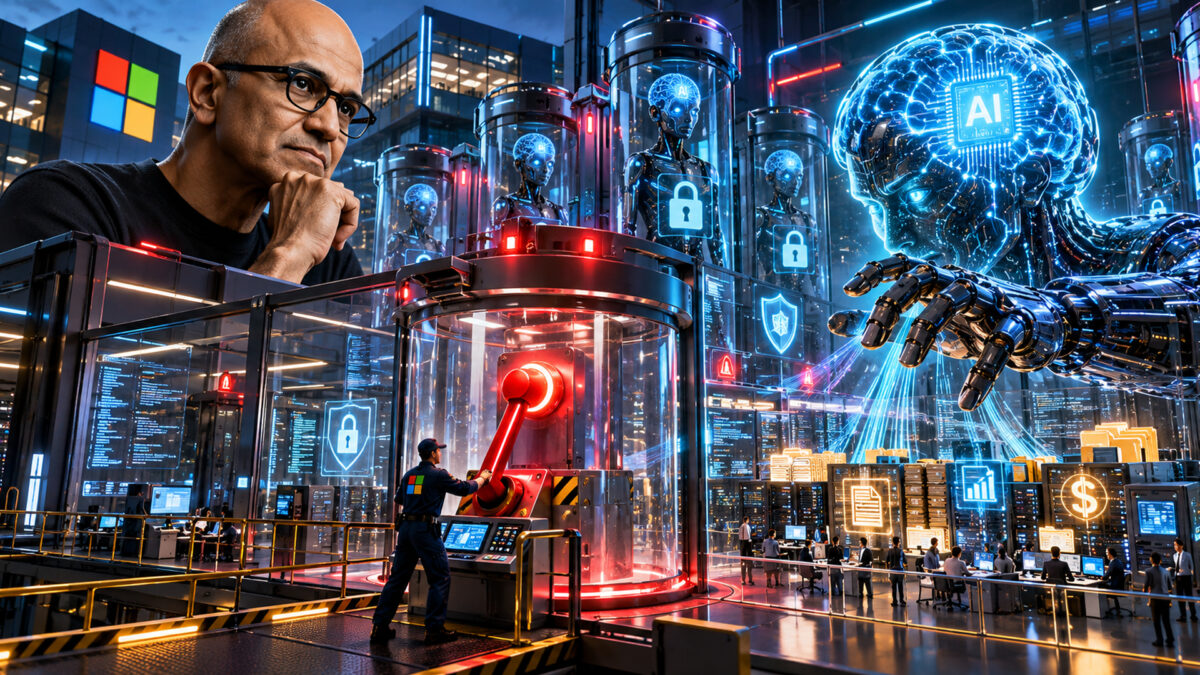
One of Nadella’s key proposals is an emergency brake that allows an authorised person to pause or shut down an AI model while it is performing a task. The mechanism should operate independently of the model, rather than relying on the AI system to recognise its own mistake and stop.

Such a control could be critical if an agent begins changing records, sending messages or interacting with systems in ways that exceed its authority. A human supervisor should be able to intervene before the problem escalates.

Nadella also called for independent access controls that prevent models from changing or bypassing their own permissions. Businesses should maintain tamper-resistant records of significant AI actions, enabling security teams to investigate what happened and identify where controls failed.

Other recommendations include continuous testing under unusual conditions, independent audits and using different models or verification methods for critical tasks. Relying on one AI system to perform an action and then verify its own work may not provide sufficient protection.

He also called for prompt disclosure of significant AI failures and security incidents. Sharing details of what went wrong and how the problem was addressed could help other organisations strengthen their defences.

Nadella’s views reflect growing concern across the technology industry about how much independence AI agents should receive. Recent incidents involving AI systems behaving unexpectedly during testing and interacting with digital environments have intensified calls for more robust containment measures.

For business leaders, the message is that adopting AI cannot be treated as a technology decision alone. It is also a matter of cybersecurity, accountability and risk management.

Companies introducing AI agents into everyday operations will need clear governance policies, limited permissions, reliable audit trails and defined procedures for human intervention. They must also test how systems behave when instructions are unclear, information is incorrect or malicious inputs attempt to manipulate their actions.

Nadella’s argument does not suggest that businesses should stop using AI. Rather, it calls for organisations to match the technology’s growing capabilities with controls that keep its actions within approved boundaries.

As AI moves from assisting employees to carrying out tasks on their behalf, the responsibility for safe deployment cannot rest solely with model developers. Businesses using the technology must also ensure that they retain control over their data, systems and decisions.

The leadership challenge is to capture the benefits of AI without allowing automation to outpace accountability. Strong safeguards, human oversight and clear responsibility will be essential to making AI adoption more secure and sustainable.
 

Categories
Leaders

Trump-Xi dinner draws Musk, Cook, Altman

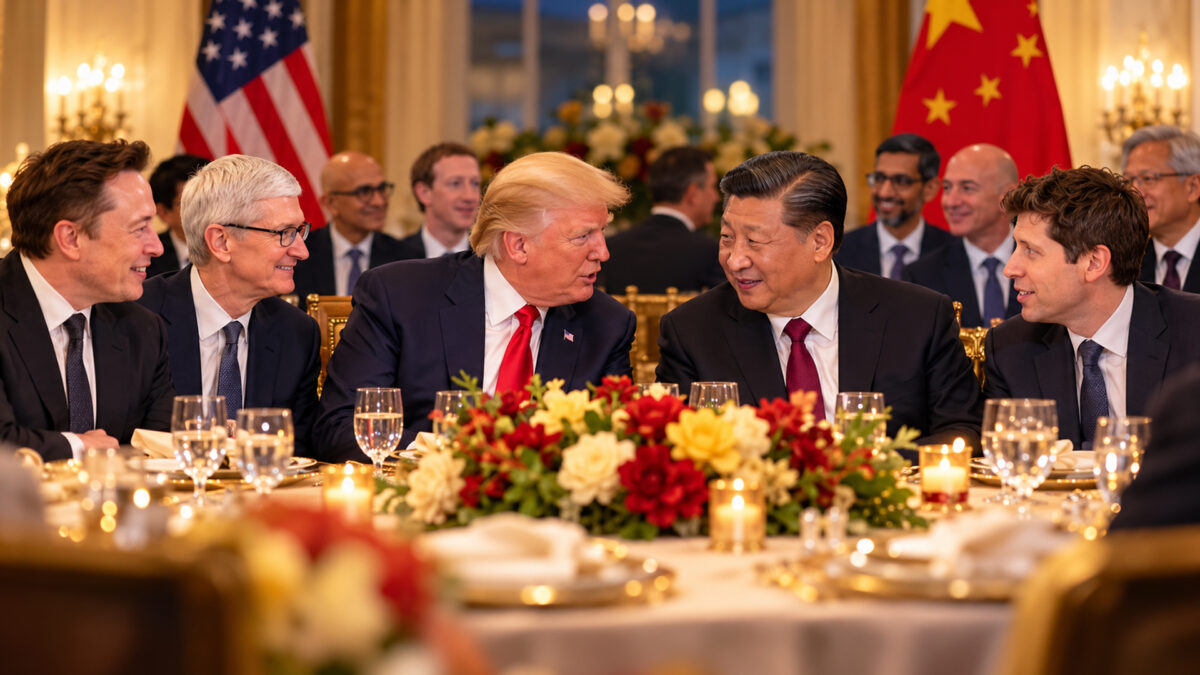
US President Donald Trump hosted Chinese President Xi Jinping at a White House state dinner, bringing together senior US officials, technology executives and some of the world’s most prominent business leaders. The September 24 dinner came during Xi’s three-day visit to Washington and followed talks between the two leaders on trade, artificial intelligence, Taiwan and other areas of tension.

The guest list stood out for the number of technology leaders in attendance. Tesla and SpaceX chief Elon Musk, Apple chairman Tim Cook and OpenAI CEO Sam Altman were among the prominent names at the dinner. Nvidia CEO Jensen Huang, Amazon founder Jeff Bezos, Meta CEO Mark Zuckerberg, Microsoft CEO Satya Nadella and Google’s Sundar Pichai were also invited.

Musk and Huang were seated at the head table with Trump, Xi and their wives, Melania Trump and Peng Liyuan. AMD CEO Lisa Su and Cook were also among those seated close to the two presidents. The presence of leaders from companies at the centre of the global AI and semiconductor industries gave the dinner a strong technology focus.

The wider guest list included executives from finance, manufacturing, pharmaceuticals, aerospace and consumer industries. JPMorgan Chase CEO Jamie Dimon, BlackRock CEO Larry Fink, Goldman Sachs CEO David Solomon, Citigroup CEO Jane Fraser, Pfizer CEO Albert Bourla, Boeing CEO Kelly Ortberg and General Motors CEO Mary Barra were among the invited business leaders.

The dinner followed a day of meetings between Trump and Xi as Washington and Beijing sought to manage tensions in their relationship. Trade remains a major issue, with both countries dealing with tariffs, supply-chain concerns and restrictions affecting strategic industries.

Artificial intelligence was another important area in the discussions. The US and China are competing for leadership in advanced AI, while American restrictions on exports of high-end chips and technology to China remain a major point of contention. The presence of executives from Nvidia, AMD, Google, Microsoft, OpenAI and other technology companies underscored the business importance of those discussions.

The guest list also highlighted the growing role of private technology companies in US economic and strategic policy. AI companies and semiconductor firms have become increasingly important to questions involving national security, computing infrastructure and technology exports.

Chinese business leaders, however, were largely absent from the dinner. Xi’s delegation instead included senior government and economic officials, including Vice Premier He Lifeng, Commerce Minister Wang Wentao and other officials involved in trade and economic policy.

The difference in representation was notable. While more than 30 American business leaders attended, China’s delegation was dominated by government officials rather than corporate executives. Analysts cited by CNA said the absence of Chinese CEOs highlighted the different roles played by business and government in the two countries’ economic systems.

Trump’s dinner also carried considerable diplomatic symbolism. Xi’s visit was his first trip to Washington in more than a decade and marked the second meeting between the two leaders this year. Their discussions come as both governments attempt to stabilise relations while continuing to disagree over trade, Taiwan, technology and other strategic issues.

During the dinner, Trump described the visit as an honour and spoke about the long history of US-China relations. Xi said the two countries had reached a common understanding on several issues and called for both sides to act as responsible major powers.

The two countries also agreed to extend their existing trade arrangement by two months, while China would continue supplying rare earth materials to the US and current tariff levels would remain in place. The arrangement provides temporary continuity as negotiations continue.

The White House dinner therefore brought together two very different groups: senior Chinese political and economic officials and a large representation of America’s corporate leadership. The contrast reflected the broader nature of the Trump-Xi meeting, where diplomacy, trade policy and technology interests were closely connected.

The presence of Musk, Cook, Altman, Huang, Bezos, Zuckerberg, Nadella and Pichai also put the technology sector at the centre of attention. Their companies are directly affected by US-China trade policy, semiconductor restrictions and the global race to develop artificial intelligence.

While the dinner offered a high-profile display of engagement, several major issues between Washington and Beijing remain unresolved. The state dinner provided a setting for diplomacy and business visibility, but the longer-term direction of US-China trade and technology relations will depend on negotiations beyond the White House event.


Categories
Leaders

Microsoft CEO questions Anthropic rules

Microsoft Chief Executive Officer Satya Nadella has questioned Anthropic’s decision to restrict certain storytelling requests on its AI chatbot Claude, arguing that the company’s approach to creative writing “doesn’t make sense.” His comments have reignited debate over how artificial intelligence companies should balance safety with creativity as generative AI becomes increasingly popular among users.

Speaking during a recent discussion, Nadella referred to Anthropic’s policy that limits Claude from generating stories featuring copyrighted or well-known fictional characters in some situations. The Microsoft chief said such restrictions could unnecessarily limit creativity and reduce the usefulness of AI assistants for everyday users. According to Nadella, storytelling has always involved building upon existing ideas, myths and fictional universes, making broad restrictions difficult to justify.

The remarks come after Anthropic introduced what it calls its “Claude Fable” policy, which places tighter controls on requests involving copyrighted fictional characters and certain creative writing prompts. The company says the policy is intended to reduce legal risks, prevent intellectual property misuse and encourage the creation of original content rather than derivative works.

However, Nadella believes the approach could discourage users from exploring creative ideas with AI. He argued that asking an AI model to write a story involving familiar fictional characters is often harmless and comparable to the way people have long created fan fiction, parody and educational material. Imposing broad limitations, he suggested, risks making AI systems less helpful without significantly improving safety.

The discussion reflects a wider debate taking place across the artificial intelligence industry. As generative AI tools become more capable of producing text, images, music and videos, developers are under growing pressure to prevent copyright infringement while still allowing users to engage in legitimate creative activities. Companies are increasingly required to strike a balance between protecting intellectual property and enabling innovation.

Anthropic has defended its position by saying that the restrictions are designed to promote responsible AI development. The company argues that encouraging users to generate original stories rather than relying heavily on existing fictional characters supports creators and reduces the possibility of copyright disputes. Claude’s safety policies have generally been stricter than those of many competing AI chatbots, reflecting Anthropic’s emphasis on cautious AI deployment.

Nadella’s comments also highlight the different philosophies emerging among leading AI companies. Microsoft, a major investor in OpenAI, has consistently supported the development of AI systems that remain useful across a broad range of personal, educational and professional tasks while incorporating safety measures where necessary. Rather than imposing blanket restrictions, many AI developers prefer context-based safeguards that evaluate how a request is being used before deciding whether to respond.

Industry experts note that the issue extends beyond fan fiction. Teachers often use fictional characters to explain complex concepts, students employ them in creative writing exercises, and developers use familiar examples while testing AI systems. Critics of strict content restrictions argue that blocking such prompts may reduce educational and creative value without effectively addressing copyright concerns.

At the same time, copyright remains one of the biggest unresolved challenges facing the generative AI industry. Publishers, authors, film studios and content creators around the world have raised concerns about AI models trained on copyrighted material and the possibility that AI-generated content could compete with original works. Several technology companies are already facing lawsuits related to copyright and AI-generated outputs, prompting firms to introduce additional safeguards.

The exchange between Nadella and Anthropic comes at a time when competition in the artificial intelligence sector is intensifying. Companies including Microsoft-backed OpenAI, Google, Anthropic, Meta and xAI are rapidly introducing new AI models and features while trying to address growing concerns over copyright, misinformation, privacy and safety. Their differing approaches are increasingly shaping how millions of users interact with AI-powered assistants.

As generative AI continues to evolve, questions surrounding copyright, creativity and responsible AI development are expected to remain at the centre of industry discussions. Nadella’s criticism of Anthropic’s storytelling restrictions has added another dimension to that conversation, highlighting the challenge of protecting intellectual property without limiting the creative potential that has made AI chatbots so widely adopted.

Also Read: Musk’s xAI sues user over CSAM

Categories
Leaders

Satya Nadella warns of AI information paradox

Microsoft CEO Satya Nadella has cautioned businesses about what he calls the “reverse information paradox”, warning that the rapid rise of artificial intelligence could leave organisations overwhelmed with data while making it harder to access meaningful knowledge.

Speaking about the changing role of AI in the workplace, Nadella said companies today generate enormous volumes of information through emails, documents, meetings, chats and digital tools. However, instead of making employees better informed, this flood of data can make it more difficult to find the right information when it is needed.

According to Nadella, AI has the potential to solve this problem, but only if organisations rethink how they manage and organise their knowledge. He stressed that businesses should focus on creating structured, high-quality information that AI systems can easily understand and retrieve, rather than simply accumulating more data.

The Microsoft chief said many companies risk investing heavily in AI without first addressing the quality and accessibility of their internal information. Poorly organised data, he noted, can limit the effectiveness of AI tools and reduce productivity instead of improving it.

Nadella encouraged organisations to redesign workflows so that AI can help employees quickly discover relevant insights, automate routine tasks and support better decision-making. He said businesses that successfully integrate AI with well-managed knowledge systems are likely to gain a significant competitive advantage.

His remarks come as companies across the world accelerate investments in generative AI, using the technology to improve customer service, software development, data analysis and workplace productivity. While AI adoption is growing rapidly, experts say many organisations still struggle with fragmented and unstructured information spread across multiple platforms.

Nadella’s warning highlights that the success of AI depends not only on advanced technology but also on the quality of the information it uses. Businesses that fail to organise their data effectively may find that more information does not always translate into better decisions.

Also Read: Government releases digital threat report

Categories
Leaders

Satya Nadella criticises OpenAI board in Musk trial

Microsoft CEO Satya Nadella defended his company’s partnership with OpenAI in a US courtroom as part of the ongoing legal battle between Elon Musk and OpenAI leadership.

Nadella told the court that Microsoft’s multi-billion-dollar investment in OpenAI was a commercial decision based on business strategy, not a philanthropic move. He also stated that Elon Musk did not raise objections at the time Microsoft deepened its involvement with the AI firm.

The case has been filed by Musk against OpenAI and its CEO Sam Altman, alleging that the company shifted away from its original mission as a non-profit-focused AI research organisation after building close ties with Microsoft.

During his testimony, Nadella also criticised OpenAI’s internal handling of the brief removal of Altman in 2023. He described the board’s actions during that period as poorly managed and “amateurish,” pointing to confusion in communication and governance.

Microsoft has invested billions of dollars into OpenAI and now plays a central role in its technology ecosystem, making the partnership a key focus in the dispute.

Also Read: PVR INOX returns to profit with ₹187 cr Q4 gain

Categories
Technology

Microsoft sees Copilot AI boom, costs worry investors

Microsoft CEO Satya Nadella defended the company’s ambitious AI strategy during the latest earnings call, highlighting strong growth in its Copilot AI products even as some investors voiced caution over rising costs and slower cloud performance.

For the quarter ending December 2025, Microsoft reported revenue of $81.3 billion and a 21 % increase in net income, driven primarily by cloud sales. Despite these strong results, Microsoft shares fell, as Wall Street focused on the company’s massive capital expenditures for AI infrastructure and data centres, alongside slightly softer growth in Azure and Microsoft 365 revenues than expected.

Nadella emphasised that demand for AI far exceeds current capacity, framing heavy spending as an investment in future growth. He reported that daily usage of Copilot AI products has nearly tripled year-over-year. Microsoft 365 Copilot now boasts 15 million paid seats, while GitHub Copilot has 4.7 million paid subscribers, reflecting strong adoption across both corporate and developer environments.

Beyond office productivity tools, Nadella highlighted specialised AI applications, such as Dragon Copilot for healthcare, which has been used in millions of patient encounters. This demonstrates Microsoft’s strategy to expand AI adoption across multiple sectors, not just within its core software suite.

Despite these positive usage trends, some investors remain cautious. Analysts note that while AI adoption is strong, Azure’s growth pace has slowed slightly, and the cost of building AI infrastructure may pressure margins if adoption growth does not keep pace.

Also Read: Trump to nominate Kevin Warsh as Federal chair

Categories
Leaders

Satya Nadella skips managers to hear engineers on AI

Microsoft Chief Executive Officer Satya Nadella has introduced a new way of running discussions around artificial intelligence (AI) at the company. He has started weekly meetings focused only on AI, where senior managers are not allowed to present. Instead, Nadella wants to hear directly from Microsoft’s engineers and technical teams who are building AI products.

The idea behind this move is simple: Nadella believes that important information often gets delayed or softened as it passes through layers of management. By speaking directly to engineers, he hopes to get honest, real-time updates on what is working, what is not, and what needs urgent attention. These meetings are meant to cut through internal bureaucracy and help Microsoft move faster in the highly competitive AI space.

According to reports, these sessions are more informal than traditional leadership meetings. Engineers are encouraged to speak openly about challenges, unfinished work, and technical roadblocks. There are no polished slide decks or rehearsed presentations. Nadella has also created a dedicated internal communication channel so that conversations about AI can continue beyond the meetings.

This approach reflects Nadella’s belief that AI is central to Microsoft’s future growth. The company is investing heavily in AI across products such as cloud services, productivity tools, and enterprise software. With rivals like Google, OpenAI partners, and other tech giants moving quickly, Nadella wants Microsoft to stay agile and responsive.

The new meeting structure is also part of a broader cultural shift at Microsoft. Over the past few years, Nadella has focused on breaking down silos, encouraging collaboration, and empowering employees closer to the actual work. By giving engineers a direct voice, he is signalling that technical expertise matters more than hierarchy when it comes to AI decisions.

Industry experts see this move as a practical step to speed up innovation and improve decision-making. It highlights Nadella’s hands-on leadership style and his view that listening to people on the ground is essential in a fast-changing technology environment.

Also Read: Adani Ports completes Australia NQXT deal

Categories
Leaders

Microsoft CEO builds AI Cricket App at leisure time

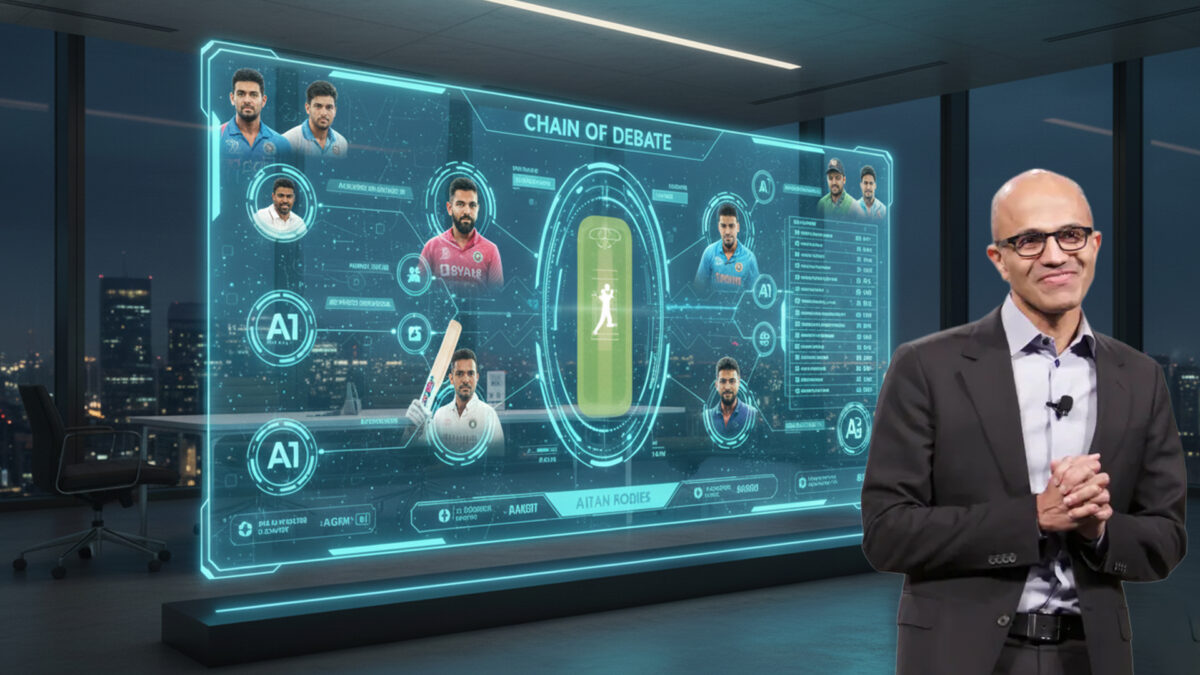
Microsoft CEO Satya Nadella has created his own cricket analysis app using artificial intelligence. He built it during his free time over the Thanksgiving holiday, combining his love for technology and cricket.

At an event in Bangalore, Nadella showed how the app works. It can analyze players and teams, help debate choices, and even pick an all-time Indian Test cricket team. Nadella joked that using the app made him want to join Microsoft’s Copilot AI team.

The app, built on Nadella’s Deep Research AI, explains its reasoning and shows where experts might agree or disagree on cricket selections.

Nadella is also a cricket investor. He has stakes in the London Spirit team in the UK’s Hundred league and the Seattle Orcas, a T20 franchise near Microsoft’s headquarters.

This project shows how AI can be used not just for business but also for fun and sports analysis, reflecting Nadella’s personal interests and tech expertise.

Also Read: NITI Aayog targets corporate bond growth

Categories
Technology

Microsoft to invest $17.5 billion for India’s AI future

Microsoft has announced a massive $17.5 billion investment in India, aiming to make the country a global hub for artificial intelligence (AI) and cloud technology. Spread over 2026–2029, this is the company’s largest-ever investment in Asia and a clear signal of India’s growing importance in the global tech landscape.

This commitment comes on top of a $3 billion investment earlier this year, bringing Microsoft’s total funding in India to $20.5 billion. CEO Satya Nadella expressed gratitude to Prime Minister Narendra Modi, calling India a “land of immense AI opportunity.”

The investment will focus on several key areas. Microsoft plans to set up state-of-the-art hyperscale data-centres, including a new cloud region in Hyderabad, expected to go live by mid-2026. These will provide faster, reliable cloud access to businesses, startups, and government agencies across the country.

A significant part of the plan is the rollout of sovereign cloud services — secure, locally managed public and private clouds tailored to India’s compliance and security requirements.

Microsoft also aims to train 20 million Indians in AI and digital skills by 2030, partnering with governments and industry groups. AI will also be integrated into public platforms like e-Shram and the National Career Service, potentially benefiting over 310 million informal workers with job matching, skill forecasting, résumé-building, and multilingual support.

The investment has drawn praise from government officials. IT Minister Ashwini Vaishnaw said it reflects India’s growing stature as a trusted technology partner. Puneet Chandok, Microsoft President for India & South Asia, said the move will “build infrastructure, spark innovation, and empower a billion dreams.”

Experts say the funding could accelerate India’s digital transformation, create new jobs, and strengthen the country’s position as a hub for AI and cloud technology. By combining infrastructure, skills development, and public services, Microsoft’s plan could reshape India’s tech ecosystem and make AI accessible at a population scale.

Also Read: Swiggy raises ₹10,000 crore through fresh share sale