Categories
Leaders

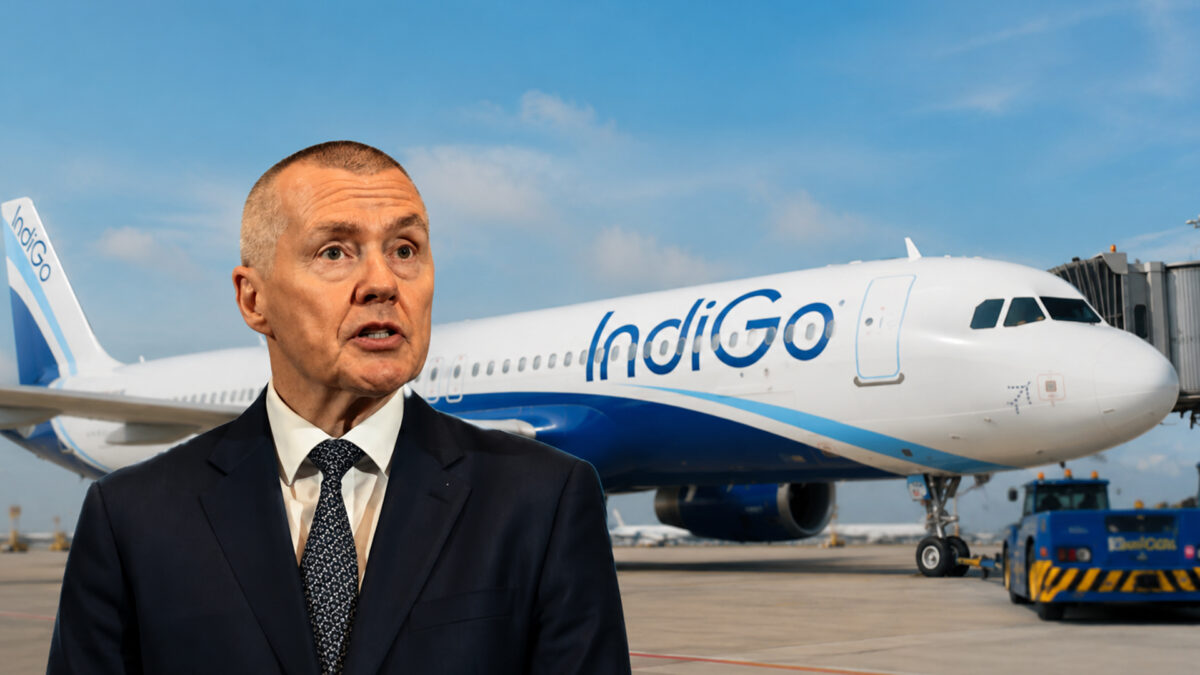
IndiGo’s Walsh charts global growth path

IndiGo’s new chief executive officer Willie Walsh has made it clear that the airline will not slow down its global ambitions despite the difficult environment facing the aviation industry. In his first address to employees after taking charge, Walsh said IndiGo must remain focused on international expansion while responding carefully to airspace disruptions, supply chain constraints, rising costs and changing global conditions.

Walsh took charge as IndiGo CEO on Monday, just days after completing his tenure as director general of the International Air Transport Association (IATA). His arrival comes at an important point for India’s largest airline, which is celebrating 20 years of operations while simultaneously dealing with financial pressure, international route disruptions and the need to rebuild confidence following last year’s operational crisis.

Speaking at IndiGo’s 20th anniversary town hall, Walsh struck an optimistic tone. He told employees that the airline’s biggest opportunities were still ahead and that new aircraft and an expanding international network could help connect India with more destinations around the world.

For Walsh, the opportunity is closely linked to India’s growing aviation market. He sees the country’s rising demand for air travel and its geographical position as important advantages that could help India develop into a major global aviation hub.

That ambition, however, comes with several immediate challenges.

IndiGo’s international operations have been affected by disruptions in the Middle East and Europe. Changes in airspace availability have forced airlines to alter routes and schedules, while geopolitical uncertainty has made international operations more expensive and complicated.

The airline has also decided to end its current wide-body operations from October 25, 2026, and complete its damp lease arrangement with Norse Atlantic Airways by October 31. The decisions come amid airspace restrictions, higher fuel costs and currency pressures. The move highlights the difficult balance IndiGo faces between pursuing long-haul international growth and protecting its finances in the short term.

Fuel costs are another major concern. Aviation turbine fuel, or ATF, normally represents one of the biggest expenses for an airline, accounting for roughly 35-40% of operating costs. IndiGo’s fuel bill jumped more than 84% in the first quarter of FY27, contributing to an unexpected loss.

The weaker Indian rupee has added another layer of pressure. Many airline expenses, including aircraft leases and maintenance costs, are linked to the US dollar. A weaker rupee therefore increases the cost of running the airline and can directly affect profitability.

Walsh is stepping into the role after a particularly difficult period for IndiGo. Former CEO Pieter Elbers resigned in March following the airline’s operational problems. The crisis had caused a sharp fall in IndiGo’s domestic market share, which dropped from 63.6% in November 2025 to 59.6% in December.

The airline has since recovered strongly. Its domestic market share climbed back to 66.3% in June, underlining the strength of its core business even as international operations remain more challenging.

Financially, however, the pressure remains significant. IndiGo reported a loss of ₹2,394 crore in FY26, compared with a profit in the previous financial year. The result reflects the impact of operational disruptions, higher fuel costs and other pressures affecting the airline industry.

Walsh brings extensive international aviation experience to the job. Before joining IndiGo, he served as IATA’s director general and previously led British Airways, Aer Lingus and International Airlines Group. His experience of managing large airline operations is expected to be particularly useful as IndiGo tries to strengthen its international network without compromising the efficiency that built its domestic success.

In his first message, Walsh also reminded employees that running an airline successfully is extremely difficult. He pointed out that 408 airlines had failed over the previous decade, making IndiGo’s two-decade journey particularly significant.

His message was not simply about expansion. Walsh emphasised discipline, teamwork and consistency as the foundations of a successful airline. He also said he wanted IndiGo to become the carrier of choice for travellers, building on the customer trust and operational reputation the airline has developed over the years.

That focus on the customer could prove important as competition in Indian aviation intensifies. Air India and the broader Tata group are expanding their international presence, while Indian travellers have more choices than ever before.

Walsh has also signalled that he intends to understand the airline from the ground up. He plans to visit airports, engineering facilities and offices in the coming months and meet employees across the organisation. His approach suggests that operational improvement will be as important as network expansion.

The timing is significant. IndiGo has already established itself as India’s dominant domestic airline. The next stage is more complicated: turning that domestic scale into a sustainable international presence while managing fuel prices, currency movements, aircraft availability, geopolitical risks and customer expectations.

 

Categories
Technology

New Samsung foldables get 30-month EMI

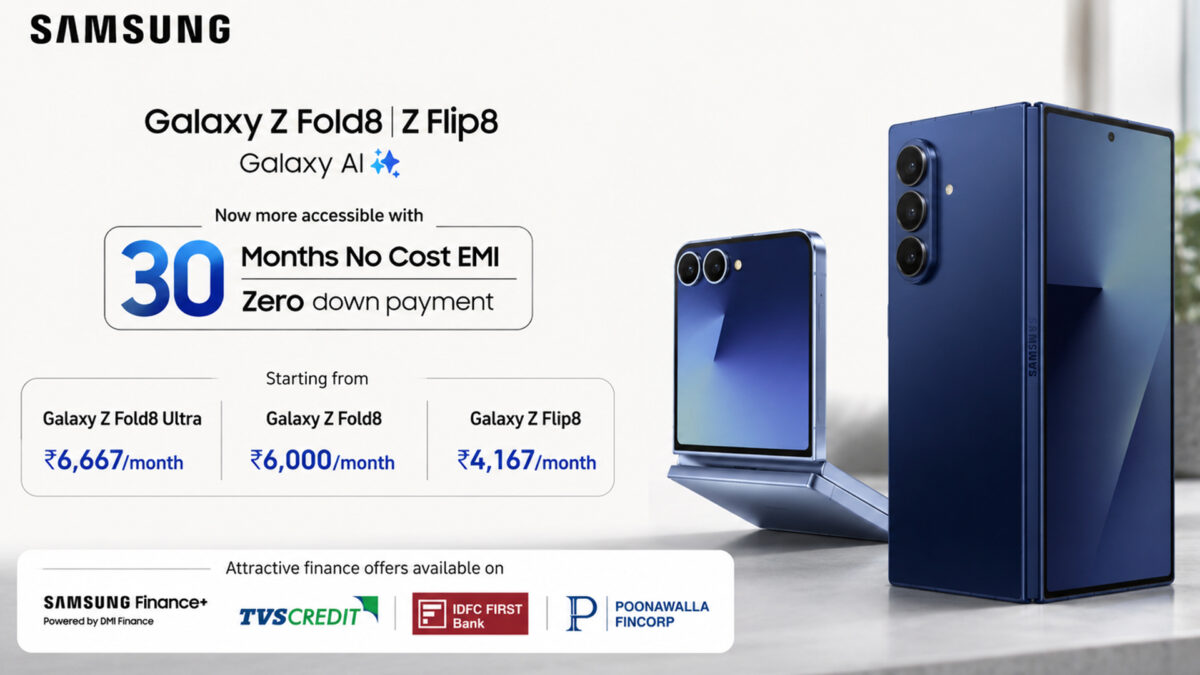
Samsung has introduced a 30-month no-cost EMI option for its latest foldable smartphones in India, making the company’s premium Galaxy Z range easier to purchase without paying the full price upfront. The offer covers the Galaxy Z Fold8 Ultra, Galaxy Z Fold8 and Galaxy Z Flip8 and comes with zero down payment through select financing partners.

The move comes at a time when foldable smartphones are gradually becoming more popular among Indian consumers. Samsung’s latest devices carry premium price tags, but the extended EMI option brings their monthly cost down and could make them more attractive to buyers who want flagship features without a large one-time payment.

Under the new plan, the Galaxy Z Fold8 Ultra 256GB is available at a monthly EMI starting at Rs 6,667. The Galaxy Z Fold8 256GB starts at Rs 6,000 per month, while the Galaxy Z Flip8 256GB comes with an EMI starting at Rs 4,167. Samsung says the 30-month plan is available with zero down payment, subject to the terms of the financing partners.

The Galaxy Z Fold8 Ultra has a starting price of Rs 1,99,999, while the Galaxy Z Fold8 starts at Rs 1,79,999. The Galaxy Z Flip8 is the most affordable model among the three, with a starting price of Rs 1,24,999 for the 256GB version. The longer repayment period means consumers can spread these costs over two-and-a-half years instead of making a much larger payment upfront.

Samsung is offering the 30-month no-cost EMI through financing partners including Samsung Finance+, TVS Credit, IDFC FIRST Bank and Poonawalla Fincorp. Customers can therefore check their eligibility and choose the financing option available to them while purchasing the new Galaxy foldables.

For Samsung, the new EMI scheme is more than just a payment convenience. It comes as the company attempts to push foldable smartphones beyond the traditional premium technology audience. The company has reported strong interest in its latest Galaxy Z lineup, with more than 271,000 pre-orders recorded within 72 hours of the July launch. Samsung also said 45% of the pre-orders came from Tier-2 cities and smaller markets, indicating that demand for foldable phones is spreading beyond India’s largest urban centres.

The Galaxy Z Fold8 Ultra sits at the top of Samsung’s new foldable smartphone portfolio. It is designed for users who want a larger screen for productivity, entertainment and multitasking while retaining the portability of a foldable device. Samsung has focused on making the device thinner and lighter while upgrading its camera and processing capabilities.

The regular Galaxy Z Fold8 is aimed at consumers who want a premium large-screen foldable without moving to the Ultra model. It combines a large inner display with a conventional cover screen, allowing users to switch between a compact smartphone experience and a tablet-like screen when the device is opened.

The Galaxy Z Flip8, meanwhile, takes a different approach. Instead of opening into a larger tablet-style screen, it folds vertically into a compact form. This makes it particularly appealing to users who want a smaller device that can fit easily into a pocket or bag. The Flip8 also uses its outer FlexWindow for quick access to notifications, applications and other information without requiring users to open the phone every time.

Artificial intelligence is another major focus across Samsung’s new foldable lineup. The Galaxy Z Fold8 Ultra, Galaxy Z Fold8 and Galaxy Z Flip8 bring expanded Galaxy AI capabilities designed to help users with everyday tasks, information management and content creation.

Samsung has also introduced features such as Now Brief and Now Nudge, while Gemini-powered capabilities are designed to help users perform certain tasks across applications. The company is positioning AI as an important part of the overall smartphone experience rather than as an additional feature that users may occasionally use.

The hardware has also received significant upgrades. The Galaxy Z Fold8 Ultra comes with a large 8-inch main display, while Samsung has equipped it with a 200MP primary camera and a Snapdragon 8 Elite Gen 5 for Galaxy processor. The device also supports 45W fast charging and carries a 5,000mAh battery.

The Galaxy Z Fold8 focuses on a lighter design, weighing 201 grams, while the Galaxy Z Flip8 weighs 180 grams. Samsung has also worked on the durability and engineering of the new foldables as it continues to address one of the biggest challenges in the category: making foldable devices thinner and more convenient without compromising their everyday usability.

Along with the EMI option, Samsung is offering other purchase benefits. Customers can choose an upgrade offer of up to Rs 10,000 on the Galaxy Z Fold8 Ultra and Galaxy Z Fold8, or receive bank and UPI cashback of up to Rs 9,000. For the Galaxy Z Flip8, the upgrade benefit goes up to Rs 5,000, while bank and UPI cashback can reach Rs 4,000.

Samsung has also started early deliveries for customers who pre-booked the new foldables. The company’s latest sales strategy combines premium hardware, artificial intelligence features and flexible financing in an effort to make foldable smartphones more mainstream.

For consumers, the biggest attraction could simply be the lower monthly commitment. A flagship foldable costing well above Rs 1 lakh can be difficult to justify as a single purchase, particularly for buyers who upgrade their phones frequently. A 30-month no-cost EMI gives them a way to manage the expense over a longer period.

The offer also shows how smartphone brands are increasingly using financing and ownership schemes to make premium devices accessible. Samsung has already experimented with alternative ownership models through its Galaxy Forever programme for select flagship smartphones. The new 30-month EMI option extends that affordability push to its latest foldable range.

With the Galaxy Z Fold8 Ultra, Fold8 and Flip8 now attracting strong interest across both major cities and smaller markets, Samsung appears confident that foldables have moved beyond being niche luxury smartphones. The extended EMI plan could further widen that audience by turning a high upfront purchase into a more manageable monthly expense.

Categories
Corporate

Sensex rises 150 points, Nifty holds above 24,600

ndian benchmark indices ended Wednesday, August 5, with modest gains after a highly volatile session in which early optimism gave way to cautious trading. The BSE Sensex closed at 78,581, rising 152.05 points, or 0.19%, while the NSE Nifty50 settled at 24,624.65, up 9.75 points, or 0.04%. Both indices finished well off their day’s highs as investors booked profits and remained cautious over renewed geopolitical tensions involving the US, Iran and the Strait of Hormuz.

The session started on a much stronger note. The Sensex jumped 626 points in early trade to touch 79,055.38, while the Nifty climbed nearly 63 points to 24,677.60. The initial buying was supported by positive global cues, hopes of progress in US-Iran discussions and a decline in crude oil prices. However, the rally lost momentum as the day progressed.

For investors watching the Indian stock market, Wednesday’s trading showed how quickly sentiment can change. The market moved from a strong opening to a near-flat close, reflecting a mix of optimism over domestic growth and caution over global risks.

One of the biggest factors weighing on sentiment was fresh uncertainty around the Strait of Hormuz. US President Donald Trump said the strategic waterway would reopen “very soon” but also warned Iran of a strong military response if the blockage continued. His comments revived concerns about the possibility of further escalation in the Middle East.

The Strait of Hormuz is particularly important for global energy markets because a prolonged disruption can affect crude oil supplies and shipping costs. For India, higher crude prices can create pressure on inflation, the rupee and corporate margins. This makes developments around the waterway an important factor for Dalal Street.

Profit booking was another reason behind the market’s retreat. After the sharp gains seen in the previous sessions, investors used the morning rally to lock in profits. The Nifty also struggled to sustain levels near 24,700, which has emerged as an important resistance zone in the near term.

Technical analysts said the index remained range-bound after failing to decisively break above the 24,700 mark. The 24,500 level provided support during the session, while 24,800 remains an important hurdle. A sustained move above 24,800 could improve the short-term market outlook, while a break below 24,400 could increase selling pressure.

Among individual stocks, Shriram Finance and Grasim Industries were among the notable Nifty gainers, with both rising around 3% at different points and remaining among the stronger performers. Larsen & Toubro also gained, while several stocks saw selling pressure as investors rotated between sectors.

On the other side, ITC, HCL Technologies and Coal India were among the notable laggards, falling by up to around 1%. Their weakness limited the gains in the benchmark indices.

The broader market also remained mixed. While some large-cap stocks attracted buying interest, investors were selective rather than aggressively adding positions. The market’s behaviour suggested that traders were paying close attention to corporate earnings, global cues, crude oil prices and currency movements before making fresh bets.

The RBI’s monetary policy decision was another important event for investors. The central bank kept the repo rate unchanged at 5.25%, while its assessment of inflation and economic growth remained in focus. The decision removed an immediate source of uncertainty for rate-sensitive stocks, although it did not trigger a sustained market rally.

Global markets offered some support at the start of the session. US stocks had closed at record highs, while Asian markets opened higher amid hopes of an interim understanding between Washington and Tehran. Falling oil prices also helped improve sentiment because lower energy costs are generally positive for oil-importing economies such as India.

The rupee and foreign investor flows are also likely to remain important market drivers. A stronger domestic currency and steady foreign institutional investment could provide support to Indian equities, while renewed selling by foreign investors could add pressure.

Wednesday’s market action also came after the Nifty ended a four-session winning streak on Tuesday. The introduction of the new Closing Auction Session had contributed to unusual volatility in the previous session, making traders more cautious about interpreting sharp late-day movements.

Corporate earnings, RBI policy, crude oil prices, US-Iran developments and foreign fund flows are likely to determine the next major move.

The day’s action ultimately delivered a simple message: buyers remain present, but they are unwilling to chase the market aggressively at higher levels.

Categories
Uncategorized

IndiGo turns 20, celebrates milestone at Mysuru

IndiGo has completed 20 years of operations, marking the milestone with celebrations at Mysuru Airport in Karnataka as the airline looks back on its growth from a domestic carrier to one of the world’s largest airlines by daily flights.

The anniversary comes with a special treat for passengers. As part of its IndiGoFree campaign, the airline is offering 20,000 free domestic flight tickets to eligible customers. The initiative is aimed at making the milestone a celebration for passengers who have been part of IndiGo’s journey over the past two decades.

Under the campaign, customers making eligible bookings during the offer period can be selected to receive a refund of their airfare, subject to the terms and conditions. The refund is capped at ₹10,000 per PNR, giving travellers an opportunity to have their flight effectively covered by the airline.

The anniversary celebrations at Mysuru Airport also underline the importance of regional aviation in IndiGo’s expansion. Mysuru is a major tourism and business centre in Karnataka, and improved air connectivity has made travel to the city more convenient for both domestic tourists and business travellers.

For the airline, regional connectivity has been a key part of its growth story. IndiGo has steadily expanded its network beyond major metropolitan cities, connecting smaller centres with larger aviation hubs. This has helped bring air travel within reach of more passengers across India.

Over the past 20 years, IndiGo has grown substantially in terms of fleet size, destinations and passenger numbers. The airline now operates a fleet of more than 430 aircraft, with nearly 2,200 daily flights connecting more than 95 domestic destinations and over 40 international destinations.

The scale of its operations represents a dramatic change from its early years. IndiGo began flying in 2006 with a focus on affordable fares, operational efficiency and a simple passenger experience. Its low-cost model helped it build a large customer base as India’s aviation market expanded.

The airline has since moved beyond its traditional domestic focus. International expansion has become an increasingly important part of its strategy, with IndiGo adding routes to destinations across Asia, Europe and the Middle East.

The carrier has also introduced new products aimed at giving passengers more choice. Its IndiGoStretch service offers a premium cabin experience on selected routes, while the airline continues to operate its core economy services.

Technology has also become an important part of the passenger experience. IndiGo has been using digital tools, including its 6Eskai AI-powered assistant, to help customers with bookings and travel-related queries. The airline is increasingly combining its large physical network with digital services to make the travel process smoother.

The 20th anniversary also comes at an important time for India’s aviation industry. Domestic air travel has expanded rapidly over the past decade, supported by rising incomes, growing tourism and improved connectivity to tier-2 and tier-3 cities.

Mysuru is a good example of that changing travel landscape. The city attracts visitors throughout the year, with destinations such as Mysuru Palace and Chamundi Hills drawing tourists from across India. Better flight connectivity can support not only tourism but also hotels, restaurants, transport operators and other local businesses.

The airport’s future expansion could further strengthen Mysuru’s position as an aviation gateway. Infrastructure improvements and increased capacity could allow the airport to handle more passengers and potentially support additional routes in the years ahead.

For passengers, however, the anniversary celebrations are likely to be most visible through the IndiGoFree campaign. Offering 20,000 free tickets turns what could have been a corporate milestone into a customer-focused celebration.

The airline’s 20-year journey has been closely linked with India’s changing relationship with air travel. Flying, once seen as an expensive option for many Indian families, has increasingly become a practical choice for business, leisure and family journeys.

IndiGo’s next phase is expected to focus on a combination of domestic expansion, international growth, fleet expansion and improved passenger services. Its challenge will be to maintain the affordability and operational reliability that helped build its brand while managing the complexities of becoming a much larger global airline.

As IndiGo celebrates two decades in the skies, the Mysuru event captures a broader story: India’s aviation sector has grown, and so has the ambition of Indian travellers. From connecting smaller cities to opening new international routes, IndiGo is entering its third decade with a network far larger than the one it started with.

Categories
Beyond

Gold higher at ₹145,310, silver at ₹224,520

Gold and silver prices moved higher on Wednesday, August 5, as investors tracked the latest signals from the Reserve Bank of India (RBI), global interest-rate expectations and geopolitical developments. On the Multi Commodity Exchange (MCX), gold was trading 0.71% higher at ₹1,45,310 per 10 grams, while MCX silver futures gained 1.08% to ₹2,24,520 per kg.

The rise in domestic bullion prices came alongside a supportive global backdrop. Spot gold was holding around $4,100 an ounce, while spot silver moved close to $61 an ounce. Investors were also watching developments around the United States and Iran, particularly reports of progress towards reopening the Strait of Hormuz.

The geopolitical developments have also had an impact on crude oil prices. Brent crude fell below $79 a barrel after signals emerged that US-Iran discussions could make progress. Lower oil prices can ease concerns about inflation, which in turn can influence expectations about interest rates and the appeal of precious metals.

Another important domestic factor was the RBI’s latest monetary policy decision. The central bank kept the repo rate unchanged at 5.25% on Wednesday after its three-day Monetary Policy Committee meeting. The decision was closely watched by markets because interest-rate expectations can influence investment flows into gold and other assets.

Gold does not generate regular interest income, so expectations of lower or stable interest rates can make the metal relatively more attractive to investors. At the same time, movements in the US dollar and the Indian rupee remain important for domestic gold prices.

The dollar index was down about 0.10% at 99.77, according to the latest market update. A softer dollar can support international gold prices because bullion priced in the US currency becomes relatively cheaper for buyers using other currencies.

Retail gold rates also remained elevated across major Indian markets. In New Delhi, 24-carat gold was priced at ₹1,44,780 per 10 grams, while 22-carat gold stood at ₹1,32,315. Mumbai recorded 24-carat gold at ₹1,44,950 and 22-carat gold at ₹1,32,871 per 10 grams.

In Bengaluru, 24-carat gold was available at around ₹1,45,060 per 10 grams, while the 22-carat rate was ₹1,32,972. Kolkata reported 24-carat gold at ₹1,44,760 and 22-carat gold at ₹1,32,697 per 10 grams.

Hyderabad remained among the cities with relatively higher retail gold prices. The 24-carat rate stood at ₹1,45,180 per 10 grams, while 22-carat gold was priced at ₹1,33,082. Chennai recorded one of the highest rates, with 24-carat gold at ₹1,45,370 per 10 grams and 22-carat gold at ₹1,33,256.

Silver prices were also firm. Retail 999-fine silver was quoted at ₹2,23,723 per kg in New Delhi, ₹2,23,923 in Mumbai and ₹2,24,110 in Bengaluru. Chennai recorded a rate of ₹2,24,580 per kg.

In Chennai, the rise was particularly noticeable in the retail market. The price of 22-carat gold increased by ₹160 per gram, taking the rate to ₹13,360 per gram. On a sovereign basis, the price rose by ₹1,280 to ₹1,06,880.

Silver also became costlier in Chennai. The rate increased by ₹5 per gram to ₹240, taking the price to ₹2,40,000 per kg. On August 4, silver was priced at ₹235 per gram.

The latest Chennai gold price is also significantly higher than a year ago. On August 5, 2025, 22-carat gold was priced at ₹9,370 per gram, compared with ₹13,360 per gram on August 5, 2026. That represents an increase of roughly 42.6% over the year.

For consumers, the difference between MCX gold prices and retail gold rates is important. MCX prices reflect futures contracts, while jewellery prices can vary depending on purity, local taxes, GST, jeweller margins and making charges. Buyers therefore may pay more than the quoted bullion rate.

Market participants are now turning their attention to upcoming US economic data, particularly employment figures, for clues about the Federal Reserve’s next policy moves. US labour-market data can influence expectations for interest rates, the dollar and, consequently, global gold prices.

For Indian investors, the movement of the rupee against the US dollar will also remain important. A weaker rupee can make imported gold more expensive domestically, even when international gold prices remain steady.

For now, both gold price today and silver price today remain firmly in focus. With MCX gold holding above ₹1.45 lakh per 10 grams and MCX silver above ₹2.24 lakh per kg, investors and consumers will be watching global bullion prices, crude oil, currency movements, central-bank policy and geopolitical developments for the next major move.

Categories
Corporate

Sensex falls 210 points, nifty ends at 24,615

Indian stock markets ended lower on Tuesday, August 4, snapping a four-session winning streak as investors turned cautious amid heightened volatility linked to the new closing auction mechanism for futures and options (F&O) stocks. The Nifty 50 fell 159 points to close at 24,615, slipping below the 24,650 mark, while the BSE Sensex declined 210 points to 78,429.

The trading session was unusually volatile, with the Nifty swinging sharply during the final part of the day. The new closing auction session, introduced for F&O stocks, added to uncertainty as traders adjusted to a different method of determining closing prices. The weekly derivatives expiry further amplified the moves.

The Nifty had fallen below 24,450 during the afternoon before recovering sharply during the closing auction. It climbed from around 24,463 before the auction to briefly touch 24,650. However, the benchmark ultimately settled at 24,615. The Sensex also remained under pressure for much of the session before ending 210 points lower.

Tuesday marked the second trading session under the new closing-price framework for F&O stocks. Under the revised system, regular cash-market trading in these stocks ends at 3:15 pm. Investors then have roughly 15 minutes to place orders for the closing auction, with the exchange determining an equilibrium price based on available buy and sell orders.

F&O trading itself continues until 3:40 pm, giving derivatives traders additional time to respond to the official closing price. The new system is designed to improve price discovery and reduce the impact of large last-minute orders, but its early implementation has resulted in sharp divergences between prices seen before and after the auction.

Market experts described Tuesday’s volatility as an initial adjustment to the new mechanism rather than a sign of a fundamental deterioration in the Indian economy.

Despite the broader weakness, select stocks attracted buying interest. Hindalco Industries, Trent, Apollo Hospitals, Jio Financial Services and Eternal were among the notable Nifty gainers, showing that investors continued to pick stocks selectively even as the benchmark remained under pressure.

Metal stocks were among the stronger pockets of the market. Hindalco benefited from buying interest, while select consumer and financial stocks also managed to stay in positive territory. The Nifty’s sectoral picture, however, remained largely weak, with most sectors ending in the red.

The resilience in some individual stocks came against the backdrop of strong corporate earnings and continued expectations that domestic economic growth will support equities over the longer term.

On the other side, Grasim Industries, HDFC Life, Max Healthcare, Hindustan Unilever and Nestle India were among the top Nifty losers. Selling pressure was particularly visible across information technology, realty, infrastructure, consumer and several financial stocks.

The Nifty Realty and IT sectors were among the weaker performers during the session, while banking, FMCG, pharma and healthcare stocks also faced pressure. Metal stocks stood out as one of the few areas showing relative strength.

LIC remained under pressure after the government launched an offer for sale at a discount to the prevailing market price. The stock fell sharply during early trade as investors assessed the impact of the government’s stake sale on supply and valuation.

Dabur shares also declined after the Food Safety and Standards Authority of India (FSSAI) barred the company from selling certain products carrying 100% claims, adding another stock-specific pressure point to an already cautious market.

Meanwhile, several companies reported their June-quarter results. Bharti Airtel reported a quarterly profit of ₹8,167 crore, up 11.5% sequentially, while revenue rose 6% to ₹58,539 crore. Nykaa reported a 248% year-on-year jump in profit to ₹80 crore, with revenue rising 29% to ₹2,782 crore.

KEI Industries also gained after reporting a 40% rise in Q1 FY27 profit and a 23% increase in revenue. GE Shipping was another notable stock, rallying after reporting a 160% year-on-year increase in quarterly net profit and a 67% rise in revenue.

The market’s attention now shifts towards the Reserve Bank of India’s monetary policy decision, along with global cues, crude oil prices and upcoming US economic data.

Earlier in the week, optimism over possible US-Iran talks had helped drive a strong rally in Indian equities. On Monday, the Nifty had jumped 1.6% and the Sensex gained 0.7%, helped by falling oil prices and improved geopolitical sentiment.

Despite Tuesday’s fall, market strategists continue to see the broader economic backdrop as supportive. Geojit’s VK Vijayakumar noted that strong credit growth, healthy auto numbers, improving GST collections and renewed foreign investor buying were positive signals for the market.

Categories
Beyond

UPI MDR bill opens door to charges

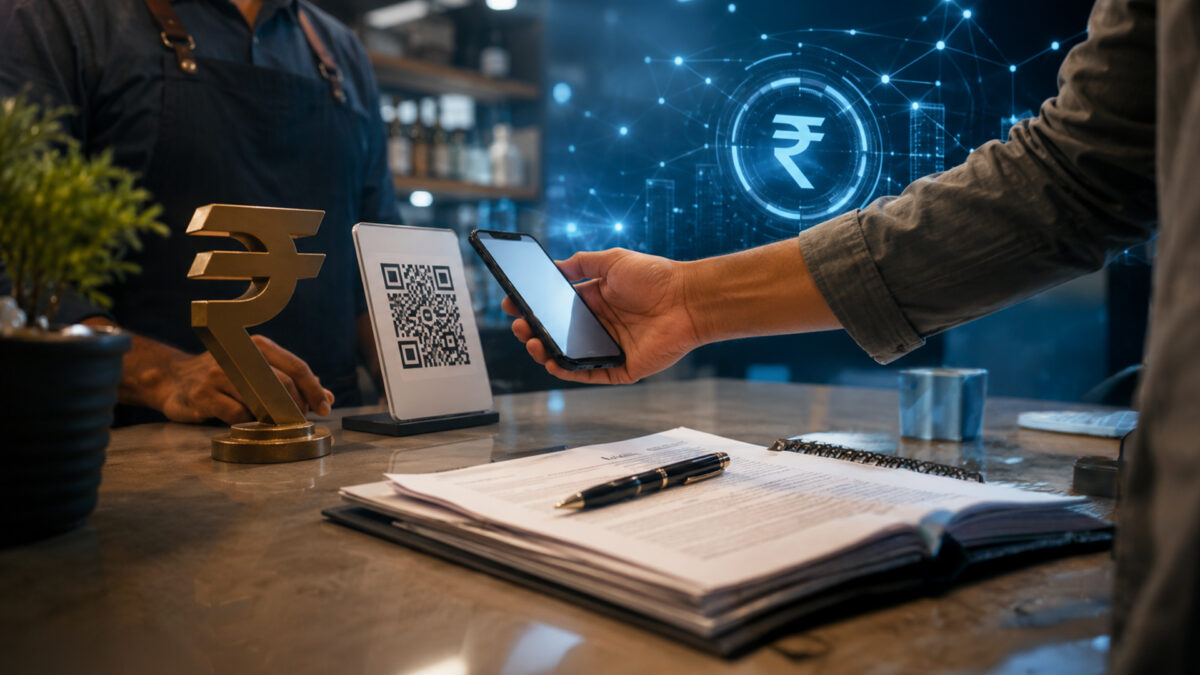
India’s popular Unified Payments Interface (UPI) could eventually have a new revenue model after the Finance Ministry introduced a Bill in Parliament seeking to amend the Payment and Settlement Systems Act, 2007. The proposed changes would give the government the power to decide which electronic payment modes can attract a Merchant Discount Rate (MDR) and which should remain exempt.

For millions of Indians who use UPI every day, however, there is no immediate reason to worry about an extra charge. The Bill itself does not impose MDR on UPI transactions or introduce a fee for customers. UPI payments will continue to remain free under the existing system until the government issues separate notifications specifying any future charges.

At present, Section 10A of the Payment and Settlement Systems Act provides a statutory exemption from charges for notified payment modes, including UPI and RuPay debit cards. The proposed amendment seeks to remove this blanket exemption.

Instead, the government would be able to notify, from time to time, which digital payment modes should continue with zero MDR and which could attract merchant charges. It would also have the flexibility to determine the applicable rates, transaction categories and entities responsible for paying them.

In simple terms, the government is not charging for UPI today. It is creating the legal framework that could allow such charges in the future.

Merchant Discount Rate is a fee paid by a merchant to banks, payment aggregators or payment service providers for processing a digital transaction. When a customer pays a shopkeeper using a payment method that carries MDR, the merchant does not necessarily receive the entire transaction amount. A small portion can be deducted as the processing fee and shared among participants in the payments ecosystem.

UPI has operated differently. Since January 2020, the government has mandated zero MDR on UPI and RuPay debit card transactions to encourage digital payments. Merchants currently receive the full value of UPI transactions, while banks and payment companies depend partly on government incentives to cover processing costs.

The Finance Ministry’s Bill does not introduce a customer transaction fee. If MDR is introduced later, it would initially be a charge on merchants rather than UPI users.

However, that does not necessarily mean consumers would never feel its impact. Businesses could choose to absorb the additional cost, negotiate lower margins or potentially factor the cost into their pricing. The actual effect would depend on the structure eventually notified by the government.

This is why the current development is better understood as a policy change enabling future MDR, rather than an immediate return of UPI charges.

The scale of India’s digital payments ecosystem has changed dramatically since UPI was launched. According to a Parliamentary Standing Committee on Finance report released in March 2026, around 88% of India’s digital transactions are now conducted through UPI.

Banks and payment service providers process more than 23 billion UPI transactions every month, with the total value approaching ₹30 lakh crore. UPI transactions have continued to set records as more consumers and businesses shift towards digital payments.

The rapid growth has also increased the cost of maintaining the payments infrastructure. The parliamentary panel warned that the zero-MDR model could become financially unsustainable as UPI expands further.

The committee estimated that UPI could add another 600 million users and eventually handle between 100 billion and 150 billion transactions every month. Such growth would require continued investment in technology, infrastructure, cybersecurity and payment processing.

Payment companies have been pushing for a change to the zero-MDR system for some time.

The Payments Council of India had earlier urged the government to reconsider the policy, arguing that incentives provided to the digital payments ecosystem cover only a fraction of the estimated cost of maintaining and expanding UPI services.

The industry body had proposed a limited MDR structure, including a 0.3% charge on UPI transactions involving large merchants. The idea was to create a revenue stream without making everyday low-value digital payments expensive.

The latest Bill gives the government room to consider such a calibrated approach in the future.

NPCI data showed that UPI transactions touched about ₹29.88 lakh crore in July 2026, while transaction volume reached 23.66 billion. The July transaction value was around 19% higher than the same month a year earlier.

That growth explains the government’s focus on building a financially sustainable digital payments ecosystem. UPI has become deeply embedded in everyday life, from buying groceries and paying utility bills to making large purchases and transferring money between bank accounts.

If Parliament approves the amendment, the next step will be government notifications specifying whether MDR will apply, which payment modes or transactions will be covered, what rates will be charged and who will bear the cost.

For now, users can continue making UPI payments without worrying about a new transaction fee. The proposed amendment simply changes who has the power to decide the future of MDR.

Categories
Leaders

Trump rebukes Chevron CEO over record oil profits

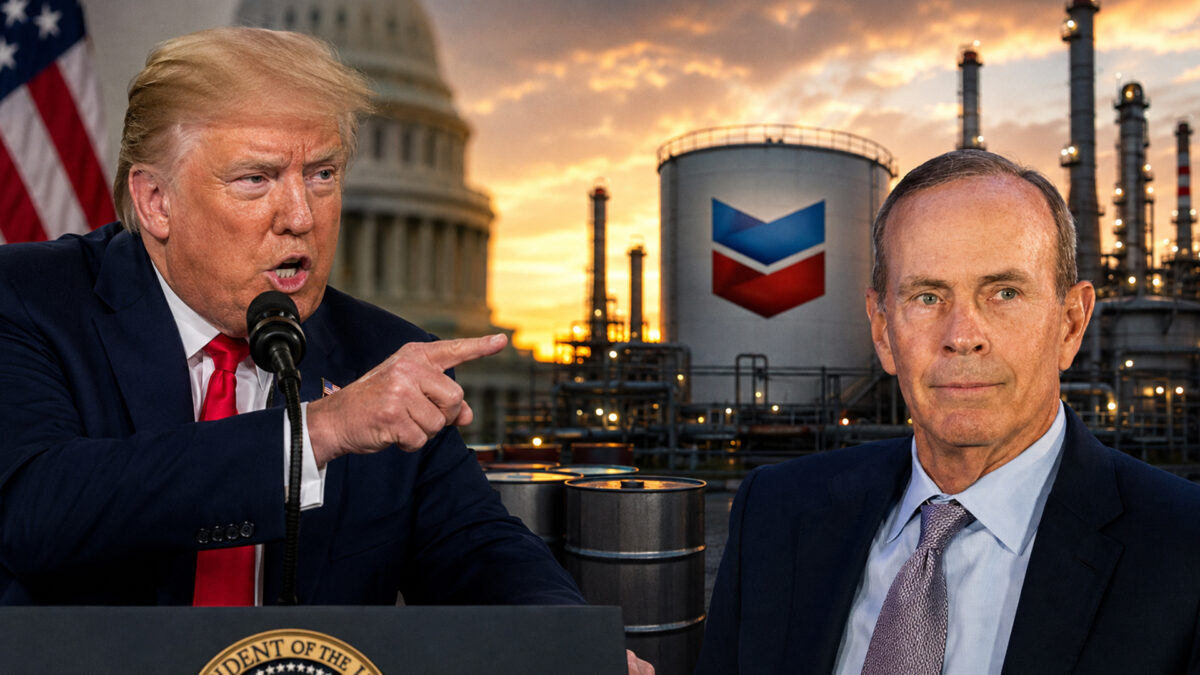
US President Donald Trump has publicly rebuked Chevron CEO Mike Wirth, accusing him of failing to give enough credit to the Trump administration for the strength of the American oil industry and questioning why motorists are still paying high prices at the pump.

Trump’s criticism came as Chevron reported a sharp jump in quarterly earnings, with the oil major benefiting from higher energy prices and strong operating performance during a period of heightened geopolitical tension. The confrontation highlights a growing tension between the White House and Big Oil over fuel prices, corporate profits and the cost of energy for American consumers.

Chevron reported quarterly earnings of about $12.1 billion, nearly five times its profit in the same period a year earlier. The result was helped by elevated oil prices linked to the conflict involving Iran and strong performance across the company’s operations. The company has also benefited from progress following its acquisition of Hess.

Wirth recently highlighted record US oil production and refining volumes in a television interview. Trump, however, was unhappy that the Chevron chief did not credit his administration for the industry’s performance.

The president subsequently criticised Wirth publicly, arguing that oil companies should acknowledge the administration’s policies and do more to bring down gasoline prices. Trump has increasingly focused on fuel costs as Americans continue to face expensive petrol despite movements in crude oil prices.

The dispute comes against a complicated backdrop for the global energy market. The conflict involving Iran has disrupted oil supplies and contributed to sharp swings in crude prices. Although oil prices have eased from their earlier highs as markets assess the possibility of a diplomatic breakthrough, gasoline prices in the United States have remained elevated.

Trump has argued that major oil companies are making too much money while American consumers continue to pay more at fuel stations. He has urged companies such as Chevron and ExxonMobil to reduce prices and effectively return some of their gains to consumers.

Chevron, meanwhile, has pointed to its strong operational performance and the difficult environment in which its employees have been working. The company recently announced a special bonus for employees following its strong earnings performance.

The bonus, equivalent to half a month’s base pay for most employees, was presented as recognition for the workforce’s performance. Wirth cited progress on cost reduction, early synergies from the Hess acquisition and continued safe operations despite geopolitical challenges in Venezuela and the Middle East.

The timing of Trump’s criticism is significant. The US president has long supported greater domestic oil and gas production and has sought to reduce regulatory barriers for the energy sector. His administration has promoted policies aimed at increasing American energy output and strengthening the country’s position as a major producer.

Yet Trump is now demanding that those policies translate into cheaper fuel for consumers.

That creates a difficult situation for oil companies. Higher crude prices can increase profits for producers, but retail gasoline prices are influenced by several factors beyond the price of crude. Refining costs, transportation, distribution, taxes and regional supply conditions all affect what consumers ultimately pay.

Chevron also does not directly control the prices charged at many of the branded gasoline stations carrying its name. A large portion of Chevron-branded stations are independently operated, meaning local operators have a role in determining retail prices.

Trump’s comments nevertheless reflect the political pressure facing the US energy industry. High gasoline prices can quickly become a household issue, affecting everything from commuting costs to the price of transporting goods.

The White House has already taken a tougher approach towards oil companies over fuel prices. The administration has questioned whether energy companies are benefiting excessively from market disruptions and has pushed the industry to respond more directly to consumer concerns.

The disagreement with Chevron also comes as oil companies prepare for increased scrutiny over their profits. ExxonMobil has similarly reported strong earnings, adding to the debate over whether energy companies should be making record or near-record profits while consumers face high fuel bills.

For investors, the situation creates a different set of questions. Strong earnings are positive for oil stocks, but increased political pressure could affect the way companies approach pricing, capital spending and shareholder returns.

Chevron’s record performance also demonstrates how quickly geopolitical events can reshape the energy industry. The Iran conflict has contributed to higher crude prices and improved earnings for major producers, while simultaneously increasing costs for consumers and raising concerns about inflation.

Trump has suggested that fuel prices could fall significantly if the conflict ends and global oil supplies stabilise. Any reopening of key shipping routes and improvement in Middle East supply conditions could put downward pressure on crude prices.

That would provide relief for consumers but could also reduce the earnings boost currently enjoyed by oil producers.

The Chevron dispute therefore goes beyond a disagreement between a president and a corporate executive. It reflects a broader debate over who benefits when energy prices rise and how much responsibility oil companies should bear for keeping fuel affordable.


Categories
Beyond

RBI likely to hold repo rate amid inflation risks

The Reserve Bank of India (RBI) is widely expected to keep the repo rate unchanged at its upcoming monetary policy review, as policymakers balance relatively comfortable domestic inflation with rising risks from global price pressures. The decision comes at a time when several major central banks are reassessing their interest-rate paths as inflation risks remain persistent.

The RBI’s Monetary Policy Committee (MPC) is scheduled to announce its latest policy decision this week. Market participants are largely expecting the central bank to maintain the repo rate at 5.50%, following the sizeable rate cuts delivered earlier this year.

The focus, however, is likely to be less on the rate decision itself and more on the RBI’s assessment of inflation, growth and the changing global economic environment. A pause would allow policymakers to assess how earlier rate reductions are affecting borrowing costs, demand and economic activity before deciding whether further easing is appropriate.

India’s inflation picture has provided the RBI with some room to support economic growth. Consumer price inflation has remained relatively contained compared with the levels seen in recent years. However, policymakers are becoming increasingly cautious about risks that could push prices higher in the months ahead.

Global developments are a major part of that concern. Higher energy prices, geopolitical tensions, currency movements and changes in trade policies can quickly feed into domestic inflation. Any sustained increase in crude oil prices, in particular, could raise transportation and production costs across the Indian economy.

The Indian rupee is another factor the central bank will be watching closely. A weaker rupee can make imported commodities, including crude oil, more expensive. That can create additional inflationary pressure at a time when the RBI is trying to keep price growth firmly under control.

The global interest-rate environment has also become more complicated. While India has moved towards lower borrowing costs, some overseas central banks are facing renewed inflation concerns and may have to maintain or even tighten monetary policy. This divergence can influence capital flows, bond yields and currency markets.

For the RBI, the challenge is to support economic growth without creating conditions that could reignite inflation. Lower interest rates generally encourage borrowing and investment by reducing the cost of loans. They can also support consumption by making home, vehicle and personal loans more affordable.

At the same time, keeping rates too low for too long can create demand-side pressure and make it harder to respond if inflation begins to rise. The central bank therefore has to balance growth with its mandate of maintaining price stability.

The banking and financial markets will also be watching the RBI’s liquidity stance and its comments on financial conditions. While the repo rate is the headline policy tool, liquidity management plays an important role in determining how quickly changes in monetary policy reach borrowers and businesses.

For households, an unchanged repo rate would mean no immediate policy-driven change in floating-rate loans. Borrowers with home loans linked to external benchmarks such as the repo rate would therefore not see another automatic reduction in their lending rates simply because of the latest policy review.

For businesses, the picture is slightly broader. Companies have benefited from lower financing costs as interest rates have eased, but investment decisions depend on more than borrowing costs. Demand conditions, input prices, exports, global trade and consumer confidence will also influence corporate spending.

The RBI is also expected to remain attentive to food inflation. Although headline inflation may appear comfortable, sudden increases in food prices can affect household budgets and influence inflation expectations. Weather conditions, crop output and supply disruptions can therefore remain important variables for the central bank.

The policy decision comes at a crucial point for India’s economy. Growth remains relatively resilient, but policymakers are operating in an uncertain global environment. Geopolitical tensions, shifting trade relationships and volatile commodity markets have made the outlook harder to predict.

A pause in the repo rate would give the RBI time to evaluate these developments without committing itself to either further rate cuts or a tightening cycle. The central bank could retain flexibility to respond if inflation moves sharply in either direction.

Economists and investors will therefore pay close attention to the language used by the MPC rather than simply the rate announcement. Any indication that the RBI is becoming more concerned about inflation could influence bond yields, equity markets and the rupee. On the other hand, a more growth-friendly tone could revive expectations of future rate cuts.

The decision will also matter for financial markets because investors are increasingly comparing India’s monetary-policy direction with that of major global economies. If overseas central banks remain cautious or turn more hawkish while the RBI keeps rates steady, interest-rate differentials could become an important factor for foreign investment flows.

For now, the broad expectation is that the RBI will stay on hold and allow previous policy measures to work through the economy. The central bank’s next moves will depend heavily on the inflation trajectory, domestic growth momentum and the risks emerging from the global economy.

The message from the policy review is therefore likely to be one of caution. With inflation risks still visible despite a relatively benign domestic price environment, the RBI may prefer to wait for clearer evidence before making another move on interest rates.

Categories
Beyond

Govt puts 6.5% LIC stake up for sale

The Indian government has launched a major stake sale in Life Insurance Corporation of India (LIC), offering to sell up to 6.5% of its holding through an Offer for Sale (OFS). The move could bring around ₹31,000 crore into the government’s disinvestment kitty while helping LIC meet the stock market regulator’s minimum public shareholding requirement.

The LIC OFS opened for non-retail investors on Tuesday, August 4, while retail investors will be able to participate on Wednesday, August 5. The government has fixed the floor price at ₹382 per share. At that price, the full 6.5% stake on offer is valued at about ₹31,410 crore.

The sale consists of a base offer of 2%, with the government retaining the option to sell an additional 4.5% if demand is strong. If the entire offer is exercised, the government’s sale would take LIC’s public shareholding from the current 3.5% to 10%.

That increase is important because LIC has to comply with the minimum public shareholding norms set by the Securities and Exchange Board of India (SEBI). The regulator has given the insurer until May 16, 2027, to reach the 10% public shareholding threshold.

The latest LIC stake sale is therefore not simply a fund-raising exercise. It is also a move to bring the state-owned insurer closer to its regulatory requirement while widening the number of shares available to public investors.

The LIC OFS comes more than four years after the insurer’s landmark stock market debut in May 2022. It is the first time the government is selling part of its LIC holding since the company was listed on the stock exchanges.

The pricing of the offer has attracted considerable attention. The ₹382 floor price represents a sizeable discount to LIC’s market price before the sale. LIC shares had closed at ₹428.50 on the NSE on Monday, putting the OFS floor price around 11% below the previous closing level.

The discounted price was aimed at making the offer attractive to investors, but it also put pressure on LIC shares when trading began on Tuesday. The stock fell sharply in early trade as investors reacted to the discounted government offer and the prospect of additional shares entering the market.

For the government, the LIC disinvestment is significant because it can provide a sizeable boost to its annual asset-sale programme. The Centre has set a target of raising ₹80,000 crore through disinvestment during the 2026-27 financial year.

Before the LIC transaction, the government had already raised around ₹21,200 crore through stake sales in companies including NHPC, Coal India and Indian Railway Finance Corporation. A full LIC OFS could therefore make a substantial contribution towards closing the gap between the amount already raised and the government’s annual disinvestment target.

The transaction is also important for LIC’s evolution as a listed company. The insurer remains one of India‘s largest financial institutions, with a vast policyholder base and a dominant position in the life insurance market.

LIC’s listing in 2022 was one of India’s biggest initial public offerings. However, the stock faced pressure after its market debut and spent a considerable period trading below its issue price. Investors have since closely tracked the insurer’s profitability, market share, product mix and ability to compete with private-sector insurance companies.

The increase in public shareholding could improve the stock’s liquidity over time by bringing more shares into the hands of institutional and retail investors. It could also broaden market participation in LIC, although the immediate impact of a large OFS can be challenging for the share price.

For retail investors, the government’s offer provides an opportunity to buy LIC shares at the specified floor price, subject to the terms and allocation rules of the OFS. However, investors will also need to consider the possibility of continued price volatility around the stake sale.

Large government stake sales often create short-term pressure because of the additional supply of shares. In LIC’s case, the discount offered through the OFS makes the difference between the market price and the government’s floor price particularly important for investors.

The outcome of the LIC OFS will be closely watched by both investors and policymakers. If the government exercises the full 6.5% offer, it could raise roughly ₹31,000 crore and lift LIC’s public shareholding to the 10% level well before the May 2027 deadline.

The government’s decision also signals that LIC will gradually move towards a broader ownership structure, even as the Centre retains majority control. The sale combines two objectives: raising resources through disinvestment and bringing LIC closer to the public ownership norms applicable to listed companies.