Categories
Uncategorized

Google rolls out Gemini 3.5 flash

Google has introduced a new artificial intelligence model called Gemini 3.5 Flash, along with upgraded AI-powered search tools, as part of its latest technology announcements.

The company said Gemini 3.5 Flash is built to be faster and more efficient, offering quick responses while using lower computing power. It is designed for tasks like answering questions, generating content, coding help and real-time assistance.

Google also unveiled new AI search agent tools that aim to make search more interactive. Instead of just showing links, the tools are designed to provide direct answers and help users complete tasks using AI.

The updates are part of Google’s efforts to make AI more practical and widely accessible. The company is focusing on improving both performance and cost efficiency as competition in the AI sector continues to grow.

With Gemini already being integrated across several Google products, the new version is expected to strengthen its AI ecosystem and expand use cases for both individuals and businesses.

Industry experts say the emphasis on faster and cheaper AI could help drive wider adoption of generative AI tools, especially in everyday digital tasks.

The announcement reflects Google’s continued push to lead in the global AI market through improved models and smarter search technology.

Also Read: StrainX Bioworks raises $13 mn to boost alternative protein

Categories
Corporate Uncategorized

Reliance talks with CATL on battery parts

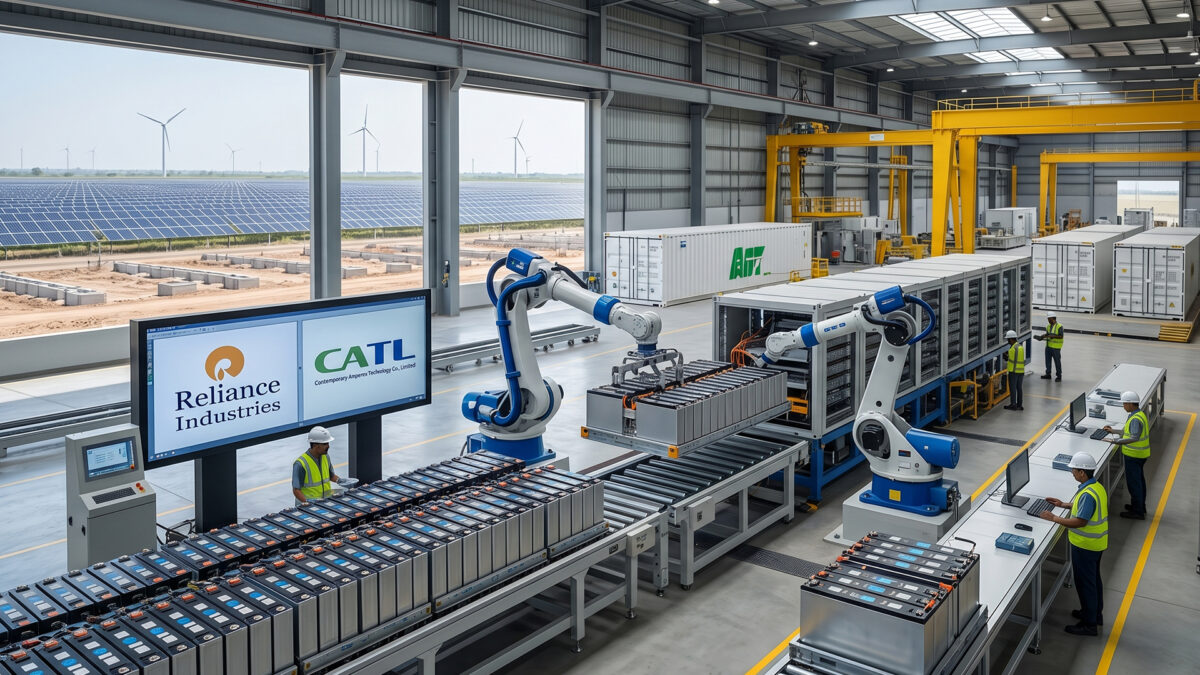
Reliance Industries is in discussions with Chinese battery giant Contemporary Amperex Technology Co. Limited (CATL) and other global suppliers to source key components for its battery energy storage systems (BESS), according to people familiar with the matter.

The talks are part of Reliance’s broader push to expand its clean energy business, particularly its large-scale battery storage plans linked to its Jamnagar energy ecosystem. The company is looking to build out capacity for grid-scale storage systems that can support renewable energy integration.

However, the negotiations come at a time when China’s tightening restrictions on battery technology exports have made it more difficult for global companies to access advanced cell manufacturing know-how. Earlier attempts by Reliance to secure technology transfer agreements reportedly faced hurdles due to these curbs, pushing the group to focus more on assembling systems using imported components.

If the discussions with CATL and other suppliers progress, Reliance is expected to concentrate on procuring pre-made cells and components rather than fully localising advanced battery cell production in the near term. This would allow the company to move ahead with deployment of energy storage infrastructure while longer-term manufacturing capabilities are developed separately.

The move reflects a broader trend in the global clean energy sector, where companies are racing to secure battery supply chains amid rising demand for electric mobility, renewable integration, and grid stability solutions.

Reliance has been investing heavily in its new energy ambitions, including solar, hydrogen, and battery storage, as part of its transition beyond traditional oil and petrochemicals. The Jamnagar project is expected to be a key hub in this strategy.

Also Read: State Banks, insurers told to slash costs, go EV

Categories
Corporate Uncategorized

Gates Foundation ends Microsoft era with $3.2 bn sale

The Gates Foundation has officially ended its long financial association with Microsoft by selling its remaining shares in the company, worth around $3.2 billion. The sale marks the end of a relationship that has lasted for more than two decades and is closely linked to the fortune created by Microsoft co-founder Bill Gates.

According to reports, the foundation sold its final 7.7 million Microsoft shares, completing a gradual reduction of its stake over the past few years. At one point, Microsoft had been among the foundation’s largest investments, with holdings worth billions of dollars.

The move, however, is not being viewed as a sign of reduced confidence in Microsoft or its business prospects. Instead, reports suggest that the sale is part of the foundation’s larger financial plan as it prepares to increase spending on global charitable work.

The Gates Foundation has been expanding its work in areas such as healthcare, education and poverty reduction. It reportedly plans to increase annual grant spending to around $9 billion, which requires greater cash availability for long-term projects and programmes.

The decision also carries symbolic importance because Microsoft played a central role in building Bill Gates’ wealth. Over the years, Gates gradually moved away from day-to-day involvement in the company and shifted much of his attention toward philanthropy and global development efforts.

Despite the foundation’s complete exit, Bill Gates personally still holds Microsoft shares. The sale therefore appears to be more about financial planning and supporting future philanthropic goals rather than any concerns about the company itself.

Also Read: Meta staff brace for May 20 layoffs

Categories
Uncategorized

US set to drop fraud case against Gautam Adani

US authorities are moving to end long-running fraud proceedings against billionaire industrialist Gautam Adani, in what could mark a major legal breakthrough for the Adani Group.

According to reports, the US Department of Justice (DoJ) is preparing to drop criminal fraud charges linked to allegations of a large bribery scheme tied to solar power contracts in India. At the same time, the US Securities and Exchange Commission (SEC) is moving toward settling a parallel civil case filed in November 2024.

The SEC settlement is expected to involve a monetary penalty, though without admission of wrongdoing. The exact terms are yet to be finalised and remain subject to court approval.

The case had alleged that Adani and associates were involved in a scheme involving over $250 million in alleged bribes to secure energy contracts, while misleading investors during fundraising in US markets. The Adani Group has consistently denied all allegations.

If the cases are formally closed, it would remove a major legal overhang for one of India’s largest conglomerates, which operates across sectors including ports, energy, infrastructure, and logistics. It would also improve the group’s ability to access international capital markets and pursue expansion plans.

Reports suggest the DoJ may announce withdrawal of charges soon, while the SEC settlement could be concluded with a fine. The developments come after months of legal proceedings, negotiations, and filings in US courts.

Also Read: HCLTech anchors ₹2,800 cr bet on Sarvam AI

Categories
Uncategorized

Apple to launch new store in Hyderabad

Apple is expanding its retail presence in India with a new store in Hyderabad, as seen from job postings for roles like Store Leader and Genius on its careers portal.

The recruitment suggests the store could open in early 2027. This follows its Noida store launch in December 2025 and plans for a Mumbai outlet.

Apple’s India expansion reflects its growing market share, where it ranks among the top five smartphone brands by volume.

Categories
Uncategorized

Vodafone Idea shares jump 4% on relief hopes

Vodafone Idea’s share price gained close to 4% on Tuesday as renewed expectations of relief on its long-pending adjusted gross revenue (AGR) dues lifted market sentiment. The stock touched around ₹10.3 during the day, extending the momentum it has seen over recent months.

The rally followed fresh comments from the Telecom Minister, who confirmed that the government is actively reviewing the company’s AGR liabilities. He said a final decision could come by the end of the year, though it would have to remain within the boundaries laid down by the Supreme Court. The government has also indicated that it is waiting for a formal relief request from Vodafone Idea before moving ahead.

The optimism is rooted in a recent Supreme Court ruling that allowed the Centre to re-examine Vodafone Idea’s AGR demands, including interest and penalties, up to the financial year 2016–17. This judgment opened a window for possible reassessment of the dues, which have weighed heavily on the company for years.

For Vodafone Idea, any relaxation, whether through reduced penalties, a recalculation of dues, or staggered payment options, could significantly ease financial pressure. The telecom operator has been battling a massive AGR burden that runs into tens of thousands of crores, straining cash flows and limiting its ability to invest in network expansion.

The company has also indicated that banks have begun reassessing its long-term funding proposals in light of the court’s direction and the government’s ongoing review. This has contributed to improved investor confidence, reflected in the stock’s strong performance over the last three and six months.

However, uncertainty still hangs over the outcome. No formal relief package has been announced so far, and it remains unclear whether the government will offer broad-based relief or restrict changes only to certain components of the dues. Market analysts caution that while the signals are positive, the final decision will determine Vodafone Idea’s long-term outlook.

For now, the stock is riding on expectations. Investors are hopeful—but the company’s future hinges on what the government ultimately decides.

Also Read: Exato Technologies IPO sees record 700× subscription

Categories
Uncategorized

Indian A320 jets complete safety software upgrade

Indian airlines have completed urgent software upgrades on 323 operational Airbus A320 family aircraft to fix a flight‑control issue triggered by intense solar radiation.

The update followed a global safety warning from Airbus, which flagged 338 planes for scrutiny. Major carriers including IndiGo, Air India, and Air India Express quickly carried out the upgrades, with IndiGo updating all 200 of its A320 jets and the others completing nearly their entire fleets.

Despite initial concerns about flight disruptions, airlines reported minimal impact on schedules. All operational aircraft are now compliant, ensuring safe and timely flight operations across India.

Categories
Uncategorized

Nestlé to Cut 16,000 Jobs in Bold Restructuring to Reignite Growth

Swiss food giant Nestlé has announced plans to eliminate 16,000 positions globally over the next two years as part of a sweeping restructuring effort aimed at reigniting growth and improving operational agility.

The move comes under the leadership of new CEO Philipp Navratil, who has embarked on an aggressive turnaround plan following several years of sluggish performance and leadership instability.

The job cuts represent roughly 5.8 percent of Nestlé’s global workforce of around 277,000 employees.

Of these, approximately 12,000 are expected to come from white-collar roles in administration and corporate functions, while about 4,000 positions will be reduced in manufacturing and supply chain operations.

The restructuring aims to streamline the company’s vast global footprint and redeploy resources toward innovation, brand development, and faster-growing categories.

Nestlé also raised its cost-savings target to 3 billion Swiss francs by 2027, up from the previous goal of 2.5 billion.

According to company statements, these savings will be reinvested in growth areas such as coffee, confectionery, nutrition, and pet care — segments that have shown resilience despite recent macroeconomic headwinds.

The announcement comes during a period of major executive transition. Philipp Navratil took charge earlier this year following the abrupt departure of Laurent Freixe, who was dismissed after an internal investigation into a personal matter.

In addition, longtime chairman Paul Bulcke stepped down, paving the way for Pablo Isla, the former Inditex executive known for his operational discipline at Zara’s parent company, to assume the chairmanship.

The leadership shake-up and the restructuring plan reflect a sense of urgency within Nestlé to restore investor confidence. Over the first nine months of 2025, the company’s reported sales fell by 1.9 percent, largely due to currency headwinds, but organic growth improved to 3.3 percent.

In the latest quarter, Nestlé delivered better-than-expected performance, with organic sales up 4.3 percent and real internal growth of 1.5 percent.

Strong demand for coffee brands like Nescafé and Nespresso, as well as confectionery and pet food, helped offset softness in other divisions.

Navratil described the restructuring as a “hard but necessary” decision to make Nestlé leaner, faster, and more performance-driven. He emphasized that the company could no longer afford inefficiencies or complacency in an increasingly competitive consumer market.

Analysts believe the job cuts are part of a broader reset that could include divesting underperforming assets or reorganizing regional operations to better align with profitability goals.

Financial markets reacted positively to the announcement. Nestlé’s shares surged more than 8 percent — their biggest one-day gain in years — as investors welcomed the decisive measures.

Market analysts described the cuts as a signal that the company’s new management is serious about driving long-term shareholder value through efficiency and disciplined capital allocation.

However, challenges remain. Rising input costs for key commodities such as coffee and cocoa, volatile exchange rates, and weak consumer demand in parts of Asia could limit short-term gains.

The company has not provided details about how specific countries or business units will be affected by the job reductions but has reaffirmed its commitment to maintaining strong global operations while refocusing on high-return segments.

Nestlé’s decision to cut 16,000 jobs marks one of the most significant restructurings in its history. It underscores the intense pressure facing global consumer goods companies to adapt swiftly to changing consumer preferences, technological shifts, and investor demands.

Whether this bold strategy translates into sustainable growth and improved profitability will become clearer in the quarters ahead — a true test of the company’s resilience and leadership resolve.

Also Read: Jio Financial’s Q2 Profit Nears ₹700 Crore as Operating Income Surges

Categories
Uncategorized

NTPC to Appoint Consultant for Overseas Uranium Mine Identification

State-owned NTPC Ltd is set to appoint a consultant to identify uranium mines abroad, following a formal agreement with Uranium Corporation of India Ltd (UCIL). This strategic move aims to secure a reliable fuel supply for NTPC’s future nuclear power projects, which are planned to be developed independently across various locations in India.

As part of its diversification into clean energy, NTPC is exploring the acquisition of uranium assets overseas. The company has already approved a draft memorandum of understanding (MoU) with UCIL to conduct joint techno-commercial due diligence of potential uranium assets. The appointed consultant will assess factors such as reserve quantity, logistics, transportation costs, and commercial viability to determine the feasibility of acquiring these assets.

NTPC’s expansion into nuclear energy is aligned with India’s ambitious goal of achieving 100 gigawatts (GW) of nuclear power capacity by 2047. The company is actively pursuing nuclear projects through joint ventures and independent initiatives. Notably, NTPC is collaborating with the Nuclear Power Corporation of India Ltd (NPCIL) on the Mahi Banswara Nuclear Power Project in Rajasthan, which has a planned capacity of 2,800 megawatts (MW).

To support its nuclear energy ambitions, NTPC is also seeking government approval for the bulk procurement of nuclear reactors. This initiative is part of a national plan to expand India’s atomic energy capacity and reduce reliance on fossil fuels. NTPC aims to install a significant portion of the country’s nuclear capacity, contributing to the broader goal of achieving 100 GW of nuclear power by 2047.

The appointment of a consultant to identify overseas uranium mines is a critical step in NTPC’s strategy to ensure a steady and cost-effective supply of fuel for its nuclear power projects. The outcome of this due diligence process will inform decisions regarding the acquisition of uranium assets abroad, supporting NTPC’s commitment to expanding India’s nuclear energy capacity.

Also Read:HUL Warns of Flat-to-Low Sales Growth Amid GST Impact

Categories
Uncategorized

NCLT Greenlights Piramal Enterprises–Piramal Finance Merger

In a major corporate restructuring move, the National Company Law Tribunal (NCLT) has approved the merger of Piramal Enterprises Ltd (PEL) with its wholly-owned subsidiary, Piramal Finance Ltd (PFL), effective September 10.

As part of the deal, Anand Piramal, son of Piramal Group chairman Ajay Piramal, has been appointed chairman of the merged entity, Piramal Finance.

The scheme of amalgamation envisages a one-to-one share swap, with shareholders of Piramal Enterprises getting equity shares in Piramal Finance in the same ratio.

A record date of September 23 has been set, from which trading in PEL shares will be suspended. Shareholders of PEL registered by that date will be allotted shares in the newly merged Piramal Finance.

Anand Piramal has been leading the financial services vertical of the group since joining in 2019, overseeing a shift from wholesale real-estate lending toward a broader technology-led non-banking finance business.

Among his key achievements is the ₹34,250 crore acquisition of the erstwhile DHFL (Dewan Housing Finance Ltd), a significant transaction under India’s Insolvency and Bankruptcy Code. Under his guidance, the legacy structured real-estate book has also been substantially reduced.

Jairam Sridharan will continue in his current role as managing director and chief executive officer of the merged Piramal Finance. Sridharan, formerly MD of the subsidiary, has been credited with scaling the retail business dramatically, growing branches and workforce, and expanding the assets under management.

Ajay Piramal, meanwhile, will retain the leadership role of Chairman of the broader Piramal Group, which encompasses Piramal Finance, Piramal Pharma, Piramal Realty, and the Piramal Foundation.

Swati Piramal will continue as Vice-Chairperson of the group. The merger thus consolidates the group’s financial services under a single entity, aimed at improving capital efficiency and operational simplicity.

Analysts see multiple strategic advantages to the merger. By folding Piramal Enterprises into Piramal Finance, the group expects gains in regulatory efficiency, reduced duplication, and a unified balance sheet for its financial services business.

The move also appears designed to sharpen focus on retail and MSME lending, geographic expansion, and leveraging technology platforms.

As of end-June 2025, Piramal Finance (formerly the non-banking finance arm, inclusive of its DHFL acquisition) had achieved a broad scale, with a rapidly growing retail and MSME portfolio, and a significantly reduced exposure to legacy real-estate stress. Capital adequacy remains healthy, and precision in risk-management has been a stated priority.

The merger marks one of the more notable transitions in India’s NBFC sector in recent years, combining legacy strength, regulatory change, and generational leadership handover in one package.

With Anand Piramal now steering the merged entity, the group signals a deeper shift toward unified financial services operations, underpinned by the leadership and vision that have driven recent growth.

Also Read: Infosys Expands Partnership with Sunrise to Accelerate AI-Driven IT