Categories
1 Minute-Read

Court relief for PepsiCo, Monster, Reliance

PepsiCo, Monster Beverage and Reliance Consumer Products have received interim relief from the Delhi High Court in a dispute over the use of the “energy drink” label.

The court has allowed the companies to sell existing stocks carrying the disputed description while the legal challenge to the FSSAI directive continues.

However, PepsiCo and Monster cannot manufacture fresh products using the label during the proceedings. Reliance had told the court that millions of cans and bottles were already packaged with the “Energy Drink” description.

The case, which could impact India’s growing energy drink market, will be heard again on November 5.

Categories
Corporate

Seven blue-chip firms lose ₹1.13 lakh cr in value

Seven of India’s 10 most-valued listed companies saw their combined market capitalisation decline by around ₹1.13 lakh crore last week, as the broader equity market remained under pressure and investor sentiment turned cautious.

Bharti Airtel and Reliance Industries accounted for the biggest erosion in value, with both companies losing more than ₹40,000 crore each. The decline came as benchmark indices extended their losses for a third consecutive week amid concerns over global interest rates, geopolitical uncertainty and volatility linked to the new closing auction session.

The BSE Sensex fell 276.32 points, or 0.35 per cent, during the week, while the NSE Nifty declined 76.35 points, or 0.31 per cent. Although the market staged a strong recovery on Friday, driven by buying in IT stocks following positive global technology cues, the late-week gains were not enough to prevent both benchmarks from ending lower.

Bharti Airtel recorded the biggest decline in market valuation among the top 10 companies. Its market capitalisation fell by ₹40,500.85 crore to ₹11,74,462.30 crore.

Reliance Industries followed closely, losing ₹40,056.32 crore in market value. Its market capitalisation stood at ₹17,38,119.27 crore at the end of the week. Despite the erosion, Reliance retained its position as India’s most-valued company.

HDFC Bank was the third-largest loser among the top companies. Its market valuation declined by ₹11,558.35 crore to ₹11,09,600.70 crore. Bajaj Finance also witnessed significant erosion, with its market capitalisation falling by ₹10,086.05 crore to ₹6,70,535.57 crore.

Larsen & Toubro saw its market value decline by ₹6,473.45 crore to ₹5,55,987.49 crore. Life Insurance Corporation of India, or LIC, lost ₹3,162.50 crore, bringing its market capitalisation down to ₹5,32,817.81 crore.

Hindustan Unilever was the seventh company among the top 10 to see its valuation decline. Its market capitalisation fell by ₹1,550.73 crore to ₹4,72,361.83 crore.

The selling pressure was not, however, spread across all the leading companies. Three of the top 10 firms added to their market value during the week, led by Tata Consultancy Services.

TCS emerged as the biggest gainer, adding ₹16,643.20 crore to its market capitalisation. Its valuation rose to ₹8,48,079.71 crore. The IT major benefited from strong buying in technology stocks, which helped the broader market recover sharply towards the end of the week.

ICICI Bank was another major gainer. Its market valuation increased by ₹4,475.28 crore to ₹10,22,805.73 crore. State Bank of India also registered a gain, with its market capitalisation rising by ₹599.99 crore to ₹9,65,568.75 crore.

The contrasting performance of the top companies highlights the selective nature of the current market trend. While investors reduced exposure to several large companies across telecom, energy, banking, finance, infrastructure and consumer sectors, buying interest remained visible in IT and select banking stocks.

Market analysts attributed the cautious tone to a combination of global and domestic factors. Concerns about the direction of global interest rates have continued to influence equity markets, while geopolitical uncertainty has added another layer of risk for investors.

The introduction of a new closing auction session has also contributed to market volatility, according to Ajit Mishra, senior vice-president of research at Religare Broking. He said Indian equities were in a corrective phase as investors assessed these uncertainties.

The sharp recovery on Friday offered some relief. Strong buying in IT stocks, supported by positive global technology cues, helped the benchmarks recover during the final trading session. However, the gains could not erase the losses accumulated earlier in the week.

Despite the changes in individual market valuations, the order of India’s 10 most-valued companies remained unchanged. Reliance Industries continued to lead the list, followed by Bharti Airtel, HDFC Bank, ICICI Bank, State Bank of India, TCS, Bajaj Finance, Larsen & Toubro, LIC and Hindustan Unilever.

The weekly decline in market capitalisation underscores the sensitivity of large-cap stocks to changes in investor sentiment. For companies with very high valuations, even relatively modest movements in share prices can translate into thousands of crores being added to or wiped off their market value.

Global interest-rate expectations, geopolitical developments and movements in overseas technology stocks are likely to remain important factors for Indian equities in the near term.

The ₹1.13 lakh crore decline across seven heavyweight companies therefore offers a snapshot of the market’s current cautious mood. At the same time, the gains recorded by TCS, ICICI Bank and SBI show that investors have not completely stepped away from equities, but are increasingly being selective about where they deploy capital.


 

Categories
Corporate

Reliance Rolls-Royce join hands for AMCA fighter engine

Reliance Industries and British aerospace major Rolls-Royce have announced a strategic partnership to jointly develop and manufacture a combat aircraft engine for India’s Advanced Medium Combat Aircraft (AMCA) programme, potentially giving a major boost to the country’s efforts to build critical defence technology at home.

The proposed collaboration will combine Rolls-Royce’s expertise in aircraft propulsion with Reliance’s manufacturing capabilities. The companies also plan to explore setting up an Aerospace Gas Turbine Complex in India, which could create an industrial base for developing and manufacturing advanced aero engines.

The announcement comes as India accelerates its flagship fifth-generation fighter aircraft programme. The AMCA is being developed by the Aeronautical Development Agency (ADA) under the Defence Research and Development Organisation (DRDO), with the Indian Air Force expected to be its primary user.

India’s Fighter Engine Challenge

For India, the engine remains one of the most difficult parts of the AMCA programme.

The country has developed sophisticated fighter airframes, missiles, radars and avionics, but has remained dependent on foreign suppliers for high-performance military engines. The proposed Reliance-Rolls-Royce partnership therefore focuses on one of the biggest gaps in India’s defence self-reliance strategy.

The companies intend to work towards designing, developing, manufacturing and delivering a combat engine in India. However, they have not disclosed the proposed investment, precise engine specifications or a detailed development schedule.

The partnership also does not automatically amount to a government contract for the AMCA engine. The Indian government will ultimately decide which engine proposal best fits the aircraft programme.

Rolls-Royce already has a long association with India’s defence sector. Its engines have powered several Indian military aircraft, while the company has also supported licensed engine manufacturing in the country. The new proposal aims to take that relationship further towards co-development and deeper domestic manufacturing.

Why AMCA’s Engine Matters

The AMCA is designed to become India’s first indigenous fifth-generation fighter jet, featuring stealth characteristics, internal weapons bays, advanced sensors and network-centric capabilities.

The programme is moving into a crucial development phase, with India seeking greater participation from private industry alongside its traditional defence companies. The first prototype is targeted for around 2028, while serial production is expected in the 2030s.

That makes the choice and development of the aircraft’s engine one of the most important decisions facing the programme.

India’s previous experience shows why the challenge is significant. The DRDO’s Kaveri engine programme was originally intended to power the Light Combat Aircraft but struggled to meet the required thrust and performance parameters.

As a result, Indian fighter aircraft have continued to rely heavily on imported engines. The Tejas, for instance, uses engines supplied by GE Aerospace. Delays in imported engine supplies have also affected aircraft production.

The AMCA is intended to break that cycle by developing a more secure and technologically advanced domestic propulsion capability.

Competition And A Bigger Industrial Push

The Reliance-Rolls-Royce proposal is likely to intensify competition among international engine manufacturers seeking a role in India’s next-generation fighter programme.

Safran of France has separately been discussing cooperation with India on a high-thrust fighter engine, while GE Aerospace already has a significant role in India’s military aviation ecosystem.

The objective is ultimately bigger than selecting an engine supplier. India wants to develop the ability to design, manufacture, maintain and eventually export advanced aircraft engines.

The partnership also underlines the growing role of India’s private sector in defence manufacturing. Reliance has a major presence across energy, telecommunications and retail, while its expanding defence interests are taking it into increasingly sophisticated areas of aerospace and military production.

Reliance’s growing presence across sectors is part of a wider trend of major Indian companies expanding into new businesses and strategic partnerships. More such corporate developments are covered in our Corporate News section.

An aero-engine project would require investment in precision manufacturing, specialised materials, testing infrastructure, engineering talent and a domestic supplier network. The proposed Aerospace Gas Turbine Complex could become an important part of that ecosystem if the project moves forward.

The proposed collaboration does not immediately solve India’s fighter-engine problem. Developing, testing and certifying a modern combat engine can take years and involves substantial technical and financial risks.

But it represents an important shift in India’s approach to defence manufacturing and aerospace self-reliance. For decades, the country has built fighter aircraft around imported propulsion systems. The AMCA offers an opportunity to change that model.

If the Reliance-Rolls-Royce effort succeeds, its impact could extend well beyond one aircraft. It could help India build the engineering, manufacturing and technology ecosystem needed for future combat aircraft.

For the AMCA, an advanced stealth airframe is only as capable as the engine that powers it. Developing that capability in India could become one of the defining tests of the country’s ambition to emerge as a major aerospace power.

Categories
Corporate

Reliance Jio nears filing for landmark $4 bn IPO

Reliance Jio Infocomm, the telecom and digital services arm of Reliance Industries, is reportedly preparing to file draft papers for its much-awaited initial public offering (IPO) within the next few days, setting the stage for what could become India’s largest-ever public issue.

According to reports, the company is expected to submit its draft red herring prospectus (DRHP) to market regulator SEBI ahead of Reliance Industries Chairman Mukesh Ambani’s annual address to shareholders later this week. The proposed IPO is estimated to raise around $4 billion, making it one of the biggest listings in the country’s corporate history.

The IPO has been closely watched by investors for years. Ambani had earlier indicated that Jio would be listed by the first half of 2026, but market volatility and geopolitical uncertainties delayed the process. With equity markets showing signs of stability, Reliance now appears ready to move forward with the offering.

Jio has transformed India’s telecom landscape since its launch in 2016, rapidly becoming the country’s largest wireless operator. The company now serves more than 500 million subscribers and accounts for a major share of India’s mobile data traffic. Over the years, it has expanded beyond telecom into digital services, cloud computing, artificial intelligence and enterprise solutions.

Market experts believe the IPO could provide a much-needed boost to India’s primary market, where fundraising activity has slowed in recent months. Analysts expect strong investor interest given Jio’s scale, growth potential and strategic importance within the Reliance ecosystem.

The company is reportedly planning a relatively small public float of around 2.5% of its equity, a structure that could support strong pricing while still raising substantial capital. Jio is estimated to be valued at around $180 billion, according to several analyst estimates.

If the filing proceeds as expected, it would mark a significant milestone for Reliance and could reignite investor enthusiasm in India’s IPO market, with many seeing the listing as one of the defining financial events of 2026.

Also Read: BigBasket names Amit Nanda CEO as Menon exits

Categories
Beyond

Reliance wins Juhu Galli redevelopment bid

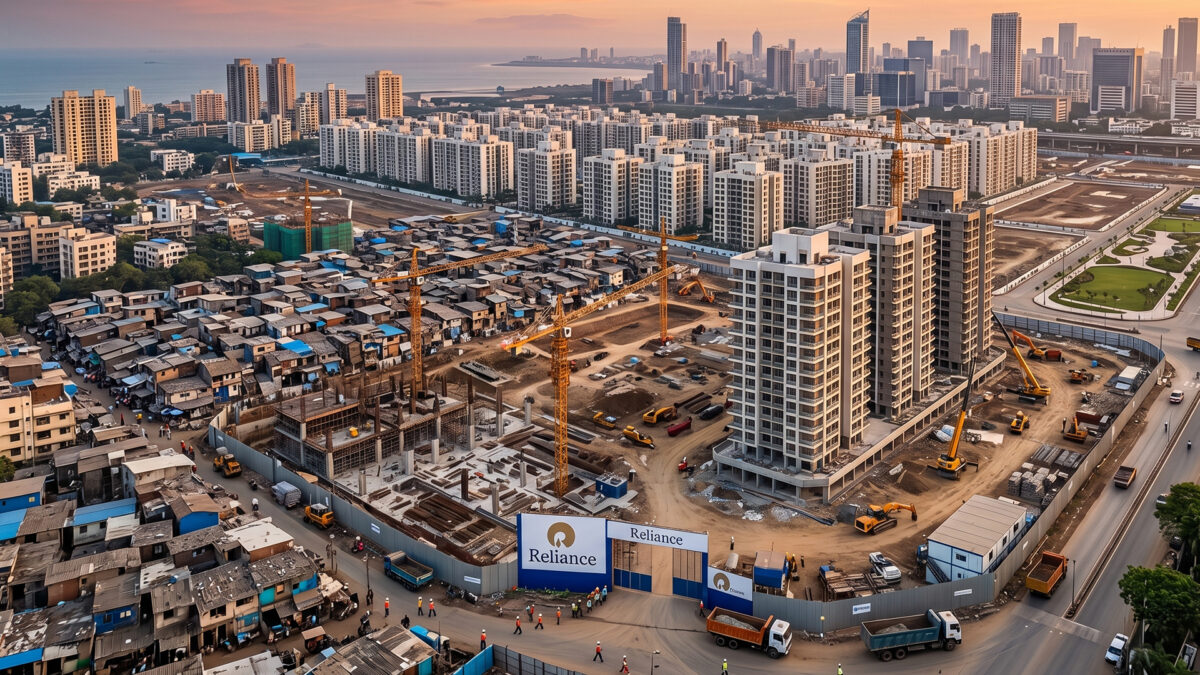
A consortium led by Reliance Group has won the bid to redevelop the Juhu Galli slum cluster in Mumbai’s Andheri area, marking the company’s entry into the city’s growing slum rehabilitation sector. The project, spread across more than 101 acres, is among the largest slum redevelopment initiatives currently planned in Mumbai.

The winning consortium is headed by Reliance 4IR Realty Development and includes Mahadev Realtors Juhu, a subsidiary of Aspect Realty. The group emerged ahead of competing bids from JSW Group and Shapoorji Pallonji Group.

According to the Slum Rehabilitation Authority (SRA), the redevelopment project is expected to provide more than 28,000 rehabilitation homes for eligible residents currently living in the Juhu Galli settlement. The initiative is aimed at improving housing conditions and modernising infrastructure in one of Mumbai’s densely populated areas.

The project reflects increasing interest from large corporate groups in Mumbai’s slum redevelopment sector. In recent years, the Maharashtra government introduced policy changes to encourage large-scale redevelopment projects. A new framework announced in 2025 allows redevelopment of large slum clusters and offers developers additional development rights and higher building limits, making such projects more financially attractive.

To safeguard residents during the redevelopment process, the Reliance-led consortium will be required to provide funds for temporary accommodation. The company must pay around ₹700 crore over the next two years towards temporary rent for affected residents. It is also required to deposit an additional year’s rent and provide a performance guarantee of ₹100 crore.

Officials said the successful bidding process highlights the growing role of major private-sector companies in addressing Mumbai’s housing challenges through large-scale urban renewal projects. The development also places Reliance alongside other major players already active in Mumbai’s redevelopment sector, including the Adani Group’s ongoing Dharavi redevelopment project.

Also Read: Jeff Bezos backed AI startup Prometheus raises $12 bn

Categories
Beyond

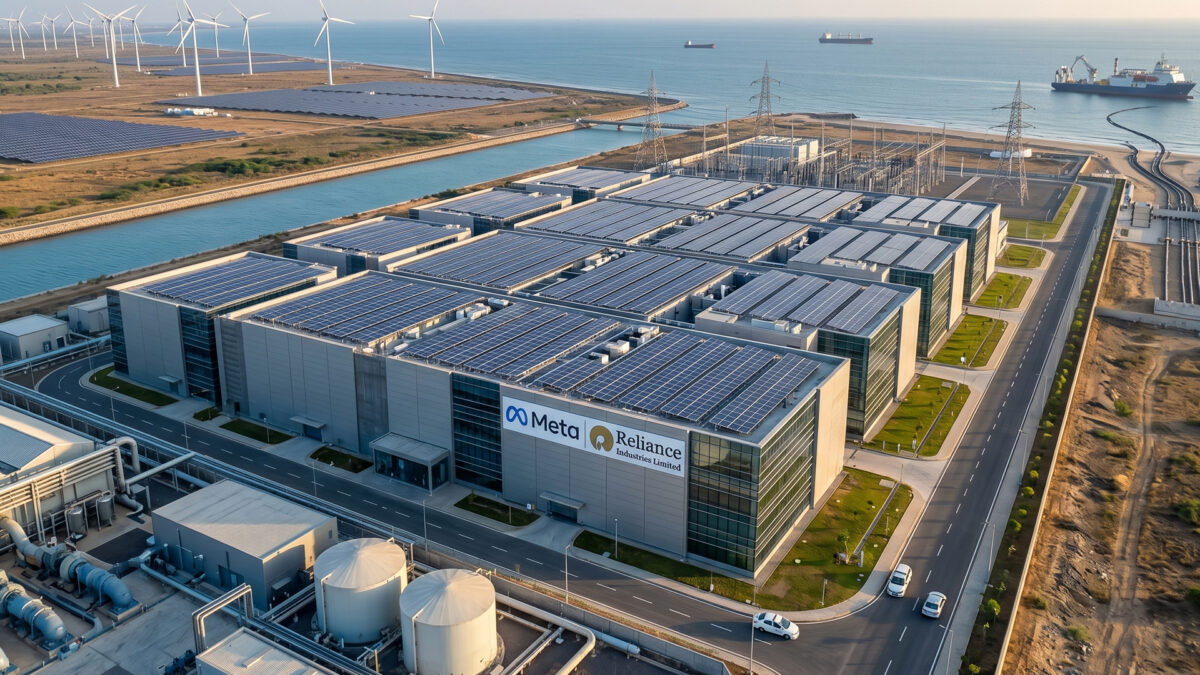
Meta, Reliance partner for AI data centre in Jamnagar

Meta has partnered with Reliance Industries to develop its first artificial intelligence-enabled data centre in India, marking a significant step in the country’s growing ambitions to become a global hub for AI and digital infrastructure.

The proposed facility will be located in Jamnagar, Gujarat, and is expected to support Meta’s expanding AI operations while catering to the increasing demand for computing power, data processing and cloud-based services. The collaboration brings together Meta’s expertise in artificial intelligence and digital platforms with Reliance’s infrastructure capabilities and large-scale project execution experience.

According to the companies, the data centre will be designed to support next-generation AI applications, including large language models, machine learning systems and advanced computing workloads. The project is expected to provide the high-performance infrastructure required for developing and deploying AI technologies at scale.

The partnership aligns with India’s broader push to strengthen its digital ecosystem and attract investments in emerging technologies. Demand for AI-ready data centres has risen sharply worldwide as technology companies invest heavily in artificial intelligence, cloud computing and data analytics.

The collaboration is a major endorsement of India’s growing importance in the global technology landscape.  Jamnagar has emerged as a key location for large-scale infrastructure projects because of its industrial ecosystem, energy resources and connectivity advantages. The proposed facility is expected to contribute to the development of a robust AI infrastructure network in the country.

The project is also likely to generate employment opportunities during both the construction and operational phases while encouraging further investment in technology and digital services.

For Meta, the initiative represents a strategic expansion of its AI infrastructure footprint in one of the world’s fastest-growing digital markets. For Reliance, the partnership strengthens its presence in the digital and technology sectors, complementing its broader ambitions in telecommunications, cloud services and artificial intelligence.

Also Read: India puts Starlink approval on hold for security reasons

Categories
1 Minute-Read

SC scraps ₹447 cr order against Reliance

The Supreme Court of India has given major relief to Reliance Industries by setting aside an order requiring the company to disgorge ₹447 crore in connection with trades involving shares of Reliance Petroleum Limited (RPL).

The court also overturned findings that had held Reliance guilty of fraudulent trading. The dispute dates back to 2007 and relates to transactions involving RPL shares and related market positions. The Supreme Court ruled that the findings against the company could not be sustained, bringing an end to a prolonged legal and regulatory battle over the matter.

Categories
1 Minute-Read

Reliance sets June 5 as dividend record date

Reliance Industries has announced June 5 as the record date for its FY26 dividend. Shareholders who own the company’s shares by this date will be eligible to receive the dividend payout.

The company will also hold its Annual General Meeting (AGM) on June 19, where major business updates and future plans are expected to be discussed.

Reliance is likely to share details about its telecom, retail and energy businesses during the meeting. Investors are also expected to closely watch announcements related to Jio and the company’s expansion plans.

The dividend announcement has kept Reliance shares in focus in the stock market. Further details regarding the dividend payment process and AGM agenda are expected soon.

Categories
Corporate Uncategorized

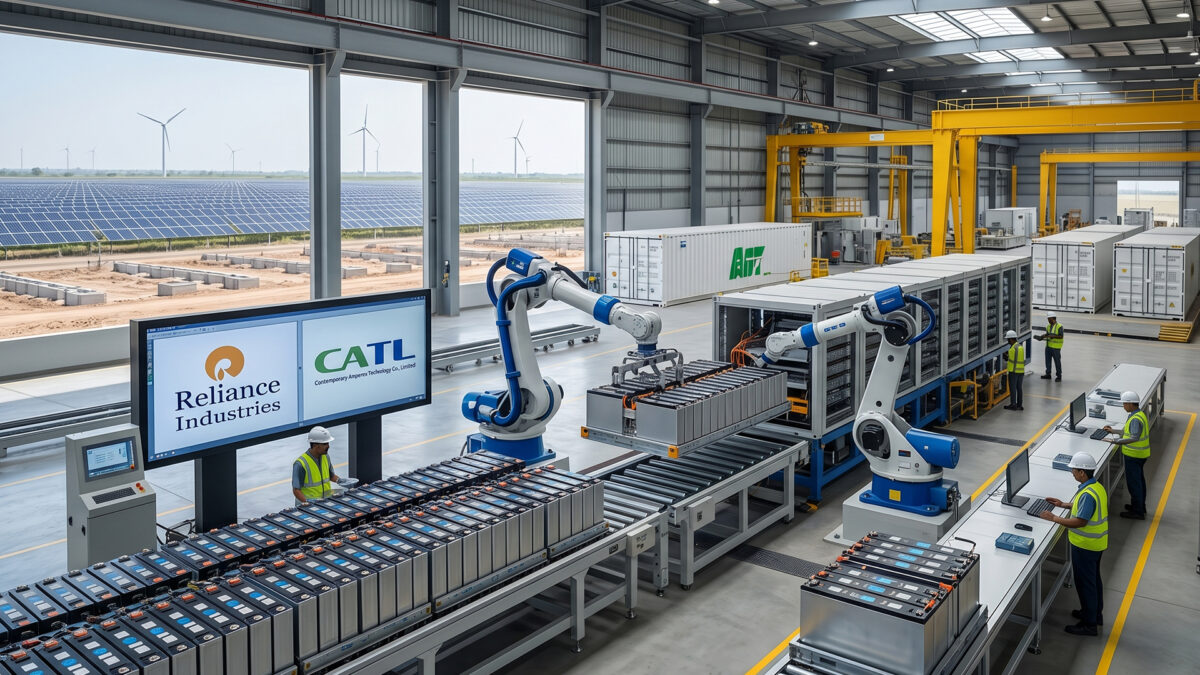
Reliance talks with CATL on battery parts

Reliance Industries is in discussions with Chinese battery giant Contemporary Amperex Technology Co. Limited (CATL) and other global suppliers to source key components for its battery energy storage systems (BESS), according to people familiar with the matter.

The talks are part of Reliance’s broader push to expand its clean energy business, particularly its large-scale battery storage plans linked to its Jamnagar energy ecosystem. The company is looking to build out capacity for grid-scale storage systems that can support renewable energy integration.

However, the negotiations come at a time when China’s tightening restrictions on battery technology exports have made it more difficult for global companies to access advanced cell manufacturing know-how. Earlier attempts by Reliance to secure technology transfer agreements reportedly faced hurdles due to these curbs, pushing the group to focus more on assembling systems using imported components.

If the discussions with CATL and other suppliers progress, Reliance is expected to concentrate on procuring pre-made cells and components rather than fully localising advanced battery cell production in the near term. This would allow the company to move ahead with deployment of energy storage infrastructure while longer-term manufacturing capabilities are developed separately.

The move reflects a broader trend in the global clean energy sector, where companies are racing to secure battery supply chains amid rising demand for electric mobility, renewable integration, and grid stability solutions.

Reliance has been investing heavily in its new energy ambitions, including solar, hydrogen, and battery storage, as part of its transition beyond traditional oil and petrochemicals. The Jamnagar project is expected to be a key hub in this strategy.

Also Read: State Banks, insurers told to slash costs, go EV

Categories
1 Minute-Read

Zee sues Reliance–Disney, Nykaa over music use

Alleges unauthorised use of songs in streaming and Instagram promotions.

Zee Entertainment has filed separate copyright cases against Reliance–Disney joint venture and Nykaa, alleging unauthorised use of its music without valid licences.

In the Reliance–Disney case, Zee claims its songs were used on streaming and broadcast platforms even after agreements expired. It is seeking damages of about $3 million for multiple alleged violations.

In a second case, Zee has accused Nykaa of using its songs in Instagram promotional reels without permission. It has sought around ₹2 crore in damages. Nykaa has removed the content, while both matters are pending in court.