Categories
Beyond

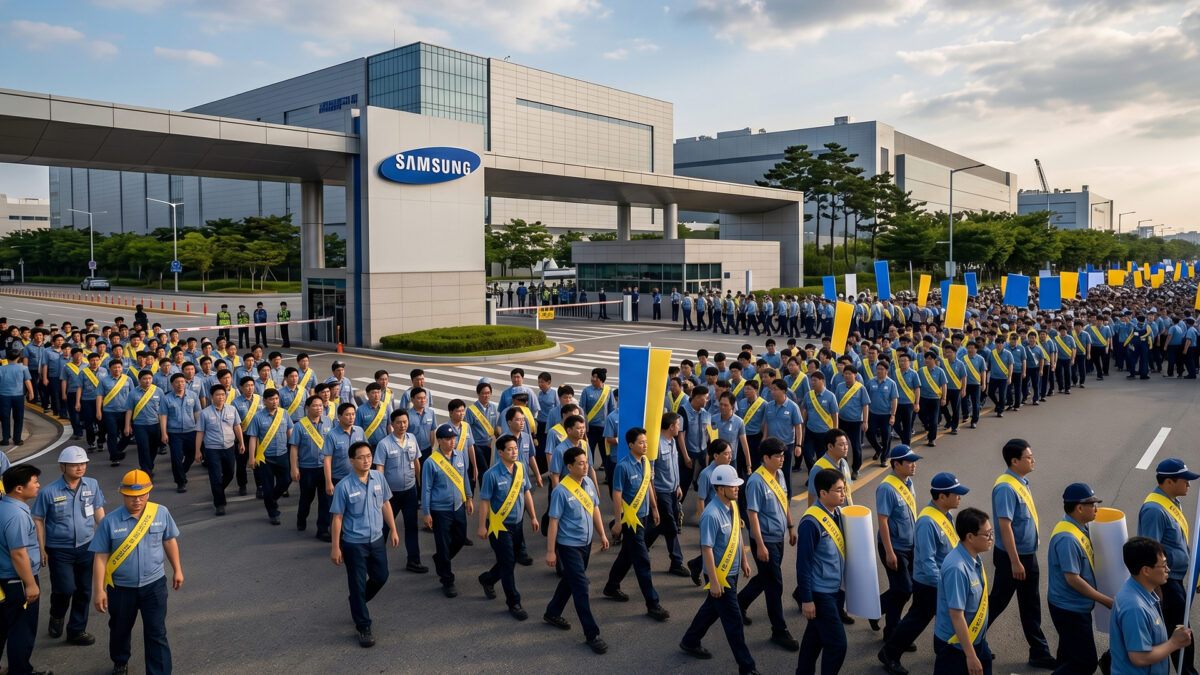
Samsung Korea workers threaten strike over pay

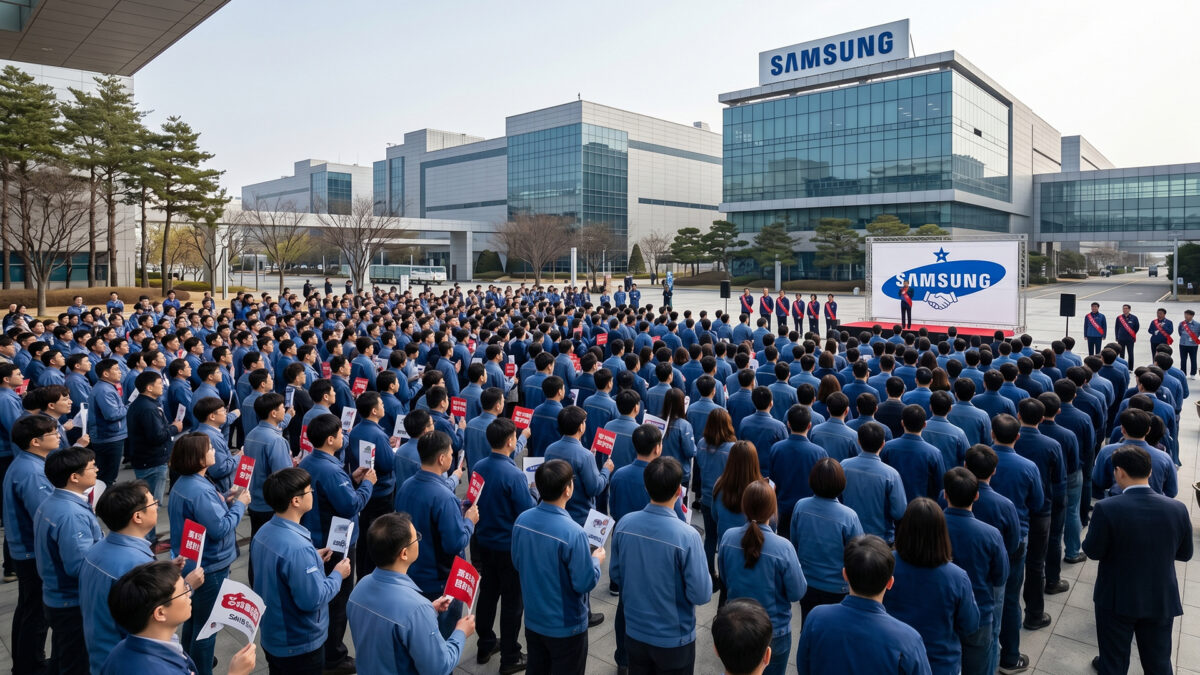
Samsung Electronics is facing a possible large-scale strike involving around 47,000 workers in South Korea, as labour tensions rise over pay and profit-sharing during a global surge in demand for AI-related chips.

The workers, represented by the company’s main labour union, are demanding higher performance-linked bonuses and a larger share of Samsung’s operating profits. They argue that employees across chip divisions have contributed significantly to the company’s strong earnings and should receive better compensation.

Union leaders are reportedly seeking a system where about 15% of annual operating profits are distributed to employees, along with changes to existing bonus structures. They say current policies do not fairly reflect worker contributions, especially during a period of strong chip demand.

Samsung has so far resisted the demands, proposing a more limited bonus structure and maintaining its current compensation framework. The gap between both sides has led to rising tensions, with talks still ongoing.

The potential strike comes at a sensitive time for Samsung, as global demand for semiconductors used in artificial intelligence, data centres and consumer electronics continues to rise. Any disruption in production could impact global supply chains.

The union has warned of an extended strike if negotiations fail, raising concerns in South Korea, where the semiconductor industry plays a key role in exports and economic growth. Authorities have urged both sides to reach an agreement to avoid wider economic disruption.

Also Read: China April growth slows as data misses forecasts

Categories
Technology

Samsung enters India’s refurbished phone market

Samsung India has introduced its “Certified Re-Newed” smartphone programme in India, offering refurbished Galaxy devices with company-backed warranty and quality assurance.

The programme allows customers to buy refurbished Galaxy smartphones directly from Samsung at lower prices while still receiving official warranty and after-sales support. The company said the initiative is aimed at making premium smartphones more affordable and accessible to a wider range of users.

According to Samsung, every refurbished device sold under the programme undergoes multiple quality checks, including hardware inspection, software testing, battery health verification and complete data wiping before resale. The company added that only genuine Samsung parts are used during refurbishment.

The smartphones will also come with a one-year manufacturer warranty, similar to new devices. Samsung said this would help build trust among buyers who are often hesitant about purchasing refurbished phones from third-party sellers.

Initially, the programme includes selected models from Samsung’s Galaxy S25 lineup and Galaxy A-series smartphones. Reports said some flagship models are available at significantly reduced prices compared to their original launch rates, making premium Galaxy devices more affordable for consumers.

In fact Samsung’s entry into the organised refurbished smartphone segment could strengthen consumer confidence in certified pre-owned devices. India’s refurbished smartphone market has grown rapidly in recent years as rising smartphone prices push more consumers toward affordable alternatives.

The initiative is viewed as part of Samsung’s broader sustainability strategy. By extending the life cycle of smartphones through refurbishment and resale, companies can help reduce electronic waste and promote reuse of devices.

The move places Samsung among the few smartphone brands in India directly offering company-certified refurbished devices with official support and warranty benefits.

Experts believe other smartphone brands may also introduce similar programmes as demand for certified refurbished devices continues to rise in the Indian market.

Also Read: Iran conflict may slow India’s growth to 6.7%

Categories
Beyond

Samsung family wealth doubles to $45 bn

The controlling family behind Samsung has seen its wealth nearly double in just one year, reaching around $45 billion, driven largely by a global boom in artificial intelligence and semiconductor demand.

According to the Bloomberg Billionaires Index, the combined wealth of the Lee family rose from about $20 billion last year to roughly $45.5 billion as of March this year. This sharp increase has pushed them up the ranks to become Asia’s third-richest family, moving from 10th place last year.

The surge in fortune is closely linked to Samsung Electronics’ strong performance in the chip industry. Demand for advanced memory chips, used in AI systems, cloud computing, and data centres, has pushed up valuations across the semiconductor sector.

The family’s financial recovery is especially notable given the challenges they faced after the death of Samsung patriarch Lee Kun-hee in 2020. The group had been dealing with one of the world’s largest inheritance tax burdens, along with legal and governance issues involving leadership transitions within the conglomerate.

Despite earlier concerns that these pressures could weaken family control over the company, the opposite has happened. The rise in Samsung’s business value has helped the family strengthen its financial position while continuing to maintain influence over the wider conglomerate.

Samsung remains South Korea’s largest chaebol (family-run business group), with major operations spanning electronics, semiconductors, and consumer technology. Its performance is seen as a key driver of the country’s economy.

Also Read: Musk–Altman OpenAI trial intensifies in court

Categories
Corporate

Samsung wins Global awards for coral reef project

Samsung has won multiple international awards for a unique environmental project that uses Galaxy smartphones to help restore coral reefs and protect ocean life.

The company’s initiative combines mobile technology with conservation efforts, showing how everyday devices can be used for real-world environmental impact.

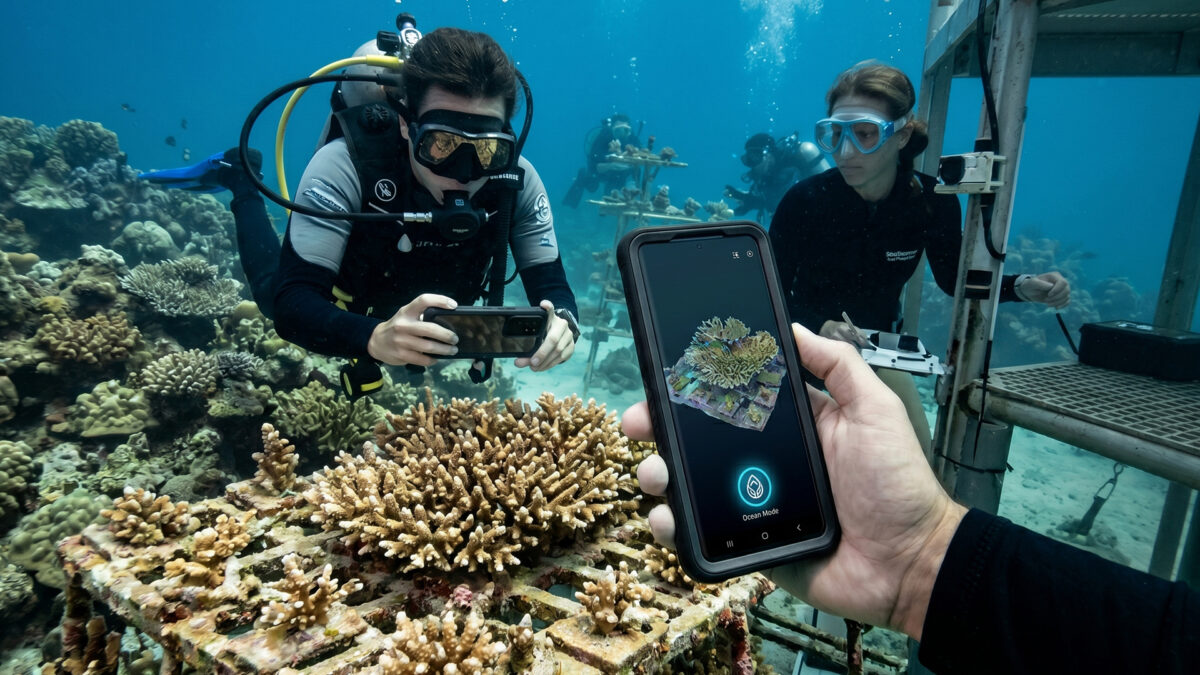
At the centre of the project is Samsung’s “Ocean Mode”, a special camera feature designed for underwater photography. It helps users capture clearer images beneath the surface by improving colour balance and reducing blur caused by water movement.

Samsung said the feature allows researchers, divers and local communities to use smartphones instead of expensive underwater cameras to monitor reef conditions.

The company’s coral reef restoration programme, called “Coral in Focus”, was recognised at international award platforms for innovation and sustainability. A documentary linked to the project also received honours for highlighting marine conservation work.

Samsung is running the initiative with environmental partners and marine scientists, including Seatrees and researchers from the University of California San Diego.

Together, they use Galaxy phones to take underwater images of coral reefs. These images are then turned into 3D models that help experts study reef damage, track recovery and plan restoration efforts.

The programme is active in several parts of the world, including Fiji, Indonesia, Costa Rica, the Galápagos Islands and the United States.

Samsung said thousands of coral fragments have already been planted through the initiative, helping rebuild damaged reef systems.

Coral reefs are among the most important ecosystems on Earth. Though they cover only a small part of the ocean floor, they support a large share of marine biodiversity and provide food and income for millions of people.

Scientists have warned that rising sea temperatures, pollution and overfishing are putting reefs at serious risk globally.

Also Read: Sanjay Jamuar named CEO of Delhi Metro global arm

Categories
Technology

Samsung brings its browser to Windows PCs

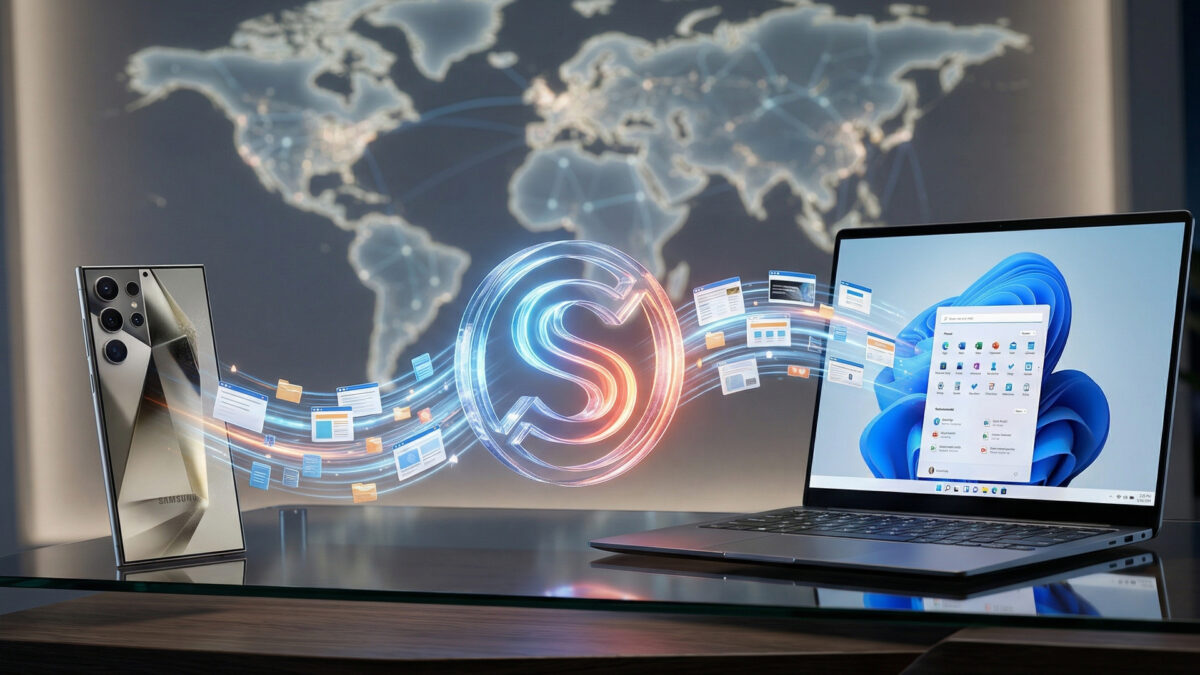
Samsung has expanded its digital ecosystem by launching its web browser for Windows users across the world. Previously available only in beta, the browser is now fully released and supports both Windows 10 and Windows 11 platforms.

The desktop version of the Samsung Internet Browser is designed to work closely with Samsung’s mobile devices. Users can sync their browsing data, including saved pages, open tabs, and history, across smartphones, tablets, and PCs. This ensures a smooth transition between devices and improves overall convenience.

One of the key additions is the use of advanced artificial intelligence within the browser. Samsung has introduced “agentic AI,” which allows the browser to understand user needs and assist with tasks. For example, it can summarise long articles, collect information from different tabs, and respond to natural language queries.

This approach reflects a growing trend in technology where software becomes more proactive and helpful. Instead of simply displaying web pages, the browser can now analyse and organise information for the user. Samsung aims to make browsing faster and more efficient through these features.

The company has said that these AI capabilities are part of its broader strategy to extend intelligent services across multiple devices. While some features are currently limited to certain regions, Samsung plans to expand access gradually.

Also Read: Petrol duty reduced to ₹3, diesel to zero

Categories
Technology

Samsung Galaxy S26 now works with AirDrop

Samsung has introduced a new feature that allows Galaxy smartphone users to share files with Apple devices, bringing an AirDrop-like experience to its ecosystem.

The feature is part of an upgraded Quick Share system and is being rolled out starting with the Galaxy S26 series. It enables users to transfer photos, videos and documents wirelessly to nearby devices, including iPhones, iPads and Mac computers, without relying on third-party apps or cloud services.

To use the feature, Galaxy users need to turn on Quick Share, while Apple users must set their AirDrop visibility to “Everyone.” Once both devices are discoverable, files can be sent instantly over a wireless connection, similar to Apple’s native sharing system.

For years, transferring files between Android and Apple devices has been inconvenient, often requiring messaging apps, email or cloud storage. Samsung’s latest update aims to simplify this process and improve the overall user experience.

The rollout began on March 23 in select countries and is expected to expand gradually to more regions. Samsung is also likely to extend the feature to older Galaxy devices through future software updates.

The new feature reflects a broader push in the tech industry toward better cross-platform compatibility. By enabling smoother interaction between Android and iOS devices, Samsung is addressing a long-standing gap in connectivity.

Also Read: Saudi Aramco CEO opts out of Houston Meet

Categories
Technology

Samsung ends Galaxy Z TriFold sales

Samsung Electronics has confirmed that it will stop selling its premium Galaxy Z TriFold smartphone, only three months after its debut. Launched in December 2025 in South Korea and arriving in the U.S. in January 2026, the TriFold was Samsung’s first attempt at a tri-folding smartphone, featuring a 10-inch flexible display that unfolded into a tablet-like device.

With a steep price of $2,899 (around ₹2.65 lakh), the phone targeted early adopters and tech enthusiasts rather than mainstream buyers. Samsung’s official website now lists the device as “sold out”, signaling that sales will end immediately in South Korea, while remaining U.S. stock will be sold until depleted.

Industry experts note that the TriFold was never intended to be a high-volume product. Its complex design and expensive manufacturing made it difficult to achieve profitability, especially with limited retail and carrier distribution. While the phone received attention for its futuristic design, these factors contributed to Samsung’s decision to discontinue sales.

Despite its short run, the Galaxy Z TriFold is likely to become a collector’s item, with remaining units occasionally available in select Samsung Experience Stores across the U.S. Samsung has not announced a successor, suggesting the lessons learned from this device may influence future foldable smartphones rather than result in a direct replacement.

Analysts say the move reflects Samsung’s focus on balancing innovation with market feasibility. The company continues to invest in foldable technology, as seen in its Galaxy Z Fold and Galaxy Z Flip series, while also promoting more mainstream devices like the Galaxy S26 Ultra.

The Galaxy Z TriFold’s brief market life underscores the challenges of producing cutting-edge, high-cost foldables. While it offered a glimpse of the future of mobile design, its discontinuation highlights the need for practicality and affordability in new form factors.

Also Read: Apple acquires Polish visual effects firm MotionVFX

Categories
Corporate

Reliance, Samsung C&T sign $3 bn green ammonia deal

Reliance Industries Limited (RIL) has signed a long-term agreement with Samsung C&T Corporation to supply green ammonia in a deal valued at more than $3 billion. The 15-year supply contract is expected to begin in the second half of fiscal year 2029.

The agreement is considered one of the largest long-term green ammonia supply deals globally and reflects rising demand for low-carbon fuels as countries and companies work to reduce carbon emissions.

Under the agreement, Reliance will produce and supply green ammonia using hydrogen generated from renewable energy sources. Green ammonia is produced by combining green hydrogen with nitrogen from the air, creating a low-carbon alternative to conventional ammonia that is typically made using fossil fuels.

The fuel is increasingly seen as an important solution for decarbonizing hard-to-abate sectors such as shipping, power generation, and heavy industry. It can also be used as a carrier for hydrogen, making it easier to transport and store clean energy across long distances.

The supply will support energy transition initiatives in countries like South Korea and Japan, which are exploring cleaner fuels to cut emissions from industrial operations and electricity generation.

The agreement is part of Reliance’s broader strategy to build a large-scale clean energy ecosystem. The company is developing an integrated new energy platform that includes renewable power generation, battery storage, green hydrogen production, and downstream fuels such as green ammonia.

Reliance is also investing in domestic manufacturing of key clean energy technologies, including solar modules, energy storage systems, and electrolysers used in hydrogen production. These investments are aimed at creating an end-to-end supply chain for clean energy products.

Also Read: Japan releases emergency oil reserves

Categories
Corporate

Samsung nears Nvidia approval for HBM4 AI chips

Samsung Electronics is nearing certification from Nvidia for its next‑generation HBM4 high-bandwidth memory, a key component for AI processors, according to industry sources. The approval would allow Samsung to supply these advanced chips, strengthening its position in the rapidly growing AI hardware market.

HBM4 memory, a stacked DRAM technology, delivers extremely high data bandwidth and energy efficiency, crucial for feeding large volumes of data into Nvidia’s AI accelerators. Nvidia has relied mainly on SK Hynix for HBM memory, making Samsung’s entry a notable shift in the supply chain.

Reports indicate Samsung is in the final stage of testing after submitting initial HBM4 samples late last year. The company aims to begin mass production in February 2026, with shipments expected soon after certification. Positive feedback from customers on Samsung’s HBM4 design highlights its competitiveness in performance and reliability.

The development has already boosted investor confidence. Samsung’s shares in Seoul gained on news of the potential approval, as analysts see it as a step toward diversifying the supply of high-end AI memory and challenging SK Hynix’s dominance.

Also Read: Shadowfax IPO allotment done, 2.7x subscribed