Categories
Corporate

South Korea’s Kospi slumps by 8%

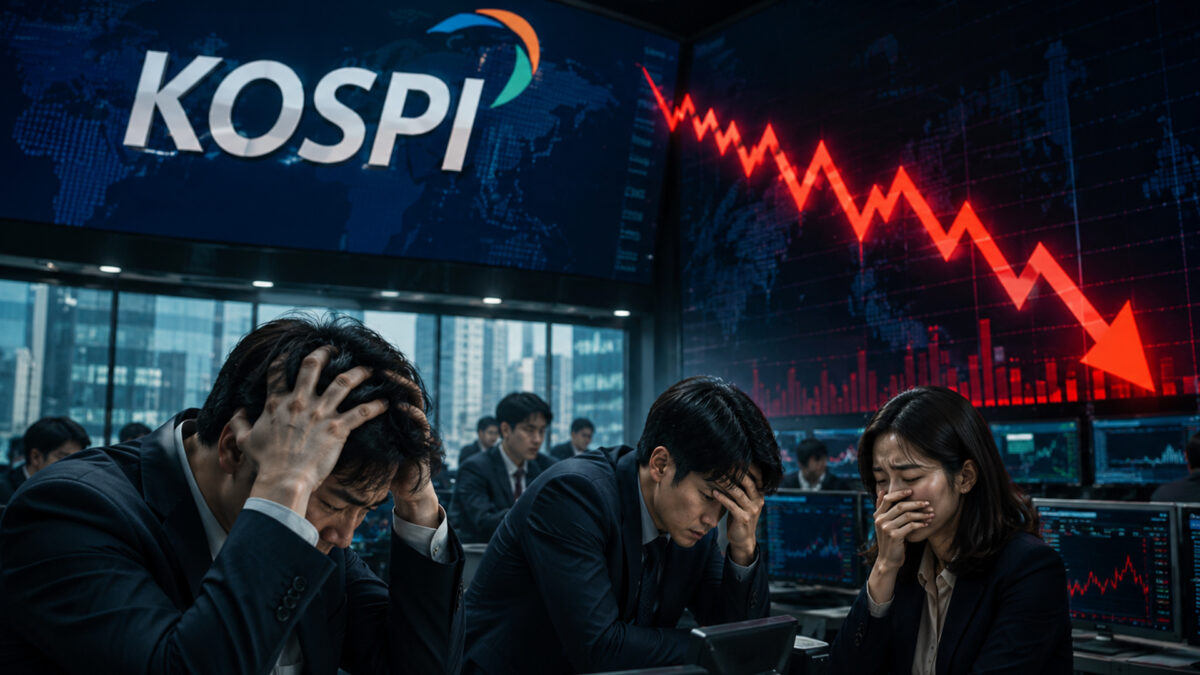
South Korea’s stock market saw another rough session as a sharp selloff in artificial intelligence and semiconductor shares dragged the benchmark Kospi index down by more than 8%, briefly forcing a trading halt. The steep fall showed how nervous investors have become about whether the recent rally in AI-linked stocks had gone too far and whether future profits can justify such high valuations.

The biggest pressure came from technology heavyweights Samsung Electronics and SK Hynix, which together make up more than half of the Kospi’s total market value. Shares of both companies fell by around 9% during trading, prompting the Korea Exchange to activate a 20-minute circuit breaker to cool the market. The index later recovered some ground, but the mood among investors remained cautious.

The latest drop is part of a wider global technology selloff. Investors have grown more careful after signs that the cost of building and running advanced AI systems is rising quickly. Higher semiconductor prices, heavy spending on AI infrastructure and doubts over whether demand will keep pace have led many traders to book profits after months of strong gains.

The weakness was not limited to South Korea. Japan’s Nikkei index also fell sharply as technology shares came under pressure. Companies closely tied to the AI boom, including major chipmakers and tech investors, recorded notable losses. That showed how concerns about the AI sector are spreading across Asian markets.

For investors, the latest swings are a reminder that fast-growing technology sectors can also see fast changes in sentiment. As companies prepare to report earnings and update markets on AI investments, volatility is likely to stay high, with each new development shaping confidence across the global tech sector.

Market analysts say the correction does not necessarily mean the AI story is over. Instead, they believe investors are rechecking valuations after a powerful rally that had made South Korea one of the world’s best-performing markets earlier this year.

Also Read: OpenAI taps Prabhjeet Singh to lead India expansion

Categories
Corporate

South Korea tops India as World’s sixth-largest stock market

South Korea has overtaken India to become the world’s sixth-largest stock market by market capitalisation, driven by a strong rally in technology and semiconductor stocks.

Statistical reports show the combined value of companies listed in South Korea has crossed $5 trillion, ahead of India’s market capitalisation of about $4.8 trillion. The shift has pushed India to seventh place in global stock market rankings.

The rise has largely been powered by the global artificial intelligence boom. South Korean chipmakers such as Samsung Electronics and SK Hynix have attracted strong investor interest as demand for AI-related chips and data-centre infrastructure continues to grow.

Indian markets, meanwhile, have faced pressure from weaker corporate earnings, foreign investor outflows and a weaker rupee. The absence of major AI-focused companies in benchmark indices has also limited gains compared with technology-heavy markets.

The latest development comes shortly after Taiwan moved ahead of India in global market rankings, causing India to slip from fifth to seventh position within a relatively short period.

The rankings underline the growing impact of AI-driven investments on global markets, with countries that have strong semiconductor industries benefiting the most from the ongoing technology boom.

Despite the decline, analysts remain positive about India’s long-term outlook. They point to strong economic growth, rising domestic participation in equities and continued infrastructure investment as key strengths supporting future market expansion.

Also Read: OYO parent gets SEBI approval for ₹6,500 cr IPO

Categories
Beyond

Samsung Korea workers threaten strike over pay

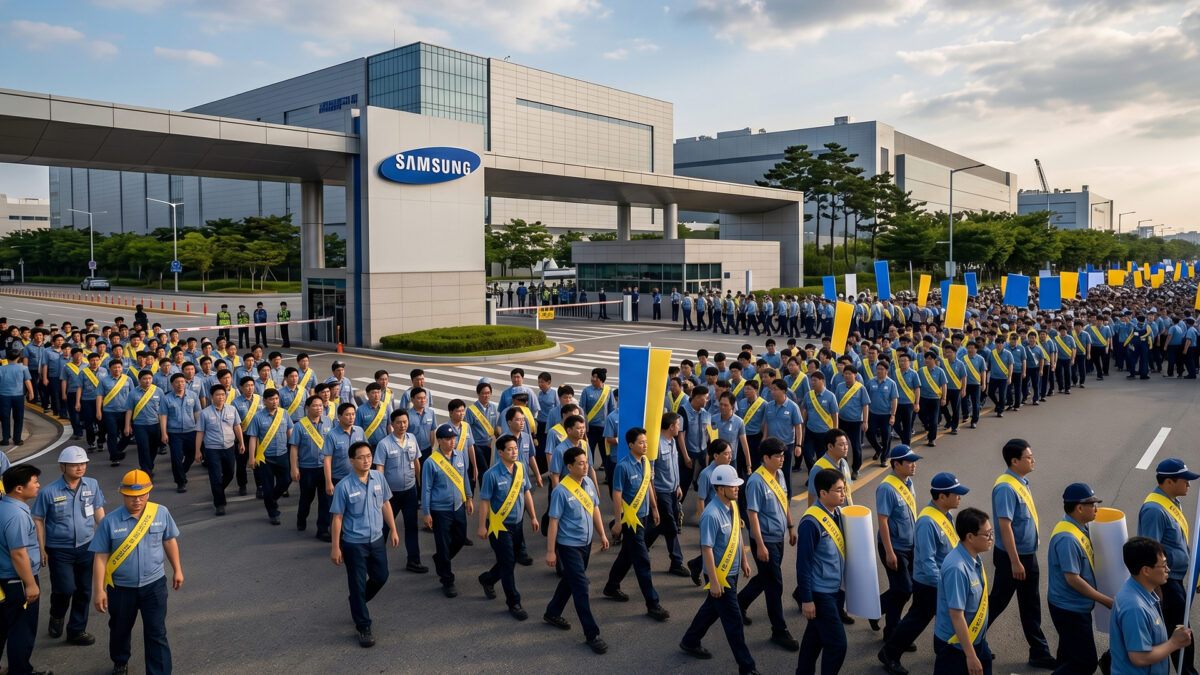
Samsung Electronics is facing a possible large-scale strike involving around 47,000 workers in South Korea, as labour tensions rise over pay and profit-sharing during a global surge in demand for AI-related chips.

The workers, represented by the company’s main labour union, are demanding higher performance-linked bonuses and a larger share of Samsung’s operating profits. They argue that employees across chip divisions have contributed significantly to the company’s strong earnings and should receive better compensation.

Union leaders are reportedly seeking a system where about 15% of annual operating profits are distributed to employees, along with changes to existing bonus structures. They say current policies do not fairly reflect worker contributions, especially during a period of strong chip demand.

Samsung has so far resisted the demands, proposing a more limited bonus structure and maintaining its current compensation framework. The gap between both sides has led to rising tensions, with talks still ongoing.

The potential strike comes at a sensitive time for Samsung, as global demand for semiconductors used in artificial intelligence, data centres and consumer electronics continues to rise. Any disruption in production could impact global supply chains.

The union has warned of an extended strike if negotiations fail, raising concerns in South Korea, where the semiconductor industry plays a key role in exports and economic growth. Authorities have urged both sides to reach an agreement to avoid wider economic disruption.

Also Read: China April growth slows as data misses forecasts