
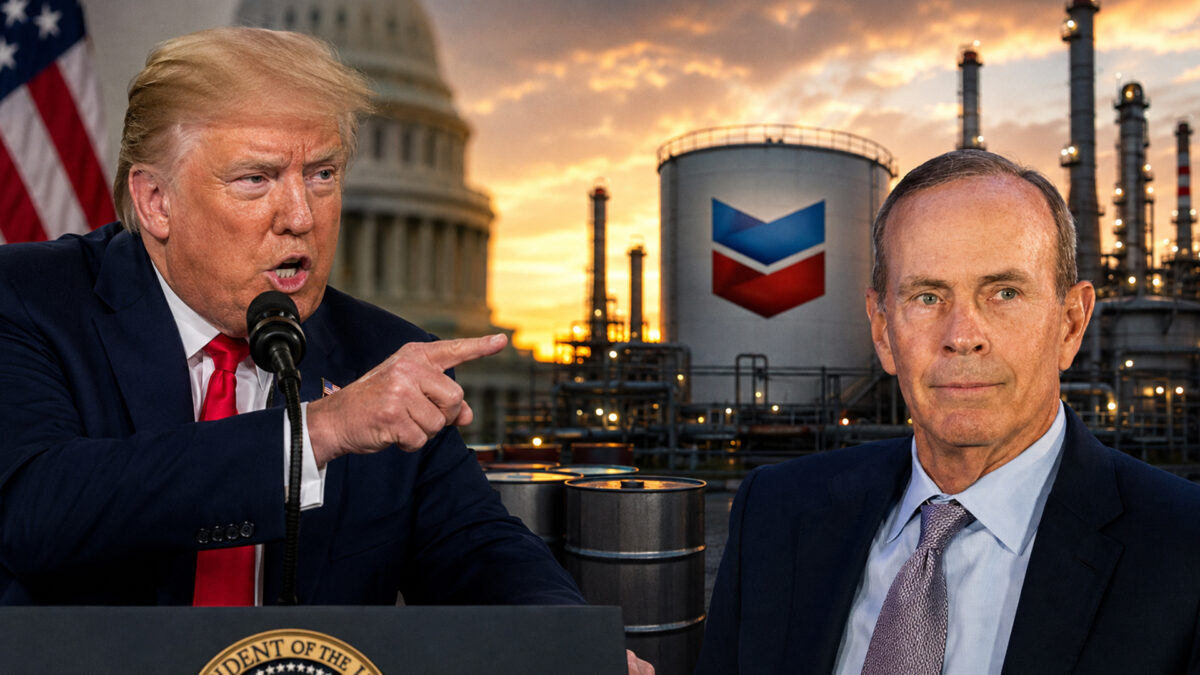
US President Donald Trump has publicly rebuked Chevron CEO Mike Wirth, accusing him of failing to give enough credit to the Trump administration for the strength of the American oil industry and questioning why motorists are still paying high prices at the pump.
Trump’s criticism came as Chevron reported a sharp jump in quarterly earnings, with the oil major benefiting from higher energy prices and strong operating performance during a period of heightened geopolitical tension. The confrontation highlights a growing tension between the White House and Big Oil over fuel prices, corporate profits and the cost of energy for American consumers.
Chevron reported quarterly earnings of about $12.1 billion, nearly five times its profit in the same period a year earlier. The result was helped by elevated oil prices linked to the conflict involving Iran and strong performance across the company’s operations. The company has also benefited from progress following its acquisition of Hess.
Wirth recently highlighted record US oil production and refining volumes in a television interview. Trump, however, was unhappy that the Chevron chief did not credit his administration for the industry’s performance.
The president subsequently criticised Wirth publicly, arguing that oil companies should acknowledge the administration’s policies and do more to bring down gasoline prices. Trump has increasingly focused on fuel costs as Americans continue to face expensive petrol despite movements in crude oil prices.
The dispute comes against a complicated backdrop for the global energy market. The conflict involving Iran has disrupted oil supplies and contributed to sharp swings in crude prices. Although oil prices have eased from their earlier highs as markets assess the possibility of a diplomatic breakthrough, gasoline prices in the United States have remained elevated.
Trump has argued that major oil companies are making too much money while American consumers continue to pay more at fuel stations. He has urged companies such as Chevron and ExxonMobil to reduce prices and effectively return some of their gains to consumers.
Chevron, meanwhile, has pointed to its strong operational performance and the difficult environment in which its employees have been working. The company recently announced a special bonus for employees following its strong earnings performance.
The bonus, equivalent to half a month’s base pay for most employees, was presented as recognition for the workforce’s performance. Wirth cited progress on cost reduction, early synergies from the Hess acquisition and continued safe operations despite geopolitical challenges in Venezuela and the Middle East.
The timing of Trump’s criticism is significant. The US president has long supported greater domestic oil and gas production and has sought to reduce regulatory barriers for the energy sector. His administration has promoted policies aimed at increasing American energy output and strengthening the country’s position as a major producer.
Yet Trump is now demanding that those policies translate into cheaper fuel for consumers.
That creates a difficult situation for oil companies. Higher crude prices can increase profits for producers, but retail gasoline prices are influenced by several factors beyond the price of crude. Refining costs, transportation, distribution, taxes and regional supply conditions all affect what consumers ultimately pay.
Chevron also does not directly control the prices charged at many of the branded gasoline stations carrying its name. A large portion of Chevron-branded stations are independently operated, meaning local operators have a role in determining retail prices.
Trump’s comments nevertheless reflect the political pressure facing the US energy industry. High gasoline prices can quickly become a household issue, affecting everything from commuting costs to the price of transporting goods.
The White House has already taken a tougher approach towards oil companies over fuel prices. The administration has questioned whether energy companies are benefiting excessively from market disruptions and has pushed the industry to respond more directly to consumer concerns.
The disagreement with Chevron also comes as oil companies prepare for increased scrutiny over their profits. ExxonMobil has similarly reported strong earnings, adding to the debate over whether energy companies should be making record or near-record profits while consumers face high fuel bills.
For investors, the situation creates a different set of questions. Strong earnings are positive for oil stocks, but increased political pressure could affect the way companies approach pricing, capital spending and shareholder returns.
Chevron’s record performance also demonstrates how quickly geopolitical events can reshape the energy industry. The Iran conflict has contributed to higher crude prices and improved earnings for major producers, while simultaneously increasing costs for consumers and raising concerns about inflation.
Trump has suggested that fuel prices could fall significantly if the conflict ends and global oil supplies stabilise. Any reopening of key shipping routes and improvement in Middle East supply conditions could put downward pressure on crude prices.
That would provide relief for consumers but could also reduce the earnings boost currently enjoyed by oil producers.
The Chevron dispute therefore goes beyond a disagreement between a president and a corporate executive. It reflects a broader debate over who benefits when energy prices rise and how much responsibility oil companies should bear for keeping fuel affordable.