
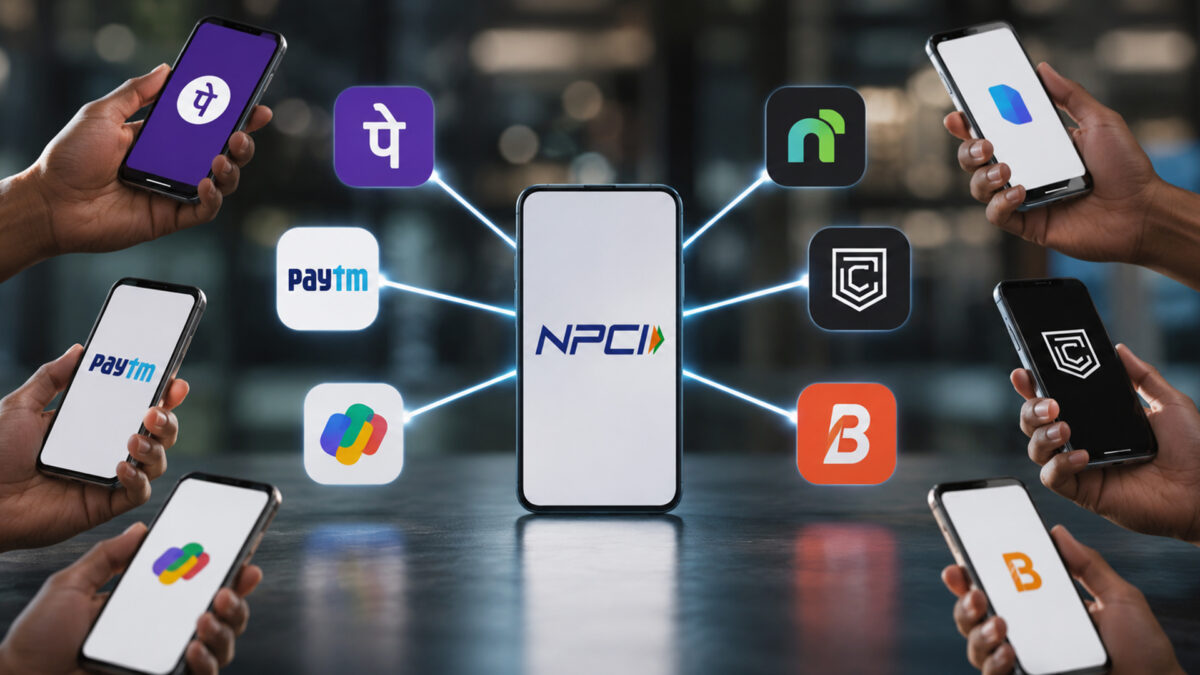
India’s digital payments ecosystem is witnessing fresh tensions as several fintech companies have raised strong objections to a proposed NPCI feature that would allow users to complete Unified Payments Interface (UPI) transactions using a pre-selected default payment app with a single click. Smaller payment firms argue that while the move promises greater convenience, it could significantly strengthen the dominance of market leaders such as PhonePe and Google Pay, making it harder for smaller players to compete.
The proposal, currently being evaluated by the National Payments Corporation of India (NPCI), is part of a broader initiative to simplify UPI payments by reducing the number of steps required during online checkouts. Under the plan, users would choose a preferred UPI app once, and future transactions on participating merchant platforms would automatically open that app instead of displaying a list of available payment applications.
Several fintech companies have urged NPCI to reconsider the proposal, warning that it could reshape India’s highly competitive digital payments market in favour of the biggest platforms. According to industry executives, most smartphone users are unlikely to change their default payment app once it is set. As a result, larger apps with an established customer base could attract an even bigger share of transactions, leaving smaller UPI applications with fewer opportunities to acquire or retain users.
Industry participants believe the proposal may unintentionally create a “winner takes most” environment. They argue that the current UPI checkout process, which allows users to choose from multiple payment apps for every transaction, encourages healthy competition by giving all apps equal visibility. Removing that choice at the payment stage, they say, could gradually reduce traffic to emerging fintech platforms.
Companies opposing the proposal include smaller UPI service providers and payment startups that have written to NPCI, expressing concerns over its potential impact on innovation and market diversity. They have suggested that instead of introducing a permanent default option, NPCI should preserve user choice or explore alternative methods that do not favour larger players.
The issue comes at a time when PhonePe and Google Pay together account for the overwhelming majority of UPI transactions in India. According to industry data, the two platforms collectively process more than 80 per cent of all UPI payments, while the remaining market is shared among Paytm, Cred, Amazon Pay, Navi, Super.money and several other payment apps. Smaller firms fear the proposed feature could widen this gap even further.
Supporters of the proposal, however, argue that it would improve the user experience by making digital payments faster and more seamless. A one-click checkout could reduce transaction time, eliminate the need to select an app repeatedly and lower the chances of users abandoning purchases during the payment process. Merchants are also expected to benefit from quicker checkouts and potentially higher payment completion rates.
NPCI has reportedly described the feature as an optional convenience rather than a mandatory system. Users would still be able to change their preferred payment app whenever they wish. However, critics believe that in practice, very few customers regularly revisit default settings, meaning early market leaders would enjoy a lasting advantage.
The debate highlights a broader challenge facing India’s rapidly expanding digital payments ecosystem: balancing innovation with fair competition. UPI has become the backbone of the country’s digital economy, processing billions of transactions every month across online shopping, bill payments, peer-to-peer transfers and merchant payments. Any change to the payment flow therefore has far-reaching implications for consumers, merchants and fintech companies alike.
Industry experts say maintaining an open and competitive UPI ecosystem has been one of the key reasons behind its remarkable success. Since its launch, UPI has enabled both established companies and startups to build innovative payment solutions on a common platform. Many fintech firms now worry that reducing visibility for smaller apps could discourage future innovation and investment.
NPCI has not announced a final decision on the proposal and is understood to be reviewing feedback received from stakeholders across the payments industry. The organisation is expected to hold further consultations before deciding whether and how the feature should be rolled out.
For consumers, the proposal presents a trade-off between convenience and choice. While faster one-click payments could simplify everyday transactions, industry players believe preserving a level playing field is equally important to ensure continued innovation, competitive pricing and better digital payment services. As India’s UPI ecosystem continues to evolve, the outcome of the discussions could shape the future of the country’s digital payments landscape for years to come.