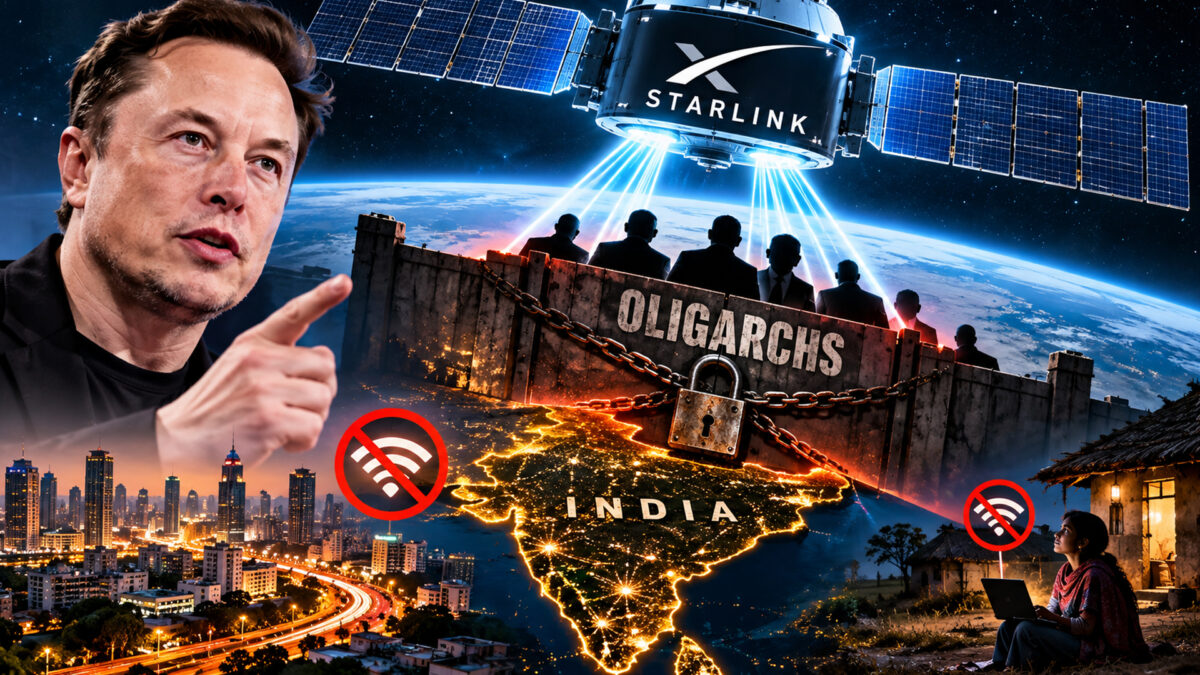
Reliance Industries has pushed back against Elon Musk’s allegations that powerful business interests are holding back Starlink’s launch in India, saying it welcomes competition but expects every company to follow the country’s laws. The response has added a fresh twist to the growing contest over satellite internet services, with Starlink now saying it is ready to connect Indian customers.
The dispute between Mukesh Ambani’s Reliance and Musk’s SpaceX comes as satellite broadband providers seek regulatory clearance to begin commercial operations in India. The outcome could influence how quickly satellite internet reaches remote areas, how companies compete for customers and what choices consumers have beyond traditional mobile and broadband networks.
In a statement posted on X on October 16, Reliance said it had never feared competition and viewed it as the best test of which company serves customers well. The company did not name Musk directly but said it wanted to clarify the facts following recent remarks about Reliance and the Indian market. <escape></escape>
Reliance also pointed out that its own satellite communication services under Jio were awaiting government clearances. It said the government applied the same process to Indian and foreign applicants, adding that investment and innovation must operate within the rule of law.
The statement highlighted Jio’s growth since it entered India’s highly competitive telecom market in 2016. Reliance said Jio had grown from a new entrant with no customers to a business serving more than 530 million people. The company presented that experience as evidence that it was not afraid of competition and would compete on customer service and affordability.
Musk’s criticism has been sharper. The SpaceX chief executive accused unnamed influential business interests of trying to prevent Starlink from entering India to protect their market positions. He later singled out Ambani, questioning why Starlink had not received final approval despite years of work to meet Indian requirements.
Musk also argued that more competition would benefit Indian consumers by giving them greater choice, even if it reduced the profits of established telecom companies. In another post, he sarcastically referred to Ambani as “Prime Minister Ambani”, suggesting that the industrialist had undue influence over the process.
The Indian government has rejected claims that the regulatory system favours domestic companies. Officials have said satellite communication applicants are undergoing security assessments and must satisfy the relevant conditions before launching commercial services. <escape></escape>
The debate moved forward on October 17, when Starlink responded to Reliance’s statement. The company said it had worked with regulators, industry and operators in India for more than five years and had built dedicated systems, gateways and other infrastructure within the country. It said the infrastructure had the necessary government approvals and that Starlink was ready to provide high-speed internet services in India. <escape></escape>
However, readiness to provide a service does not automatically mean commercial operations can begin. Satellite operators must meet applicable security requirements and obtain spectrum assignments under India’s regulatory framework. The government is also working on the framework for charging satellite operators for spectrum use.
Starlink is not the only company pursuing this opportunity. Reliance’s Jio Satellite Communications and Bharti-backed Eutelsat OneWeb are also seeking to provide satellite internet services in India. Communications Minister Jyotiraditya Scindia has said the government does not intend to allow a monopoly in the sector and that operators must meet the required conditions.
Bharti Enterprises chairman Sunil Bharti Mittal has also said that OneWeb applied earlier and is ahead in the approval queue. The competing claims underline how important regulatory timing has become for companies preparing to enter India’s satellite broadband market.
Satellite internet can be particularly useful in villages, remote regions and areas where laying fibre-optic cables or expanding mobile networks is difficult or expensive. Low-Earth-orbit satellites can provide connectivity across large areas without relying entirely on conventional ground-based telecom infrastructure.
For consumers, the real test will be the quality, price and availability of the services once commercial launches are permitted. More providers could improve access and give households, businesses and institutions additional options, although affordability and coverage will depend on each company’s plans and technology.
The immediate issue remains regulatory clearance, not simply the public exchange between two business leaders. Reliance says it welcomes Starlink, while Starlink says its infrastructure is ready. The next step will depend on the government’s approval process and whether each operator meets all the conditions required to serve customers in India.