
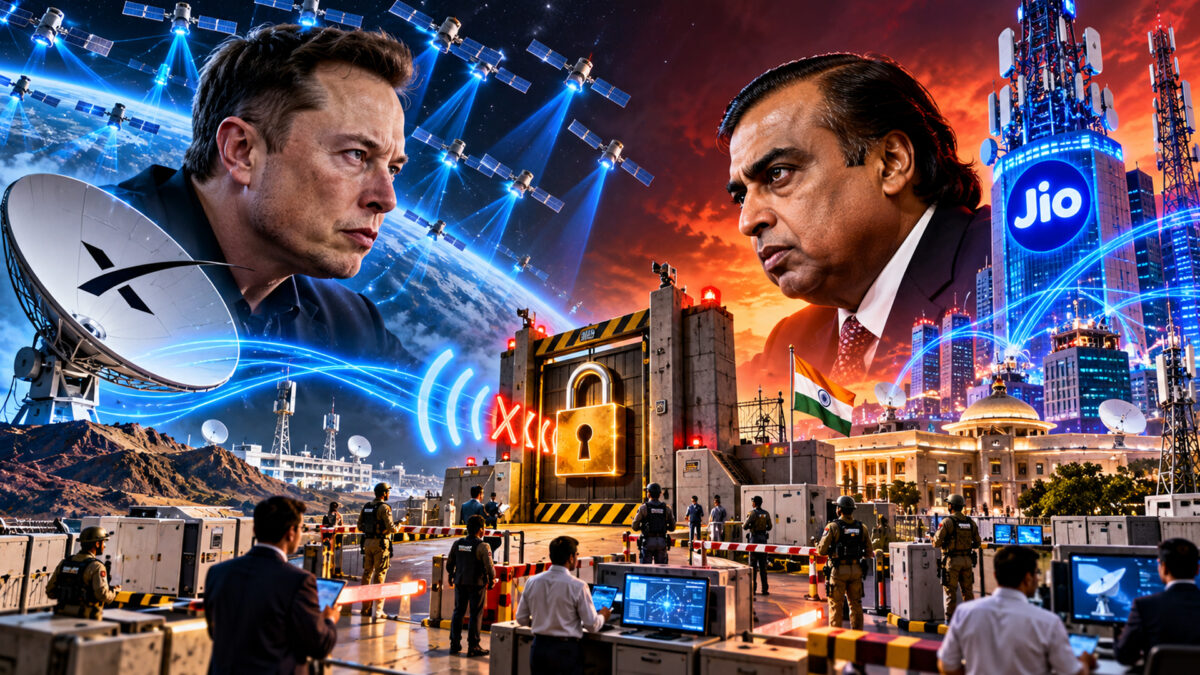
Elon Musk has intensified his public criticism of Reliance Industries chairman Mukesh Ambani over the delay in launching Starlink satellite internet services in India, sarcastically addressing the Indian billionaire as “Prime Minister Ambani” and accusing him of protecting existing telecom interests from competition.
In his latest post on X, Musk argued that Starlink could bring internet connectivity to underserved communities, improve educational opportunities for children and help small businesses reach customers worldwide. He questioned whether Ambani would allow Starlink to compete in India, alleging that established players preferred to maintain their dominance in the market.
The remarks mark another escalation in the dispute over Starlink’s entry into India, one of the world’s largest internet markets. However, Musk has not provided evidence to substantiate his allegation that Ambani is deliberately obstructing the launch.
The Indian government has rejected claims that powerful business interests are influencing the approval process. Telecom Minister Jyotiraditya Scindia said India does not permit monopolies in any sector, pushing back against Musk’s allegations.
The Ministry of Communications has also maintained that the regulatory framework for satellite communications is fair and non-discriminatory. According to the government, Starlink and two other satellite internet operators are at broadly the same stage of the approval process and must complete security assessments before receiving satellite spectrum.
Starlink, operated by Musk’s aerospace company SpaceX, has spent several years preparing to enter the Indian market. Despite securing key regulatory clearances and establishing partnerships with domestic telecom companies, it has yet to receive the final approvals required to begin commercial services.
The latest confrontation follows Musk’s earlier accusation that unnamed “oligarchs” were blocking Starlink’s entry to preserve their hold over India’s telecommunications sector. He described the alleged obstruction as harmful to consumers, particularly people living in areas with limited internet access.
Musk subsequently singled out Ambani, asking whether the Reliance chairman was the “real boss of India”. His latest remarks continued that line of criticism, suggesting that Starlink’s delayed launch was preventing Indian consumers from accessing an alternative internet service.
Reliance Jio, the telecom arm of Ambani-led Reliance Industries, is India’s largest mobile operator. Bharti Airtel, led by Sunil Bharti Mittal, is another major player in the sector. Both companies are also pursuing satellite broadband opportunities, putting them in the same emerging market as Starlink.
The competition is particularly significant because satellite internet can connect locations where conventional mobile networks and fibre-optic broadband are difficult or expensive to deploy. Remote villages, mountainous regions, islands and areas affected by natural disasters could benefit from reliable satellite-based connectivity.
Starlink uses a constellation of low-Earth-orbit satellites to deliver broadband internet. Unlike traditional geostationary satellite systems, its satellites operate closer to Earth, helping reduce signal delays. The service has expanded internationally, but entering India requires compliance with the country’s licensing, security and spectrum rules.
SpaceX has said it is ready to serve Indian customers. Starlink has reportedly established more than 20 gateway sites in the country, along with hundreds of antennas, as part of its preparations. Gateway stations connect the satellite network to terrestrial internet infrastructure and are an important part of delivering the service.
The company has also said it has adapted its operations to meet Indian requirements concerning security and data sovereignty. However, authorities have maintained that the remaining assessments must be completed before commercial operations can begin.
The disagreement is not new. Starlink and Reliance Jio previously clashed over how satellite spectrum should be allocated. Musk’s company supported administrative allocation, while Jio argued that spectrum should be auctioned, a process it believed would create a level playing field between satellite and terrestrial telecom providers. The government ultimately opted for administrative allocation.
Despite their differences, SpaceX signed distribution agreements with Reliance Jio and Bharti Airtel in 2025. These arrangements were intended to help make Starlink services and equipment available in India once regulatory approvals were secured. The partnerships highlight the complicated relationship between potential competitors and prospective distributors.
Airtel has links to Eutelsat OneWeb, another satellite communications operator seeking to provide services in India. Jio is working with Luxembourg-based SES on satellite broadband. Both companies therefore have their own commercial interests in the development of satellite internet.
The debate has wider implications for India’s digital connectivity ambitions. Satellite broadband could complement existing mobile and fibre networks, particularly in underserved regions, but operators must also address concerns about national security, lawful interception and control over communications infrastructure.
The government says all operators must complete the required procedures, while Musk continues to demand faster entry and greater competition. Whether the dispute leads to further regulatory clarification or simply intensifies the public exchange remains to be seen.
Ultimately, the outcome will matter not only to SpaceX and India’s telecom giants but also to consumers waiting for more choices in broadband connectivity. A successful launch could expand internet access in remote areas, while the unresolved approval process underscores the challenge of balancing innovation, competition and national security.