Categories
Leaders

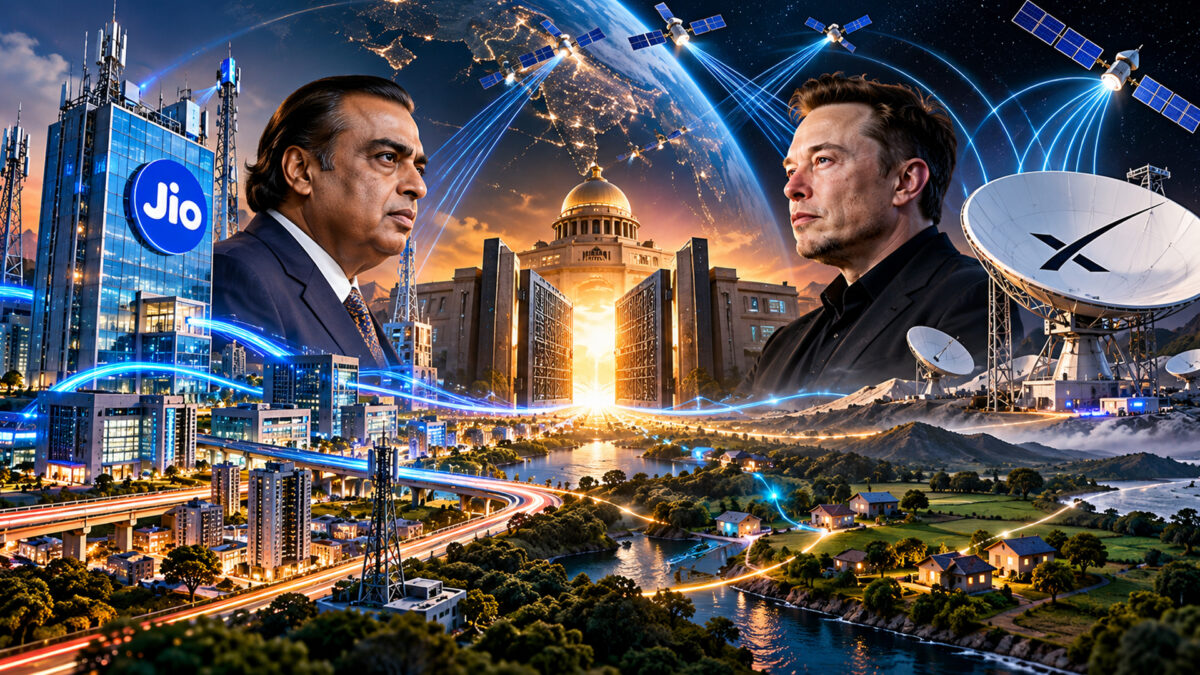
Mukesh Ambani responds to Musk over Starlink India

Reliance Industries has pushed back against Elon Musk’s allegations that powerful business interests are holding back Starlink’s launch in India, saying it welcomes competition but expects every company to follow the country’s laws. The response has added a fresh twist to the growing contest over satellite internet services, with Starlink now saying it is ready to connect Indian customers.

The dispute between Mukesh Ambani’s Reliance and Musk’s SpaceX comes as satellite broadband providers seek regulatory clearance to begin commercial operations in India. The outcome could influence how quickly satellite internet reaches remote areas, how companies compete for customers and what choices consumers have beyond traditional mobile and broadband networks.

In a statement posted on X on October 16, Reliance said it had never feared competition and viewed it as the best test of which company serves customers well. The company did not name Musk directly but said it wanted to clarify the facts following recent remarks about Reliance and the Indian market. <escape></escape>

Reliance also pointed out that its own satellite communication services under Jio were awaiting government clearances. It said the government applied the same process to Indian and foreign applicants, adding that investment and innovation must operate within the rule of law.

The statement highlighted Jio’s growth since it entered India’s highly competitive telecom market in 2016. Reliance said Jio had grown from a new entrant with no customers to a business serving more than 530 million people. The company presented that experience as evidence that it was not afraid of competition and would compete on customer service and affordability.

Musk’s criticism has been sharper. The SpaceX chief executive accused unnamed influential business interests of trying to prevent Starlink from entering India to protect their market positions. He later singled out Ambani, questioning why Starlink had not received final approval despite years of work to meet Indian requirements.

Musk also argued that more competition would benefit Indian consumers by giving them greater choice, even if it reduced the profits of established telecom companies. In another post, he sarcastically referred to Ambani as “Prime Minister Ambani”, suggesting that the industrialist had undue influence over the process.

The Indian government has rejected claims that the regulatory system favours domestic companies. Officials have said satellite communication applicants are undergoing security assessments and must satisfy the relevant conditions before launching commercial services. <escape></escape>

The debate moved forward on October 17, when Starlink responded to Reliance’s statement. The company said it had worked with regulators, industry and operators in India for more than five years and had built dedicated systems, gateways and other infrastructure within the country. It said the infrastructure had the necessary government approvals and that Starlink was ready to provide high-speed internet services in India. <escape></escape>

However, readiness to provide a service does not automatically mean commercial operations can begin. Satellite operators must meet applicable security requirements and obtain spectrum assignments under India’s regulatory framework. The government is also working on the framework for charging satellite operators for spectrum use.

Starlink is not the only company pursuing this opportunity. Reliance’s Jio Satellite Communications and Bharti-backed Eutelsat OneWeb are also seeking to provide satellite internet services in India. Communications Minister Jyotiraditya Scindia has said the government does not intend to allow a monopoly in the sector and that operators must meet the required conditions.

Bharti Enterprises chairman Sunil Bharti Mittal has also said that OneWeb applied earlier and is ahead in the approval queue. The competing claims underline how important regulatory timing has become for companies preparing to enter India’s satellite broadband market.

Satellite internet can be particularly useful in villages, remote regions and areas where laying fibre-optic cables or expanding mobile networks is difficult or expensive. Low-Earth-orbit satellites can provide connectivity across large areas without relying entirely on conventional ground-based telecom infrastructure.

For consumers, the real test will be the quality, price and availability of the services once commercial launches are permitted. More providers could improve access and give households, businesses and institutions additional options, although affordability and coverage will depend on each company’s plans and technology.

The immediate issue remains regulatory clearance, not simply the public exchange between two business leaders. Reliance says it welcomes Starlink, while Starlink says its infrastructure is ready. The next step will depend on the government’s approval process and whether each operator meets all the conditions required to serve customers in India.
 

Categories
Leaders

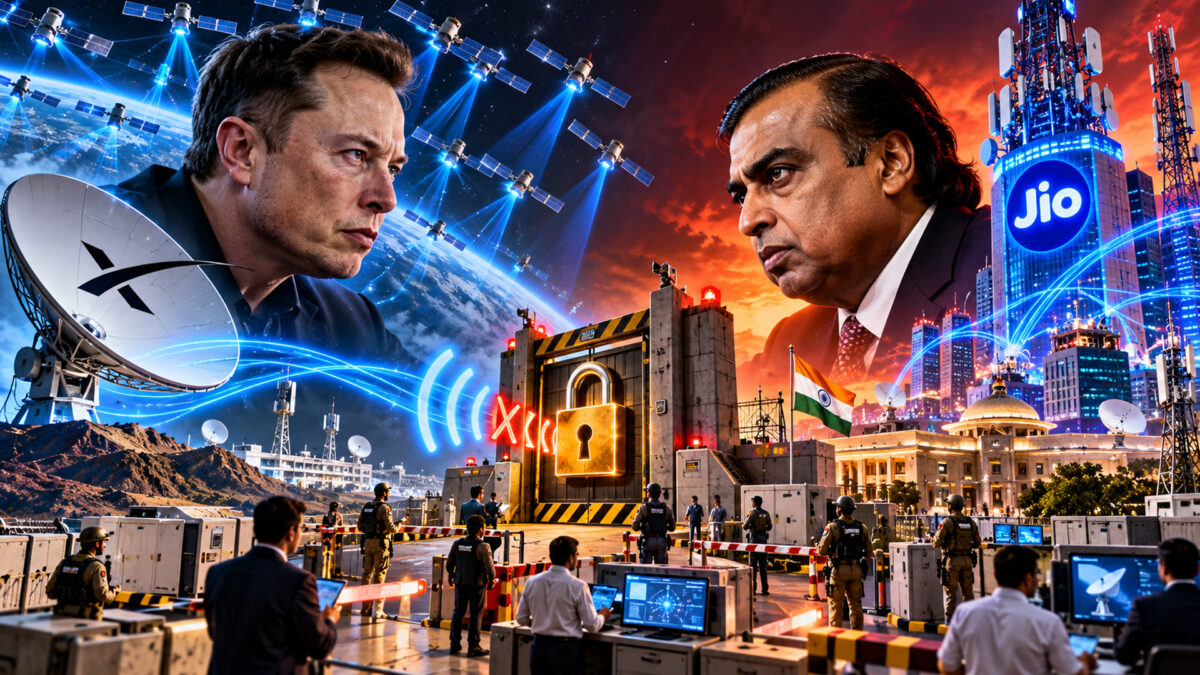
Musk renews attack on Ambani over Starlink

Elon Musk has intensified his public criticism of Reliance Industries chairman Mukesh Ambani over the delay in launching Starlink satellite internet services in India, sarcastically addressing the Indian billionaire as “Prime Minister Ambani” and accusing him of protecting existing telecom interests from competition.

In his latest post on X, Musk argued that Starlink could bring internet connectivity to underserved communities, improve educational opportunities for children and help small businesses reach customers worldwide. He questioned whether Ambani would allow Starlink to compete in India, alleging that established players preferred to maintain their dominance in the market.

The remarks mark another escalation in the dispute over Starlink’s entry into India, one of the world’s largest internet markets. However, Musk has not provided evidence to substantiate his allegation that Ambani is deliberately obstructing the launch.

The Indian government has rejected claims that powerful business interests are influencing the approval process. Telecom Minister Jyotiraditya Scindia said India does not permit monopolies in any sector, pushing back against Musk’s allegations.

The Ministry of Communications has also maintained that the regulatory framework for satellite communications is fair and non-discriminatory. According to the government, Starlink and two other satellite internet operators are at broadly the same stage of the approval process and must complete security assessments before receiving satellite spectrum.

Starlink, operated by Musk’s aerospace company SpaceX, has spent several years preparing to enter the Indian market. Despite securing key regulatory clearances and establishing partnerships with domestic telecom companies, it has yet to receive the final approvals required to begin commercial services.

The latest confrontation follows Musk’s earlier accusation that unnamed “oligarchs” were blocking Starlink’s entry to preserve their hold over India’s telecommunications sector. He described the alleged obstruction as harmful to consumers, particularly people living in areas with limited internet access.

Musk subsequently singled out Ambani, asking whether the Reliance chairman was the “real boss of India”. His latest remarks continued that line of criticism, suggesting that Starlink’s delayed launch was preventing Indian consumers from accessing an alternative internet service.

Reliance Jio, the telecom arm of Ambani-led Reliance Industries, is India’s largest mobile operator. Bharti Airtel, led by Sunil Bharti Mittal, is another major player in the sector. Both companies are also pursuing satellite broadband opportunities, putting them in the same emerging market as Starlink.

The competition is particularly significant because satellite internet can connect locations where conventional mobile networks and fibre-optic broadband are difficult or expensive to deploy. Remote villages, mountainous regions, islands and areas affected by natural disasters could benefit from reliable satellite-based connectivity.

Starlink uses a constellation of low-Earth-orbit satellites to deliver broadband internet. Unlike traditional geostationary satellite systems, its satellites operate closer to Earth, helping reduce signal delays. The service has expanded internationally, but entering India requires compliance with the country’s licensing, security and spectrum rules.

SpaceX has said it is ready to serve Indian customers. Starlink has reportedly established more than 20 gateway sites in the country, along with hundreds of antennas, as part of its preparations. Gateway stations connect the satellite network to terrestrial internet infrastructure and are an important part of delivering the service.

The company has also said it has adapted its operations to meet Indian requirements concerning security and data sovereignty. However, authorities have maintained that the remaining assessments must be completed before commercial operations can begin.

The disagreement is not new. Starlink and Reliance Jio previously clashed over how satellite spectrum should be allocated. Musk’s company supported administrative allocation, while Jio argued that spectrum should be auctioned, a process it believed would create a level playing field between satellite and terrestrial telecom providers. The government ultimately opted for administrative allocation.

Despite their differences, SpaceX signed distribution agreements with Reliance Jio and Bharti Airtel in 2025. These arrangements were intended to help make Starlink services and equipment available in India once regulatory approvals were secured. The partnerships highlight the complicated relationship between potential competitors and prospective distributors.

Airtel has links to Eutelsat OneWeb, another satellite communications operator seeking to provide services in India. Jio is working with Luxembourg-based SES on satellite broadband. Both companies therefore have their own commercial interests in the development of satellite internet.

The debate has wider implications for India’s digital connectivity ambitions. Satellite broadband could complement existing mobile and fibre networks, particularly in underserved regions, but operators must also address concerns about national security, lawful interception and control over communications infrastructure.

The government says all operators must complete the required procedures, while Musk continues to demand faster entry and greater competition. Whether the dispute leads to further regulatory clarification or simply intensifies the public exchange remains to be seen.

Ultimately, the outcome will matter not only to SpaceX and India’s telecom giants but also to consumers waiting for more choices in broadband connectivity. A successful launch could expand internet access in remote areas, while the unresolved approval process underscores the challenge of balancing innovation, competition and national security.


Categories
Leaders

Gautam Adani becomes Asia’s richest

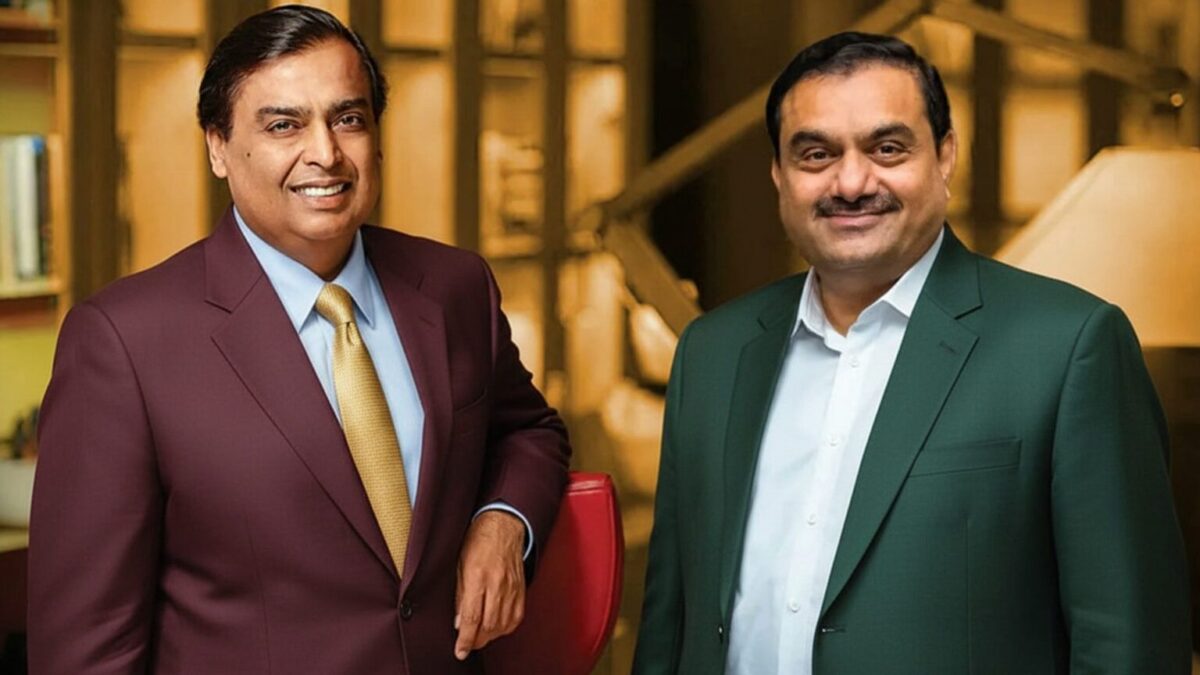
Business tycoon Gautam Adani has overtaken fellow billionaire Mukesh Ambani to become Asia’s richest person, according to the latest Bloomberg Billionaires Index.

Adani’s net worth is estimated at around $92.6 billion, placing him ahead of Ambani, whose wealth is reported at about $90.8 billion. The shift also places both Indian industrialists among the top ranks of global billionaires.

The change at the top is mainly driven by a sharp rally in shares of Adani Group companies, which span infrastructure, energy, ports, airports and logistics. The surge in market value of these listed firms has significantly boosted Adani’s personal wealth in a short span of time.

Ambani, who leads Reliance Industries, continues to have a strong presence across energy, telecom and retail sectors, but recent fluctuations in stock performance have slightly reduced his net worth in comparison to Adani’s rapid gains.

According to market trackers, the rankings of global billionaires are highly sensitive to stock movements, meaning positions can change quickly based on daily trading trends. Both Adani and Ambani have frequently swapped positions in recent years as market conditions shift.

Globally, the top spot remains with Elon Musk, who continues to lead the billionaire rankings by a wide margin, while several other technology and retail magnates occupy the upper positions.

The latest reshuffle highlights the growing influence of infrastructure and energy-linked businesses in wealth creation, especially in emerging markets like India. It also reflects how closely tied billionaire rankings are to stock market performance rather than fixed assets.

While the difference between the two Indian business leaders remains relatively small, the symbolic shift underscores the intense competition between two of the country’s largest corporate groups, both of which play a major role in shaping India’s economic landscape.

Also Read: Reed Hastings to step down from Netflix