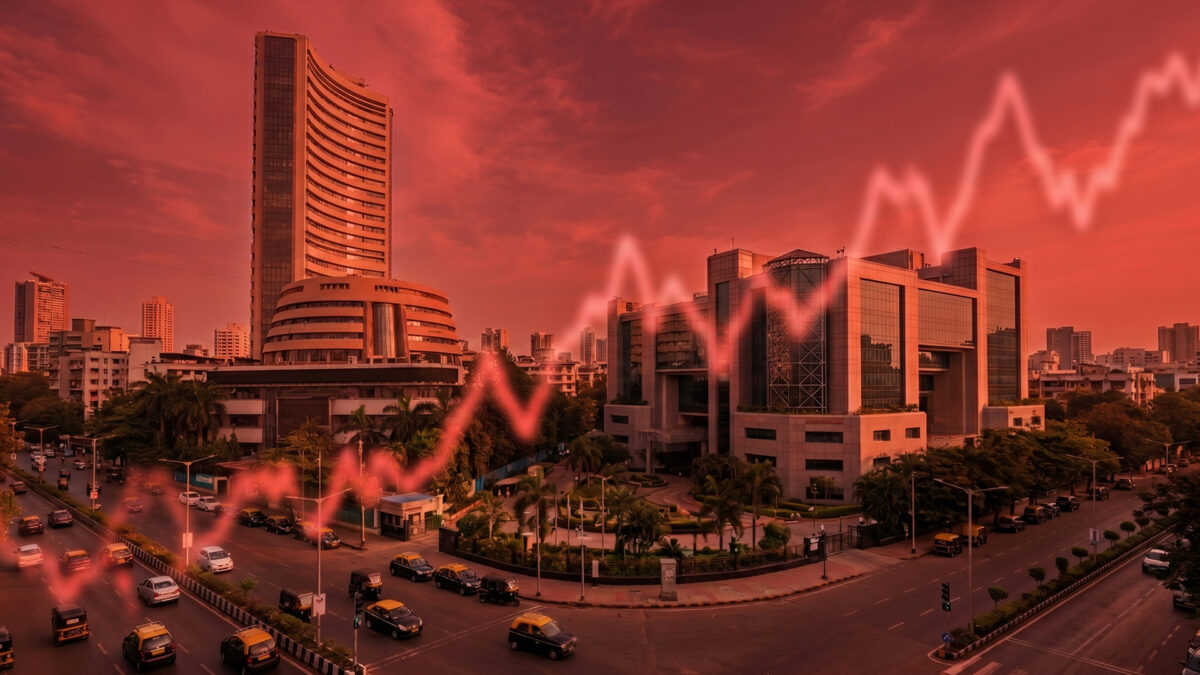
Indian equities came under heavy selling pressure on Thursday as surging crude oil prices, a hawkish shift by the Reserve Bank of India and continued foreign fund outflows combined to unsettle investors. The Sensex plunged 1,045.46 points, or 1.44%, to close at 71,593.24, while the Nifty 50 dropped 371.25 points, or 1.64%, to 22,231.80.
The fall pushed both benchmarks to important lows. The Sensex ended at its weakest level since February 2024, while the Nifty closed at an almost 18-month low. During the session, the Nifty slipped to 22,179.90, its lowest level of the year.
The sell-off was broad-based, with investors worried that expensive crude could keep inflation elevated and make it harder for the RBI to ease monetary conditions. Brent crude prices climbed above $104 a barrel amid concerns over supply disruptions, adding another layer of uncertainty for an economy that imports most of its oil.
Higher crude prices are particularly important for India because they can increase the country’s import bill, put pressure on the rupee and raise costs for businesses and consumers. A prolonged rise in oil prices can also squeeze corporate margins and reduce expectations for economic growth.
The pressure was compounded by the RBI’s policy decision on Wednesday. The central bank raised its repo rate by 25 basis points to 5.5% and changed its policy stance from neutral to calibrated tightening. The shift surprised investors and fuelled expectations that interest rates could remain higher for longer if inflationary pressures intensify.
Rate-sensitive sectors were among the biggest casualties. Metals, real estate and oil and gas stocks faced sharp selling as investors reassessed the impact of higher borrowing costs on businesses.
Adani Enterprises emerged as one of the biggest losers on the Nifty, falling around 5.4%. JSW Steel and ITC also declined more than 4%. Other major laggards included Adani Ports, InterGlobe Aviation, Power Grid Corporation and Reliance Industries.
IT stocks, however, showed relative resilience. Infosys, Tech Mahindra and Axis Bank were among the very few Nifty 50 stocks to finish in positive territory. Infosys gained about 0.5%, while Tech Mahindra also closed higher. HCL Technologies and TCS were relatively better placed during the session, with investors focusing on the start of the September-quarter earnings season.
Tata Consultancy Services was closely watched ahead of its quarterly results, which were scheduled after market hours. The IT major’s performance and management commentary are expected to provide the first major indication of how corporate earnings are holding up amid a challenging global environment.
The limited number of gainers highlighted the extent of the market weakness. Only three Nifty 50 stocks ended higher, while 47 closed in the red.
The broader market also took a significant hit. The Nifty MidCap index fell about 2.5%, while the SmallCap index declined more than 2%. The weakness suggested that investors were reducing exposure to riskier assets rather than limiting selling to large-cap stocks.
Foreign investors added to the pressure. Foreign institutional investors remained heavy sellers, with net selling of more than ₹6,000 crore on Wednesday. Persistent overseas outflows have been a major concern for Indian markets in recent months and have made the benchmarks more vulnerable to global shocks.
The rupee also remained under pressure, trading close to ₹96.8 against the US dollar. A weaker currency can make India’s oil imports more expensive, creating another channel through which crude prices can feed into domestic inflation.
Global markets offered little relief. Rising US Treasury yields, concerns about inflation and weaker Asian equities added to the cautious mood. Investors are increasingly weighing the possibility that major central banks may have less room to cut rates if energy prices remain elevated.
The sharp fall also comes after a difficult stretch for Indian equities. The Sensex and Nifty have struggled to sustain recoveries, with foreign selling, high crude prices and concerns over interest rates repeatedly weighing on sentiment.
Still, the focus could gradually shift from macroeconomic worries to corporate earnings. The September-quarter results season is beginning, with TCS among the first major companies to report. Investors will be looking closely at revenue growth, margins, demand and management guidance.
The immediate market outlook, however, remains closely tied to crude oil. If oil prices remain above $100 a barrel for an extended period, investors could continue to worry about inflation, interest rates and corporate profitability.
Thursday’s sell-off showed how quickly those concerns can come together. With the Nifty now close to the 22,000 mark, the market enters the next phase of earnings season with investors looking for stronger corporate numbers to counter a difficult macroeconomic backdrop.