Categories
Uncategorized

Flipkart CEO confirms food delivery launch

Flipkart is set to enter India’s highly competitive online food delivery market, taking on established players Swiggy and Zomato in a move that could reshape the country’s rapidly growing digital commerce landscape. The Walmart-owned e-commerce company plans to launch its food delivery service in the coming weeks, beginning with a pilot in Bengaluru before expanding to other cities.

Confirming the development, Flipkart Group CEO Kalyan Krishnamurthy said the company is ready to roll out the new service after months of preparation. The announcement marks another major step in Flipkart’s strategy to expand beyond its traditional e-commerce business and strengthen its presence in high-growth consumer services.

Speaking about the company’s plans, Krishnamurthy said entering a market later than competitors should not be seen as a disadvantage. According to him, companies that focus on delivering a better customer experience and creating real value can still succeed, even in sectors dominated by established players.

“Just because somebody enters a market late doesn’t mean they can’t build a strong business,” he said, expressing confidence that Flipkart can carve out its own space in the food delivery market.

The company is expected to leverage its existing logistics infrastructure, particularly the network built for Flipkart Minutes, its quick commerce platform. With thousands of delivery personnel, dark stores and fulfilment centres already operating across multiple cities, Flipkart believes it has a strong operational base to support restaurant deliveries.

The move comes at a time when India’s food delivery industry is largely controlled by Swiggy and Zomato, which together account for most online food orders. Both companies have spent years building extensive restaurant partnerships, delivery fleets and loyal customer bases. Even so, Flipkart believes there is room for another strong player in the market.

Industry experts say Flipkart’s biggest advantage lies in its massive customer base and well-established digital ecosystem. Millions of users already shop on the platform for electronics, fashion, groceries and household essentials. Adding food delivery could encourage customers to use a single app for multiple daily needs, making the platform even more integral to their lives.

Reports suggest the food delivery service will first be tested in Bengaluru. A pilot launch will allow the company to fine-tune delivery operations, strengthen restaurant partnerships and gather customer feedback before expanding to other metropolitan markets.

Krishnamurthy also shared his broader view on the rapid growth of quick commerce in India. He described quick commerce as simply another retail category rather than a separate business altogether, adding that Flipkart is focused on building a sustainable business rather than chasing growth at any cost.

His comments come as companies across India’s digital economy continue to invest heavily in faster deliveries and expanded services. Consumers today increasingly expect groceries, medicines, electronics and even restaurant meals to arrive at their doorstep within minutes, prompting major platforms to diversify their offerings.

For restaurant owners, Flipkart’s entry could open another important sales channel. More competition among food delivery platforms may also improve commission structures, offer better business terms and reduce dependence on a limited number of aggregators.

Consumers, meanwhile, are likely to benefit from increased competition. Industry observers expect attractive launch offers, discounts, loyalty programmes and faster delivery options as Flipkart attempts to win customers from existing players. Rival platforms may also introduce new incentives and service improvements to retain market share.

However, analysts caution that success in the online food delivery business will depend on more than competitive pricing. Efficient delivery operations, reliable service, strong restaurant relationships and consistent customer experience will be critical in a business where profitability has historically been difficult to achieve.

Flipkart’s entry also reflects the broader convergence of e-commerce, quick commerce and food delivery, with major technology companies increasingly trying to become one-stop platforms for consumers’ everyday needs.

Backed by Walmart’s financial strength and supported by one of India’s largest logistics networks, Flipkart believes it is well positioned to compete in the next phase of the country’s digital commerce evolution.

Whether the company can break the long-standing dominance of Swiggy and Zomato remains to be seen. But with Group CEO Kalyan Krishnamurthy publicly confirming the launch and expressing confidence in Flipkart’s strategy, the battle for India’s online food delivery market is about to become significantly more competitive.
Also Read: Infosys names Ashiss Kumar Dash CEO-Designate

Categories
Beyond

India eases FDI rules for e-commerce exports

In a major policy reform aimed at boosting exports, the Centre has relaxed foreign direct investment (FDI) norms for e-commerce companies, allowing foreign-funded online platforms to own inventory for goods meant exclusively for exports. The move is being seen as the biggest easing of India’s e-commerce FDI policy in several years and is expected to strengthen the country’s export ecosystem.

The revised rules allow e-commerce companies with foreign investment to directly procure, store and export products manufactured in India. Earlier, such companies could only operate under the marketplace model, where they acted as intermediaries connecting buyers and sellers without owning the products being sold.

The government has clarified that the relaxation applies only to exports. The existing restrictions on inventory-based e-commerce for domestic retail sales remain unchanged. This means foreign-funded companies still cannot own inventory for products sold within India and must continue operating as marketplace platforms for the domestic market.

The policy change is intended to make Indian products more competitive in global markets by simplifying export operations. Allowing e-commerce companies to maintain inventory for exports is expected to reduce supply chain complexities, speed up deliveries and improve order fulfilment for international customers.

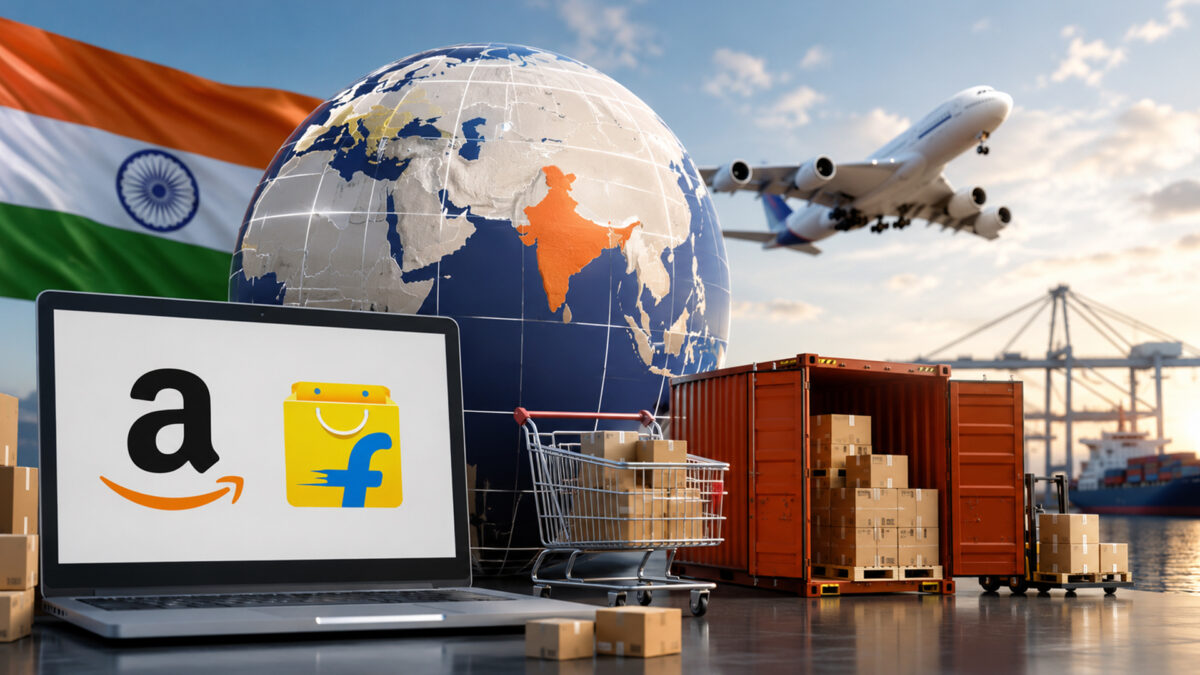
The decision is likely to benefit global e-commerce companies such as Amazon and Flipkart, which have invested heavily in India’s digital commerce sector. The revised framework enables these companies to source products directly from Indian manufacturers and exporters, store them in warehouses and sell them to overseas buyers through their global platforms.

Industry experts believe the move could significantly expand export opportunities for micro, small and medium enterprises (MSMEs), artisans and local manufacturers. Many smaller businesses often struggle with international logistics and distribution. By leveraging the infrastructure and global reach of large e-commerce companies, they could gain easier access to customers in foreign markets.

The government expects the policy to support its broader objective of increasing exports and integrating Indian businesses into global supply chains. With international demand for Indian products growing across categories such as textiles, handicrafts, electronics, home décor and engineering goods, digital commerce is emerging as an important channel for export growth.

The revised FDI norms also simplify operational processes for e-commerce companies. Under the earlier rules, firms often had to rely on third-party exporters or complex business arrangements to comply with investment regulations. The new framework allows them to manage export inventories directly, making the process more efficient and cost-effective.

Amazon welcomed the government’s decision, saying the policy would help thousands of Indian sellers and manufacturers expand their global presence. The company has been working to increase exports from India through its online marketplace and believes the revised rules will accelerate that effort.

However, trader bodies have expressed concerns over the policy. The Confederation of All India Traders (CAIT) has urged the government to ensure that the relaxation is used strictly for exports and does not indirectly affect India’s domestic retail market. The organisation has called for strong monitoring mechanisms to prevent misuse of the revised rules.

Experts note that the policy strikes a balance between encouraging exports and protecting domestic retailers. While it provides greater flexibility for export operations, it does not alter the government’s long-standing restrictions on inventory-led e-commerce within India.

The reform also comes as India seeks to strengthen its position in global trade and attract more investment into manufacturing and supply chains. By allowing foreign-funded e-commerce companies to play a bigger role in exports, policymakers hope to improve the country’s competitiveness in international markets while creating new opportunities for Indian businesses.

As India’s digital economy continues to expand, online platforms are expected to play an increasingly important role in connecting local manufacturers with global consumers. The latest policy change is expected to reduce export barriers, improve logistics and help Indian products reach overseas markets more efficiently.

With export-led growth becoming a key focus area, the revised FDI rules for e-commerce are expected to benefit manufacturers, exporters, online platforms and small businesses alike, while keeping domestic retail regulations unchanged. The government believes the move will strengthen India’s export capabilities and support the long-term growth of its digital commerce ecosystem.

Also Read: Shadowfax shares slide after ₹1,047 cr block deal

Categories
Corporate

Shadowfax shares slide after ₹1,047 cr block deal

Shares of Shadowfax Technologies came under heavy selling pressure on Thursday after a ₹1,047 crore block deal changed hands in the market, triggering concerns over stake dilution and prompting investors to book profits. The stock fell as much as 7% during intraday trade before recovering some losses to close lower, making it one of the biggest laggards of the session.

According to market reports, around 1.98 crore shares, representing nearly 5.4% of the company’s equity, were traded through multiple block deals. The transactions were executed at an average price of around ₹530 per share, which was at a discount to the previous day’s closing price. The discounted sale put pressure on the stock soon after trading began.

While the identities of all buyers were not immediately disclosed, reports suggested that Flipkart, one of Shadowfax’s early investors, was among the likely sellers. Some other existing shareholders were also believed to have participated in the transaction as part of their portfolio rebalancing. However, there was no official confirmation from the company or the investors regarding the exact participants in the deal.

The block deal sparked a sharp reaction on Dalal Street, with investors interpreting the large share sale as a sign of profit booking by early backers following the company’s recent stock market debut. Analysts noted that such transactions are common after the expiry of lock-in periods, allowing early investors to monetise part of their holdings.

Despite Thursday’s decline, market experts said the block deal does not necessarily reflect the company’s operational performance or long-term growth prospects. Instead, they described it as a financial decision by existing shareholders seeking to partially exit their investment after years of holding the stock.

Shadowfax, one of India’s leading logistics and last-mile delivery companies, has built a strong presence in the fast-growing e-commerce and quick commerce sectors. The company provides delivery solutions for online retailers, direct-to-consumer brands, grocery platforms and businesses across the country.

Over the past few years, Shadowfax has expanded rapidly by leveraging technology, a large delivery partner network and increasing demand for faster deliveries. The company has benefited from the continued growth of India’s digital economy, where online shopping and hyperlocal delivery services have become increasingly popular.

Investors have closely tracked the company’s performance since its listing, viewing it as a play on India’s expanding logistics and supply chain sector. However, Thursday’s large block transaction temporarily overshadowed the company’s business fundamentals, leading to increased selling pressure during the trading session.

Market analysts explained that block deals involving large institutional investors often create short-term volatility because of the significant volume of shares changing hands at discounted prices. Such transactions can temporarily impact investor sentiment even when the company’s underlying business remains unchanged.

Some experts also pointed out that early investors, including venture capital and private equity firms, typically reduce their holdings gradually after a company goes public. These exits help investors realise returns while improving the stock’s public float and liquidity over time.

Despite the sharp fall, analysts believe Shadowfax remains well positioned to benefit from India’s growing logistics market. Rising e-commerce penetration, increasing online consumer spending and the rapid expansion of quick commerce platforms continue to drive demand for efficient delivery services across urban and semi-urban markets.

The company has also been investing in technology, automation and network expansion to strengthen its delivery capabilities. These initiatives are expected to support long-term growth as businesses increasingly rely on organised logistics providers for faster and more reliable deliveries.

For investors, Thursday’s decline serves as a reminder that large institutional stake sales can create short-term market volatility, even when there are no changes to a company’s business outlook. Analysts advise investors to focus on fundamentals such as revenue growth, profitability, competitive positioning and future expansion plans rather than reacting solely to block deal activity.

While the ₹1,047 crore block deal weighed on the stock in the near term, market participants will now watch whether fresh institutional buying emerges in the coming sessions. The company’s long-term prospects are expected to depend more on its ability to capitalise on India’s booming logistics industry than on temporary movements caused by shareholder exits.

Also Read: Adani Group rejects airline venture speculation

Categories
Technology

AI now writes 40% code at Flipkart

Flipkart is rapidly expanding its use of artificial intelligence, with nearly 40% of the company’s software code now being generated by AI, according to its Chief Product and Technology Officer.

The company is also building its own large language models (LLMs) tailored specifically for e-commerce, signalling a major shift in how India’s leading online retailer plans to use AI to improve both customer experience and internal operations.

Speaking about Flipkart’s AI strategy, the company’s technology leadership said generative AI is no longer limited to experimentation but has become an integral part of software development. Engineers increasingly rely on AI-powered coding assistants to automate repetitive programming tasks, allowing them to spend more time solving complex technical problems and building new features.

The company clarified that AI is intended to assist developers rather than replace them. Human engineers continue to review, validate and refine AI-generated code before it is deployed, ensuring quality, security and reliability.

Beyond software development, Flipkart is investing heavily in proprietary AI models designed specifically for online commerce. Unlike general-purpose language models, these systems are trained to understand shopping behaviour, product catalogues, customer queries and seller operations. The goal is to deliver more personalised recommendations, improve product discovery, enhance customer support and streamline logistics.

According to the company, building in-house AI models also offers greater control over data, improves performance for India-specific use cases and reduces dependence on external AI platforms.

Flipkart believes artificial intelligence will play an increasingly important role across every stage of online retail, from inventory planning and demand forecasting to fraud detection and warehouse automation. The company is integrating AI into multiple business functions as it prepares for the next phase of digital commerce growth.

Also Read: Adani Enterprises raises QIP size to ₹15,000 cr

Categories
1 Minute-Read

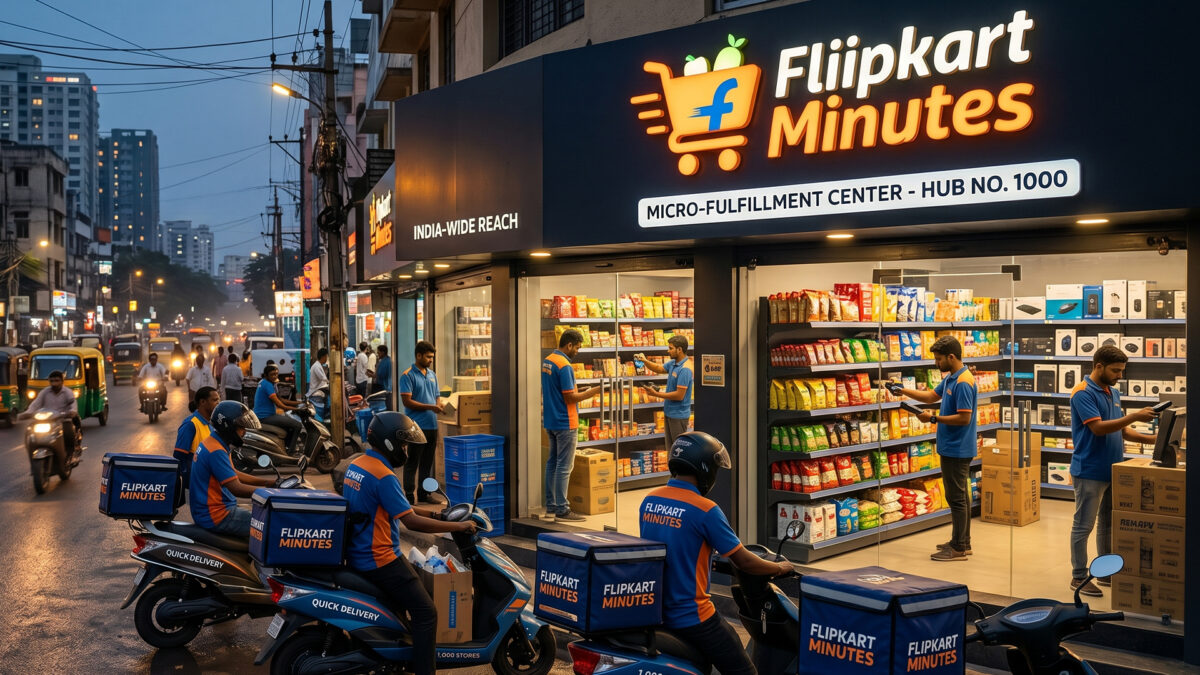
Flipkart minutes hits 1,000 stores in expansion push

Flipkart has crossed a major milestone in India’s fast-growing quick commerce market, with its instant delivery service Flipkart Minutes expanding to 1,000 micro-fulfilment centres in less than two years. The achievement highlights the company’s aggressive push to strengthen its presence in a sector that has become one of the fiercest battlegrounds in Indian e-commerce.

The Walmart-owned company said the rapid expansion has been driven by rising demand for quick deliveries across both large cities and smaller towns. Unlike many rivals that initially focused on metros, Flipkart has increasingly targeted consumers in Tier-2 and Tier-3 markets, where online shopping adoption continues to grow rapidly. Around 70% of its fulfilment network is now concentrated in these smaller cities.

Flipkart Minutes, which promises deliveries within minutes, has emerged as one of the fastest-growing businesses in the company’s portfolio. According to company data, order volumes have increased fivefold over the past year, while sales from smaller towns have surged dramatically as more consumers embrace quick commerce for groceries, daily essentials and other products.

The company now operates across more than 130 cities and plans to continue expanding. Reports indicate that Flipkart aims to increase its network to around 1,500 fulfilment centres in the coming months as competition intensifies.

India’s quick commerce market has witnessed explosive growth, with players such as Blinkit, Zepto and Swiggy Instamart investing heavily in warehouses, logistics and customer acquisition. Global giants including Amazon and Flipkart have also accelerated their efforts to capture a larger share of the rapidly expanding sector.

Also Read: Vedanta promoter trims stake through ₹2,149 cr block deal

Categories
1 Minute-Read

Flipkart bolsters leadership with key tech hires

Walmart-owned Flipkart has appointed several senior leaders across its AI, fintech and engineering divisions as it looks to strengthen its technology capabilities and drive innovation.

The new executives bring experience in artificial intelligence, product development, financial technology and engineering, and will help enhance customer experience and operational efficiency.

The appointments come as competition in India’s e-commerce sector intensifies and companies increasingly invest in AI-driven solutions. Flipkart said the hires reflect its focus on building strong leadership and advancing technology-led growth as it expands its presence in India’s rapidly growing digital economy.

Categories
Beyond

FSSAI issues notices to KFC, Nestlé and Flipkart

India’s food safety regulator has issued notices to three major brands , KFC India, Nestlé India and Flipkart, following consumer complaints related to food hygiene and alleged pest contamination.

The action was taken by the Food Safety and Standards Authority of India after complaints were received through the National Consumer Helpline. The regulator said the notices were issued to seek responses from the companies regarding grievances raised by consumers.

According to reports, the complaints involved concerns about hygiene standards and the presence of foreign objects or pests in food products supplied or sold through the companies. While the exact details of individual complaints have not been publicly disclosed, the regulator has asked the firms to investigate the issues and provide explanations.

The move highlights growing scrutiny of food safety practices as authorities seek to strengthen consumer protection and improve confidence in food products and services. FSSAI regularly monitors complaints received through various channels and can seek clarification from companies when concerns are raised about product quality or safety.

The notices do not amount to a finding of wrongdoing. They are part of the regulator’s process of examining complaints and gathering information before deciding whether any further action is required. The companies concerned may respond with details of their internal investigations, quality-control procedures and corrective measures, if any.

Consumer complaints relating to food quality, packaging and contamination have increasingly come under the spotlight as online food delivery and e-commerce platforms expand their reach across the country. Regulators have stressed the importance of maintaining strict safety standards throughout the supply chain, from manufacturing and storage to delivery.

Also Read: Wikipedia rolls out history trivia game on iPhone

Categories
Corporate

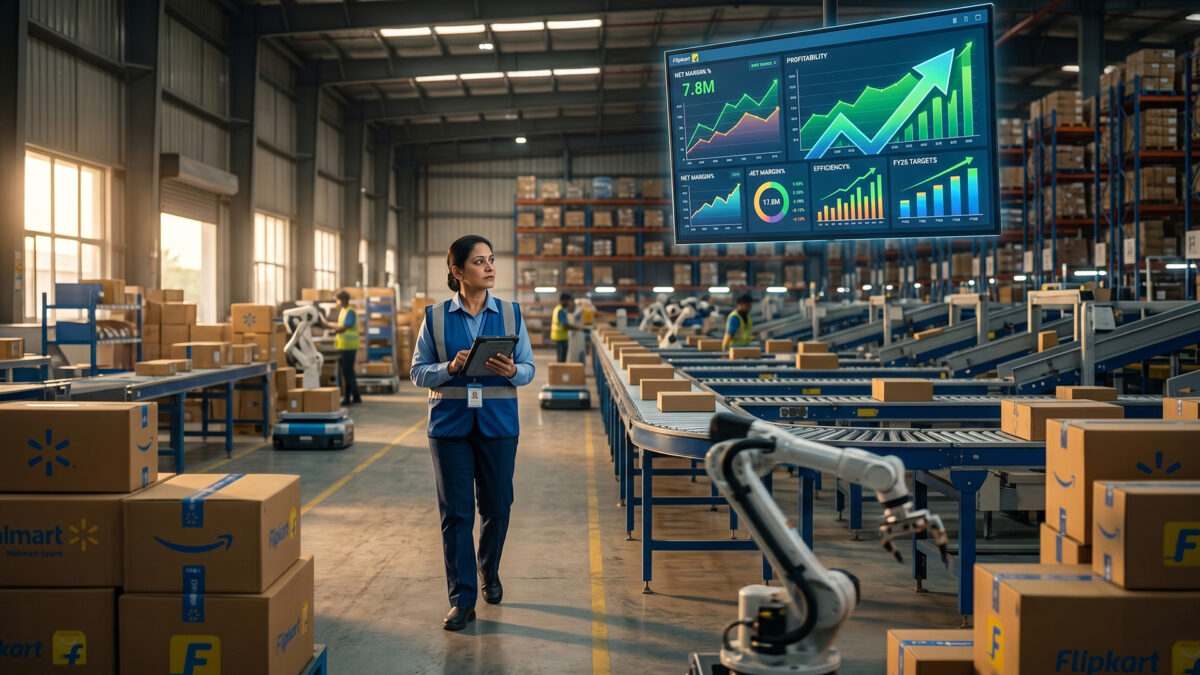
Flipkart IPO put on hold, focus shifts to profits

Flipkart is expected to delay its long-awaited stock market debut as its parent company Walmart pushes the e-commerce firm to focus on profitability instead of rushing into an IPO.

According to reports, Walmart has advised Flipkart to hold off on listing plans until the company shows steady financial improvement. The goal is to first reach stronger earnings performance, including an internal target of breaking even at the EBITDA level by FY2027.

Flipkart had been widely expected to go public in the next couple of years, with earlier market expectations pointing to a possible IPO around 2026–27. However, that timeline now appears uncertain, with some reports suggesting the listing could be pushed as far as 2028.

The shift reflects a broader change in strategy. Instead of focusing on valuations and market entry, Flipkart is now being encouraged to strengthen its core business and improve margins. That includes cutting losses, improving efficiency, and growing higher-profit areas like advertising, fintech services, and logistics.

Walmart’s direction signals a more cautious approach, prioritising long-term stability over short-term listing goals. The idea is that Flipkart should enter the public markets only when its financial performance is strong enough to support sustained investor confidence.

Flipkart, one of India’s biggest e-commerce companies, has been preparing for an IPO for several years. The company has gone through multiple rounds of restructuring and investment to prepare for a potential listing.

However, changing market conditions and increased pressure on profitability across global tech companies have slowed down many IPO plans in the startup sector.

Also Read: New Google accounts may face 5GB storage limit

Categories
Corporate

Flipkart shifts headquarters to India ahead of IPO plans

E-commerce company Flipkart has moved its headquarters from Singapore back to India, a step widely seen as preparation for its planned initial public offering (IPO). The move aligns the company’s corporate structure with its main market, where most of its business operations are based.

The company confirmed that it has completed the shift of its holding structure to India. With this change, Flipkart Internet Private Limited, the group’s India entity, will become the main holding company for its operations. The restructuring is expected to simplify regulatory processes and support the company’s future listing plans.

Founded in Bengaluru in 2007, Flipkart had earlier moved its headquarters to Singapore to attract global investors and operate under a more favourable tax and regulatory environment. However, with India’s capital markets expanding and investor interest in technology companies growing, the company has decided to bring its base back to the country.

The relocation is closely linked to Flipkart’s long-term plan to go public. The company is reportedly preparing for a possible IPO in the coming years, which could become one of the largest listings in India’s technology sector. While the timeline and valuation have not yet been finalised, industry analysts believe the move will help the company navigate domestic listing rules more easily.

Flipkart is one of India’s largest online retail platforms and plays a major role in the country’s fast-growing e-commerce sector. The company competes with global players such as Amazon in the Indian market.

The firm received a major boost in 2018 when US retail giant Walmart acquired a majority stake in the company in a deal worth about $16 billion. Since then, Flipkart has continued to expand its operations across categories including electronics, fashion and grocery.

Also Read: Iran crisis affects LPG supply in major Indian cities

Categories
1 Minute-Read

Flipkart gets approval to shift base back to India

Flipkart has received approval from the National Company Law Tribunal (NCLT) to move its legal domicile from Singapore back to India, clearing an important hurdle ahead of its initial public offering (IPO).

The Walmart-owned e-commerce company had shifted its headquarters to Singapore in 2011 to attract global investors. With India’s capital markets deepening, Flipkart is now restructuring its corporate setup to enable a domestic listing.

The approval allows the company to begin the process of consolidating its overseas entities under an Indian holding company. While Flipkart has not announced an IPO timeline, the move signals strong intent to list in India.