Categories
Leaders

Parul Bajaj joins Coca-Cola as VP, Chief of Staff

Parul Bajaj has joined The Coca-Cola Company as Vice President and Chief of Staff after spending more than 10 years with automobile company Nissan.

In her new role, Bajaj will work closely with Coca-Cola’s senior leadership team, especially in areas related to communications, sustainability and strategic partnerships. She announced the appointment through a LinkedIn post, saying she was excited to begin a new chapter with the company.

Before joining Coca-Cola, Bajaj held several important roles at Nissan across the United States and Europe. Most recently, she worked in sustainability and corporate affairs. She also served as Chief of Staff to senior leaders handling communications and sustainability operations across multiple regions.

Over the years, Bajaj has built experience in corporate communications, sustainability initiatives and stakeholder engagement. She has also worked with companies such as FedEx and Bridgestone earlier in her career.

Coca-Cola has been strengthening its leadership teams globally as businesses increasingly invest in environmental initiatives and corporate partnerships.

Also Read: Google showcases next-generation AI tools

Categories
Technology

Google showcases next-generation AI tools
Google has unveiled a range of new artificial intelligence features for Android devices along with a new AI-powered laptop platform called GoogleBook during its Android Show 2026 event.

The company introduced “Gemini Intelligence”, an upgraded AI assistant integrated directly into Android smartphones and tablets. Google said the system is designed to help users perform tasks more naturally through voice and text commands.

According to the company, Gemini Intelligence can summarise conversations, organise information, draft messages and assist users across multiple apps. Google said the AI will make Android devices more personalised and interactive.

Another major announcement was GoogleBook, a lightweight laptop platform built around AI-powered tools. Google showcased features such as real-time summarisation, smart writing assistance, voice-based commands and AI-supported search.

The company demonstrated how users could ask Gemini to manage schedules, write emails, edit photos and retrieve information from files using simple conversational prompts.

Google said more details about the rollout of Gemini Intelligence and GoogleBook will be shared during its upcoming developer conference, Google I/O.

Industry experts believe the announcements highlight Google’s push to compete aggressively in the rapidly growing AI market, where companies including Microsoft, Apple and OpenAI are introducing similar technologies. Google said the new AI features will also improve services like Maps, Search, messaging and accessibility tools on Android devices.

Also Read: Air India cuts overseas flights due to fuel costs hike

Categories
Beyond

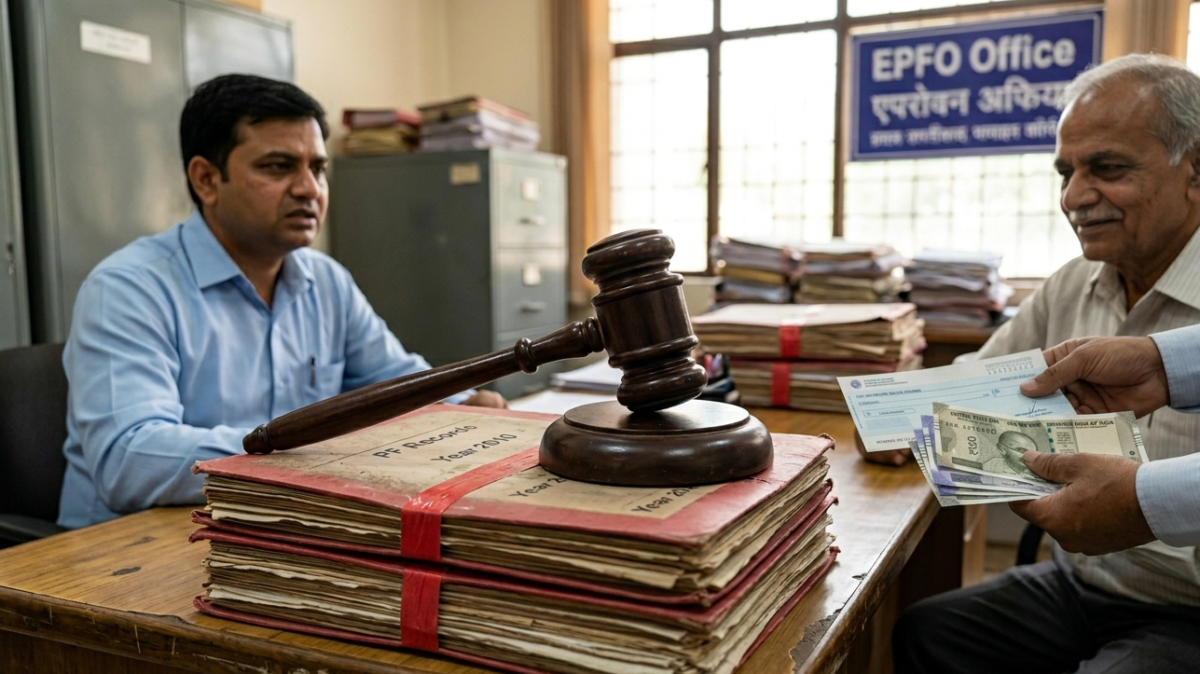
EPFO fined ₹50,000 for 10-year delay in PF transfer

The Employees’ Provident Fund Organisation (EPFO) has been directed to pay ₹50,000 compensation to an employee after taking almost 10 years to transfer his provident fund account from one employer to another.

The order was passed by the District Consumer Disputes Redressal Commission in Chandigarh, which criticised the EPFO for the long delay and called it a clear case of poor service.

The employee had switched jobs from Tech Mahindra to Infosys in 2010 and applied for the transfer of his PF balance soon after. However, despite repeated reminders, complaints and RTI applications, the transfer process remained pending for years.

According to the case details, the PF amount was finally transferred only in 2020. The employee then approached the consumer commission, arguing that the delay caused financial loss and mental stress.

During the hearing, the EPFO blamed technical and software-related issues for the delay. The commission, however, rejected the explanation and observed that such excuses could not justify keeping a subscriber waiting for nearly a decade for access to his own savings.

The commission termed the delay a “deficiency in service” and ordered the EPFO to pay ₹50,000 towards compensation and litigation costs within 60 days. It also warned that failure to comply would attract interest on the amount.

The ruling has drawn attention to delays faced by many PF subscribers and is being viewed as a significant decision on accountability in public service delivery.

Also Read: Centre hikes gold, silver import duty from 6% to 15%

Categories
Beyond

Centre hikes gold, silver import duty from 6% to 15%

The Centre has increased import duties on gold and silver from 6% to 15% in a major move aimed at reducing imports, supporting the rupee and protecting foreign exchange reserves amid global economic uncertainty.

The revised tariff structure, which came into effect immediately, includes a 10% basic customs duty along with a 5% Agriculture Infrastructure and Development Cess (AIDC). Import duty on platinum has also been raised to 15.4%.

Following the announcement, domestic bullion markets witnessed a sharp rally. Gold prices surged nearly 10%, climbing to around ₹1.62 lakh per 10 grams in some markets, while silver prices jumped by nearly ₹17,000 per kilogram to touch ₹2.90 lakh per kg. Traders described the move as one of the sharpest single-day increases in domestic bullion prices in recent years.

Market experts said the sudden rise in import duty directly increased the landed cost of precious metals, leading to a spike in retail and futures prices across the country. Gold and silver futures on the Multi Commodity Exchange (MCX) also recorded strong gains during Wednesday’s trade.

The government’s decision comes amid pressure on the rupee due to rising crude oil prices, foreign fund outflows and geopolitical tensions in West Asia. Officials believe reducing imports of non-essential commodities such as gold can help narrow the trade deficit and conserve foreign exchange reserves.

India is among the world’s largest consumers of gold, with demand driven mainly by jewellery purchases, weddings and investment demand. Industry representatives warned that the steep increase in duty could affect jewellery demand in the coming months, especially as global gold prices are already trading near record highs.

Some analysts also cautioned that higher import taxes may encourage unofficial imports and smuggling, which had declined after the government reduced duties in recent years. Jewellers said consumers could delay purchases in anticipation of price corrections or lower taxes in the future.

The duty hike follows recent appeals from Prime Minister Narendra Modi urging citizens to reduce gold purchases temporarily to ease pressure on the economy and external accounts.

Also Read: Sensex gains over 200 points, Nifty reclaims 23,450

Categories
Corporate

Sensex gains over 200 points, Nifty reclaims 23,450

Indian stock markets opened in a volatile range on Wednesday after four consecutive sessions of heavy losses, with benchmark indices attempting a modest recovery amid mixed global cues. The BSE Sensex rose over 200 points in early trade, while the NSE Nifty reclaimed the 23,450 mark, supported by easing crude oil prices and a slightly stronger rupee.

Investor sentiment, however, remained cautious due to continued geopolitical tensions in West Asia and persistent foreign institutional investor (FII) selling. Market volatility stayed elevated, with India VIX, the market’s fear indicator,  rising during the session.

Among sectoral performers, metal stocks emerged as the top gainers, supported by renewed buying interest in commodity-linked counters. Pharma and FMCG shares also witnessed selective buying as investors preferred defensive sectors amid uncertainty. Chemical stocks too traded in positive territory during the day.

On the losing side, banking, IT and auto stocks remained under pressure, dragging overall market sentiment. Realty shares also saw weakness as investors booked profits after recent gains. Analysts said concerns over global growth, inflation and elevated oil prices continued to weigh on sectors sensitive to economic activity.

The market recovery came after a steep selloff in the previous session, when the Sensex had plunged more than 1,450 points and the Nifty slipped below 23,400. Traders said bargain buying at lower levels and stable Asian markets helped domestic equities recover partially on Wednesday.

Also Read: India eases royalty rules for oil and gas firms

Categories
Beyond

India eases royalty rules for oil and gas firms

Shares of ONGC and Oil India surged up to 9% after the Indian government reduced royalty rates on crude oil and natural gas production to encourage higher domestic output.

The policy aims to support upstream oil and gas companies by lowering their operational costs and improving profitability. Officials said the revised structure is designed to boost exploration, attract investment, and increase India’s energy production.

Under the new framework, royalty rates have been rationalised across onshore, offshore, and deepwater fields. Offshore and gas production rates have been reduced, while some categories now offer lower or phased royalty charges.

Market analysts say the move could significantly benefit state-run producers like ONGC and Oil India, improving cash flows and encouraging fresh investment in difficult exploration areas.

Following the announcement, both companies saw strong buying interest on the stock market, reflecting investor optimism about higher earnings potential.

The government’s decision is part of a broader push to reduce India’s dependence on imported crude oil and strengthen domestic energy security through increased local production.

Also Read: Toyota to build SUV plant in Maharashtra by 2029

Categories
Beyond

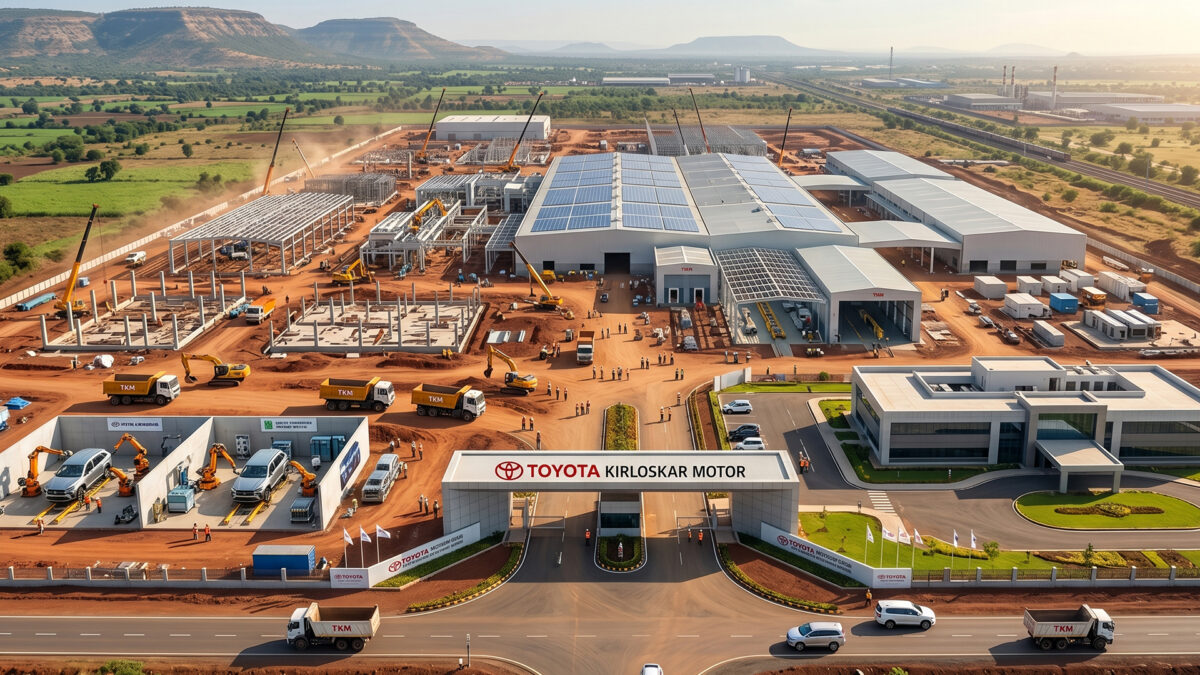
Toyota to build SUV plant in Maharashtra by 2029

Toyota Kirloskar Motor has announced plans to set up a new manufacturing plant in Maharashtra, expanding its operations in India’s growing auto market.

The facility will be located in the Bidkin Industrial Area and is expected to begin production in the first half of 2029. Once operational, it will have an annual capacity of around 1 lakh vehicles.

The plant will focus mainly on producing a new SUV model, along with full vehicle manufacturing processes such as welding, painting, and final assembly. It is expected to generate about 2,800 jobs.

Toyota said the new unit is part of its long-term plan to strengthen its presence in India and meet rising demand, especially for SUVs, which remain one of the fastest-growing segments in the country.

With production set for 2029, the Maharashtra plant is expected to play a key role in Toyota’s future SUV lineup for both domestic and export markets.

The company also plans to use the facility to support exports to nearby international markets, making it part of a wider global supply strategy.

While investment details have not been disclosed, the project is seen as a major step in Toyota’s expansion in India, where it already operates manufacturing plants in Karnataka.

Also Read: PVR INOX returns to profit with ₹187 cr Q4 gain

Categories
Beyond

Sensex tumbles 1,300 points, Nifty down 23,600 mark

Indian equity markets witnessed a sharp sell-off on Tuesday, with the Sensex falling over 1,300 points in intraday trade and the Nifty slipping below the 23,600 mark. The downturn extended losses for the fourth straight session, wiping out nearly ₹11 lakh crore in investor wealth over the period.

The market weakness was driven by a mix of global and domestic pressures, including rising crude oil prices, a weakening rupee, geopolitical tensions, and sustained foreign institutional investor (FII) selling. Higher oil prices have raised concerns over inflation and increased costs for companies, while currency depreciation added further pressure on sentiment.

Heavyweight stocks led the decline. Major losers included Infosys, TCS, HDFC Bank, ICICI Bank, and Tata Motors, all of which saw strong selling pressure. Banking, IT, auto, and financial stocks were among the worst-hit sectors, reflecting broad-based risk aversion among investors.

In contrast, defensive stocks provided limited support to the market. Shares of Sun Pharma, ITC, and Hindustan Unilever saw some buying interest, helping cushion the fall slightly, though not enough to reverse the overall negative trend.

Market analysts said the correction is largely driven by external factors rather than company-specific earnings weakness. Rising crude oil prices, triggered by global supply concerns and geopolitical tensions, have heightened fears of inflation and margin pressure for Indian companies.

Foreign investor outflows have also intensified the sell-off, as global funds continue to reduce exposure to emerging markets amid uncertainty and stronger safe-haven demand.

Also Read: Satya Nadella criticises OpenAI board in Musk trial

Categories
Leaders

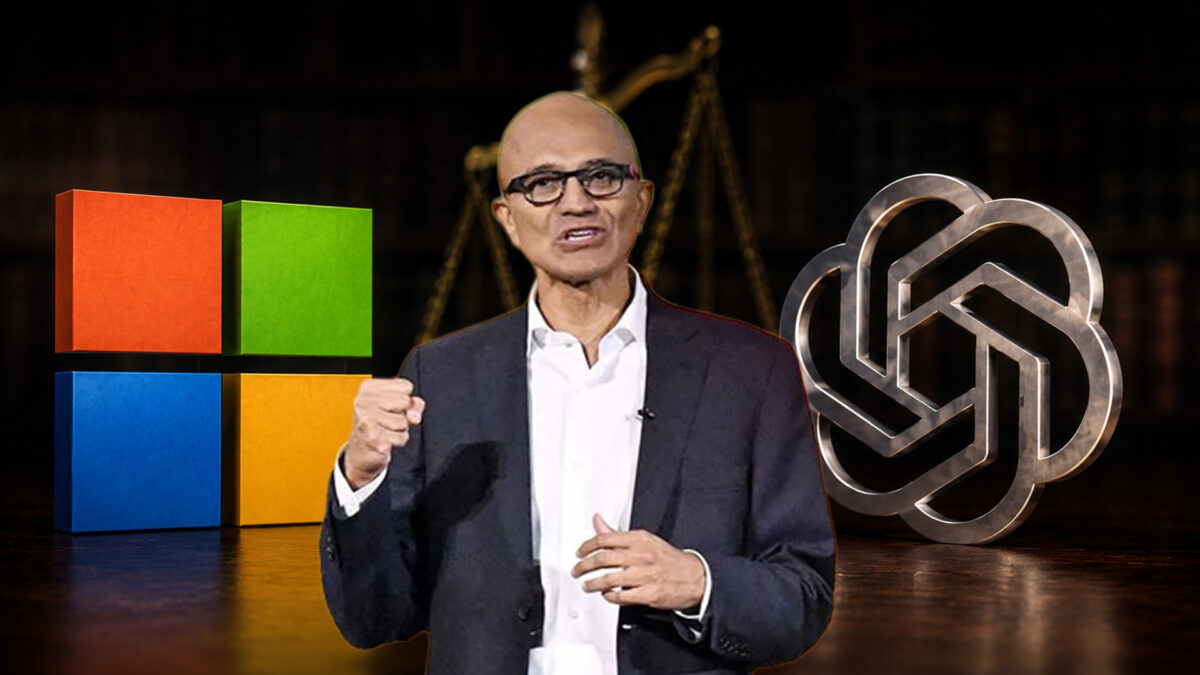
Satya Nadella criticises OpenAI board in Musk trial

Microsoft CEO Satya Nadella defended his company’s partnership with OpenAI in a US courtroom as part of the ongoing legal battle between Elon Musk and OpenAI leadership.

Nadella told the court that Microsoft’s multi-billion-dollar investment in OpenAI was a commercial decision based on business strategy, not a philanthropic move. He also stated that Elon Musk did not raise objections at the time Microsoft deepened its involvement with the AI firm.

The case has been filed by Musk against OpenAI and its CEO Sam Altman, alleging that the company shifted away from its original mission as a non-profit-focused AI research organisation after building close ties with Microsoft.

During his testimony, Nadella also criticised OpenAI’s internal handling of the brief removal of Altman in 2023. He described the board’s actions during that period as poorly managed and “amateurish,” pointing to confusion in communication and governance.

Microsoft has invested billions of dollars into OpenAI and now plays a central role in its technology ecosystem, making the partnership a key focus in the dispute.

Also Read: PVR INOX returns to profit with ₹187 cr Q4 gain

Categories
1 Minute-Read

PVR INOX returns to profit with ₹187 cr Q4 gain

PVR INOX reported a net profit of ₹187 crore in the March quarter, compared to a ₹125 crore loss in the same period last year.

Revenue rose 26% year-on-year, supported by stronger ticket sales, better movie releases and higher spending on food and beverages. Improved theatre occupancy and advertising income also boosted earnings.

The multiplex operator said operational efficiency and a strong film lineup helped drive the recovery. The company has now returned to profitability after a weak previous year, reflecting a revival in cinema-going demand across India.