Categories
Technology

Google rolls out Gemini 3.5 flash

Google has introduced a new artificial intelligence model called Gemini 3.5 Flash, along with upgraded AI-powered search tools, as part of its latest technology announcements.

The company said Gemini 3.5 Flash is built to be faster and more efficient, offering quick responses while using lower computing power. It is designed for tasks like answering questions, generating content, coding help and real-time assistance.

Google also unveiled new AI search agent tools that aim to make search more interactive. Instead of just showing links, the tools are designed to provide direct answers and help users complete tasks using AI.

The updates are part of Google’s efforts to make AI more practical and widely accessible. The company is focusing on improving both performance and cost efficiency as competition in the AI sector continues to grow.

With Gemini already being integrated across several Google products, the new version is expected to strengthen its AI ecosystem and expand use cases for both individuals and businesses.

Industry experts say the emphasis on faster and cheaper AI could help drive wider adoption of generative AI tools, especially in everyday digital tasks.

The announcement reflects Google’s continued push to lead in the global AI market through improved models and smarter search technology.

Also Read: StrainX Bioworks raises $13 mn to boost alternative protein

Categories
Technology

Google introduces Gemini for science

Google has introduced Gemini for Science, a new artificial intelligence initiative aimed at helping scientists and researchers handle complex research work more efficiently. The company said the tools are designed to support researchers in analysing information, identifying patterns and assisting with scientific discoveries across different areas of study.

Research today often involves handling huge amounts of data, studies and technical information. Google said Gemini for Science is intended to reduce the time spent on repetitive and data-heavy tasks so researchers can focus more on experiments and innovation.

The AI system can assist in reviewing scientific papers, organising large datasets and helping researchers identify possible connections and insights that might otherwise take much longer to find. The technology is expected to support work in areas such as healthcare, biology, chemistry and other scientific fields.

Google said the goal is not to replace scientists but to create a tool that works alongside them, helping improve productivity and speed up the research process. Experts believe AI-powered research tools could become increasingly important as scientific work becomes more data-driven.

The launch reflects the growing role of artificial intelligence beyond consumer technology, with companies increasingly building specialised AI tools for research and industry applications.

Also Read: Nvidia profit rises despite China export challenges

Categories
Technology

Google, Blackstone launch $5 bn AI cloud venture

Google and Blackstone have announced a joint venture to create a new artificial intelligence-focused cloud company, backed by an initial $5 billion investment from Blackstone. The move is aimed at meeting the rapidly growing global demand for AI computing infrastructure.

The new US-based company will focus on building large-scale data centre capacity and offering access to Google’s custom-built AI chips, known as Tensor Processing Units (TPUs), through a cloud service model. These chips are widely used for training and running advanced AI systems.

Under the plan, Blackstone will take a majority stake in the venture while providing the initial equity funding. Google will supply hardware, software, and technical expertise to power the platform.

The project is designed to bring around 500 megawatts of computing capacity online by 2027, with scope for further expansion as demand increases. The total investment could eventually reach as much as $25 billion, including additional financing over time.

The venture will be led by long-time Google executive Benjamin Treynor Sloss, reflecting Google’s deep involvement in the project despite it being structured as a separate company.

The partnership comes at a time when global demand for AI infrastructure is surging, driven by the rapid growth of generative AI tools and large-scale machine learning systems. Companies across industries are competing for access to high-performance computing power, particularly specialised chips that can handle AI workloads efficiently.

The initiative also positions Google more directly in competition with other cloud and chip players by allowing external customers to access its proprietary TPU technology outside its core Google Cloud platform.

Also Read: Copilot key on Windows can now be remapped

Categories
Technology

New Google accounts may face 5GB storage limit

Google is reportedly testing a new approach to free cloud storage that could reduce the default limit for new accounts from 15GB to 5GB. The storage applies across Gmail, Google Drive and Google Photos, which all draw from a shared quota.

In the test, some users signing up for new Google accounts are shown only 5GB of free storage initially. To access the full 15GB, users may need to complete phone number verification during or after the registration process.

This change does not appear to affect existing Google accounts, which continue to receive the standard 15GB free storage allocation. The experiment is currently limited in scope and has not been officially rolled out worldwide.

For years, the 15GB free storage plan has been a key part of Google’s ecosystem, giving users a unified space for emails, files and photo backups. It has also been a competitive advantage in the cloud storage market.

However, storage usage has increased significantly over time as users store more high-resolution photos, videos and documents. This has led many users to eventually upgrade to paid Google One plans once their free limit is reached.

The new test suggests Google may be exploring ways to better manage storage demand while also tightening account verification processes. Industry observers note that linking storage benefits to identity confirmation could become a broader trend across digital platforms.

Google has described the move as a controlled experiment aimed at improving platform security and reducing the creation of fake or spam accounts. By linking full storage access to verification, the company may be trying to discourage mass sign-ups that exploit free storage offerings.

Also Read: ITC Hotels to acquire The Zuri Kumarakam for ₹205 cr

Categories
Technology

Google showcases next-generation AI tools

Google has unveiled a range of new artificial intelligence features for Android devices along with a new AI-powered laptop platform called GoogleBook during its Android Show 2026 event.

The company introduced “Gemini Intelligence”, an upgraded AI assistant integrated directly into Android smartphones and tablets. Google said the system is designed to help users perform tasks more naturally through voice and text commands.

According to the company, Gemini Intelligence can summarise conversations, organise information, draft messages and assist users across multiple apps. Google said the AI will make Android devices more personalised and interactive.

Another major announcement was GoogleBook, a lightweight laptop platform built around AI-powered tools. Google showcased features such as real-time summarisation, smart writing assistance, voice-based commands and AI-supported search.

The company demonstrated how users could ask Gemini to manage schedules, write emails, edit photos and retrieve information from files using simple conversational prompts.

Google said more details about the rollout of Gemini Intelligence and GoogleBook will be shared during its upcoming developer conference, Google I/O.

Industry experts believe the announcements highlight Google’s push to compete aggressively in the rapidly growing AI market, where companies including Microsoft, Apple and OpenAI are introducing similar technologies. Google said the new AI features will also improve services like Maps, Search, messaging and accessibility tools on Android devices.

Also Read: Air India cuts overseas flights due to fuel costs hike

Categories
Technology

Google introduces AI-powered Fitbit Air

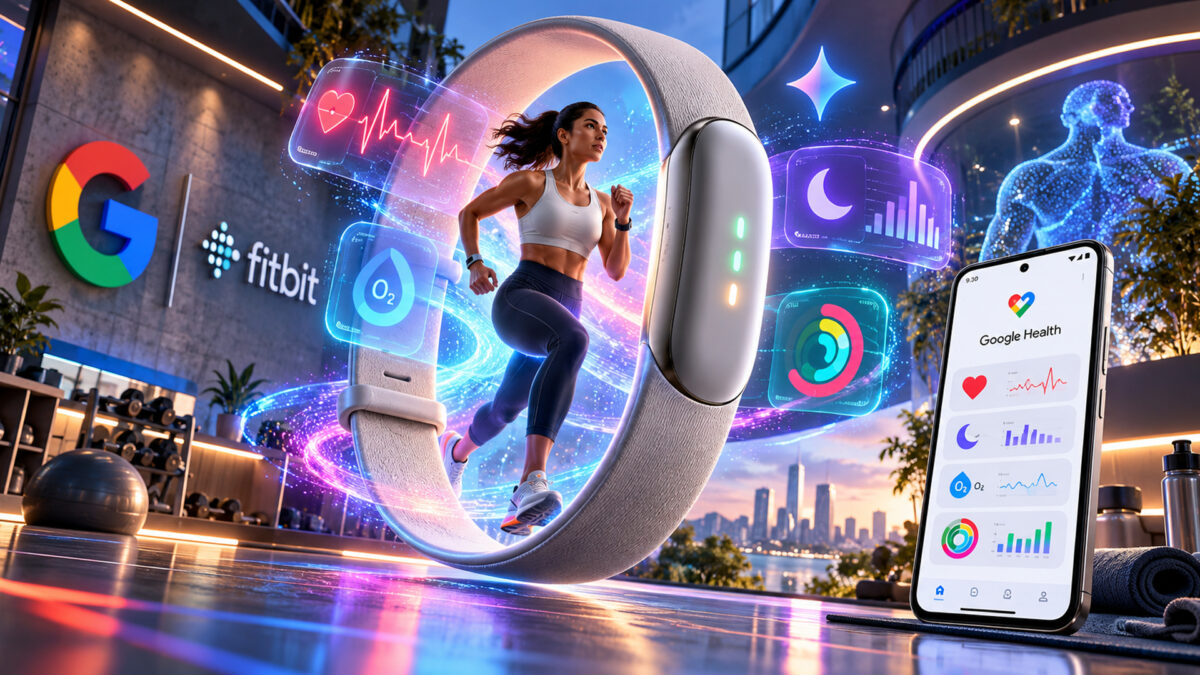
Google has entered the growing AI-driven wearable market with the launch of Fitbit Air, a new screenless fitness tracker designed to focus on health monitoring rather than smartwatch-style features. The company said the wearable combines passive health tracking with artificial intelligence-based wellness insights.

Priced at $99, Fitbit Air does not include a display, notifications, or apps. Instead, the lightweight wrist strap continuously tracks user health data in the background and delivers personalised recommendations through Google’s new Health app. The device is powered by Google’s Gemini AI technology, which analyses fitness and biometric information to provide coaching related to sleep, recovery, activity levels, and overall wellness.

The wearable includes features such as continuous heart-rate monitoring, sleep analysis, blood oxygen tracking, activity tracking, temperature sensing, and heart rhythm notifications. Google claims the device can offer up to seven days of battery life on a single charge.

According to the company, Fitbit Air is aimed at users who want health insights without the distractions associated with traditional smartwatches. The product reflects a growing trend in the wearable technology industry, where companies are shifting focus toward continuous biometric tracking and AI-powered health analysis.

Google has also announced a unified Google Health app that will replace the older Fitbit app experience. The new platform combines fitness, sleep, and wellness information in one interface while offering AI-generated recommendations based on user data patterns.

The company confirmed that Fitbit Air will support both Android and iPhone users, widening its potential customer base. Alongside the device, Google is also introducing a subscription-based AI Health Coach service that provides more advanced health analysis and customised wellness guidance.

Fitbit Air directly competes with popular screenless wearable brands such as Whoop and Oura, which have gained popularity among fitness-focused users and professional athletes.

Also Read: Tata Trusts postpones crucial board meeting

Categories
1 Minute-Read

Google tests YouTube AI search tool

Google is testing a new AI-powered feature called “Ask YouTube” that allows users to search using full questions instead of simple keywords.

The tool provides text summaries, suggested videos, Shorts and highlighted clips related to the query. Users can also ask follow-up questions, making search more conversational.

The feature is currently being tested with selected YouTube Premium users in the United States. Google has not announced a wider rollout date yet.

The move is part of its broader AI push and could change how users discover tutorials, reviews and educational content on YouTube.

Categories
Technology

Google plans a huge $40 bn investment in Anthropic

Google’s parent company, Alphabet, has announced plans to invest up to $40 billion in artificial intelligence startup Anthropic, one of the leading rivals in the fast-growing AI space. The deal strengthens an already close partnership between the two companies.

According to reports, Google will immediately invest about $10 billion in Anthropic. A further $30 billion may follow, but only if the startup meets certain performance targets. The investment values Anthropic at around $350 billion.

Anthropic is best known for its AI chatbot family called Claude, which competes directly with OpenAI’s ChatGPT and Google’s own Gemini models. The company has seen rapid growth in demand, especially for its coding-focused tools.

Along with funding, the deal also includes major support for computing power. Google will provide large-scale access to its cloud infrastructure and specialized AI chips to help Anthropic train and run its models. This kind of computing capacity is seen as critical for building advanced AI systems.

The investment comes as competition among big tech firms intensifies. Amazon recently announced its own multi-billion-dollar backing for Anthropic, making the startup one of the most heavily funded AI companies in the world.

Also Read: RBI cancels Paytm payments bank licence

Categories
Leaders

Gucci-owner to launch AI smart glasses with Google

French luxury group Kering, best known for brands like Gucci, is planning to step into the world of smart technology with a new line of high-end smart glasses, developed in partnership with Google. The company aims to launch the product as early as next year, signalling a shift toward combining fashion with advanced digital features.

The idea is simple: take the elegance and style associated with Gucci and merge it with Google’s expertise in artificial intelligence and wearable tech. The result could be a pair of smart glasses that not only look premium but also offer practical features powered by AI.

This move comes at a time when the luxury industry is looking for new ways to attract customers. Kering, in particular, has been facing slower growth at Gucci, its biggest brand. By entering the smart eyewear space, the company hopes to open up a fresh revenue stream and appeal to younger, tech-savvy consumers.

Competition in this space is already heating up. Companies like EssilorLuxottica have partnered with Meta to produce Ray-Ban smart glasses, which combine classic design with features like cameras and voice assistance. Kering’s entry could raise the bar by bringing a stronger focus on luxury and design.

Kering’s leadership says the project is part of a broader plan to expand beyond traditional fashion and adapt to changing consumer habits. As people increasingly look for products that combine style with functionality, smart glasses could become a key category in the future.

Also Read: Sam Altman seeks relief in sister’s lawsuit

Categories
Technology

Google brings AI search to Windows desktop

Google has introduced a new desktop app for Windows users, making it easier to search the web and access information without opening a browser.

The app works on Windows 10 and newer versions and is currently available in English. It is designed to simplify how people search by bringing everything—web results, files, apps, and even cloud content—into one place.

One of its main features is “AI Mode,” which allows users to ask questions in a natural, conversational way. Instead of just showing a list of links, the app provides clear answers along with useful sources. This makes searching feel more like having a conversation than typing keywords.

Another useful feature is a quick shortcut. By pressing Alt + Space, users can instantly open the search bar and look for anything on their computer or online. This helps save time and reduces the need to switch between apps or browser tabs.

The app also includes tools like screen-based search and image recognition. Users can select something on their screen and ask questions about it, translate text, or identify images using built-in tools similar to Google Lens.

This launch is part of Google’s broader push to bring artificial intelligence into daily use. By placing AI tools directly on the desktop, the company is trying to make technology more helpful and less time-consuming.

For now, the app is limited to English, but more languages are expected in the future. With this move, Google is taking a step towards making search more personal, faster, and easier to use.

Also Read: Anthropic brings in Novartis CEO Narasimhan to board