Categories
Leaders

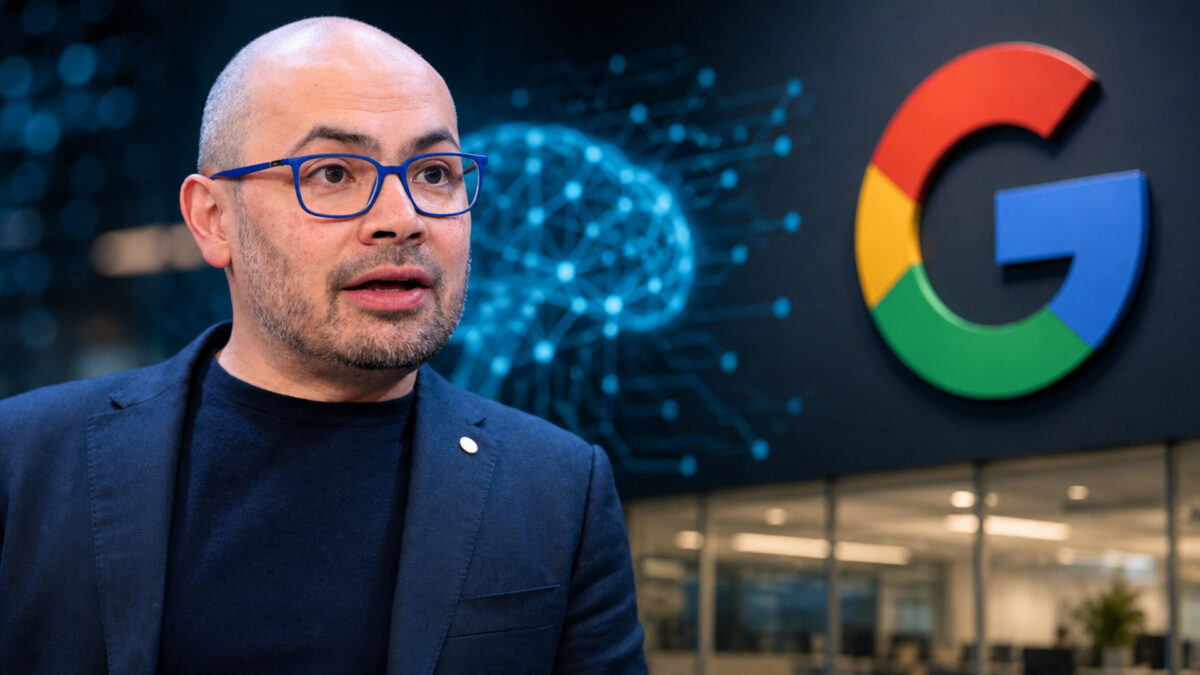
Demis Hassabis leaves Google DeepMind CEO role

Demis Hassabis is stepping down as chief executive of Google DeepMind, marking a major leadership change at one of the world’s most influential artificial intelligence research organisations.

Hassabis will become chair of Google DeepMind and chief scientist of Alphabet, Google’s parent company. He will move away from the lab’s day-to-day management but remain closely involved in its long-term artificial intelligence strategy. He will also continue leading Isomorphic Labs, Alphabet’s AI-focused drug discovery company.

The change comes at an important moment for Google. The company is investing heavily in AI as competition intensifies from rivals including OpenAI and Anthropic. Google has been pushing its Gemini AI models, AI agents and other products while trying to maintain its position in the rapidly changing generative AI market.

Under the new structure, Koray Kavukcuoglu, a long-time DeepMind executive, will take over as senior vice-president of Google DeepMind. He will oversee the organisation’s core AI research, Gemini model development and the Gemini app and developer teams.

For Hassabis, however, the move is not an exit from Google or artificial intelligence. Instead, it gives him a broader role across Alphabet, with a greater focus on scientific research, advanced AI and the longer-term goal of developing artificial general intelligence (AGI).

Hassabis co-founded DeepMind in 2010 with the ambition of building machines capable of learning and solving complex problems. Google acquired the company in 2014, and DeepMind was later combined with Google Brain in 2023 to create Google DeepMind.

The organisation has since become central to Google’s AI strategy. Its research has produced landmark systems such as AlphaGo, which defeated a leading human Go player, and AlphaFold, which transformed the study of protein structures. More recently, Google DeepMind has been deeply involved in the development of Gemini and other generative AI technologies.

Hassabis’ scientific reputation also extends beyond the technology industry. In 2024, he shared the Nobel Prize in Chemistry with John Jumper for work connected to protein structure prediction using AI. His career has placed him at the intersection of computer science, neuroscience and scientific research.

His new position as Alphabet chief scientist reflects that background. Rather than focusing primarily on operational management, Hassabis is expected to concentrate on the broader scientific direction of the company and its efforts to push the boundaries of AI.

The leadership change is part of a much wider shake-up inside Google’s AI division.

Jeff Dean, one of Google’s most senior AI figures and a company veteran of 27 years, is leaving to start a new public-benefit company called Discovery Loop. The venture will focus on using AI to automate scientific and engineering research. Dean will be joined by several other prominent Google researchers.

Dean’s departure is particularly notable because he has played a central role in Google’s computing and AI development for many years. His exit, alongside other senior departures, has raised questions about how Google will manage its research talent while the AI race becomes increasingly competitive.

Google is also facing pressure to turn its enormous AI investment into products that can compete effectively with rapidly developing systems from OpenAI, Anthropic and other companies.

The company’s financial results show how central AI has become to its future. Alphabet said recently that its second-quarter revenue rose 24% year-on-year, while Google Cloud revenue increased 82%, driven partly by demand for AI infrastructure and AI solutions. Google said Gemini was also becoming an important driver of growth across its cloud business.

That backdrop makes the leadership restructuring particularly significant. Google is no longer treating AI simply as a research project. Artificial intelligence now sits at the centre of its search business, cloud operations, consumer products and future technology plans.

The company has also expanded Gemini into a wider ecosystem covering AI assistants, developer tools and enterprise services. At the same time, Google DeepMind continues to work on areas including robotics, scientific discovery and advanced AI systems.

Hassabis has repeatedly argued that AI could have an enormous impact on science and society. In his expanded role, he is expected to focus more strongly on that long-term vision while allowing a new leadership team to handle day-to-day execution.

The transition also highlights how quickly the AI industry is changing. A few years ago, leadership at major AI laboratories was largely associated with research breakthroughs. Today, those organisations are simultaneously responsible for developing foundation models, running consumer products, managing huge computing requirements and responding to intense commercial competition.

Hassabis stepping back from the CEO position does not mean Google DeepMind is moving away from its AI ambitions. Instead, the company is separating its scientific and strategic leadership from its operational management.

Kavukcuoglu now faces the immediate task of leading the organisation’s next phase, including Gemini development and frontier AI research. Hassabis, meanwhile, will have a wider platform across Alphabet to focus on advanced research and AGI.

The leadership change therefore represents more than a change of title. It signals Google’s attempt to organise itself for the next stage of the global AI race, where scientific breakthroughs, powerful AI models, commercial products and computing infrastructure are becoming increasingly intertwined.
 

Categories
1 Minute-Read

Alphabet profit rises to $28.2 bn in strong quarter

Alphabet, Google’s parent company, reported stronger-than-expected second-quarter results, driven by rapid growth in its cloud business and continued momentum in artificial intelligence (AI).

Revenue rose 14% year-on-year to $103.3 billion, while net profit climbed to $28.2 billion, reflecting healthy demand across its core businesses. Google Cloud posted impressive growth as enterprises increased spending on AI-powered services and cloud infrastructure.

The strong performance also boosted investor confidence in AI-related companies, including Adobe and Broadcom. Alphabet said it will increase capital spending to expand AI infrastructure, signalling its commitment to meeting rising global demand for advanced AI tools and cloud computing services.

Categories
1 Minute-Read

Alphabet plans $80 bn fundraise to accelerate AI expansion

Alphabet, the parent company of Google, plans to raise $80 billion through stock sales to fund its growing artificial intelligence ambitions.

The company said the proceeds will be used to expand AI infrastructure, including data centres, computing power and advanced AI systems. Reports indicate that the fundraising package includes a $10 billion investment from Berkshire Hathaway.

The move reflects the enormous capital requirements of the global AI race as technology giants compete to build next-generation AI platforms. The announcement highlights Alphabet’s commitment to scaling its AI capabilities to meet rapidly growing demand.

Categories
Corporate

Alphabet Inc. sees strong growth as AI, cloud demand surges

Alphabet Inc., the company behind Google, has reported a strong start to 2026, with its latest earnings showing how quickly artificial intelligence (AI) and cloud computing are becoming central to its business.

The company’s revenue grew significantly in the first quarter, crossing the $100 billion mark, while profits jumped sharply compared to last year. This growth reflects the rising demand for AI-powered services across the world.

A big part of this success came from Google Cloud, which continues to expand rapidly. More businesses are turning to cloud platforms to run their operations, and many are now using AI tools built into these services. This has made cloud computing one of Alphabet’s fastest-growing segments.

CEO Sundar Pichai said AI is now deeply integrated across Google’s products, from search and YouTube to Gmail and enterprise tools. These AI features are helping users get faster results, better recommendations, and smarter tools for work and daily use.

Alphabet is also investing heavily to stay ahead in the AI race. The company is building more data centres and developing advanced chips to handle the growing demand for AI processing. These investments are expensive, but the company believes they are necessary for long-term growth.

Despite rising competition, Google’s core search business remains strong. Improved AI features are helping the company maintain user engagement and advertising revenue.

Another encouraging sign is the growing demand pipeline for cloud services. Alphabet has a strong order backlog, which means many customers have already committed to using its services in the future.

At the same time, the company recently introduced new tools, including AI-driven agents that can help developers automate tasks more efficiently. These innovations show how Google is trying to stay competitive in a fast-changing tech landscape.

Also Read: Vedanta Ltd demerger nears completion, shares to list by June

Categories
Technology

Alphabet raises $32 billion via bonds for AI push

Alphabet Inc., the parent company of Google, has raised nearly $32 billion through a series of global bond sales, marking one of the largest corporate debt offerings in recent years. The funds will primarily support the company’s aggressive expansion in artificial intelligence (AI), cloud infrastructure and data centres.

The fundraising was completed in less than 24 hours and included bonds issued in multiple currencies, such as US dollars, British pounds and Swiss francs. A notable highlight was the issuance of a rare 100-year sterling bond, a maturity that is uncommon for technology companies. The long-dated bond reportedly drew strong investor interest, reflecting confidence in Alphabet’s long-term business outlook.

The bond sale builds on a $20 billion US dollar issuance earlier and forms part of Alphabet’s broader financing strategy to meet rising capital expenditure needs. The company has significantly increased its investments in AI infrastructure as competition intensifies among global technology giants.

Investor appetite for high-quality corporate debt remains strong, particularly for companies with solid balance sheets like Alphabet. Market participants view the company as financially stable, with robust cash flows from its core advertising and cloud businesses. This strength enabled Alphabet to attract heavy demand across different maturities.

Several major tech firms are increasing spending to stay competitive in generative AI and advanced computing, leading to higher capital requirements.

Also Read: US edits India trade deal factsheet

Categories
Corporate

Alphabet breaks $400 bn revenue barrier in 2025

Alphabet Inc., the parent company of Google, has achieved a historic milestone by recording annual revenues exceeding $400 billion in 2025 for the first time. The landmark performance reflects strong momentum across its core businesses, supported by rising demand for artificial intelligence, digital advertising, video streaming and cloud services.

In its full-year earnings statement, Alphabet reported revenues of about $403 billion, representing around 15 per cent growth compared to the previous year. The company also delivered a robust final quarter, generating nearly $114 billion in revenue, comfortably beating analysts’ expectations and underscoring steady business expansion through the year.

Chief Executive Officer Sundar Pichai said the results demonstrate the strength of Alphabet’s long-term strategy, particularly its focus on AI-led innovation. He noted that artificial intelligence is now deeply integrated across Google’s products, improving performance, user engagement and monetisation.

Google’s search and advertising business continued to be the biggest contributor to revenues, helped by better ad targeting and the rollout of AI-powered search features. YouTube also posted solid gains, with advertising and subscription income together crossing $60 billion during 2025. Growth was driven by higher viewer engagement, strong demand for premium subscriptions and sustained interest from advertisers.

Google Cloud emerged as another major growth engine, as enterprises increasingly adopted cloud infrastructure and AI-based tools. The cloud division recorded sharp revenue growth during the year and continued to improve margins, strengthening its position in a highly competitive market.

Alphabet’s push into generative AI has been a key highlight. Its Gemini AI platform has rapidly scaled, attracting hundreds of millions of monthly users. The company said Gemini is being embedded across multiple services, from search and productivity tools to cloud offerings, helping unlock new revenue opportunities.

The strong revenue growth was matched by a rise in net profit, supported by higher scale and operational efficiencies. Looking ahead, Alphabet announced plans to significantly step up capital expenditure in 2026, with major investments planned for data centres, chips and AI infrastructure to support future demand.

Also Read: India removes small-car relief in new fuel emission rules

Categories
Corporate

Alphabet expands Bengaluru offices, adds thousands of AI jobs

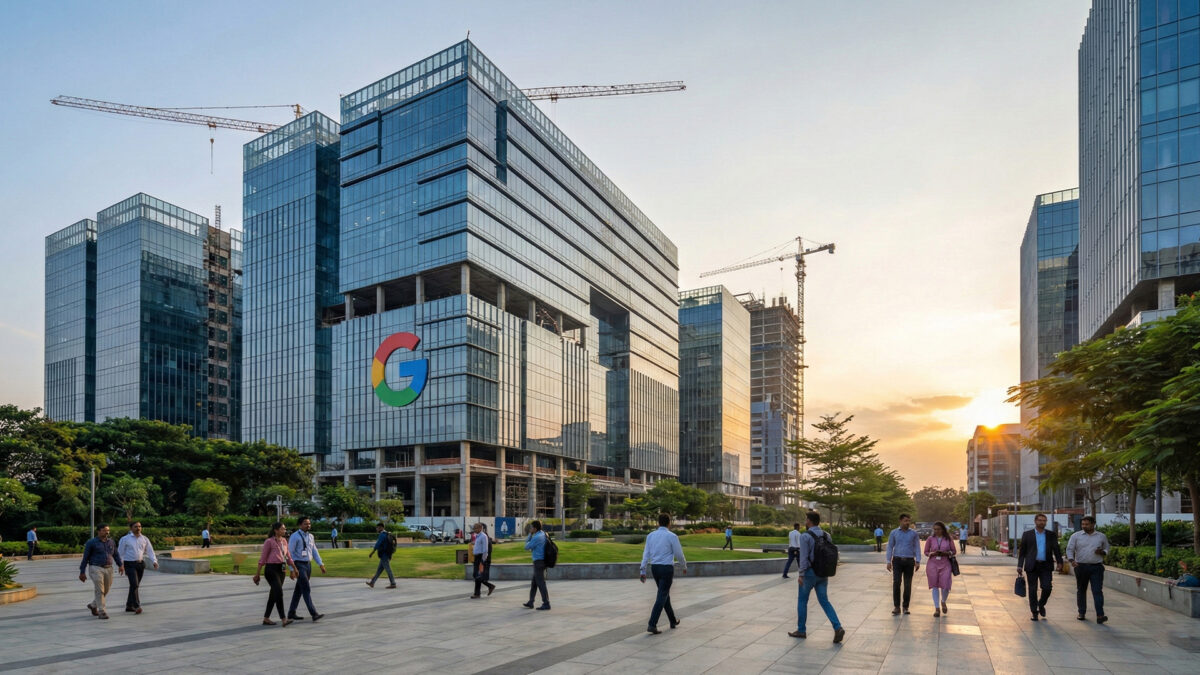
Alphabet Inc, the parent company of Google, is planning a major expansion in India, with a focus on Bengaluru, one of the country’s top tech cities. The company is leasing a new office tower in the Whitefield tech corridor and is considering two more buildings, creating a massive new campus for its growing workforce.

If Alphabet occupies all three towers, the new space could accommodate up to 20,000 employees, more than doubling its current staff in India, which is around 14,000. The first office is expected to be ready in the coming months, with the other two set to open next year.

A company spokesperson confirmed Alphabet’s strong presence in Bengaluru and other Indian cities, while highlighting that the new tower lease reflects its long-term plans in the country. The company, however, did not comment on the total number of employees or future expansion plans.

Experts say the expansion is partly due to tighter U.S. visa rules, which have made it harder for American tech companies to bring talent from abroad. With these restrictions, India is emerging as a key hub for global tech and AI talent, and companies like Alphabet are increasingly investing in local growth.

Bengaluru, already known as India’s Silicon Valley, is quickly becoming a global centre for artificial intelligence. Several AI companies are setting up shop here, and local talent is gaining worldwide recognition. For Alphabet, this expansion is not just about more office space—it’s a bet on India’s growing role in shaping the future of technology.

Industry insiders see this as a long-term commitment, showing that global tech giants are not just outsourcing to India, they are building major operations here. For Bengaluru, it’s another step in solidifying its place on the world’s technology map.

With more jobs, more innovation, and a growing focus on AI, Alphabet’s plans are set to strengthen India’s position in the global tech ecosystem, while giving thousands of professionals a chance to be part of cutting-edge technology projects right at home.

Also Read: Bajaj Finance shares drop 6% as Q3 provisions weigh

Categories
Technology

Alphabet beats Apple to become No. 2 company

Alphabet Inc., the parent company of Google, has overtaken Apple Inc. to become the world’s second-most valuable company. The rise reflects strong investor confidence in Alphabet’s growth, especially in artificial intelligence (AI).

On January 8, 2026, Alphabet’s market value reached about $3.89 trillion, slightly above Apple’s $3.85 trillion. Alphabet’s shares continued to rise after this, while Apple’s slipped, confirming Alphabet’s new position in global rankings.

Despite Alphabet’s gain, Nvidia remains the world’s most valuable company, with a market capitalization of over $4.4 trillion, driven by its AI hardware and data center business.

Alphabet’s climb is largely due to its success in AI, including the Gemini 3 model and custom AI chips called TPUs. These technologies have helped Google expand from search and ads into cloud computing and AI services, attracting more investors. In 2025, Alphabet’s stock was one of the top performers among major tech companies.

Apple’s valuation has lagged because its AI efforts are slower, and investors are cautious about leadership changes. While Apple is adding AI features to its products, it has not yet matched Alphabet’s AI-driven growth.

AI is now a key factor in determining company value, and companies that lead in AI are attracting more investor attention. Alphabet’s new position highlights the importance of innovation in shaping the world’s biggest companies.

Also Read: Trump orders $200bn mortgage bonds to cut rates

Categories
Corporate

Alphabet nears $4 trillion market on AI gains

Alphabet Inc., the parent company of Google, is racing toward a $4 trillion market valuation as investor enthusiasm grows around its artificial intelligence (AI) initiatives and cloud business. Shares of the company recently surged over 5% to $315.90, giving it a market capitalization of roughly $3.82 trillion, a record high for the company.

This year, Alphabet’s stock has risen nearly 70%, outperforming other major tech players, including Microsoft and Amazon. Analysts attribute the strong rally to the company’s renewed focus on AI, particularly the positive reception of its Gemini 3 AI model, which has reinforced confidence in Alphabet’s ability to lead in the fast-evolving AI sector.

The company has also seen improvements in its cloud division, which has boosted revenue growth and added to investor optimism. Further support came from prominent investors like Berkshire Hathaway, whose purchases of Alphabet shares signaled confidence in the company’s long-term potential.

If Alphabet crosses the $4 trillion mark, it will join a small group of tech giants,  including Apple, Microsoft, and Nvidia,  that have reached such a milestone. This surge reflects the growing impact of AI on global markets, highlighting how the technology is driving valuations and reshaping competition in the tech sector.

While the rally has excited investors, some experts caution that stock prices may be rising faster than earnings, echoing concerns seen in previous tech booms. Regulators are also closely watching the growth of Big Tech, but Alphabet’s latest performance demonstrates that innovation and market confidence remain strong drivers of company value.

Also Read: Ola founder Bhavish Aggarwal bets on home batteries