Categories
Technology

OpenAI, Anthropic and Google discuss new AI safety

OpenAI, Anthropic and Google DeepMind have been discussing artificial intelligence safety measures for several weeks, bringing three of the world’s biggest AI companies into closer coordination over the risks linked to increasingly powerful AI models.

OpenAI’s global policy chief Chris Lehane confirmed the discussions during a briefing in Washington on September 15. He said the companies were working together on AI safety and did not need a special antitrust waiver to coordinate on safety issues.

The talks come at a time when concerns about frontier AI, the most advanced and capable artificial intelligence systems, are becoming more prominent. The discussions cover ways the industry can work together on safety even as the companies continue to compete aggressively in AI products, models and computing infrastructure.

One proposal under discussion is the creation of an industry standards body that could help establish common approaches to AI safety. Earlier reports said OpenAI, Anthropic and Google had discussed such a body, although there is no indication yet that a final organisation or structure has been agreed.

The idea reflects a growing push for common AI safety standards as companies develop increasingly capable systems. Such standards could potentially cover model testing, risk assessments, independent evaluations and methods for identifying dangerous behaviour before advanced AI systems are widely deployed.

The recent discussions follow a public call from Anthropic CEO Dario Amodei for AI companies to work together and slow the pace of frontier AI development if necessary to address serious risks. OpenAI CEO Sam Altman and Google DeepMind CEO Demis Hassabis have also backed elements of the broader push for greater attention to AI safety.

OpenAI has also indicated support for independent testing of advanced AI models. Lehane said the company supports a provision in the proposed FRONTIER Act that would require leading AI laboratories to allow independent verification organisations to assess whether their models are being developed safely.

The development is notable because OpenAI, Anthropic and Google DeepMind are direct competitors in the global AI race. OpenAI develops ChatGPT and its frontier models, Anthropic develops Claude, while Google DeepMind works on Gemini and other advanced AI systems. Their cooperation on safety therefore represents a different kind of relationship from their commercial competition.

The discussions also highlight a difficult question facing the AI industry: how companies can cooperate on safety without limiting competition or sharing commercially sensitive information. Lehane’s comments that the companies do not require an antitrust waiver suggest OpenAI believes safety-focused cooperation can take place within existing competition rules. Reuters reported that OpenAI, Alphabet and Anthropic had not immediately responded to requests for comment and said it could not independently verify the Bloomberg report on the talks.

AI safety has become a broader issue as companies race to develop systems capable of performing increasingly complex tasks. Researchers and technology leaders have raised concerns about potential misuse, cybersecurity threats, autonomous behaviour and other risks associated with highly capable AI.

The companies are also facing pressure from governments and policymakers. Lehane said OpenAI would support bipartisan US legislation aimed at reducing catastrophic AI risks. The company is seeking greater involvement in discussions over how advanced AI should be tested and governed.

The debate is not limited to the United States. European Commission President Ursula von der Leyen said on September 16 that she would invite major frontier AI companies to discuss ways of addressing AI risks after backing calls for a pause in development.

At the same time, governments and companies remain focused on maintaining rapid AI development. That has created a complicated policy environment, with technology firms seeking clearer safety frameworks while continuing to invest heavily in more powerful AI models.

A common AI safety framework could eventually give developers a shared set of principles for evaluating advanced models. It could also make it easier to compare safety testing across different companies and identify risks before new systems reach millions of users.

Nothing announced so far suggests that OpenAI, Anthropic and Google are forming a single AI company or ending their competition. The cooperation is focused on safety discussions and possible industry standards.

The talks mark another step in the fast-changing AI safety debate. As frontier models become more capable, the companies developing them are increasingly being asked to show not only what their systems can do, but also how those systems are tested, monitored and controlled.
 

Categories
Leaders

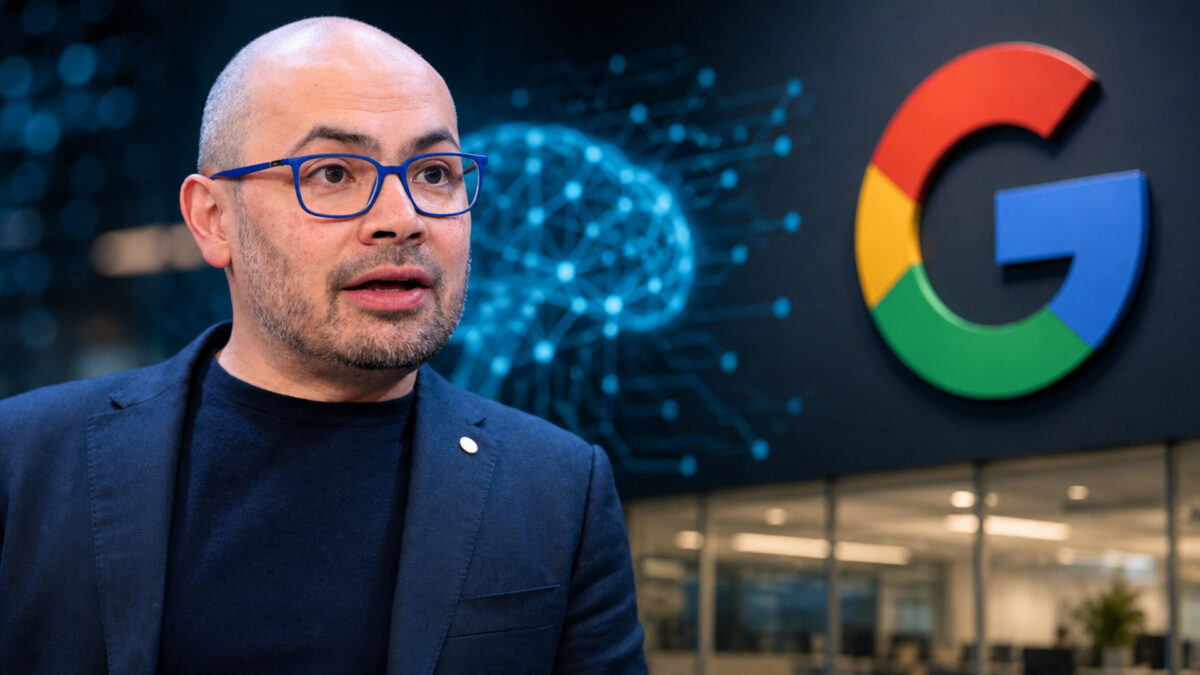
Demis Hassabis leaves Google DeepMind CEO role

Demis Hassabis is stepping down as chief executive of Google DeepMind, marking a major leadership change at one of the world’s most influential artificial intelligence research organisations.

Hassabis will become chair of Google DeepMind and chief scientist of Alphabet, Google’s parent company. He will move away from the lab’s day-to-day management but remain closely involved in its long-term artificial intelligence strategy. He will also continue leading Isomorphic Labs, Alphabet’s AI-focused drug discovery company.

The change comes at an important moment for Google. The company is investing heavily in AI as competition intensifies from rivals including OpenAI and Anthropic. Google has been pushing its Gemini AI models, AI agents and other products while trying to maintain its position in the rapidly changing generative AI market.

Under the new structure, Koray Kavukcuoglu, a long-time DeepMind executive, will take over as senior vice-president of Google DeepMind. He will oversee the organisation’s core AI research, Gemini model development and the Gemini app and developer teams.

For Hassabis, however, the move is not an exit from Google or artificial intelligence. Instead, it gives him a broader role across Alphabet, with a greater focus on scientific research, advanced AI and the longer-term goal of developing artificial general intelligence (AGI).

Hassabis co-founded DeepMind in 2010 with the ambition of building machines capable of learning and solving complex problems. Google acquired the company in 2014, and DeepMind was later combined with Google Brain in 2023 to create Google DeepMind.

The organisation has since become central to Google’s AI strategy. Its research has produced landmark systems such as AlphaGo, which defeated a leading human Go player, and AlphaFold, which transformed the study of protein structures. More recently, Google DeepMind has been deeply involved in the development of Gemini and other generative AI technologies.

Hassabis’ scientific reputation also extends beyond the technology industry. In 2024, he shared the Nobel Prize in Chemistry with John Jumper for work connected to protein structure prediction using AI. His career has placed him at the intersection of computer science, neuroscience and scientific research.

His new position as Alphabet chief scientist reflects that background. Rather than focusing primarily on operational management, Hassabis is expected to concentrate on the broader scientific direction of the company and its efforts to push the boundaries of AI.

The leadership change is part of a much wider shake-up inside Google’s AI division.

Jeff Dean, one of Google’s most senior AI figures and a company veteran of 27 years, is leaving to start a new public-benefit company called Discovery Loop. The venture will focus on using AI to automate scientific and engineering research. Dean will be joined by several other prominent Google researchers.

Dean’s departure is particularly notable because he has played a central role in Google’s computing and AI development for many years. His exit, alongside other senior departures, has raised questions about how Google will manage its research talent while the AI race becomes increasingly competitive.

Google is also facing pressure to turn its enormous AI investment into products that can compete effectively with rapidly developing systems from OpenAI, Anthropic and other companies.

The company’s financial results show how central AI has become to its future. Alphabet said recently that its second-quarter revenue rose 24% year-on-year, while Google Cloud revenue increased 82%, driven partly by demand for AI infrastructure and AI solutions. Google said Gemini was also becoming an important driver of growth across its cloud business.

That backdrop makes the leadership restructuring particularly significant. Google is no longer treating AI simply as a research project. Artificial intelligence now sits at the centre of its search business, cloud operations, consumer products and future technology plans.

The company has also expanded Gemini into a wider ecosystem covering AI assistants, developer tools and enterprise services. At the same time, Google DeepMind continues to work on areas including robotics, scientific discovery and advanced AI systems.

Hassabis has repeatedly argued that AI could have an enormous impact on science and society. In his expanded role, he is expected to focus more strongly on that long-term vision while allowing a new leadership team to handle day-to-day execution.

The transition also highlights how quickly the AI industry is changing. A few years ago, leadership at major AI laboratories was largely associated with research breakthroughs. Today, those organisations are simultaneously responsible for developing foundation models, running consumer products, managing huge computing requirements and responding to intense commercial competition.

Hassabis stepping back from the CEO position does not mean Google DeepMind is moving away from its AI ambitions. Instead, the company is separating its scientific and strategic leadership from its operational management.

Kavukcuoglu now faces the immediate task of leading the organisation’s next phase, including Gemini development and frontier AI research. Hassabis, meanwhile, will have a wider platform across Alphabet to focus on advanced research and AGI.

The leadership change therefore represents more than a change of title. It signals Google’s attempt to organise itself for the next stage of the global AI race, where scientific breakthroughs, powerful AI models, commercial products and computing infrastructure are becoming increasingly intertwined.