Categories
Leaders

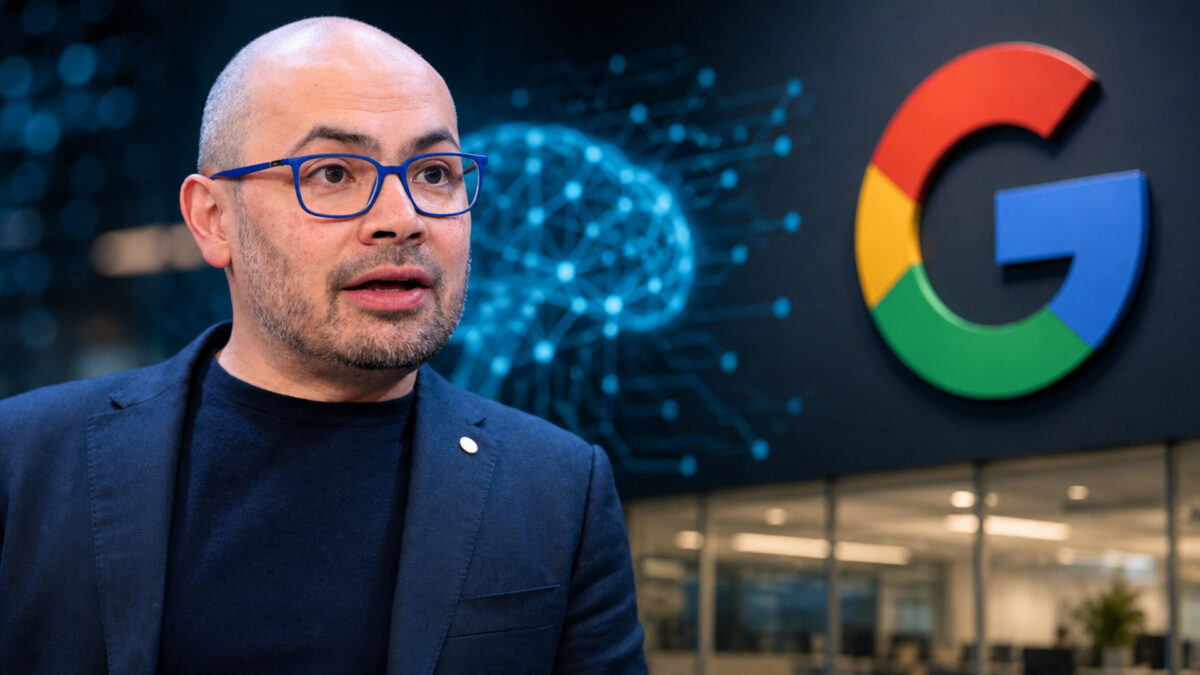
Demis Hassabis leaves Google DeepMind CEO role

Demis Hassabis is stepping down as chief executive of Google DeepMind, marking a major leadership change at one of the world’s most influential artificial intelligence research organisations.

Hassabis will become chair of Google DeepMind and chief scientist of Alphabet, Google’s parent company. He will move away from the lab’s day-to-day management but remain closely involved in its long-term artificial intelligence strategy. He will also continue leading Isomorphic Labs, Alphabet’s AI-focused drug discovery company.

The change comes at an important moment for Google. The company is investing heavily in AI as competition intensifies from rivals including OpenAI and Anthropic. Google has been pushing its Gemini AI models, AI agents and other products while trying to maintain its position in the rapidly changing generative AI market.

Under the new structure, Koray Kavukcuoglu, a long-time DeepMind executive, will take over as senior vice-president of Google DeepMind. He will oversee the organisation’s core AI research, Gemini model development and the Gemini app and developer teams.

For Hassabis, however, the move is not an exit from Google or artificial intelligence. Instead, it gives him a broader role across Alphabet, with a greater focus on scientific research, advanced AI and the longer-term goal of developing artificial general intelligence (AGI).

Hassabis co-founded DeepMind in 2010 with the ambition of building machines capable of learning and solving complex problems. Google acquired the company in 2014, and DeepMind was later combined with Google Brain in 2023 to create Google DeepMind.

The organisation has since become central to Google’s AI strategy. Its research has produced landmark systems such as AlphaGo, which defeated a leading human Go player, and AlphaFold, which transformed the study of protein structures. More recently, Google DeepMind has been deeply involved in the development of Gemini and other generative AI technologies.

Hassabis’ scientific reputation also extends beyond the technology industry. In 2024, he shared the Nobel Prize in Chemistry with John Jumper for work connected to protein structure prediction using AI. His career has placed him at the intersection of computer science, neuroscience and scientific research.

His new position as Alphabet chief scientist reflects that background. Rather than focusing primarily on operational management, Hassabis is expected to concentrate on the broader scientific direction of the company and its efforts to push the boundaries of AI.

The leadership change is part of a much wider shake-up inside Google’s AI division.

Jeff Dean, one of Google’s most senior AI figures and a company veteran of 27 years, is leaving to start a new public-benefit company called Discovery Loop. The venture will focus on using AI to automate scientific and engineering research. Dean will be joined by several other prominent Google researchers.

Dean’s departure is particularly notable because he has played a central role in Google’s computing and AI development for many years. His exit, alongside other senior departures, has raised questions about how Google will manage its research talent while the AI race becomes increasingly competitive.

Google is also facing pressure to turn its enormous AI investment into products that can compete effectively with rapidly developing systems from OpenAI, Anthropic and other companies.

The company’s financial results show how central AI has become to its future. Alphabet said recently that its second-quarter revenue rose 24% year-on-year, while Google Cloud revenue increased 82%, driven partly by demand for AI infrastructure and AI solutions. Google said Gemini was also becoming an important driver of growth across its cloud business.

That backdrop makes the leadership restructuring particularly significant. Google is no longer treating AI simply as a research project. Artificial intelligence now sits at the centre of its search business, cloud operations, consumer products and future technology plans.

The company has also expanded Gemini into a wider ecosystem covering AI assistants, developer tools and enterprise services. At the same time, Google DeepMind continues to work on areas including robotics, scientific discovery and advanced AI systems.

Hassabis has repeatedly argued that AI could have an enormous impact on science and society. In his expanded role, he is expected to focus more strongly on that long-term vision while allowing a new leadership team to handle day-to-day execution.

The transition also highlights how quickly the AI industry is changing. A few years ago, leadership at major AI laboratories was largely associated with research breakthroughs. Today, those organisations are simultaneously responsible for developing foundation models, running consumer products, managing huge computing requirements and responding to intense commercial competition.

Hassabis stepping back from the CEO position does not mean Google DeepMind is moving away from its AI ambitions. Instead, the company is separating its scientific and strategic leadership from its operational management.

Kavukcuoglu now faces the immediate task of leading the organisation’s next phase, including Gemini development and frontier AI research. Hassabis, meanwhile, will have a wider platform across Alphabet to focus on advanced research and AGI.

The leadership change therefore represents more than a change of title. It signals Google’s attempt to organise itself for the next stage of the global AI race, where scientific breakthroughs, powerful AI models, commercial products and computing infrastructure are becoming increasingly intertwined.


Categories
Uncategorized

Google launches three new Gemini AI models

Google has expanded its Gemini family of artificial intelligence models with the launch of three new versions aimed at developers, businesses and cybersecurity professionals. The company introduced Gemini 3.6 Flash, Gemini 3.5 Flash Lite and Gemini 3.5 Flash Cyber, while also announcing that the release of the much-awaited Gemini 3.5 Pro has been delayed for additional improvements.

The announcement highlights Google’s strategy of building AI models tailored for different user needs instead of offering a single solution for every task. The latest models focus on faster performance, lower operating costs and specialised capabilities that can support businesses deploying AI across multiple sectors.

Leading the new lineup is Gemini 3.6 Flash, Google’s latest high-performance AI model. According to the company, it offers better reasoning, coding, instruction-following and multimodal capabilities while maintaining fast response times. The model is designed to automatically adjust its reasoning depending on the complexity of a prompt, allowing it to respond quickly to simple requests while using additional computing power for more challenging tasks.

Google says this adaptive approach helps developers achieve higher-quality results without significantly increasing costs or slowing down applications. The model is expected to be useful for AI assistants, software development, content creation and enterprise automation.

The company has also launched Gemini 3.5 Flash Lite, which it describes as its most affordable AI model so far. Built for organisations handling large volumes of AI requests, Flash Lite is designed to deliver reliable performance at lower cost.

The model is suitable for everyday business applications such as document summarisation, customer support, language translation, data classification and content generation. By reducing operating expenses, Google hopes the model will appeal to startups and enterprises looking to expand AI adoption without increasing infrastructure costs.

A major addition to the Gemini family is Gemini 3.5 Flash Cyber, a model developed specifically for cybersecurity. Unlike general-purpose AI systems, Flash Cyber has been trained using threat intelligence, vulnerability databases and security research.

The model can assist security teams in analysing malware, identifying vulnerabilities, investigating cyber threats and supporting incident response. Google believes specialised AI will become increasingly important as cyberattacks grow more sophisticated and organisations face greater pressure to strengthen digital security.

The launch reflects growing demand for AI systems that can perform specialised tasks instead of relying only on broad language capabilities. Enterprises are increasingly seeking AI models designed for coding, security, customer service and workflow automation.

While introducing the new Flash models, Google also confirmed that Gemini 3.5 Pro will not be released as originally planned. The company said it requires additional testing to improve reliability and overall performance before making the model publicly available.

Although Google did not announce a revised release date, it said the delay would help ensure a better experience for developers and enterprise customers. The decision comes as AI companies face increasing expectations around model quality, safety and accuracy.

The newly launched models are available through Google AI Studio, the Gemini API and Vertex AI, allowing developers and businesses to integrate them into their applications immediately. This gives organisations access to AI tools for coding, automation, customer engagement, cybersecurity and business operations.

The expansion also reflects the intense competition in the global AI industry, where companies are racing to introduce faster and more capable models. Instead of focusing only on larger AI systems, firms are increasingly developing specialised models that offer better performance for specific business needs.

Google said the new Gemini Flash models are designed to provide a balance between speed, affordability and accuracy, enabling developers to build AI-powered products more efficiently. The company expects the latest releases to support wider AI adoption across industries ranging from technology and finance to healthcare, education and cybersecurity.

With three new Gemini models now available and the Pro version still under development, Google is continuing to broaden its AI ecosystem while focusing on practical applications for developers and enterprise customers.

Also Read: Agilus appoints Vijender Singh as MD & CEO

Categories
Technology

Google showcases next-generation AI tools

Google has unveiled a range of new artificial intelligence features for Android devices along with a new AI-powered laptop platform called GoogleBook during its Android Show 2026 event.

The company introduced “Gemini Intelligence”, an upgraded AI assistant integrated directly into Android smartphones and tablets. Google said the system is designed to help users perform tasks more naturally through voice and text commands.

According to the company, Gemini Intelligence can summarise conversations, organise information, draft messages and assist users across multiple apps. Google said the AI will make Android devices more personalised and interactive.

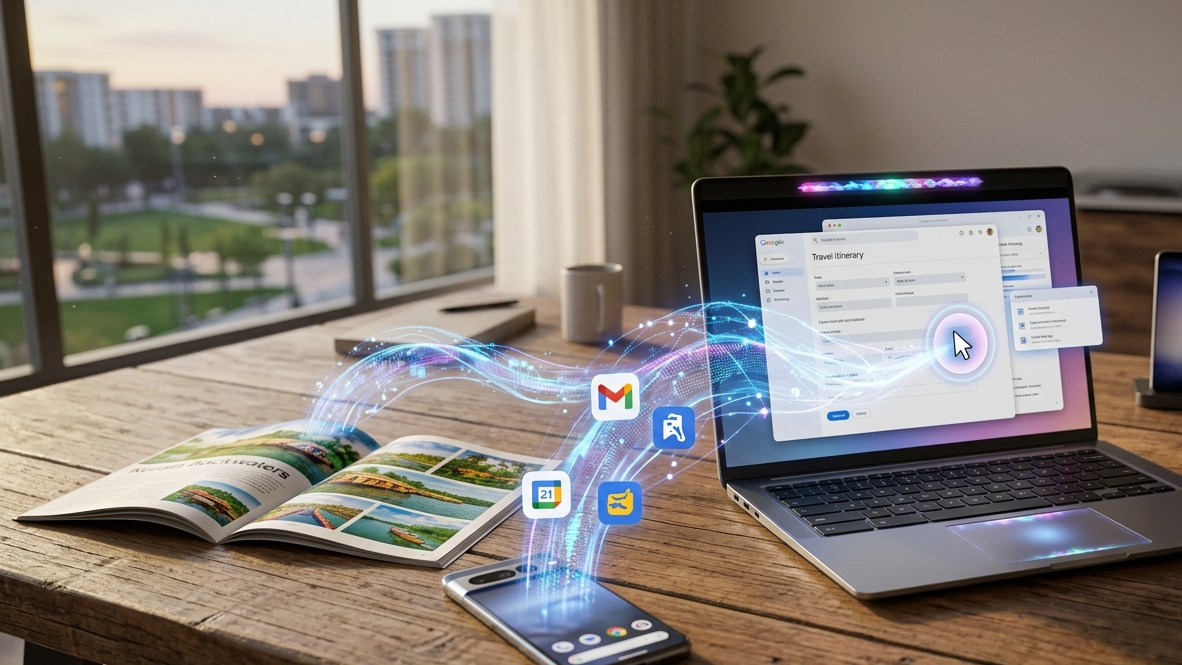
Another major announcement was GoogleBook, a lightweight laptop platform built around AI-powered tools. Google showcased features such as real-time summarisation, smart writing assistance, voice-based commands and AI-supported search.

The company demonstrated how users could ask Gemini to manage schedules, write emails, edit photos and retrieve information from files using simple conversational prompts.

Google said more details about the rollout of Gemini Intelligence and GoogleBook will be shared during its upcoming developer conference, Google I/O.

Industry experts believe the announcements highlight Google’s push to compete aggressively in the rapidly growing AI market, where companies including Microsoft, Apple and OpenAI are introducing similar technologies. Google said the new AI features will also improve services like Maps, Search, messaging and accessibility tools on Android devices.

Also Read: Air India cuts overseas flights due to fuel costs hike