Categories
Technology

Apple watchOS 27 to improve fitness tracking accuracy

Apple is preparing a software upgrade for the Apple Watch that could significantly improve heart rate tracking accuracy with the upcoming watchOS 27 update. The focus of the update is expected to be better health monitoring rather than introducing major new features or design changes.

Reports suggest Apple is working on improving the way the Apple Watch reads and interprets heart rate signals. While current models already provide features like continuous heart rate monitoring, ECG readings, workout tracking, and alerts for abnormal readings, users sometimes experience inconsistent data during fast-paced movement or high-intensity exercise. The new update aims to reduce such errors.

The key improvement is expected to come from enhanced algorithms that process heart rate data more intelligently. These improvements would allow the watch to filter out noise caused by motion and physical strain, resulting in more stable and reliable readings. This is particularly useful for athletes, runners, and users engaged in interval training or gym workouts.

Better heart rate accuracy could also improve other health-related functions of the Apple Watch. These include calorie estimation, workout intensity tracking, recovery time suggestions, and overall fitness analysis. As wearable devices become more central to personal health monitoring, even incremental improvements in accuracy are considered important.

The Apple Watch has evolved into a major health-focused device, offering features such as fall detection, irregular heart rhythm alerts, and oxygen monitoring in newer models. These tools have positioned it as both a smartwatch and a wellness tracker.

While Apple has not officially confirmed the details, watchOS updates are typically announced during its annual developer conference. More details are expected in the coming months, followed by a wider release later in the year.

watchOS 27 appears to be more of a refinement update rather than a feature-heavy release. Instead of introducing major new tools, Apple seems to be focusing on improving the performance of existing health and fitness features. This approach aligns with Apple’s broader strategy of strengthening its health ecosystem through incremental upgrades.

Also Read: Heatwave spurs beverage sales, not appliances

Categories
Technology

Apple blocks $2.2 bn app store fraud in 2025

Apple has reported that it prevented more than $2.2 billion worth of fraudulent transactions on its App Store in 2025, as it continues tightening security across its global digital marketplace.

The company said the figure reflects scams and suspicious activity blocked before users or developers could be impacted. These include fake apps, fraudulent payment attempts, impersonation schemes, and misleading subscription practices.

Apple credited its mix of automated detection systems and human review teams for catching much of the activity early. Every app submitted to the App Store is reviewed before it goes live, and the company said this process is a key barrier against fraud.

Alongside app screening, Apple said it also removed thousands of developer accounts linked to suspicious behaviour. These accounts were often found distributing deceptive apps or trying to bypass App Store rules.

The company noted that fraud attempts are constantly evolving, with scammers regularly changing tactics to avoid detection. As a result, Apple said it continuously updates its security tools and policies to stay ahead of new threats.

With millions of apps and billions of downloads globally, the App Store remains one of the world’s largest digital marketplaces. Apple said maintaining user trust is essential, especially as more people rely on apps for payments, shopping, entertainment, and subscriptions.

The company also highlighted its broader investment in privacy and payment security systems designed to protect users during transactions. According to Apple, these safeguards help reduce risks linked to online financial fraud.

While Apple did not break down the numbers by region, it said its anti-fraud systems operate across all markets where the App Store is available.

Also Read: Parle Industries shares jump on viral “Melody” confusion

Categories
Beyond

Apple settles $250mn case over Siri AI delays

Apple has agreed to pay $250 million to settle a lawsuit over delays in rolling out its much-talked-about Siri artificial intelligence features. The case came after the company promoted its “Apple Intelligence” tools as part of new iPhone launches but failed to deliver some key features on time.

The issue goes back to 2024, when Apple introduced its next-generation AI plans, promising a smarter, more personalised Siri experience. These features were expected to be available with newer iPhones, including the iPhone 16 and some iPhone 15 models. However, when the devices reached users, many of the advanced capabilities were either missing or only partly available.

This led to complaints that Apple had created expectations it could not meet at launch. The lawsuit claimed that customers were misled into believing the features were ready, influencing their decision to buy the devices.

Apple has agreed to settle the case but has not admitted any wrongdoing. The company said it chose to resolve the matter to avoid a long legal process and to focus on improving its products. The settlement still needs approval from a US court before it becomes final.

The payout will cover millions of devices sold in the United States during the period when the features were advertised but not fully available. Eligible users may receive compensation, though the exact amount will depend on how many claims are filed.

The case has also drawn attention to how tech companies present new AI features. Regulators have raised concerns about marketing language that may suggest products are ready before they are fully rolled out.

Also Read: Vi names Kumar Mangalam Birla as non-executive Chairman

Categories
Beyond

Etihad Airways teams up with Air Cambodia to expand routes

Travelling between the Middle East and Southeast Asia is set to become simpler, thanks to a new partnership between Etihad Airways and Air Cambodia.

The two airlines have signed a codeshare agreement that allows passengers to book connecting flights under a single ticket. This means travellers can fly across multiple destinations without the hassle of separate bookings or rechecking baggage at every stop.

For instance, passengers flying with Etihad can now easily reach Cambodian cities like Phnom Penh and Siem Reap by connecting through the airline’s network. Siem Reap, in particular, is a popular destination as it serves as the gateway to the famous Angkor Wat temple complex, attracting tourists from around the world.

The agreement also benefits passengers flying from Cambodia. Those travelling with Air Cambodia will now have smoother access to Etihad’s wide global network through Abu Dhabi, opening up routes to Europe, the Middle East, and other parts of Asia.

This partnership is part of Etihad’s broader effort to strengthen its presence in Southeast Asia, a region where travel demand continues to grow. Instead of launching new direct flights to every destination, airlines often use codeshare deals like this to expand their reach quickly and efficiently.

The collaboration also improves access to nearby countries. Travellers can now connect more easily to cities in Vietnam, such as Ho Chi Minh City and Da Nang, adding more options to their travel plans.

Etihad had already introduced direct flights between Abu Dhabi and Phnom Penh last year. This new agreement builds on that step, making Abu Dhabi an even more important hub for travellers heading to Southeast Asia.

Airline officials say the move will not only make travel more convenient but also help boost tourism and business links between the regions.

Also Read: Vedanta Ltd demerger nears completion, shares to list by June

Categories
Technology

Apple Inc. may launch ‘Ultra’ iPhone, MacBook soon

Apple Inc. may soon take its premium lineup a step further by introducing a new “Ultra” category for its devices, including the iPhone and MacBook.

According to recent reports, the company is exploring the idea of launching an “iPhone Ultra,” which could become its most advanced smartphone yet. This model is expected to stand above the current Pro versions, offering cutting-edge features and a fresh design.

One of the biggest highlights could be Apple’s first foldable iPhone. Unlike its traditional designs, this device may feature a screen that folds like a book, giving users a larger display in a compact form. If launched, it would mark a major shift for Apple, which has so far stayed away from foldable phones.

Alongside the iPhone, Apple is also said to be working on a “MacBook Ultra.” This could be a high-end laptop designed for users who want top performance and advanced features. Reports suggest it may come with an OLED display, offering brighter colors and better picture quality than current models.

There are also talks of possible touchscreen support in future MacBooks—something Apple has not offered so far. If this happens, it would be a significant change in how users interact with Mac devices.

The “Ultra” branding is not new for Apple. The company has already used it for products like the Apple Watch Ultra and its most powerful chips. Extending this label to iPhones and MacBooks would clearly position these devices as the most premium options in Apple’s lineup.

Also Read: Waaree Energies shares sink 11% despite 71% profit jump

Categories
Corporate Leaders

Apple names John Ternus CEO, Cook Chairman

Apple has announced a major leadership transition, naming John Ternus as its next Chief Executive Officer, while current CEO Tim Cook will become Executive Chairman from September 1, 2026.

The move marks the first change at the top of Apple since 2011, when Cook succeeded company co-founder Steve Jobs. After leading the tech giant for 15 years, Cook will remain closely involved in guiding Apple’s long-term direction in his new role.

During Cook’s tenure, Apple grew into one of the world’s most valuable companies. Under his leadership, the company expanded far beyond the iPhone, building successful businesses in wearables and digital services. Products such as the Apple Watch and AirPods became major growth drivers, while Apple’s services business also expanded rapidly.

Ternus, who currently heads Apple’s hardware engineering division, has been with the company for about 25 years. He has played a central role in the development of many of Apple’s flagship products, including the iPhone, iPad and Mac.

He was also deeply involved in Apple’s transition to its own custom-designed chips for Mac computers, a move widely seen as one of the company’s most successful strategic decisions in recent years.

Industry analysts view Ternus as a steady and experienced executive with strong technical expertise. His appointment suggests Apple wants to place product innovation and engineering at the centre of its next growth phase.

The leadership change comes at an important time for the company. Apple is facing increasing pressure to strengthen its position in artificial intelligence, as rivals continue to invest heavily in AI-powered products and services.

Also Read: Jio Financial falls 4% after weak Q4 profit


Categories
Technology

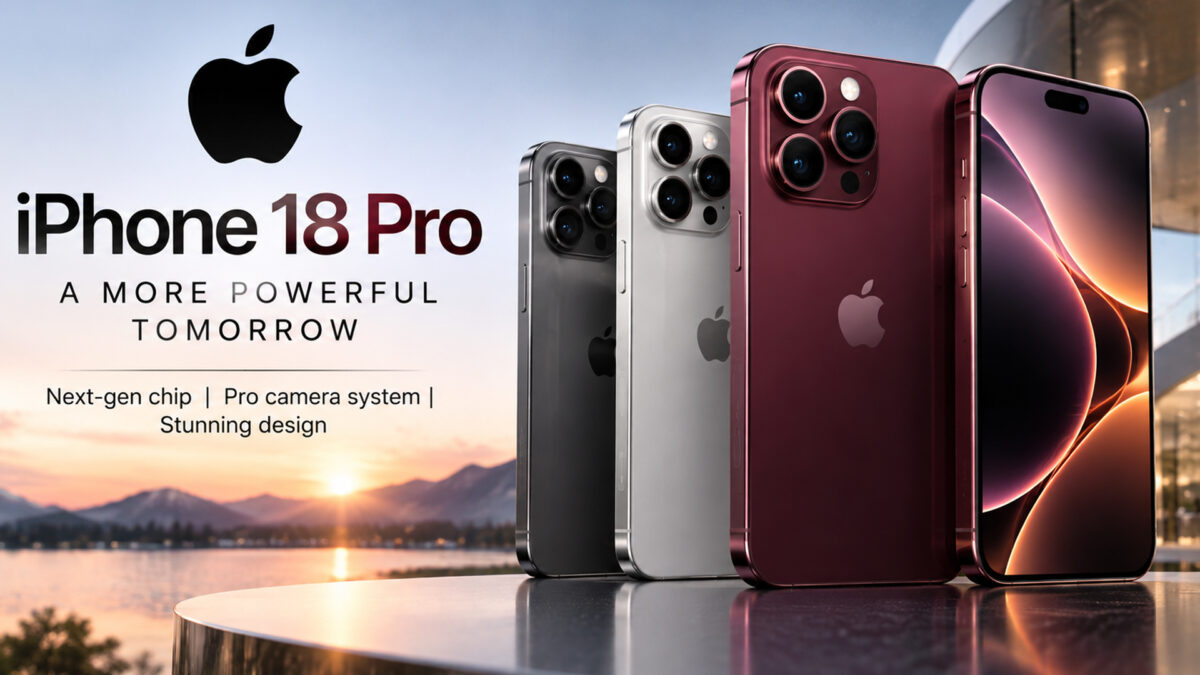
iPhone 18 Pro may get variable aperture camera

Apple’s upcoming iPhone 18 Pro series is reportedly moving closer to production, with early leaks pointing to a major upgrade in its camera system. The biggest expected change is the introduction of a variable aperture lens, a feature commonly seen in professional DSLR cameras but never used in an iPhone before.

According to industry reports, Apple is working on integrating this system into the main 48MP rear camera of the iPhone 18 Pro models. A variable aperture allows the camera to adjust how much light enters the lens depending on the surrounding conditions. In low light, the aperture opens wider to capture more detail, while in bright environments it narrows to prevent overexposure.

This upgrade is expected to significantly improve photo quality, especially in challenging lighting conditions. It could also give users more control over depth of field, making background blur more natural in portrait shots.

Along with the camera changes, leaks suggest Apple is testing improvements in zoom performance and optical systems. These upgrades may help deliver clearer long-range photography, addressing one of the key areas where smartphone cameras still face limitations compared to dedicated cameras.

In addition to camera enhancements, Apple is also expected to refresh the colour lineup for the iPhone 18 Pro series. While exact shades are not confirmed, reports indicate that the company may introduce deeper and more premium-looking finishes compared to current models.

Also Read: India’s crude imports fall 17% amid Hormuz crisis

Categories
Technology

Apple boosts 30% recycled materials

Apple Inc. has announced that 30% of the materials used in its products shipped in 2025 came from recycled sources, the highest share recorded so far. The update was shared in its latest environmental report, highlighting steady progress toward its goal of becoming carbon neutral across its supply chain by 2030.

The company said it has significantly increased the use of recycled materials in core components, including cobalt in batteries, rare earth elements in magnets, and gold and tin in circuit boards. These changes are part of a broader effort to reduce reliance on newly mined resources.

Apple also confirmed that all product packaging is now fully fibre-based, eliminating plastic from boxes. This shift is aimed at making packaging easier to recycle and reducing overall environmental impact.

The company reported that its carbon emissions have fallen by more than 60% since 2015, even as production has grown globally. It also continues to expand recycling systems that recover materials from old devices, including automated disassembly robots.

Apple said the progress supports its “Apple 2030” plan to make all products carbon neutral within the next five years.

Also Read: BBC plans 2,000 job cuts as cost reduction drive

Categories
Technology

iOS 26.5 Beta 1 adds RCS security, maps ad

Apple has released the first developer beta of iOS 26.5, offering new privacy features and laying the foundation for upcoming services. The update comes soon after iOS 26.4 and is currently available only for registered developers.

One major change is the reintroduction of end-to-end encryption for RCS messaging. This ensures that messages sent between iPhones and Android devices remain private and secure. The feature is enabled by default and represents a significant step toward safer cross-platform communication.

Another highlight is the groundwork for ads in Apple Maps. A new “Suggested Places” feature recommends nearby locations based on user activity and trends. While no ads are visible yet, Apple is preparing to allow businesses to promote listings within Maps search results later this year.

The beta also improves compatibility with third-party devices. Apple is testing features that allow non-Apple wearables, such as smartwatches and earbuds, to sync notifications and Live Activities with iPhones more smoothly. These updates are partly aimed at meeting European Union regulations and expanding device interoperability.

Despite these improvements, iOS 26.5 Beta 1 does not include any upgrades to Siri. Users hoping for AI enhancements will need to wait for a future release, likely iOS 27.

Also Read: New tax rules from April 1

Categories
Technology

Apple to invest $400 million to boost US manufacturing

Apple has unveiled plans to invest $400 million to expand its manufacturing footprint in the United States, bringing in new partners such as Bosch, Cirrus Logic, TDK and Qnity Electronics under its American Manufacturing Program. The investment, which will be made over the next few years, is aimed at increasing local production of key components used in Apple devices.

The initiative is part of Apple’s broader effort to make its supply chain more resilient by reducing dependence on overseas manufacturing. With global uncertainties and supply disruptions continuing to impact industries, the company is focusing on building stronger domestic capabilities for producing critical technologies.

Under the expanded program, Apple will work with Bosch and other partners to manufacture sensing components within the US. Cirrus Logic will collaborate with semiconductor manufacturer GlobalFoundries to develop advanced chips that power features like Face ID. These efforts are expected to bring more high-tech production processes to the country.

In addition, Japan-based TDK plans to begin manufacturing sensors in the United States instead of relying entirely on overseas facilities. Qnity Electronics will contribute materials essential for semiconductor and artificial intelligence technologies, further supporting Apple’s growing ecosystem.

Apple said the investment will help improve supply chain stability while also contributing to job creation and technological development in the US. The move builds on the company’s earlier commitment to significantly increase its spending on American manufacturing and innovation.

Also Read: Health insurance platform Plum secures $20 million funding