Categories
Leaders

Gucci-owner to launch AI smart glasses with Google

French luxury group Kering, best known for brands like Gucci, is planning to step into the world of smart technology with a new line of high-end smart glasses, developed in partnership with Google. The company aims to launch the product as early as next year, signalling a shift toward combining fashion with advanced digital features.

The idea is simple: take the elegance and style associated with Gucci and merge it with Google’s expertise in artificial intelligence and wearable tech. The result could be a pair of smart glasses that not only look premium but also offer practical features powered by AI.

This move comes at a time when the luxury industry is looking for new ways to attract customers. Kering, in particular, has been facing slower growth at Gucci, its biggest brand. By entering the smart eyewear space, the company hopes to open up a fresh revenue stream and appeal to younger, tech-savvy consumers.

Competition in this space is already heating up. Companies like EssilorLuxottica have partnered with Meta to produce Ray-Ban smart glasses, which combine classic design with features like cameras and voice assistance. Kering’s entry could raise the bar by bringing a stronger focus on luxury and design.

Kering’s leadership says the project is part of a broader plan to expand beyond traditional fashion and adapt to changing consumer habits. As people increasingly look for products that combine style with functionality, smart glasses could become a key category in the future.

Also Read: Sam Altman seeks relief in sister’s lawsuit
Categories
Technology

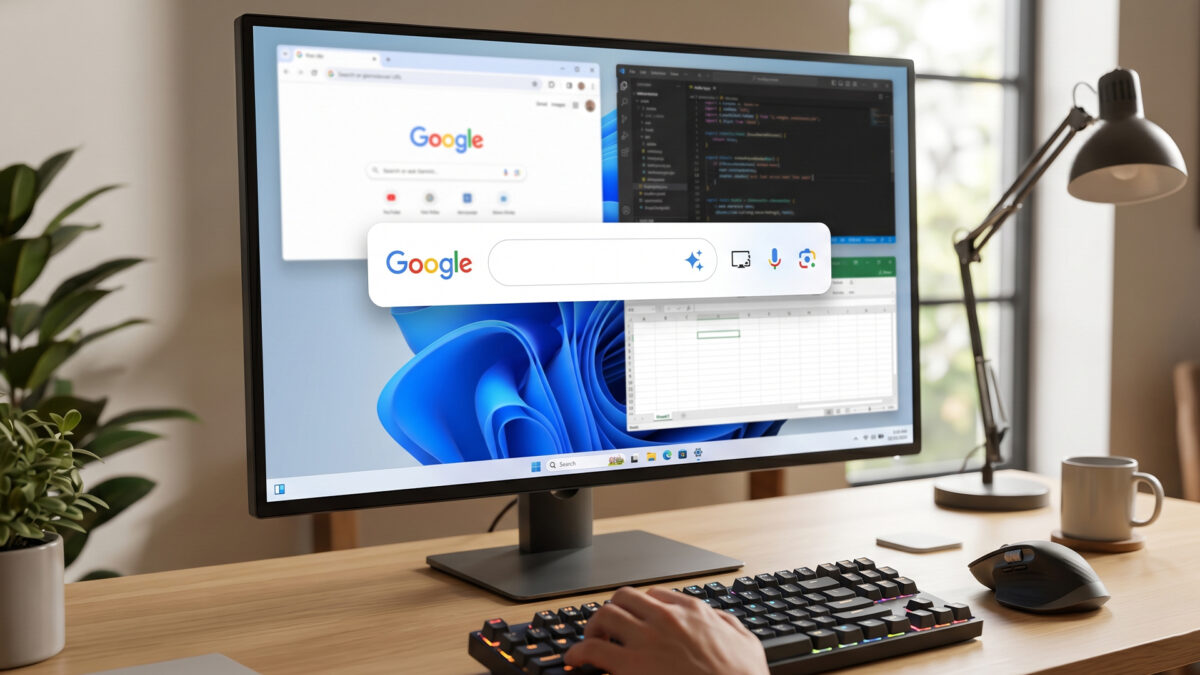
Google brings AI search to Windows desktop

Google has introduced a new desktop app for Windows users, making it easier to search the web and access information without opening a browser.

The app works on Windows 10 and newer versions and is currently available in English. It is designed to simplify how people search by bringing everything—web results, files, apps, and even cloud content—into one place.

One of its main features is “AI Mode,” which allows users to ask questions in a natural, conversational way. Instead of just showing a list of links, the app provides clear answers along with useful sources. This makes searching feel more like having a conversation than typing keywords.

Another useful feature is a quick shortcut. By pressing Alt + Space, users can instantly open the search bar and look for anything on their computer or online. This helps save time and reduces the need to switch between apps or browser tabs.

The app also includes tools like screen-based search and image recognition. Users can select something on their screen and ask questions about it, translate text, or identify images using built-in tools similar to Google Lens.

This launch is part of Google’s broader push to bring artificial intelligence into daily use. By placing AI tools directly on the desktop, the company is trying to make technology more helpful and less time-consuming.

For now, the app is limited to English, but more languages are expected in the future. With this move, Google is taking a step towards making search more personal, faster, and easier to use.

Also Read: Anthropic brings in Novartis CEO Narasimhan to board


Categories
Technology

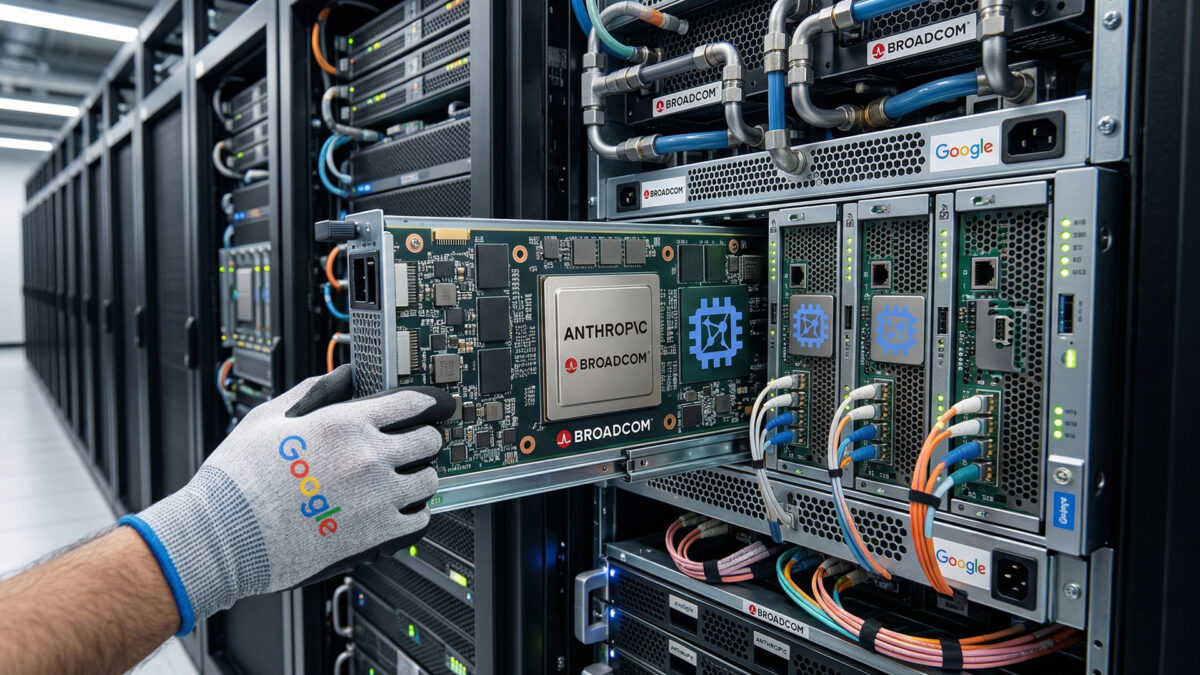
Anthropic partners Google, Broadcom for AI expansion

Anthropic has entered into a major long-term partnership with Google and Broadcom to strengthen its access to advanced AI chips and computing infrastructure.

The agreement is aimed at meeting the growing demand for high-performance computing required to train and run advanced artificial intelligence models. As part of the deal, Anthropic will use Google’s custom-built Tensor Processing Units (TPUs), which are designed specifically for AI workloads.

The partnership is expected to significantly scale Anthropic’s computing capacity over the coming years. Reports suggest that the company could gain access to several gigawatts of compute power, reflecting the massive infrastructure needed for next-generation AI systems.

Broadcom will play a key role by helping design and supply custom chips that power Google’s AI infrastructure. The collaboration is part of a broader, multi-year arrangement that will support the development of future AI processors.

For Anthropic, the deal ensures a steady supply of critical resources needed to expand its AI offerings, including its Claude chatbot. The company has been rapidly growing and requires large-scale computing to keep up with increasing user demand and more complex AI models.

The partnership also highlights a wider trend in the tech industry, where companies are entering long-term agreements to secure access to chips and computing power. With AI systems becoming more resource-intensive, reliable infrastructure has become a key competitive factor.

For Google, the deal strengthens its cloud and AI ecosystem by promoting the use of its in-house chips. For Broadcom, it reinforces its role in the global semiconductor supply chain.

Also Read: Beacon Group names Dr Rajesh Patel as CEO


Categories
Technology

Google unveils Gemma 4 AI model

Google has launched its new AI model, Gemma 4, to help developers create smarter applications with ease. Built by Google DeepMind, the model is designed to be simple to use while still offering powerful features.

Gemma 4 is available in multiple sizes, allowing it to run on a variety of devices such as smartphones, laptops, and servers. This makes it more accessible, especially for developers who may not have high-end hardware.

The model can perform tasks like answering questions, generating text, and assisting with coding. It also supports text, images, and audio, making it capable of handling different types of data in one system.

Another key feature is that Gemma 4 can work directly on devices, sometimes without needing an internet connection. This helps improve speed and enhances data privacy.

With support for over 140 languages, the model can be used to build applications for users around the world. It can also process large amounts of information at once, making it suitable for more advanced tasks.

Google has made Gemma 4 available under an open licence, allowing developers to freely use, modify, and build on it, including for commercial use.

Also Read: India adds new nuclear submarine INS Aridhaman

Categories
Technology

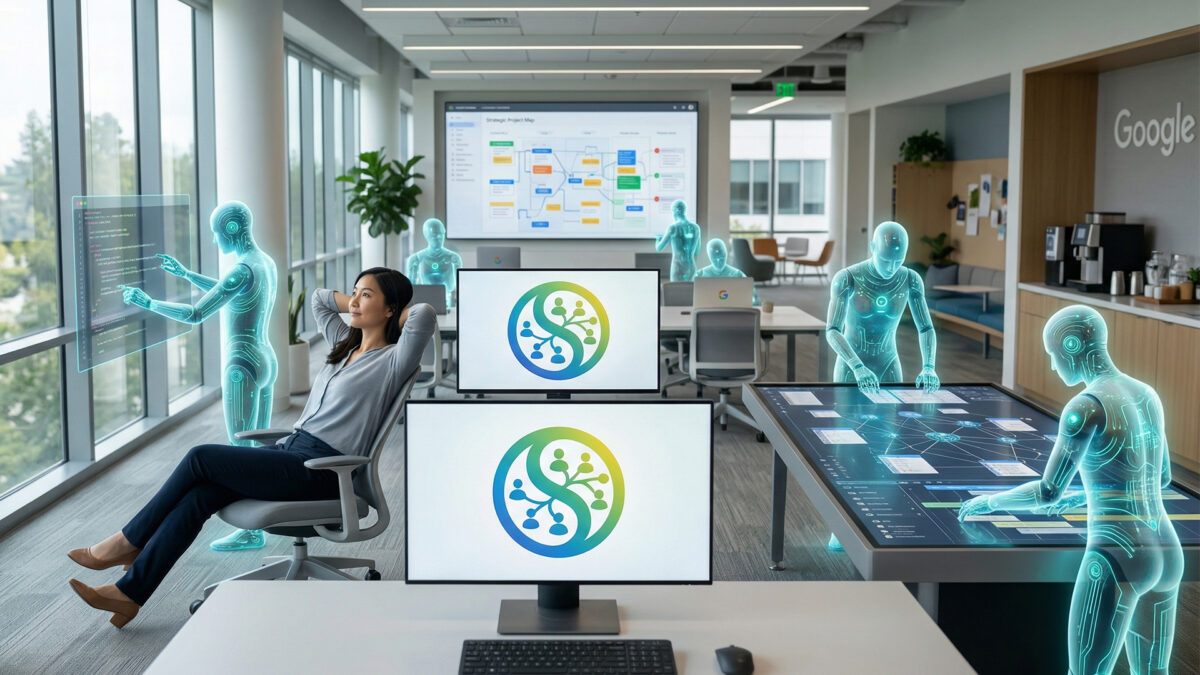
Google restricts ‘Agent Smith’ AI tool after internal surge

Google has limited access to its internal AI tool “Agent Smith” after it quickly gained popularity among employees. The tool is designed to automate coding and handle routine work tasks with minimal human involvement.

Agent Smith stands out for its ability to perform multi-step tasks independently. Employees can assign work from their smartphones, and the AI continues processing in the background, allowing greater flexibility and efficiency.

The system also connects with Google’s internal platforms to retrieve documents and relevant data, reducing manual effort and speeding up workflows. Its growing use reflects a shift from basic AI assistants to more advanced, autonomous agents.

The rise of the tool aligns with CEO Sundar Pichai’s focus on integrating AI into daily operations. Sergey Brin has also emphasized that such AI agents will play a key role in the company’s future.

While details remain limited, Agent Smith’s rapid adoption signals how AI is increasingly transforming workplace productivity.

Also Read: Anthropic plans $60 billion IPO amid AI boom

Categories
Technology

Google, Accel pick five India-linked AI startups

Google and venture capital firm Accel have chosen five artificial intelligence startups connected to India after evaluating more than 4,000 applications for their joint accelerator program, emphasizing the growing importance of building original AI technology rather than simple integrations.

The startups were selected for the Atoms accelerator, a program launched by Google and Accel to support early-stage AI companies developing products tied to India’s technology ecosystem. After a rigorous selection process, the firms picked K-Dense, Dodge.ai, Persistence Labs, Zingroll, and Level Plane for the new cohort.

During the screening process, investors found that a large portion of submissions lacked substantial technological depth. Around 70% of the applications were categorized as “AI wrappers,” meaning the products mainly relied on existing large AI models without creating meaningful proprietary technology or infrastructure.

According to the organizers, the final five startups demonstrated stronger technical foundations and clearer long-term innovation potential. Each company focuses on a different application of AI across industries.

K-Dense is developing an AI “co-scientist” aimed at supporting researchers and accelerating discoveries in fields such as life sciences and chemistry. Dodge.ai is building autonomous AI agents designed to work within enterprise resource planning (ERP) systems. Persistence Labs is working on voice-based artificial intelligence tools for customer service and call-center operations.

Meanwhile, Zingroll is building a platform that enables AI-generated content for film and television production. Level Plane focuses on creating AI solutions to streamline enterprise workflows and improve operational efficiency.

Startups selected for the program may receive up to $2 million in investment from Accel and Google’s AI Futures Fund. In addition, they can access up to $350,000 worth of cloud and computing credits, including infrastructure from Google Cloud and advanced AI tools such as Gemini.

The initiative reflects a broader shift in the startup ecosystem, where investors are becoming more cautious about companies that simply layer existing AI models onto products without developing unique technology.

Through the accelerator, Google and Accel aim to support startups capable of building deeper AI systems with long-term global potential, while strengthening India’s growing role in the artificial intelligence landscape.

Also Read: IEA to release 400 mn barrels of oil

Categories
Technology

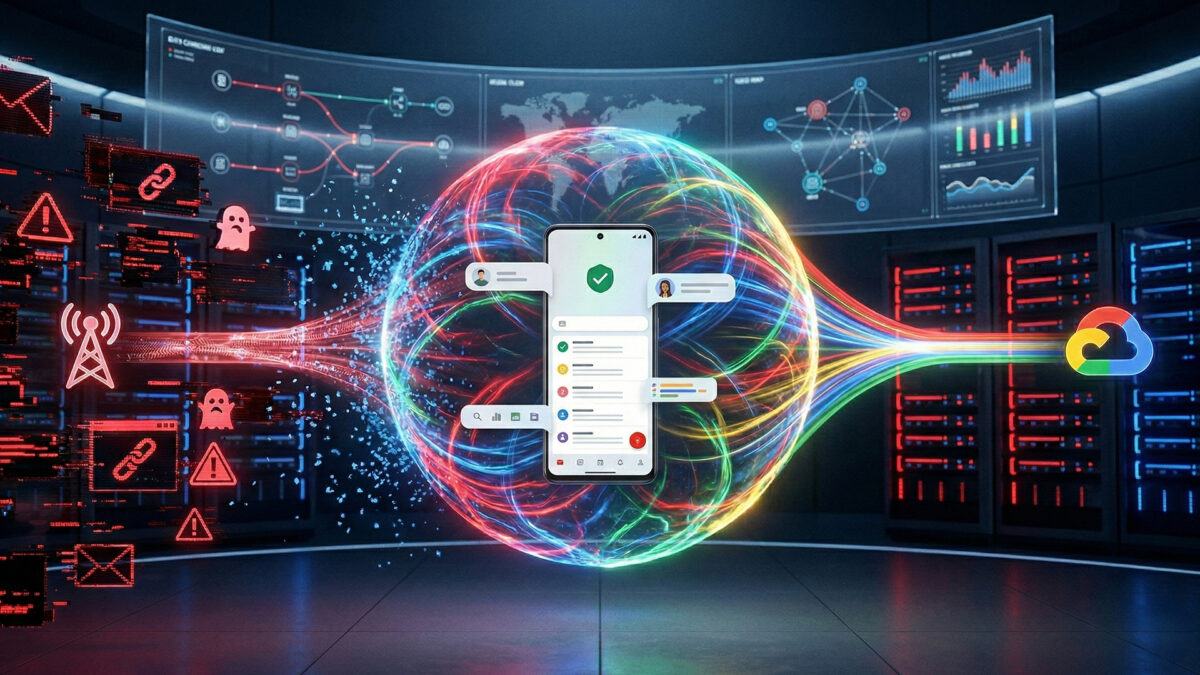
Airtel + Google bring AI spam protection to RCS

Bharti Airtel and Google have teamed up to fight spam and fraud on RCS messaging, the upgraded messaging platform that allows users to share media, chat interactively, and receive messages from verified businesses. The partnership uses Airtel’s AI-powered spam detection to screen messages in real time, blocking unwanted or malicious content and ensuring a safer user experience.

With billions of spam calls and SMS already blocked by Airtel, the collaboration brings similar protections to enhanced messaging. Messages from verified businesses are clearly identified, while messages violating Do Not Disturb (DND) settings or containing suspicious links are filtered automatically.

Google said the partnership strengthens trust in RCS and encourages safe adoption of new messaging features. Airtel highlighted that AI-based spam detection at the network level can significantly reduce fraud and protect users from phishing attempts, unsafe links, and unwanted promotions.

The initiative is especially relevant in India, where millions rely on messaging platforms for personal and business communication. By blocking spam before it reaches users’ phones, the system provides peace of mind while making enhanced messaging more reliable.

In addition to filtering spam, the system ensures faster and more secure delivery of legitimate messages. Consumers can now interact with businesses safely, access interactive features, and trust that RCS messaging remains free from malicious content.

Experts say the collaboration sets a global example for integrating carrier-level AI security into messaging platforms. With billions of daily messages, Airtel and Google aim to make RCS safer, smarter, and more user-friendly, positioning India as a leader in secure next-generation messaging technologies.

Also Read: Magellan to merge with Barrenjoey in $1.1bn deal

Categories
Technology

Google stops Antigravity access for OpenClaw tied accounts

Google has temporarily cut access to its Antigravity model for several users after detecting what it described as a spike in “malicious usage” tied to third‑party agent tools such as OpenClaw. The action affected both paid and premium subscribers who had linked their Google AI accounts to these external tools.

Many users began seeing 403 PERMISSION_DENIED errors and messages saying Antigravity access was disabled for violating Google’s Terms of Service. Reports of sudden lockouts appeared on Reddit and Google support forums in mid‑February, with affected customers saying they received little or no prior warning.

Google said the suspension was necessary to stop abusive activity that was degrading service for legitimate users. The company indicated it was targeting accounts that used Antigravity in ways it did not intend and suggested some users might regain access after review.

Developers of third‑party tools reacted quickly. The creator of OpenClaw called Google’s enforcement strict and said he would remove Antigravity support to protect users. Other developers advised switching from OAuth account linking to API keys or moving to alternative model providers to avoid similar disruptions.

Community troubleshooting threads urged users who see the “disabled for violation” notice to check whether they had exposed Antigravity OAuth tokens through agent frameworks and to stop using those integrations. Users who believe they were blocked in error are advised to contact Google support with details of their setup.

Also Read: ₹5.16 cr toll refund for Mumbai–Pune Expressway motorists

Categories
Corporate

Sundar Pichai announces $15-bn AI investment for India

Google CEO Sundar Pichai on Friday announced a $15-billion investment to expand artificial intelligence infrastructure and capabilities in India, saying the country has the potential to become a major global hub for AI.

Speaking at the India AI Impact Summit, Pichai described AI as the most important technological shift of our time and said it can bring large-scale changes in sectors such as healthcare, education, agriculture and scientific research.

A major part of Google’s plan includes building strong digital infrastructure, improving compute capacity and supporting a full-stack AI ecosystem in the country. He also highlighted the need to train students, developers and professionals so that India’s workforce is ready for the AI era.

Pichai said India’s digital public platforms, large pool of tech talent and fast-growing startup ecosystem give it a unique advantage in the global AI race. He praised efforts to develop AI models that work in Indian languages and understand local needs, calling them essential for making the technology useful for millions of people.

At the same time, he cautioned that the benefits of AI will not come automatically. According to him, governments, companies and academic institutions must work together to ensure the technology is developed and used responsibly. He stressed that AI should reduce inequality, not increase it, and must be accessible and affordable to all.

Pichai also pointed to scientific breakthroughs powered by AI, such as AlphaFold, to show how the technology can help solve complex global challenges.

On the sidelines of the event, Pichai was seen tasting Indian GI-tagged coffee, reacting with a cheerful “wow”, a moment that quickly went viral on social media.

Also Read: AI key to India’s sovereignty, says Jeet Adani

Categories
1 Minute-Read

Former NPR host alleges Google cloned his voice

Veteran radio journalist David Greene has taken legal action against Google, claiming its AI feature in NotebookLM reproduced his recognisable on-air voice without consent.

Greene said the AI-generated presenter matches his rhythm, tone and speaking quirks so closely that friends assumed he had authorised its use. A forensic voice study submitted with the lawsuit reported a similarity of more than 50%. Google has dismissed the allegation, maintaining the audio was created using a professional voice actor.

The dispute highlights mounting concerns over how generative AI systems are trained and whether individuals have rights over their vocal identity in the rapidly evolving digital landscape.