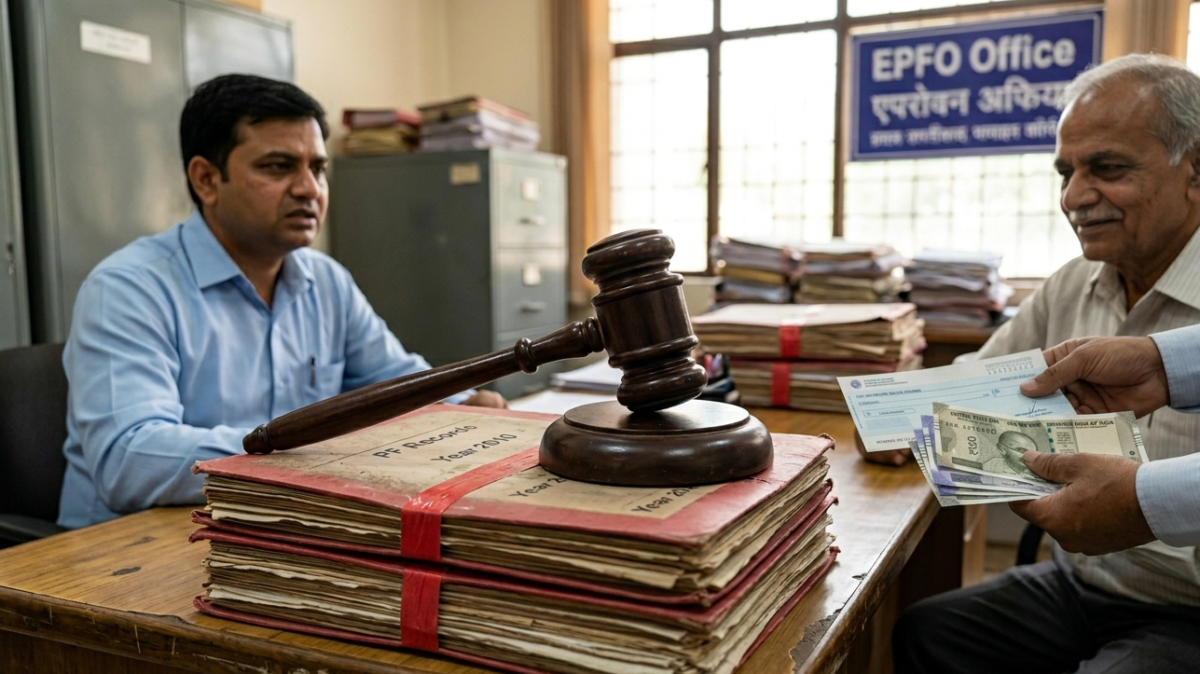
The Employees’ Provident Fund Organisation (EPFO) has introduced a 12-month waiting period for members who leave employment or retire before turning 55 before they can withdraw their entire Employees’ Provident Fund (EPF) balance.
Under the revised rules, members below 55 can withdraw up to 75% of their EPF balance within 12 months of leaving their job or retiring. The remaining 25% can be accessed after the waiting period, subject to the applicable rules.
Members who retire after attaining 55 years, however, can continue to withdraw their full EPF balance without waiting for 12 months.
The clarification follows complaints from EPFO members who said they were unable to submit final settlement claims after leaving their jobs. EPFO officials said the 12-month condition was introduced to discourage people from withdrawing their entire retirement savings when they are changing jobs.
The EPFO issued the notification on June 29, 2026, following a decision of its Central Board of Trustees. The change is part of a broader effort to balance easier access to provident fund savings with the need to preserve money for retirement.
The new rule primarily affects members who leave employment before reaching 55.
A member who quits a job or retires before 55 can access 75% of the EPF balance within the first 12 months. The remaining amount is subject to the 12-month waiting period.
The rule does not mean that members have to wait a year to access their EPF savings altogether. A substantial portion of the balance remains available during the period.
The government had earlier simplified EPF withdrawal rules by combining several categories of partial withdrawals and reducing the minimum service requirement for many withdrawals to 12 months. Members can also withdraw 75% of the eligible amount in certain circumstances, including unemployment.
The policy is aimed at ensuring that workers retain part of their provident fund corpus instead of exhausting their retirement savings immediately after leaving employment.
The 12-month waiting period does not apply in the same way to members who have attained 55 years.
EPFO officials said members retiring after 55 should select the “Retirement after 55 years” option while submitting their claim. Members who retire earlier should use the regular “Retirement” option.
Confusion over the two categories had reportedly resulted in some members receiving messages saying they were not eligible to submit a final settlement claim because the mandatory 12-month period had not been completed.
EPFO officials said members who have already reached 55 years can receive their final settlement relatively quickly if they select the correct claim category.
According to the organisation, claims involving amounts above ₹5 lakh can be settled within around seven to 10 days, while claims below ₹5 lakh may be processed within three days.
The EPFO has also clarified the distinction through its frequently asked questions and plans to publicise the information through social media channels.
The main reason behind the change is to prevent premature depletion of retirement savings.
EPF is designed to build a long-term financial cushion for salaried workers. However, withdrawing the entire corpus after changing jobs can leave members with little savings for retirement.
The government has said earlier that repeated withdrawals had reduced the retirement corpus of many workers. According to a Ministry of Labour and Employment explanation, a significant proportion of members had relatively low EPF balances at the time of final settlement. The ministry said retaining a portion of the balance would allow members to benefit from interest and compounding over a longer period.
Under the broader EPFO reforms, 25% of contributions is intended to remain as a minimum balance in the member’s account in several circumstances. The aim is to preserve a retirement cushion while allowing members to access money when they need it.
The revised framework does not completely prevent early access to the full EPF balance in all circumstances.
Government guidelines provide for full withdrawal in specified situations, including retirement after 55, permanent disability or incapacity to work, retrenchment, voluntary retirement and permanent departure from India.
Members facing unemployment can also access 75% of their EPF balance immediately, with the remaining portion becoming available after the prescribed period.
The changes are therefore intended to distinguish between genuine financial needs and withdrawals made simply because a worker has changed jobs.
For EPFO members, the most important point is to check their age, reason for exit and the claim category selected before applying for final settlement.
The new 12-month rule means workers retiring or leaving employment before 55 may no longer be able to withdraw their entire EPF corpus immediately. At the same time, those aged 55 and above continue to have a separate route for full retirement settlement.
The changes underline the government’s attempt to make EPF withdrawals more flexible while ensuring that provident fund savings continue to serve their primary purpose — providing financial security after employment.