Categories
Corporate

Vedanta sets May 1 for demerger

Vedanta has confirmed May 1, 2026, as the record date for its much-awaited demerger, taking a big step towards splitting its businesses into separate listed companies.

The move is part of Vedanta’s larger restructuring plan aimed at creating independent companies focused on individual sectors such as aluminium, power, oil and gas, iron ore, and steel.

Under the scheme, shareholders who hold Vedanta shares on the record date will receive one share in each new company for every one Vedanta share owned. In simple terms, existing investors will automatically get shares in the newly formed businesses.

The company says the demerger is designed to unlock value and allow each business to grow on its own. Separate companies can raise funds independently, focus on sector-specific strategies and make faster decisions.

It is assumed that this kind of restructuring often helps investors better understand the real value of each business. Instead of being part of one large group, each unit can be judged on its own performance and growth potential.

The market reacted positively to the announcement. Vedanta shares rose sharply and touched record highs after the company provided clarity on the timeline.

For many investors, the key question had been when the demerger would happen. With the date now fixed, attention is shifting to the next phase,  the listing of the new companies on stock exchanges.

Experts believe the separate businesses could attract different categories of investors. Those interested in metals may focus on the aluminium and mining units, while others may prefer energy or power businesses.

The demerger is also expected to improve management efficiency, with each company having its own leadership and sharper business focus.

For shareholders, the main takeaway is clear: investors must hold Vedanta shares before May 1 to be eligible for the new share allotments.

Vedanta’s restructuring is being seen as one of the biggest corporate changes in India’s natural resources sector in recent years.

Also Read: Hyundai, TVS join hands for electric 3-wheelers

Categories
Corporate

Hyundai, TVS join hands for electric 3-wheelers

Hyundai Motor Company and TVS Motor Company have joined hands to develop electric three-wheelers for India, in a move aimed at tapping the country’s fast-growing clean mobility market.

The two companies have signed a joint development agreement to design and build electric three-wheelers suited for Indian roads and everyday transport needs. These vehicles are expected to serve both passenger travel and cargo delivery segments.

Under the partnership, Hyundai will bring its global expertise in design, engineering and future mobility technologies. TVS Motor will contribute its manufacturing strength, local market knowledge and experience in two- and three-wheeler mobility. TVS is also expected to handle production and sales in India.

The collaboration comes at a time when demand for electric three-wheelers is rising rapidly across the country. These vehicles are increasingly being used for city transport, last-mile connectivity, and e-commerce deliveries because of their lower running costs compared with petrol or diesel models.

India is already one of the world’s largest markets for three-wheelers, and the shift towards electric models has gained momentum with government incentives and growing environmental awareness.

The companies had earlier displayed a concept electric three-wheeler at an auto expo, and the new agreement now moves that idea closer to commercial launch.

The upcoming vehicles are likely to be designed specifically for Indian conditions, with features such as better ground clearance, durable batteries, and practical cabin space for passengers or goods.

The alliance is also expected to increase competition in India’s electric three-wheeler segment, where several companies are already expanding aggressively.

No official launch date or pricing details have been announced so far.

Also Read: Groww profit jumps 122% in strong Q4


Categories
Corporate

Groww profit jumps 122% in strong Q4

Investment platform Groww reported a strong set of quarterly results, with profit more than doubling in the January-March period as more users traded and invested through its platform.

For the fourth quarter of FY26, the company posted a net profit of ₹686 crore, up 122% from ₹309 crore in the same quarter last year. Revenue from operations also rose sharply to ₹1,505 crore, showing strong growth compared with the previous year.

The company’s performance was supported by rising participation from retail investors, higher trading volumes and growing interest in digital investing products. Groww has continued to attract new users as more people use mobile platforms for stocks, mutual funds and other investments.

The quarter also showed improvement in operating efficiency. Groww reported stronger margins as revenue growth outpaced expenses, helping profitability rise significantly.

The company said it continued to gain traction across key business segments, including equities, mutual funds and derivatives trading. Its growing market share in mutual funds reflects its increasing presence in India’s retail investment market.

Customer assets on the platform stood at around ₹3 lakh crore at the end of March, highlighting steady growth in assets despite fluctuations in the stock market. Active users also increased during the quarter.

Analysts say Groww’s latest results show the continued strength of India’s digital wealth and trading industry, where online platforms are benefiting from growing financial awareness and easier access to investing tools.

The company has also been expanding into newer areas such as lending, wealth management and broader financial services, which could support future growth.

While competition in the fintech sector remains intense, Groww’s strong brand and expanding customer base are seen as key advantages.

Market watchers will now focus on whether the company can maintain this growth momentum in the coming quarters, especially if trading activity slows or market volatility increases.

Also Read: Apple names John Ternus CEO, Cook Chairman

Categories
Corporate Leaders

Apple names John Ternus CEO, Cook Chairman

Apple has announced a major leadership transition, naming John Ternus as its next Chief Executive Officer, while current CEO Tim Cook will become Executive Chairman from September 1, 2026.

The move marks the first change at the top of Apple since 2011, when Cook succeeded company co-founder Steve Jobs. After leading the tech giant for 15 years, Cook will remain closely involved in guiding Apple’s long-term direction in his new role.

During Cook’s tenure, Apple grew into one of the world’s most valuable companies. Under his leadership, the company expanded far beyond the iPhone, building successful businesses in wearables and digital services. Products such as the Apple Watch and AirPods became major growth drivers, while Apple’s services business also expanded rapidly.

Ternus, who currently heads Apple’s hardware engineering division, has been with the company for about 25 years. He has played a central role in the development of many of Apple’s flagship products, including the iPhone, iPad and Mac.

He was also deeply involved in Apple’s transition to its own custom-designed chips for Mac computers, a move widely seen as one of the company’s most successful strategic decisions in recent years.

Industry analysts view Ternus as a steady and experienced executive with strong technical expertise. His appointment suggests Apple wants to place product innovation and engineering at the centre of its next growth phase.

The leadership change comes at an important time for the company. Apple is facing increasing pressure to strengthen its position in artificial intelligence, as rivals continue to invest heavily in AI-powered products and services.

Also Read: Jio Financial falls 4% after weak Q4 profit


Categories
Corporate

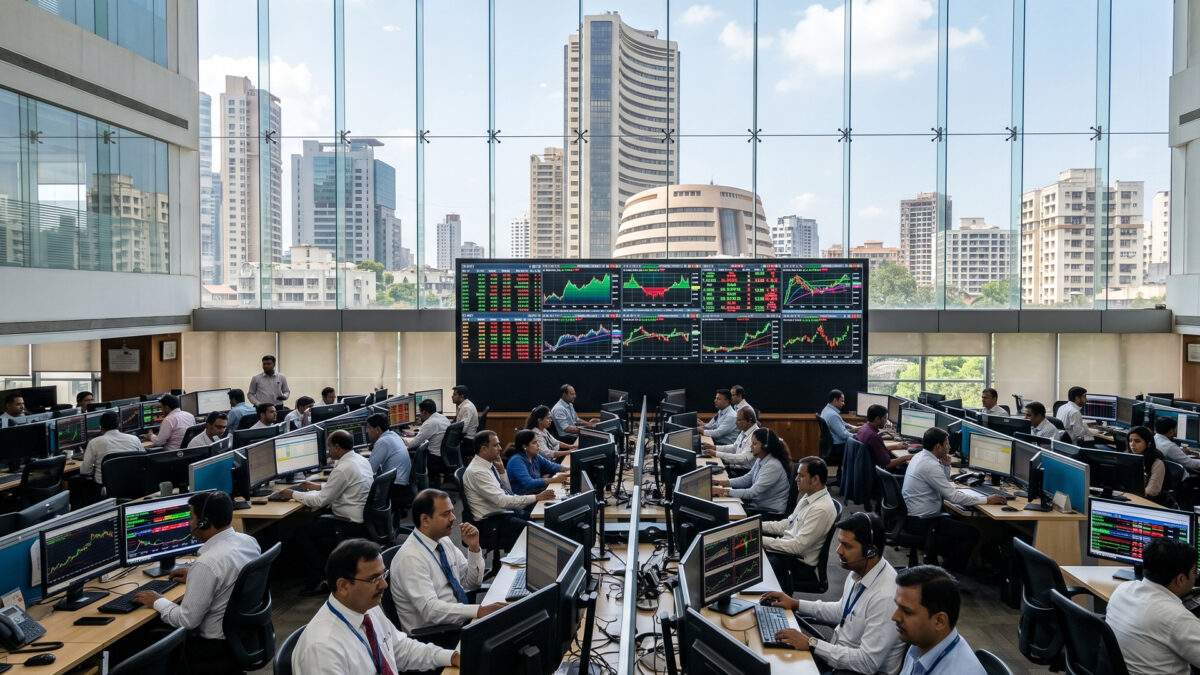
Sensex rises over 600 points, Nifty crosses 24,500

Indian stock markets  on April 21, 2026, opened as the Sensex surged by over 600 points, while the Nifty reclaimed and held above the 24,500 mark during the session, reflecting broad-based buying across key sectors.

Financial stocks led the rally throughout the trading session. Heavyweight private banks such as ICICI Bank witnessed strong buying interest following steady quarterly performance, while other banking and financial services counters also gained momentum. The IT sector added further strength, with stocks like Infosys and HCL Technologies attracting investor attention amid expectations of stable global demand. Adani Pofrts shares saw considerable rise in the values.

The broader market also saw support from energy and large-cap stocks, with Reliance Industries contributing to the upward move. Positive cues from global markets and a stable opening indicated by GIFT Nifty set the tone for the day’s rally.

Oil prices remained elevated but relatively stable, easing fears of sharp inflationary pressures in the near term. Currency movements and global bond yields were also monitored closely by investors, though they did not significantly disrupt market momentum.

Also Read: India’s crude imports fall 17% amid Hormuz crisis

Categories
Corporate

India’s crude imports fall 17% amid Hormuz crisis

India’s crude oil imports fell sharply by nearly 17% in March compared to previous levels, as tensions in the Middle East and disruptions around the Strait of Hormuz continued to affect global energy flows. The decline reflects reduced shipments from key Gulf suppliers amid ongoing geopolitical uncertainty.

According to official and shipping data, the slowdown in crude inflows has been driven by instability in the region, where a large share of India’s energy imports originate. The Strait of Hormuz, one of the world’s most important oil shipping routes, has seen repeated interruptions due to the Iran conflict, forcing several tankers to reroute or wait for clearance.

The situation has also raised concerns over supplies of LPG and LNG, which are heavily dependent on the same route. Reports indicate that nearly 90% of India’s LPG imports and more than half of its LNG imports pass through the Strait of Hormuz, making them vulnerable to any blockade or conflict-related disruption.

The latest developments suggest that Iran has reportedly tightened control over the passage at different points during the ongoing conflict, leading to uncertainty for tankers carrying crude oil, cooking gas and industrial fuels bound for India. Several ships are said to be stuck in the region or operating under delayed schedules.

Despite these challenges, government sources have said that India’s fuel supply remains stable for now, with strategic reserves and diversified import sources helping cushion the impact. Refineries continue to operate at high capacity, and efforts are underway to secure alternative shipping routes and suppliers where possible.

However, analysts warn that prolonged disruption in the Strait of Hormuz could push global oil prices higher and increase India’s import bill, as the country depends on overseas supplies for most of its crude oil needs. Even small changes in supply flows from the Gulf can have a direct impact on domestic fuel prices and inflation.

Also Read: Tata Trusts to amend trustee rules

Categories
Corporate

Tata Trusts to amend trustee rules

Tata Trusts has decided to initiate formal proceedings to amend parts of the trust deed of the Bai Hirabai Jamsetji Tata Navsari Charitable Institution, focusing on rules that govern who can become a trustee. The move comes amid an ongoing dispute over eligibility criteria and recent challenges to board appointments.

The decision was taken after a review of the trust’s governance structure, where trustees agreed to approach the appropriate authority to modify certain restrictive clauses in the 1923 deed. These clauses have been under scrutiny for limiting trustee eligibility, including provisions that were earlier interpreted as excluding non-Zoroastrians.

The issue gained attention after objections were raised regarding the appointment of certain trustees, leading to a complaint before the Maharashtra Charity Commissioner. The complaint questioned whether the appointed members met the eligibility requirements laid out in the trust deed.

In response, Tata Trusts has maintained that its broader philosophy has always been inclusive and secular. It also noted that, based on past legal opinion, non-Zoroastrians have been associated with the trust since 2000. However, the existing wording of the deed has still led to legal and governance concerns.

The trust has clarified that the proposed changes are intended to correct inconsistencies in the old document and align governance rules with current values and practices. The amendment process will require approval from the relevant regulatory authority before any changes take effect.

Alongside this, Tata Trusts has expressed confidence in its leadership and administrative structure, including its CEO Siddharth Sharma, whose role has also been referenced in recent discussions around trust governance.

The development reflects a wider effort within the organisation to modernise legacy trust structures that were created nearly a century ago. It also highlights ongoing debates around how historical legal provisions should be interpreted in today’s governance framework.

Also Read: UAE seeks US financial lifeline

Categories
Corporate

Sensex up 27 points, Nifty closes above 24,350

Indian stock markets ended with modest gains on Monday after a volatile trading session, as investors balanced domestic earnings optimism with concerns over rising crude oil prices and global tensions.

The BSE Sensex closed 27 points higher at 78,520.30, while the NSE Nifty50 gained 11 points to settle at 24,364.85. Both benchmark indices moved between gains and losses through the day before ending slightly positive.

Markets opened weak amid worries over the ongoing US-Iran conflict and fears of disruption to oil supplies in the Gulf region. However, buying in select banking, metal and PSU stocks helped markets recover.

Among the top gainers on the Nifty were JSW Steel, SBI, Trent, Asian Paints and Grasim Industries. These stocks saw steady buying interest as investors moved into select sectors.

On the losing side, Jio Financial Services, Tata Motors, Kotak Mahindra Bank, Hindalco and HDFC Life ended lower. Profit booking and cautious sentiment weighed on these shares.

Sector-wise, PSU banks, power, energy and media stocks performed well, while IT, telecom and real estate counters remained under pressure. Midcap and smallcap shares ended mixed, reflecting selective participation in the broader market.

ICICI Bank shares also gained after reporting healthy quarterly earnings, while Jio Financial fell after weaker profit numbers. Indian Energy Exchange declined sharply following regulatory concerns.

The Indian rupee weakened slightly against the US dollar, reflecting cautious sentiment in global markets. Analysts said investors are closely watching quarterly earnings, foreign fund flows and crude oil prices for near-term direction.

Also Read: Air India begins Dreamliner upgrade drive

Categories
Corporate

Air India begins Dreamliner upgrade drive

Air India has introduced its first refurbished Boeing 787-8 Dreamliner, marking a key milestone in the airline’s ongoing transformation under the Tata Group. The upgraded aircraft is part of a wider plan to modernise the fleet, improve passenger comfort and strengthen Air India’s position in the global market.

The airline said seven more Boeing 787-8 aircraft are expected to be upgraded by the end of this year. In total, 26 older Dreamliners are set to undergo refurbishment as part of the makeover programme.

The first upgraded aircraft recently arrived in Delhi after renovation work overseas. It now features a completely refreshed interior, new seating, modern cabin styling and Air India’s updated branding.

One of the biggest changes is the introduction of a three-class cabin layout. Passengers will now be able to choose between Business Class, Premium Economy and Economy Class. The addition of Premium Economy is aimed at travellers looking for more comfort without the higher cost of Business Class.

The aircraft also comes with improved in-flight entertainment systems, upgraded seats and redesigned cabin spaces to enhance the travel experience, especially on long international routes. These Dreamliners are expected to be used on flights to Europe, the UK, Australia and other overseas destinations.

Air India has been undergoing a major revival since returning to the Tata Group. The airline has placed record aircraft orders, launched a new brand identity and started upgrading both domestic and international fleets.

Also Read: UAE seeks US financial lifeline

Categories
Corporate

IEX shares fall 8% after CERC draft proposal

Shares of Indian Energy Exchange (IEX) fell sharply on Monday, dropping around 8% after a draft proposal from the Central Electricity Regulatory Commission (CERC) unsettled investors. The stock came under strong selling pressure as the new proposal raised concerns about changes in how electricity prices may be determined in the future.

The market reaction followed CERC’s draft rules on “market coupling,” a system aimed at creating a single price discovery mechanism across multiple power exchanges. If implemented, bids from different exchanges would be pooled together and a common market-clearing price would be decided centrally.

At present, exchanges such as IEX run their own platforms where electricity prices are discovered based on supply and demand. This model has helped IEX emerge as the dominant player in India’s power trading market over the years. Investors now fear that a common pricing system could reduce the company’s competitive edge.

IEX has built its strength through high liquidity, strong market share and a large user base. Analysts believe these advantages may become less valuable if all exchanges operate under a central pricing framework. That could impact trading volumes, pricing power and future earnings growth.

The Day-Ahead Market, one of IEX’s most important business segments, is seen as particularly vulnerable if market coupling is introduced there first. Since this segment contributes significantly to the company’s revenue, any changes could directly affect investor sentiment.

Despite the sharp sell-off, experts noted that the proposal is still in the draft stage and not yet final. CERC has invited comments from stakeholders before taking a final decision, which means the framework could still undergo changes after consultations.

Some market observers also pointed out that India’s power market continues to expand due to rising electricity demand, renewable energy growth and increased industrial consumption. This means IEX may still have growth opportunities even if competition increases.

Also Read: Andhra Pradesh to start India’s first private gold mine