Categories
Beyond

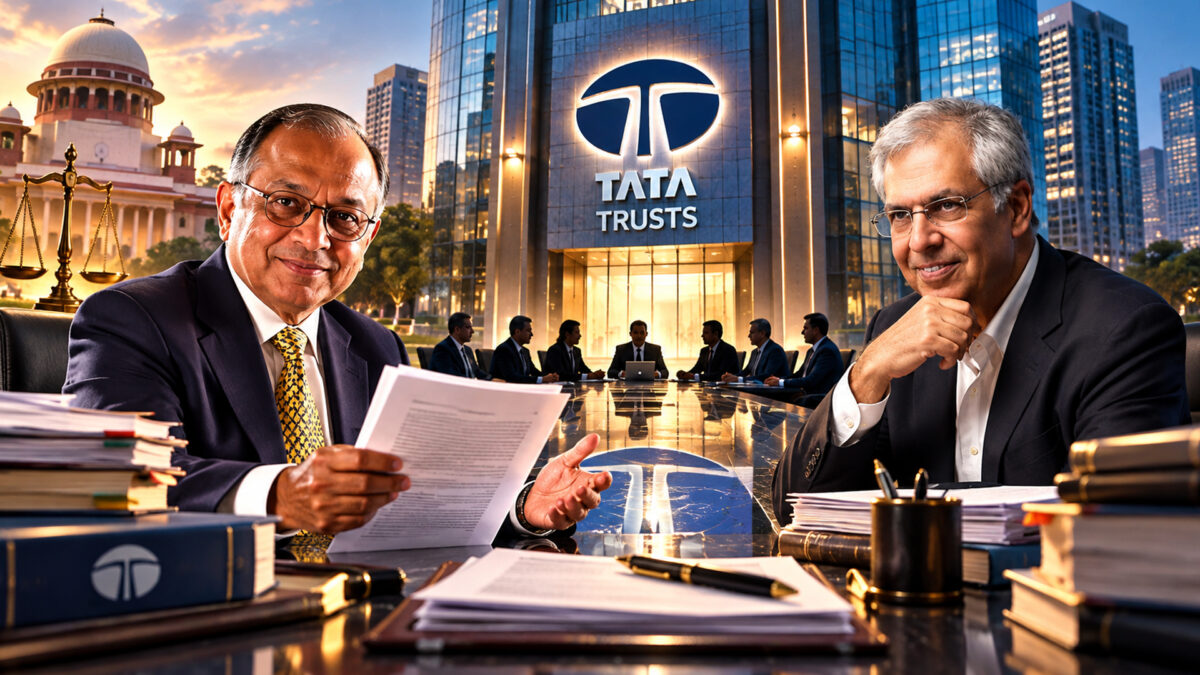
Venu Srinivasan seeks Tata Trusts probe

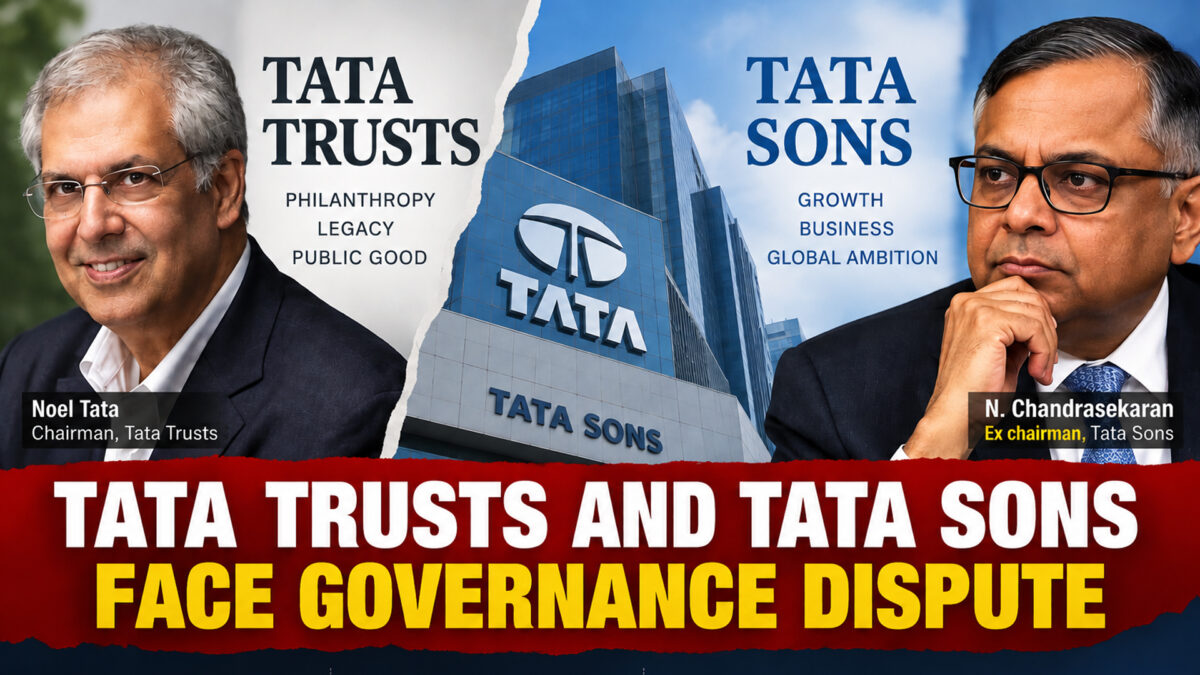
A fresh governance dispute has emerged within Tata Trusts, with trustee Venu Srinivasan seeking an inquiry into the administration of two key trusts and questioning the appointments and powers of chairman Noel Tata and his son Neville Tata.

Srinivasan, who is a trustee of the Sir Dorabji Tata Trust (SDTT) and Sir Ratan Tata Trust (SRTT), has approached the Maharashtra Charity Commissioner seeking an immediate inquiry into the governance of the trusts. His move adds another layer to the ongoing differences between Tata Trusts and the board of Tata Sons, the holding company of the Tata Group.

In his September 24 letter, Srinivasan questioned the basis on which Noel Tata became a perpetual trustee and subsequently chairman of Tata Trusts. He also raised objections over the appointment of Neville Tata as a trustee of SDTT and alleged that he was excluded from parts of the decision-making process surrounding the appointment.

Srinivasan has also asked the Charity Commissioner to examine the wider role played by the trusts in the commercial and strategic affairs of Tata Sons. His contention is that the charitable trusts have become increasingly involved in decisions concerning the commercial company, raising questions about the separation between their philanthropic objectives and Tata Sons’ business affairs.

Tata Trusts collectively own about 66% of Tata Sons, giving them significant influence over the holding company and, indirectly, the wider Tata Group. Tata Sons has interests across sectors including technology, automobiles, steel, aviation, consumer products and financial services.

The latest dispute is closely linked to the disagreement over the future governance and restructuring of Tata Sons. Srinivasan has supported the proposed listing of Tata Sons, while Tata Trusts have opposed aspects of the process and questioned decisions taken by the Tata Sons board.

A major flashpoint came on September 17, when the Tata Sons board backed the reappointment of N Chandrasekaran as chairman. Tata Trusts subsequently maintained that the resolution was legally invalid because both trust-nominated directors had not supported it. Noel Tata voted against the proposal, while Srinivasan voted in favour. The Trusts have maintained that their nominee directors’ support was necessary under Tata Sons’ Articles of Association.

Srinivasan has separately challenged an SDTT circular resolution that sought to restrict his participation in discussions and voting related to the proposed Tata Sons listing. He has argued that the move attempted to prevent him from exercising independent judgment as a nominee director.

The dispute highlights a complex governance structure in which Tata Trusts, despite being philanthropic organisations, have substantial shareholder rights in Tata Sons. Questions over how trustees should exercise those rights have become increasingly important as the group considers changes to its ownership and corporate structure.

Srinivasan has asked the Charity Commissioner to consider whether trustees should be suspended or removed if an inquiry establishes grounds for such action. He has also sought restrictions on certain decisions involving Noel Tata, including matters connected with Tata Sons. These are requests made by Srinivasan and do not represent findings by the regulator.

The controversy has also widened beyond Srinivasan. Tata Trusts vice-chairman Vijay Singh has approached the Maharashtra Charity Commissioner separately, seeking an inquiry into the trust’s involvement in Tata Sons and raising questions about recent governance decisions.

The Charity Commissioner’s office has been examining developments involving the trusts. The regulatory backdrop has become particularly important after the Sir Ratan Tata Trust faced a freeze earlier this year over issues connected with the Maharashtra Public Trusts Act. The freeze had consequences for Tata Sons, including delays involving its annual general meeting.

Tata Trusts have responded to the latest complaint by filing caveats with the Charity Commissioner’s office, seeking to ensure that they are heard before any order is passed. A caveat allows a party to request prior notice before a court or authority takes a decision affecting it.

Noel Tata became chairman of Tata Trusts in October 2024 following the death of Ratan Tata. The trustees had said at the time that his appointment was unanimously approved. In November 2025, SDTT announced Neville Tata’s induction as a trustee for a three-year term. Srinivasan was also appointed trustee and vice-chairman for three years.

The latest developments therefore involve both personalities and broader questions about corporate governance, trustee powers and shareholder rights. At the centre is the relationship between Tata Trusts and Tata Sons and how decisions affecting the wider Tata Group should be taken.
 

Categories
Corporate

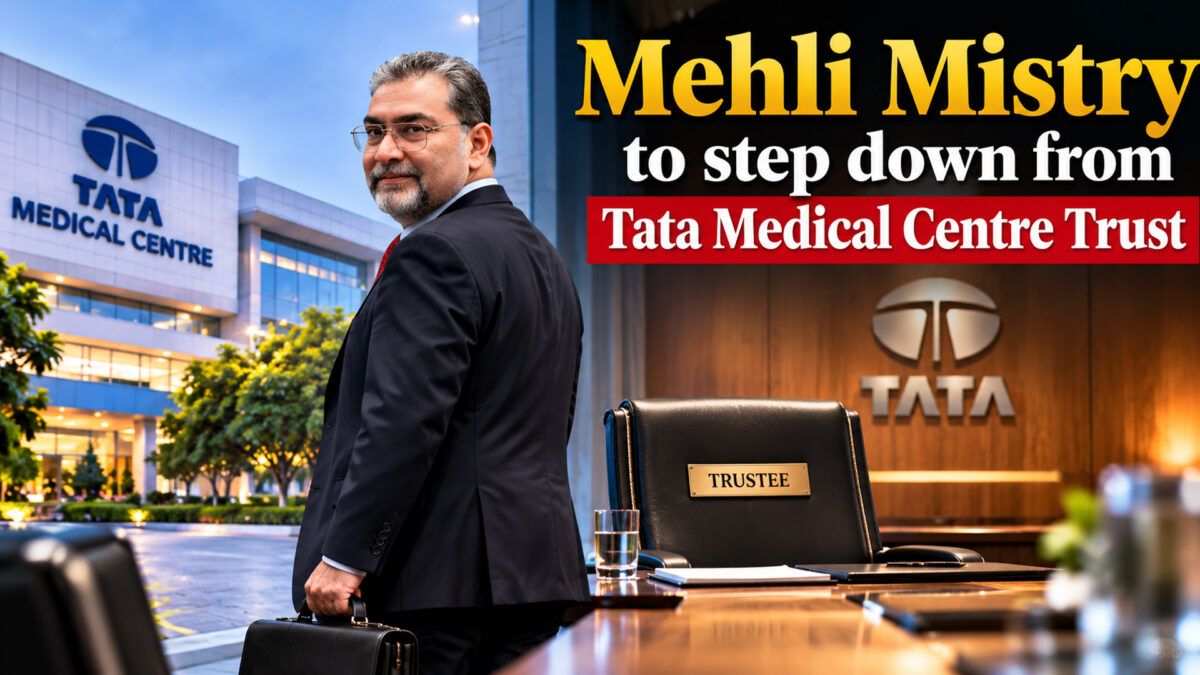
Tata Medical Centre trust sees trustee change

Mehli K Mistry, a long-time associate of late industrialist Ratan Tata, will step down as a trustee of the Tata Medical Centre Trust after deciding not to seek another term. His current tenure ends on September 30, 2026.

Mistry communicated his decision in an email dated September 15 to Arun Pattatheyil, CEO of Tata Medical Centre. In the email, he said he did not wish to stand for re-election and requested that his decision not to renew his trusteeship be formally recorded. The communication was also marked to Tata Trusts Chairman Noel Tata and trustees Vijay Singh, Darius J Khambata, Leah Tata, Maya Tata and Neville Tata.

The move marks another change in Mistry’s association with the Tata group’s philanthropic and investment ecosystem. He has served on the Tata Medical Centre Trust board since 2017. His latest decision will take effect when his current term expires at the end of September.

Tata Medical Centre Trust oversees the Tata Medical Centre in Kolkata, a not-for-profit cancer-care institution. The hospital provides cancer treatment along with services covering screening, early detection, prevention, rehabilitation and palliative care. Recent reports have described the centre as a 436-bed tertiary cancer hospital, while other accounts have referred to its larger planned or operational capacity.

Mistry’s departure from the medical centre trust follows several changes in his roles across Tata-linked organisations over the past year.

In July 2026, he stepped down as a director of RNT Associates Private Limited, the investment vehicle established by Ratan Tata to manage his personal investments. Reports said the company has a portfolio worth more than ₹1,000 crore, with investments in companies including Ola Electric and Urban Company.

Before that, Mistry stepped down as a trustee of the Ratan Tata Endowment Trust and the Ratan Tata Endowment Foundation. The changes followed developments around the trusteeships of the principal Tata charitable trusts.

In October 2025, his reappointment to the Sir Dorabji Tata Trust and the Sir Ratan Tata Trust was not approved, despite an earlier resolution proposing his appointment as a lifetime trustee. Mistry subsequently approached the Maharashtra Charity Commissioner with a pre-emptive caveat, seeking to be heard before changes were made to the trustees’ list.

His latest departure has therefore been reported as his sixth exit from an institution linked to Ratan Tata since the former Tata Sons chairman died in October 2024. Mistry, however, continues to be associated with the Tata Education and Development Trust.

Mistry’s exits come at a time when governance and succession within Tata’s philanthropic institutions have received greater attention.

The Tata Trusts control a significant stake in Tata Sons, the holding company of the Tata group. Changes in the composition of the trusts can therefore have implications beyond philanthropy, particularly because of the trusts’ role in the group’s ownership structure.

Mistry had previously said that his approach to the Tata Trusts was guided by Ratan Tata’s values, including transparency, good governance and public interest. Those comments came after his departure from the principal Tata trusts and amid differences surrounding their governance.

The Tata Medical Centre Trust, however, has a more direct healthcare and philanthropic role. Established to oversee the cancer hospital in Kolkata, it is part of the Tata group’s long-standing commitment to healthcare and community-focused institutions.

Mistry’s exit means the trusteeship of the Tata Medical Centre Trust will move into its next phase after September 30. Reports indicate that the remaining trustees include Noel Tata, Leah Tata, Maya Tata, Neville Tata and former defence secretary Vijay Singh.

The immediate focus for the trust is expected to remain on the hospital’s healthcare operations and its not-for-profit mandate. Tata Medical Centre serves patients from Kolkata and other parts of eastern and northeastern India and provides cancer care alongside prevention, diagnosis and supportive services.

For the wider Tata ecosystem, Mistry’s departure is another marker of the institutional changes that have followed Ratan Tata’s death. His association with several Tata-linked organisations has gradually reduced, while his continuing role with the Tata Education and Development Trust represents one of his remaining links with the philanthropic network.

The transition also highlights the distinction between Tata’s operating companies and its charitable institutions. While Tata group companies operate as commercial businesses, the Tata Trusts and their associated institutions play a major role in areas such as healthcare, education and social development.

With Mistry’s term at the Tata Medical Centre Trust ending this month, attention will now turn to the trust’s next composition and how it continues its healthcare and philanthropic responsibilities.

Categories
Leaders

Tata Sons defends N Chandrasekaran’s third term

Tata Sons has rejected Tata Trusts chairman Noel Tata’s objections to N Chandrasekaran’s reappointment, saying the decision to give the chairman a third five-year term was legally valid and followed the company’s Articles of Association. The company has backed its position with legal opinions from former Supreme Court judges and senior counsel, deepening an ongoing corporate governance dispute within the Tata Group.

The latest development follows the September 17 meeting of the Tata Sons board, where Chandrasekaran’s reappointment was approved. Four directors voted in favour, while Noel Tata, one of the Tata Trusts’ nominee directors, voted against it. The other Trusts nominee, Venu Srinivasan, supported the proposal. With the two Trust nominees split, Harish Manwani, who was chairing the meeting after Chandrasekaran recused himself from the discussion, used his casting vote in favour of the reappointment.

Noel Tata subsequently questioned both the voting process and the legal basis for the decision. Tata Trusts has argued that the support of a majority of its nominee directors was separately required under Tata Sons’ Articles of Association. Since the two nominees voted differently, the Trusts said that condition was not met and could not be overcome by a chairman’s casting vote. Tata Trusts collectively owns about 66% of Tata Sons.

Tata Sons has now taken a different legal view. In a letter to Noel Tata, the company cited opinions from former Chief Justice of India Uday U Lalit and former Supreme Court judge B N Srikrishna. It also relied on an opinion from senior advocate Sudipto Sarkar, which had been obtained before the board meeting. The opinions support the validity of the board resolution and the use of the casting vote.

Justice Lalit’s opinion said that because there was an equality of votes among the directors appointed under Article 104B, the presiding chairman could exercise a casting vote under Article 121. Justice Srikrishna similarly concluded that the proceedings were consistent with the wording and intent of Article 121. His opinion also said a director’s statutory fiduciary duty to the company would take precedence over a contractual duty to the entity that nominated the director if the two came into conflict.

That interpretation also addresses why Venu Srinivasan voted in favour of Chandrasekaran despite Noel Tata opposing the move. Srikrishna’s opinion said Srinivasan had acted in accordance with his fiduciary responsibility to Tata Sons. Tata Trusts, however, has maintained that Srinivasan’s vote could not remove the requirement for affirmative support from the Trusts’ nominee directors.

The dispute also centres on Article 118 of Tata Sons’ Articles of Association, which deals with the selection of a chairman. Noel Tata’s position is that this provision should have governed Chandrasekaran’s reappointment and that a five-member selection committee, including three Trust nominees, should have been involved.

Tata Sons has rejected that interpretation. Sarkar’s legal opinion said Article 118 refers specifically to the selection of a “new chairman” and does not apply to the reappointment of an incumbent chairman. Chandrasekaran remains chairman until the end of his current term in February 2027, according to the legal reasoning cited by Tata Sons.

The disagreement has also brought two different legal opinions into focus. Noel Tata had presented an opinion from former Chief Justice of India D Y Chandrachud, which supported the Tata Trusts’ interpretation that the affirmative support of the Trust nominees was necessary and that a casting vote could not substitute for that requirement. Tata Sons has relied instead on the opinions of Lalit, Srikrishna and Sarkar.

The issue is now expected to move beyond the boardroom. Chandrasekaran’s reappointment as a director will require shareholder approval at Tata Sons’ annual general meeting, which is expected in the coming weeks. The outcome of that process could become an important next step in determining how the dispute develops.

Chandrasekaran, who became Tata Sons chairman in 2017, began his second five-year term in 2022. His third-term reappointment comes at a time when the relationship between Tata Sons and Tata Trusts is facing closer scrutiny over governance, shareholder rights and the balance of authority within the group.

The immediate disagreement is centred on a narrow question of corporate law — how Tata Sons’ Articles of Association should be interpreted when Trust nominees disagree and whether a casting vote can resolve that difference. But the dispute has wider implications for the governance structure of one of India’s largest business groups.

Tata Sons has maintained that its directors acted in accordance with their fiduciary duties and that the September 17 resolution was valid. Tata Trusts, meanwhile, continues to challenge that interpretation and the validity of the reappointment process. With competing legal opinions now on record, the next stage of the Chandrasekaran reappointment row is likely to play out through the shareholder process and potentially further legal scrutiny.


Categories
Leaders

Tata Sons listing faces Trusts’ opposition

Tata Group is facing a major governance debate over the future of Tata Sons, its principal holding company. At the centre of the dispute is whether Tata Sons should become a publicly listed company and how the group should manage its relationship with Tata Trusts.

Senior advocate Harish Salve, who is advising Tata Sons chairman N Chandrasekaran, has backed the case for a public company structure. He has argued that Tata Sons needs to comply with regulatory requirements and that a listed structure could provide greater transparency.

The disagreement comes after the Reserve Bank of India rejected Tata Sons’ request to give up its registration as an Upper Layer Core Investment Company (CIC). The decision has increased pressure on Tata Sons to consider a stock market listing.

Tata Sons had sought to surrender its registration after arguing that it no longer met the conditions requiring it to remain registered as a CIC. The company had repaid its borrowings in 2019. However, the RBI’s position is that Tata Sons continues to meet the regulatory criteria because several companies in which it holds significant stakes have borrowings.

The regulatory status is important because companies classified as upper-layer CICs are subject to additional oversight. The framework also includes requirements relating to governance, capital and risk management.

A public listing could therefore become one route for Tata Sons to address the regulatory requirement. The issue, however, is complicated by the company’s unusual ownership structure.

Tata Trusts collectively hold about 66% of Tata Sons. The trusts have historically played a central role in the Tata Group and have special rights under the company’s Articles of Association.

The trusts have opposed a Tata Sons listing and have argued that alternatives should be examined. Their position is linked to concerns about preserving the long-standing structure and purpose of the Tata Group.

Tata Sons, meanwhile, has to consider its regulatory obligations as well as the interests of its shareholders. A decision to list would involve significant changes to the company’s ownership structure and could bring its shares into public markets for the first time.

The disagreement has also extended to the appointment of Tata Sons chairman N Chandrasekaran. The company’s board has backed his continuation as chairman. Tata Trusts have raised objections to the process and the wider governance arrangements.

The issue has highlighted a larger question about how Tata Sons should be governed when its major stakeholders do not agree on important decisions.

Salve has argued that a company cannot operate effectively if its key stakeholders remain locked in a prolonged disagreement. He has also maintained that directors have a legal duty to act in the interests of the company rather than represent the interests of individual shareholders.

That principle could become important as the dispute develops. Tata Sons has a large and diverse portfolio, with stakes in businesses spanning information technology, automobiles, steel, aviation, consumer products and financial services.

The holding company owns significant interests in some of India’s biggest businesses. These include Tata Consultancy Services, Tata Motors, Tata Steel and Air India.

The value of Tata Sons therefore extends well beyond its own balance sheet. Decisions taken at the holding-company level can have implications for the wider Tata Group and its listed companies.

The proposed listing would also have implications for the Tata Trusts. A public offering could dilute their ownership depending on the structure and size of the issue. It could also introduce a much wider group of shareholders into the governance of Tata Sons.

The Tata Sons IPO has consequently become a sensitive issue. A listing could improve public disclosure and create a market value for the holding company. At the same time, it would mark a major change from the group’s traditional ownership model.

The Shapoorji Pallonji Group, which owns around 18.4% of Tata Sons, has supported the possibility of a listing. Its position adds another dimension to the shareholder discussions.

The Reserve Bank’s regulatory decision has now made the question more urgent. Tata Sons has also challenged the regulatory position, while the RBI has taken steps to protect its position in any potential legal proceedings.

The company therefore faces several issues at the same time — regulatory compliance, shareholder rights, board governance and the future ownership structure.

A final decision on the Tata Sons listing has not yet been announced. The company and its shareholders will need to consider the legal and regulatory requirements alongside the long-standing governance framework of the Tata Group.

The dispute is ultimately about more than an IPO. It raises questions about how one of India’s most influential business groups should balance its traditional trust-led ownership model with the demands of modern corporate governance and regulation.

As discussions continue, the Tata Group’s next steps will determine whether Tata Sons remains privately held or moves towards becoming a publicly traded company.


Categories
Leaders

Tata Trusts opposes Chandrasekaran’s fresh term

Tata Sons has approved a fresh five-year term for N Chandrasekaran as executive chairman, reversing his decision last month not to seek another term. The move has opened a new dispute with Tata Trusts, which has questioned the legality of the board decision.

The Tata Sons board voted 4-1 in favour of Chandrasekaran’s reappointment at its September 17 meeting. Noel N Tata, chairman of Tata Trusts and a Trusts nominee on the board, voted against the proposal.

Chandrasekaran’s current term ends on February 20, 2027. He had told the board on August 12 that he would not offer himself for another term. Tata Trusts accepted that decision and had called for a succession process to identify his replacement.

The situation changed after the Tata Sons Nomination and Remuneration Committee met on September 3. The committee asked Chandrasekaran to reconsider his decision and recommended his reappointment. He agreed to reconsider before Thursday’s board meeting, where directors approved the new five-year term by majority vote.

Tata Trusts has strongly objected to the reversal. Noel Tata said the chairman had already communicated his decision to step down and that the Trusts had accepted it. He argued that the company should now move ahead with the process of finding a successor rather than reopen the question of Chandrasekaran’s tenure.

The Trusts has also challenged the validity of Thursday’s board resolution. It described the decision as a “legal nullity”, arguing that the Tata Sons Articles of Association require the necessary support from Trusts nominee directors for the appointment or reappointment of the chairman. Noel Tata’s vote against the proposal is central to that argument.

Noel Tata also submitted a legal opinion from former Chief Justice of India D Y Chandrachud supporting the Trusts’ position, according to reports. The Trusts said the opinion was not properly considered by the board.

The dispute is significant because Tata Trusts collectively owns about 66% of Tata Sons, the holding company at the centre of the Tata Group. The next major step will be the company’s annual general meeting, where the board’s decisions will face shareholder approval.

The boardroom disagreement comes at another important moment for Tata Sons. The company has also decided to begin steps towards a possible stock market listing after the Reserve Bank of India rejected its request to surrender its registration as a Core Investment Company.

Tata Sons had sought deregistration after taking steps to meet debt-related requirements. The RBI’s decision has brought the listing requirement for an upper-layer non-banking financial company back into focus. The company said it would seek guidance from the RBI, Tata Trusts and other stakeholders on the compliance process.

The listing issue adds another layer to the disagreement between Tata Sons and Tata Trusts. A public listing would change the ownership and governance dynamics of the group’s holding company, which has stakes in major listed businesses including Tata Consultancy Services, Tata Motors and Tata Steel, besides controlling several unlisted businesses.

Chandrasekaran has led Tata Sons since 2017 and was given a second five-year term in 2022. During his tenure, the Tata Group expanded its presence in aviation, electronics, digital businesses and other emerging sectors. The group also completed the acquisition of Air India and has been pursuing major investments in manufacturing and technology.

His continuation was therefore expected to provide continuity as Tata Sons deals with regulatory requirements and large business projects. But the opposition from Tata Trusts means the question may now move beyond the boardroom.

The Trusts had already begun considering the succession process after Chandrasekaran’s August announcement. Its latest position indicates that it does not accept Thursday’s reversal as settling the matter.

The immediate focus will now shift to the Tata Sons AGM and the steps that follow. The board has backed Chandrasekaran, while Noel Tata and Tata Trusts have challenged that decision.

At the same time, Tata Sons is preparing to respond to the RBI’s position on its corporate structure and listing. The two developments together make the coming months important for the group’s leadership, governance and ownership structure.

What began as a planned leadership transition has now turned into a wider debate over chairman succession, shareholder rights and the future structure of Tata Sons. The final outcome will depend on the company’s shareholder process, regulatory requirements and how the dispute between the board and Tata Trusts develops.


Categories
1 Minute-Read

Tata Trusts cleared in old share dispute

Tata Trusts has received relief in a decades-old dispute over 833 Tata Sons shares transferred to Naval Tata in 1989. The Maharashtra Charity Commissioner has closed the complaint, finding that the transaction followed the required process.

The shares were transferred from the Navajbai Ratan Tata Trust, with the trust receiving payment based on an approved valuation. The complaint was revived this year by trustee Vijay Singh, who sought an inquiry into the transaction.

The Commissioner also criticised aspects of Singh’s conduct while pursuing the case. The ruling comes as Tata Trusts, led by Noel Tata, faces growing attention over Tata Sons’ succession and governance.


Categories
Beyond

Tata Trusts gets relief in 1989 share transfer case

Tata Trusts has received relief in a nearly four-decade-old dispute involving the transfer of Tata Sons shares to former Tata Group chairman Naval Tata.

The Maharashtra Charity Commissioner has closed a complaint seeking an inquiry into the transfer of 833 Tata Sons shares from the Navajbai Ratan Tata Trust to Naval Tata in 1989. The Commissioner found that the transaction had followed the required process and that there was no need for further investigation.

The complaint had raised questions about whether the charitable trust was legally allowed to transfer the shares and whether the necessary procedures had been followed at the time.

The issue came back into focus this year after Vijay Singh, a trustee of the Navajbai Ratan Tata Trust and vice-chairman of Tata Trusts, sought an inquiry into the old transaction.

The Charity Commissioner has now rejected those concerns and closed the case.

According to the order, the share transfer was supported by the required documents. The trust received payment for the shares based on a valuation that had been accepted by the Commissioner of Wealth Tax.

The transaction was also included in the trust’s financial records. The trust had made a profit from the sale, according to the findings.

The shares were transferred in January 1989, when Naval Tata was an important figure in the Tata Group. The transaction involved the Navajbai Ratan Tata Trust, one of the charitable trusts that form the foundation of Tata Trusts.

The fact that the matter dates back to 1989 makes the case unusual. The Charity Commissioner had to examine records and decisions relating to a transaction that took place almost 40 years ago.

The Commissioner also criticised the way Vijay Singh handled the complaint. According to reports, Singh did not first share his complaint with the trust before submitting it to the Charity Commissioner.

The order also questioned certain aspects of his conduct as a trustee and criticised the manner in which the complaint was pursued.

For Tata Trusts, the decision comes at an important time. The organisation is playing a major role in discussions about the future leadership of the Tata Group.

Noel Tata, who heads Tata Trusts, has become an important figure in the group’s leadership and succession discussions. Tata Trusts has a controlling stake in Tata Sons, the main holding company of the Tata Group.

The question of who will lead Tata Sons next is also becoming more important. Tata Sons chairman N Chandrasekaran’s current term is scheduled to end in February 2027.

That has increased attention on the succession process and on the role Tata Trusts will play in choosing the next chairman.

The old share-transfer dispute had the potential to create additional questions around the governance of Tata Trusts. With the Charity Commissioner now closing the case, that issue has been removed from the immediate picture.

However, wider discussions about Tata Group succession and governance are expected to continue.

The Tata Group has grown significantly in recent years, with businesses spanning technology, automobiles, aviation, consumer products and other sectors. The appointment of the next Tata Sons chairman will therefore be closely watched.

Noel Tata’s position as chairman of Tata Trusts gives him an important role in the process. Since Tata Trusts owns a majority stake in Tata Sons, its views carry considerable weight in major decisions involving the holding company.

The Charity Commissioner’s decision also provides some clarity on the 1989 transaction. The regulator found that the transfer of the 833 shares was carried out according to the process applicable at the time.

Tata Trusts has welcomed the decision and rejected the allegations made against the trust. It has maintained that its actions have always been guided by its long-standing values and commitment to public service.

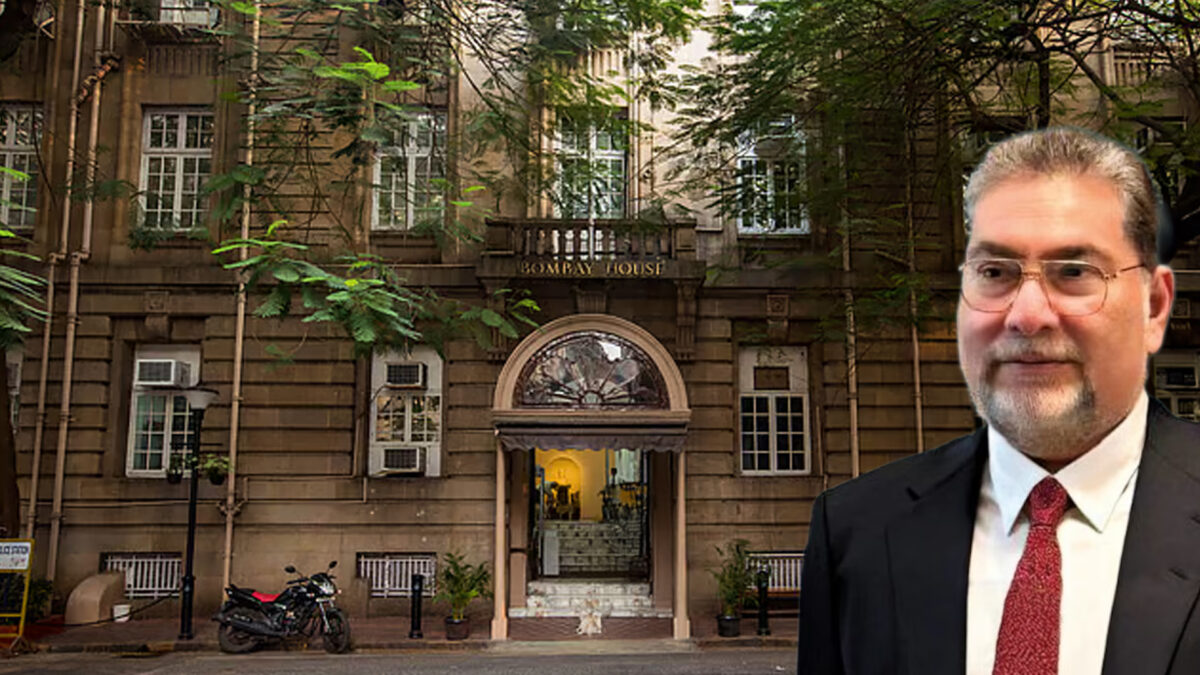
The dispute over the 1989 share transfer is closed. The focus at Bombay House is likely to return to the larger issues facing the Tata Group, particularly the succession process at Tata Sons.

The case is also a reminder that decisions made decades ago can come under fresh scrutiny when questions about ownership, governance and leadership emerge.

In this case, the Charity Commissioner’s ruling has cleared the old transaction and given Tata Trusts some breathing room.

But with the Tata Group preparing for its next leadership phase, attention will remain firmly on Noel Tata, Tata Trusts and the future of Tata Sons.


Categories
Leaders

Mehli Mistry challenges removal from Tata Trusts

A governance dispute has surfaced within Tata Trusts after former trustee Mehli Mistry challenged his removal from the organisation, alleging that the decision was unlawful and violated established procedures.

Mistry, a veteran chartered accountant and younger brother of late industrialist Pallonji Mistry, has questioned the circumstances surrounding his ouster from the influential philanthropic body that holds a significant stake in the Tata Group. In a detailed communication, he reportedly argued that his removal was carried out without following due process and lacked adequate justification.

The controversy has drawn attention because of Tata Trusts’ crucial role in overseeing charitable activities and its influence over the Tata Group, one of India’s largest business conglomerates. Mistry had been associated with the trusts for several years and was regarded as an experienced voice on governance and financial matters.

In his objections, Mistry raised concerns about governance practices and potential conflicts of interest within the trust structure. He reportedly questioned whether certain decisions were being taken in accordance with the principles of transparency, accountability and fiduciary responsibility expected from a public charitable institution.

According to reports, Mistry contended that the removal process did not comply with the trust deed and relevant governance norms. He also sought greater clarity regarding the reasons cited for his exit and the procedures followed by the trust leadership.

Tata Trusts, however, has maintained that its decisions are taken in accordance with applicable rules and governance frameworks. The organisation has not publicly accepted Mistry’s allegations and is understood to be standing by the decision taken by its board.

The dispute comes at a time when Tata Trusts is undergoing changes in leadership and governance following the appointment of Noel Tata as chairman. Observers note that the matter could attract wider attention because of the trust’s importance within the Tata ecosystem and its role in guiding long-term philanthropic and strategic initiatives.

Corporate governance experts say the episode highlights the growing scrutiny of governance standards at large charitable institutions and business-linked trusts.

Also Read: Gold rises to ₹1,53,170, silver falls to ₹2,59,900

Categories
1 Minute-Read

Tata Trusts postpones crucial board meeting

Tata Trusts has postponed its key board meetings to May 16 amid ongoing legal challenges and governance concerns linked to Tata Sons.

The meetings of Sir Dorabji Tata Trust and Sir Ratan Tata Trust were earlier scheduled for May 8 and were expected to discuss important matters related to board representation and Tata Sons’ future structure.

The postponement follows petitions filed in the Bombay High Court challenging certain trustee decisions.

Although the court declined immediate intervention, the issue has intensified scrutiny around governance within the Trusts. Tata Trusts, chaired by Noel Tata, remains the largest shareholder in Tata Sons.

Categories
Beyond

Tata Trusts to review Tata Sons board changes

Tata Trusts is set to hold an important meeting on May 8 to review its representation on the board of Tata Sons, in what could lead to notable changes at the top level of the group.

The discussions are expected to focus on possible changes to nominee directors appointed by the Trusts. One of the key developments under consideration is the potential exit of Venu Srinivasan from the Tata Sons board. At the same time, former Titan Company managing director Bhaskar Bhat is being considered for a board position.

Tata Trusts, which collectively hold a majority stake in Tata Sons, play a central role in shaping decisions within the Tata Group. Any changes in board representation are therefore seen as significant for the group’s overall direction.

The review comes at a time when there are differing views within the Trusts on certain strategic matters. One of the key issues being debated is whether Tata Sons should remain a privately held company or consider going public. While some members have supported the idea of listing, others have preferred to keep the current structure unchanged.

Apart from board composition, the meeting may also touch on broader governance issues, including leadership roles within the Trusts and long-term planning for the group. Reports suggest that even internal positions, such as the vice-chairman role, could be reviewed as part of this exercise.

The outcome of the meeting is being closely watched by industry observers, as it could signal how decision-making and influence are evolving within the Tata Group.

Also Read: Vietnam sees tourism boom with over 2 mn visitors