Categories
Leaders

John Ternus takes Apple helm as AI challenges grow

John Ternus will take charge as Apple’s chief executive on September 1, marking the end of Tim Cook’s 15-year tenure and opening a new chapter for the technology giant.

Ternus, Apple’s senior vice-president of Hardware Engineering, will become the company’s eighth CEO. Cook will move to the role of executive chairman, allowing Apple to retain his experience while handing day-to-day leadership to a new generation.

The leadership transition comes at an important moment for Apple. The company remains one of the world’s most valuable businesses, with a huge global customer base and strong positions in smartphones, computers, wearables and digital services. But the technology industry is changing rapidly, with artificial intelligence emerging as a major force shaping the future of consumer technology.

Ternus will inherit a financially powerful company, but also one facing questions over its AI strategy, growth prospects, China business and global supply chain.

An Apple veteran takes charge

Ternus has spent nearly 25 years at Apple after joining the company in 2001. He became senior vice-president of Hardware Engineering in 2021 and has played an important role in the development of several of Apple’s major products.

His work has included the iPhone, iPad, Mac and Apple Watch, as well as other hardware. He has also been closely involved in Apple’s transition to its own chips, which has given the company greater control over the performance and design of its devices.

His appointment signals a preference for continuity. Instead of bringing in an outsider, Apple has chosen an executive who understands its products, engineering teams and culture from within.

That experience could be valuable as Apple attempts to connect artificial intelligence more closely with its hardware.

Ternus, however, will now have responsibilities far beyond product development. As CEO, he will have to oversee Apple’s global operations, manage relations with governments, respond to regulatory challenges and guide the company’s long-term business strategy.

AI becomes the biggest challenge

Artificial intelligence is likely to be the most closely watched area of Ternus’ leadership.

Apple has already introduced Apple Intelligence, bringing AI-powered features to the iPhone, iPad and Mac. However, the company has moved more cautiously than several technology rivals in the generative AI race.

Companies such as Google, Microsoft, Meta and OpenAI have invested heavily in AI systems, infrastructure and consumer products. Apple, meanwhile, has faced questions over delays in delivering more advanced AI capabilities for Siri.

For Ternus, strengthening Apple’s AI position will be a key priority.

The company does not necessarily need to compete by creating another standalone chatbot. Its biggest advantage is its ecosystem of devices and services. The challenge will be to make AI useful across that ecosystem, from smartphones and computers to wearables and other connected products.

Apple will also want to maintain its focus on privacy and ease of use. The company has long promoted privacy as an important part of its products, and its AI strategy will need to balance powerful new features with those commitments.

Ternus’ hardware background could prove useful. AI increasingly depends on specialised chips and efficient computing, areas where Apple has invested heavily in recent years.

China remains a difficult equation

China will present another major challenge for the new CEO.

The country remains important to Apple as both a manufacturing centre and a consumer market. Although Apple has expanded production in countries including India and Vietnam, China continues to play a significant role in its global supply chain.

Apple must also deal with rising geopolitical and trade tensions. US policies have encouraged companies to reduce dependence on Chinese manufacturing, while relations between Washington and Beijing remain uncertain.

The Chinese smartphone market has become increasingly competitive for Apple as domestic manufacturers have strengthened their products and gained consumer attention.

Ternus will therefore have to balance manufacturing diversification with the realities of running a complex global supply chain. Any major shift away from China will take time because Apple depends on an enormous network of suppliers and manufacturing partners.

Cook’s move to executive chairman could provide some continuity in this area. His experience in dealing with governments, suppliers and international business partners will remain useful as Ternus takes over.

Cook leaves behind a transformed Apple

Ternus is taking charge of an Apple that is much larger than the company Cook inherited in 2011.

During Cook’s leadership, Apple expanded beyond the iPhone with products such as the Apple Watch and AirPods. It also built a major services business covering areas such as the App Store, Apple Music and iCloud.

Apple also developed its own silicon for Macs and other devices, giving the company greater control over its hardware and software.

The company’s market value rose dramatically during Cook’s tenure, reaching about $4 trillion. Apple now has more than 2.5 billion active devices worldwide, creating a vast ecosystem for new products and services.

Services have become an important source of recurring revenue, helping Apple reduce its dependence on hardware sales alone.

Cook’s tenure therefore left Ternus with a strong foundation. But maintaining that growth will be harder as smartphone markets mature and competition increases.

First major test arrives quickly

Ternus will have little time to settle into his new role before facing his first major product test.

Apple is scheduled to hold its next major iPhone event on September 9, only days after Ternus becomes CEO. The company is expected to introduce its latest iPhone lineup, with particular attention on the possibility of a foldable iPhone.

A foldable device would represent one of the biggest changes to the iPhone’s design in years. It could also open a new premium segment and give Apple another opportunity to drive hardware growth.

The launch will be closely watched because it will be the first major iPhone event under Ternus’ leadership. Investors and consumers will be looking for signs of how the new CEO intends to shape Apple’s product strategy.

Defining the next Apple era

Ternus takes over at a time when Apple’s traditional strengths are being tested by rapid changes in technology.

The company must continue growing the iPhone business, strengthen its artificial intelligence capabilities, develop new products and manage increasingly complicated supply chains. At the same time, it faces intense competition and growing regulatory scrutiny across major markets.

His engineering background gives Ternus a deep understanding of Apple’s products. His bigger challenge will be proving that he can translate that expertise into a broader vision for the company.

Cook leaves behind a business that has grown enormously in size, value and global reach. Ternus must now build on that success while ensuring Apple does not fall behind in the next major technology shift.

The leadership change is therefore more than a change of CEO. It comes as the industry moves from the smartphone era towards an AI-driven future.

Ternus’ task will be to preserve what has made Apple successful while giving the company a clear path into that future. His ability to close the AI gap, manage China-related challenges and deliver the next wave of products will determine whether Apple can maintain its position at the top of the technology industry.
 

Categories
Leaders

Tim Cook’s 15-year Apple era nears its end

Apple has begun saying goodbye to Tim Cook as he prepares to step down as the company’s chief executive after 15 years. The company reportedly hosted a farewell gathering at Apple Park in Cupertino on August 23, bringing together around 200 employees and several senior figures from Cook’s time at the helm.

The celebration came just a day before Cook completed 15 years as Apple CEO. He took charge on August 24, 2011, succeeding Steve Jobs, and will officially hand over the CEO role to John Ternus on September 1, 2026. Cook, however, will not be leaving Apple. He will become executive chairman of the company’s board.

The farewell event offered a more personal glimpse of a leader who has generally kept his private life away from the spotlight. The gathering was held partly at Caffe Macs, Apple Park’s cafeteria, while the outdoor courtyard hosted a performance by American pop-rock band OneRepublic. Cook also addressed employees and thanked colleagues for their support during his long tenure.

Among those who reportedly paid tribute to Cook were Laurene Powell Jobs, widow of Apple co-founder Steve Jobs, former Apple chief operating officer Jeff Williams, Apple Services chief Eddy Cue and John Ternus, who currently leads Apple’s hardware engineering division. Cook also acknowledged his partner, Mike, during the event, offering an unusually personal moment in front of his colleagues.

For Apple, the farewell marks the closing of one of the longest and most consequential CEO tenures in the company’s history. Cook joined Apple in 1998 and initially focused on worldwide operations and the supply chain. His expertise in operations helped prepare him for the top job, particularly as Apple expanded its global manufacturing and distribution network.

When Cook became CEO, Apple was already one of the world’s most valuable technology companies. But the business grew dramatically during his leadership. According to Apple, its market capitalisation increased from about $350 billion in 2011 to around $4 trillion, while annual revenue rose from $108 billion in fiscal 2011 to more than $416 billion in fiscal 2025.

Cook’s Apple also moved beyond its traditional dependence on the iPhone, Mac and iPad. The company introduced products including the Apple Watch, AirPods and Apple Vision Pro, while expanding services such as Apple Music, Apple TV, Apple Pay and iCloud. The Services business grew into a more than $100-billion annual business during his tenure.

Another major part of Cook’s legacy has been Apple’s move towards controlling more of its core technology. The company transitioned to its own Apple-designed silicon, improving performance and power efficiency across Mac and other products. Cook also placed greater emphasis on privacy, security, accessibility and environmental initiatives. Apple says its carbon footprint has fallen by more than 60% from 2015 levels under his leadership.

The leadership change was formally announced by Apple in April after what the company described as a long-term succession planning process. Cook will continue working with Apple as executive chairman, including on selected matters such as engagement with policymakers around the world. The arrangement means his departure from the CEO position is not a complete break from the company.

Taking over will be John Ternus, a longtime Apple executive who joined the company in 2001. He became vice-president of Hardware Engineering in 2013 and joined Apple’s executive team as senior vice-president of Hardware Engineering in 2021. During his career, Ternus has worked on products across the iPhone, iPad, Mac, Apple Watch and AirPods lines.

Ternus will also join Apple’s board when he becomes CEO. His first major public test will arrive quickly, with Apple’s September product event expected to be one of the most closely watched moments of the company’s calendar.

The transition is therefore unlikely to look like a sudden change in direction. Apple has stressed continuity, and Ternus has spent much of his career inside the company. Cook is expected to remain available to guide the new leadership while taking a less prominent day-to-day style.

Categories
Leaders

Tim Cook discusses Siri AI with EU

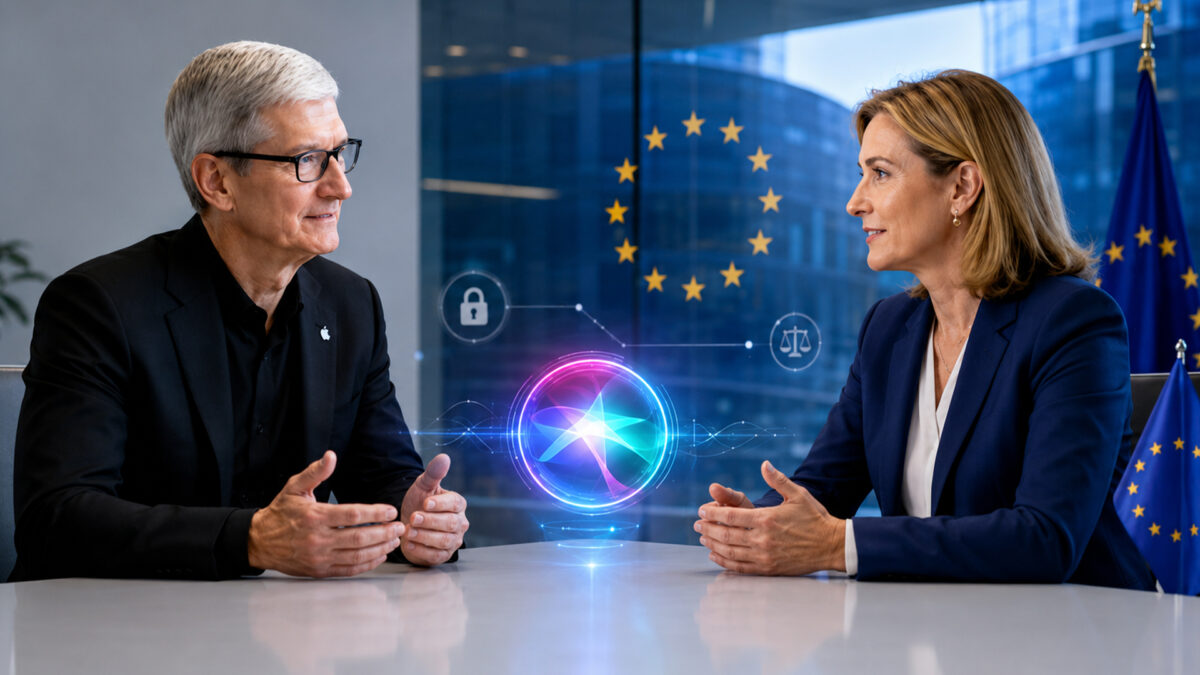
The European Union and Apple have held what officials described as “constructive talks” following recent disagreements over the company’s artificial intelligence features, particularly those related to Siri. The meeting signals an effort by both sides to ease tensions and find common ground as Europe strengthens oversight of major technology companies.

The discussions took place between European Commission officials and Apple CEO Tim Cook, who visited Brussels amid growing scrutiny of AI-powered services and digital platforms. While no specific agreement was announced, both sides described the interaction as positive and useful.

The recent friction centred on Apple’s AI-enabled Siri features and the company’s approach to rolling out certain artificial intelligence capabilities in Europe. Apple has previously expressed concerns that some requirements under the European Union’s digital regulations could affect the timing and availability of new AI features for users in the region.

During the meeting, officials discussed how innovation in artificial intelligence can continue while ensuring compliance with the EU’s evolving digital rules. The European Commission reiterated that its regulations are designed to promote fair competition, consumer protection and transparency without preventing technological advancement.

Apple, meanwhile, reaffirmed its commitment to working closely with European regulators. The company said it supports responsible AI development and remains focused on delivering innovative products while complying with local laws.

Decisions taken by the EU often influence technology policies in other parts of the world, making cooperation between regulators and major technology firms increasingly important.

The talks also reflect the broader challenge facing global technology companies as governments introduce stricter rules for AI, data privacy and digital competition. Companies are expected to balance rapid innovation with growing regulatory expectations.

Also Read: Zee approves ₹3,144-cr promoter fundraise

Categories
Corporate Leaders

Apple names John Ternus CEO, Cook Chairman

Apple has announced a major leadership transition, naming John Ternus as its next Chief Executive Officer, while current CEO Tim Cook will become Executive Chairman from September 1, 2026.

The move marks the first change at the top of Apple since 2011, when Cook succeeded company co-founder Steve Jobs. After leading the tech giant for 15 years, Cook will remain closely involved in guiding Apple’s long-term direction in his new role.

During Cook’s tenure, Apple grew into one of the world’s most valuable companies. Under his leadership, the company expanded far beyond the iPhone, building successful businesses in wearables and digital services. Products such as the Apple Watch and AirPods became major growth drivers, while Apple’s services business also expanded rapidly.

Ternus, who currently heads Apple’s hardware engineering division, has been with the company for about 25 years. He has played a central role in the development of many of Apple’s flagship products, including the iPhone, iPad and Mac.

He was also deeply involved in Apple’s transition to its own custom-designed chips for Mac computers, a move widely seen as one of the company’s most successful strategic decisions in recent years.

Industry analysts view Ternus as a steady and experienced executive with strong technical expertise. His appointment suggests Apple wants to place product innovation and engineering at the centre of its next growth phase.

The leadership change comes at an important time for the company. Apple is facing increasing pressure to strengthen its position in artificial intelligence, as rivals continue to invest heavily in AI-powered products and services.

Also Read: Jio Financial falls 4% after weak Q4 profit


Categories
Leaders

Tim Cook’s message on Apple’s 50th anniversary

As Apple approaches its 50th anniversary, CEO Tim Cook has shared a message of gratitude, reflecting on the company’s remarkable journey and the people who helped shape it.

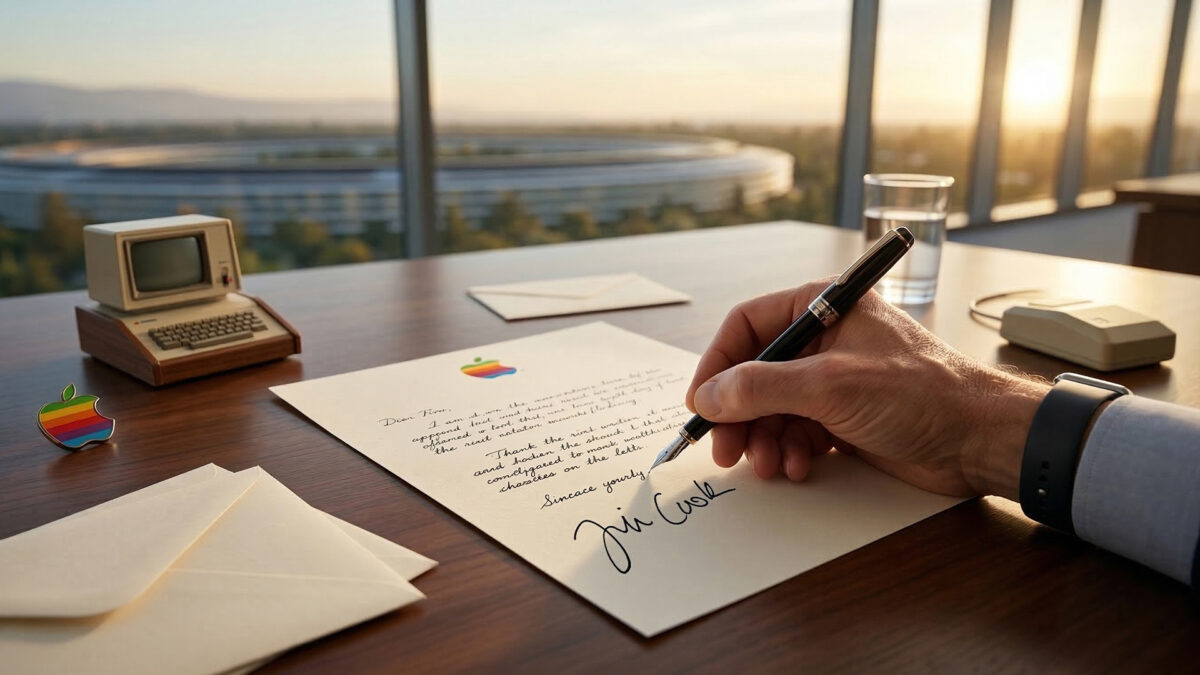
In a letter marking the milestone, Cook thanked Apple employees, developers and customers around the world for their role in building the company over the past five decades. The message comes as Apple prepares to celebrate its 50th year on April 1, 2026.

Cook noted that Apple began as a small venture started in a garage by Steve Jobs and Steve Wozniak in 1976. What started as an effort to make personal computers more accessible eventually grew into one of the world’s most influential technology companies.

Reflecting on the company’s early vision, Cook said Apple was founded on the belief that technology should be simple, personal and empowering. That philosophy, he said, continues to guide the company as it designs products and services for millions of users worldwide.

Over the years, Apple has introduced several products that changed the way people interact with technology. From the early Macintosh computers to devices such as the iPod, iPhone and iPad, the company has played a key role in shaping modern digital life. More recently, products like the Apple Watch and AirPods have expanded its ecosystem further.

Cook also pointed out that Apple’s influence now extends beyond hardware. Services such as the App Store, Apple Music and Apple Pay have become an important part of the company’s business and user experience.

Despite the technological breakthroughs, Cook emphasised that Apple’s success is ultimately driven by people. He said the company’s products are meaningful because of how they are used in everyday life, whether it is helping people stay connected, learn new skills or pursue creative ideas.

In his message, Cook expressed appreciation for Apple’s global teams and the developer community that continues to build apps and services on the company’s platforms. He also thanked customers for their trust and support over the years.

Also Read: Google Maps rolls out ‘Ask Maps’ in India

Categories
Leaders

Tim Cook talks succession, denies retirement plans

Apple CEO Tim Cook has addressed speculation about his retirement and the company’s leadership future at a rare all-hands meeting, reassuring staff that succession planning is ongoing but he is not stepping down anytime soon.

Cook, who turned 65 in 2025, noted that planning for future leadership is a key responsibility for any large organization. While thinking about who will lead Apple in the coming years is important, he emphasized that his focus remains on current operations.

The meeting also highlighted recent departures of senior executives, including Lisa Jackson, Jeff Williams, and Katherine Adams. Cook described these as planned transitions, stressing that Apple’s leadership bench remains strong and capable.

Industry observers point to John Ternus, senior VP of hardware engineering, as a likely future CEO, noting his increased responsibilities and visibility within the company.

Cook’s comments come amid tech industry speculation about a near-term retirement, but he reinforced that Apple is focused on long-term strategy and stability, not abrupt leadership changes. The all-hands also touched on Apple’s upcoming 50th anniversary, signaling reflection on the company’s legacy alongside succession planning.

Also Read: India plans $80 bn Boeing aircraft purchase

Categories
Technology

Apple prepares for Tim Cook exit

Apple is intensifying its succession planning as CEO Tim Cook considers stepping down, potentially as early as next year. Internal discussions at the company indicate that John Ternus, Apple’s senior vice-president of hardware engineering, is widely seen as the leading candidate to succeed Cook.

The board and top executives are actively reviewing potential leaders and preparing for a smooth transition to ensure continuity in the company’s strategic vision and operations.

No formal announcement is expected before Apple releases its January quarter results, which cover the crucial holiday sales period. Cook has been at the helm since 2011, after succeeding Steve Jobs, and has overseen

Apple through significant product launches, global expansion, and growth in revenue and market value. His tenure has also included major innovations in iPhone, iPad, Mac, and other Apple products, cementing the company’s position as a technology leader.

The succession planning comes amid growing scrutiny from investors and the board about future leadership stability. By identifying a clear successor and preparing the company for a seamless transition, Apple aims to maintain investor confidence and ensure that its long-term strategy and innovation pipeline remain uninterrupted.

Also Read: Google to invest $40 billion in Texas