
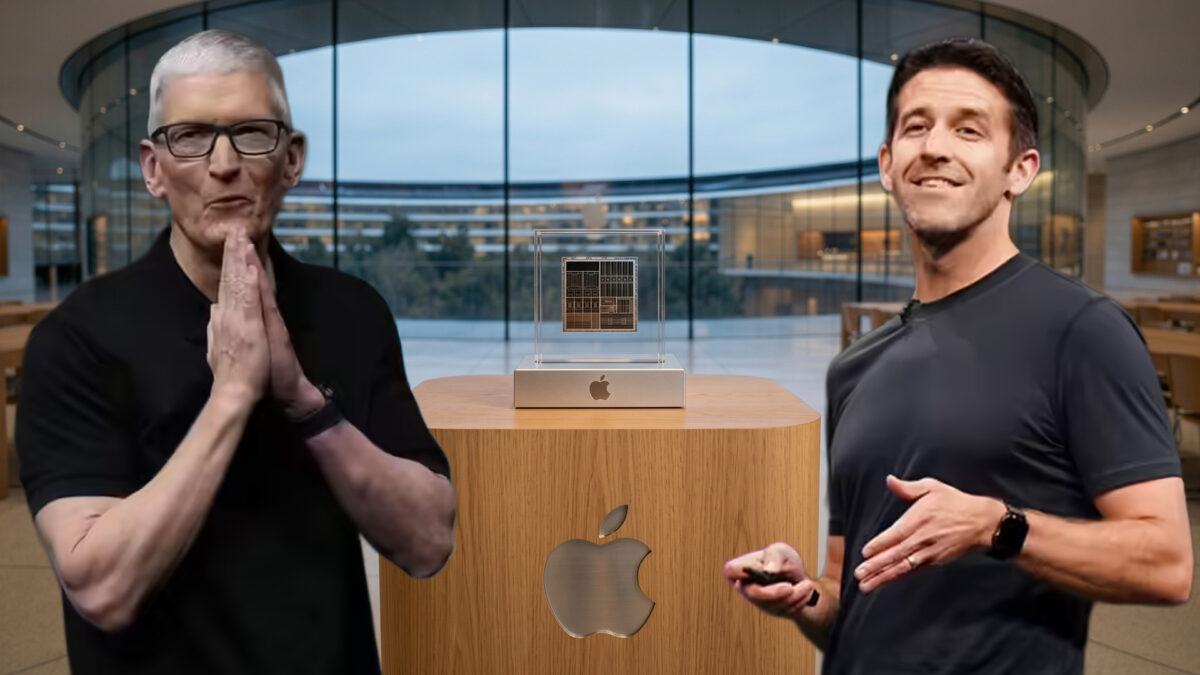
John Ternus will take charge as Apple’s chief executive on September 1, marking the end of Tim Cook’s 15-year tenure and opening a new chapter for the technology giant.
Ternus, Apple’s senior vice-president of Hardware Engineering, will become the company’s eighth CEO. Cook will move to the role of executive chairman, allowing Apple to retain his experience while handing day-to-day leadership to a new generation.
The leadership transition comes at an important moment for Apple. The company remains one of the world’s most valuable businesses, with a huge global customer base and strong positions in smartphones, computers, wearables and digital services. But the technology industry is changing rapidly, with artificial intelligence emerging as a major force shaping the future of consumer technology.
Ternus will inherit a financially powerful company, but also one facing questions over its AI strategy, growth prospects, China business and global supply chain.
An Apple veteran takes charge
Ternus has spent nearly 25 years at Apple after joining the company in 2001. He became senior vice-president of Hardware Engineering in 2021 and has played an important role in the development of several of Apple’s major products.
His work has included the iPhone, iPad, Mac and Apple Watch, as well as other hardware. He has also been closely involved in Apple’s transition to its own chips, which has given the company greater control over the performance and design of its devices.
His appointment signals a preference for continuity. Instead of bringing in an outsider, Apple has chosen an executive who understands its products, engineering teams and culture from within.
That experience could be valuable as Apple attempts to connect artificial intelligence more closely with its hardware.
Ternus, however, will now have responsibilities far beyond product development. As CEO, he will have to oversee Apple’s global operations, manage relations with governments, respond to regulatory challenges and guide the company’s long-term business strategy.
AI becomes the biggest challenge
Artificial intelligence is likely to be the most closely watched area of Ternus’ leadership.
Apple has already introduced Apple Intelligence, bringing AI-powered features to the iPhone, iPad and Mac. However, the company has moved more cautiously than several technology rivals in the generative AI race.
Companies such as Google, Microsoft, Meta and OpenAI have invested heavily in AI systems, infrastructure and consumer products. Apple, meanwhile, has faced questions over delays in delivering more advanced AI capabilities for Siri.
For Ternus, strengthening Apple’s AI position will be a key priority.
The company does not necessarily need to compete by creating another standalone chatbot. Its biggest advantage is its ecosystem of devices and services. The challenge will be to make AI useful across that ecosystem, from smartphones and computers to wearables and other connected products.
Apple will also want to maintain its focus on privacy and ease of use. The company has long promoted privacy as an important part of its products, and its AI strategy will need to balance powerful new features with those commitments.
Ternus’ hardware background could prove useful. AI increasingly depends on specialised chips and efficient computing, areas where Apple has invested heavily in recent years.
China remains a difficult equation
China will present another major challenge for the new CEO.
The country remains important to Apple as both a manufacturing centre and a consumer market. Although Apple has expanded production in countries including India and Vietnam, China continues to play a significant role in its global supply chain.
Apple must also deal with rising geopolitical and trade tensions. US policies have encouraged companies to reduce dependence on Chinese manufacturing, while relations between Washington and Beijing remain uncertain.
The Chinese smartphone market has become increasingly competitive for Apple as domestic manufacturers have strengthened their products and gained consumer attention.
Ternus will therefore have to balance manufacturing diversification with the realities of running a complex global supply chain. Any major shift away from China will take time because Apple depends on an enormous network of suppliers and manufacturing partners.
Cook’s move to executive chairman could provide some continuity in this area. His experience in dealing with governments, suppliers and international business partners will remain useful as Ternus takes over.
Cook leaves behind a transformed Apple
Ternus is taking charge of an Apple that is much larger than the company Cook inherited in 2011.
During Cook’s leadership, Apple expanded beyond the iPhone with products such as the Apple Watch and AirPods. It also built a major services business covering areas such as the App Store, Apple Music and iCloud.
Apple also developed its own silicon for Macs and other devices, giving the company greater control over its hardware and software.
The company’s market value rose dramatically during Cook’s tenure, reaching about $4 trillion. Apple now has more than 2.5 billion active devices worldwide, creating a vast ecosystem for new products and services.
Services have become an important source of recurring revenue, helping Apple reduce its dependence on hardware sales alone.
Cook’s tenure therefore left Ternus with a strong foundation. But maintaining that growth will be harder as smartphone markets mature and competition increases.
First major test arrives quickly
Ternus will have little time to settle into his new role before facing his first major product test.
Apple is scheduled to hold its next major iPhone event on September 9, only days after Ternus becomes CEO. The company is expected to introduce its latest iPhone lineup, with particular attention on the possibility of a foldable iPhone.
A foldable device would represent one of the biggest changes to the iPhone’s design in years. It could also open a new premium segment and give Apple another opportunity to drive hardware growth.
The launch will be closely watched because it will be the first major iPhone event under Ternus’ leadership. Investors and consumers will be looking for signs of how the new CEO intends to shape Apple’s product strategy.
Defining the next Apple era
Ternus takes over at a time when Apple’s traditional strengths are being tested by rapid changes in technology.
The company must continue growing the iPhone business, strengthen its artificial intelligence capabilities, develop new products and manage increasingly complicated supply chains. At the same time, it faces intense competition and growing regulatory scrutiny across major markets.
His engineering background gives Ternus a deep understanding of Apple’s products. His bigger challenge will be proving that he can translate that expertise into a broader vision for the company.
Cook leaves behind a business that has grown enormously in size, value and global reach. Ternus must now build on that success while ensuring Apple does not fall behind in the next major technology shift.
The leadership change is therefore more than a change of CEO. It comes as the industry moves from the smartphone era towards an AI-driven future.
Ternus’ task will be to preserve what has made Apple successful while giving the company a clear path into that future. His ability to close the AI gap, manage China-related challenges and deliver the next wave of products will determine whether Apple can maintain its position at the top of the technology industry.