Categories
Technology

Apple Pay may launch in India soon

Apple Pay could arrive in India as early as October 2026, according to reports, giving iPhone and Apple Watch users access to Apple’s digital payment service.

The initial offering is expected to focus on credit card payments, with Axis Bank likely to be among the first banking partners. Apple is also reported to be in discussions with HDFC Bank and ICICI Bank, though their participation has not been finalised.

Apple Pay allows users to add eligible cards to the Apple Wallet and make payments at contactless terminals using an iPhone or Apple Watch. Transactions can be authorised through Face ID or Touch ID, without requiring users to carry a physical card.

The service uses tokenisation for security. A device-specific number is used during transactions instead of sharing the user’s actual card number with merchants.

Cards issued on major networks such as Visa and Mastercard are expected to be supported. More banks could join the service later.

The biggest question for Indian users is UPI support. Some reports have indicated that Apple is exploring UPI integration, while others suggest the service could initially be limited to card payments. Apple has not publicly confirmed whether UPI will be available.

That distinction matters because UPI dominates India’s digital payments ecosystem. Consumers routinely use services such as Google Pay, PhonePe and Paytm to make QR-code payments, transfer money and pay bills.

A card-only service would give Apple users a convenient option for contactless payments, but it would not replace the UPI-based transactions that are part of everyday payments across India.

UPI integration would require Apple to work with the National Payments Corporation of India (NPCI) and a partner bank. Discussions around bringing the service to India have reportedly included these arrangements, but no final details have been announced.

Apple Pay was introduced in the US in 2014 but has remained unavailable in India despite the country’s rapid shift towards digital payments.

Apple’s growing presence in the Indian smartphone market has increased the potential customer base for its payment service. The company has expanded its business in India through iPhone sales, local manufacturing and its own retail stores.

The company has reportedly been negotiating with Indian banks and payment networks over the service. Commercial terms, including how transaction revenue would be shared, have been part of the discussions.

The possible entry comes as India’s digital payments sector continues to evolve. UPI has expanded rapidly, while banks, technology companies and payment platforms compete for users and transactions.

Apple Pay could offer a different experience for iPhone users by allowing them to pay directly through their devices at compatible card terminals. The service would also bring Apple’s existing payment security features to Indian consumers.

The number of participating banks will be important at the start. Users whose cards are not supported may have to wait until their banks join the platform.

Apple has not officially confirmed the reported October date, participating banks or the complete set of features planned for India.

The key questions ahead of any rollout are therefore straightforward: which banks will support Apple Pay, which cards will work, and whether UPI will be available from the beginning. Those details will determine how widely the service can be used by Indian consumers.


Categories
Leaders

John Ternus takes Apple helm as AI challenges grow

John Ternus will take charge as Apple’s chief executive on September 1, marking the end of Tim Cook’s 15-year tenure and opening a new chapter for the technology giant.

Ternus, Apple’s senior vice-president of Hardware Engineering, will become the company’s eighth CEO. Cook will move to the role of executive chairman, allowing Apple to retain his experience while handing day-to-day leadership to a new generation.

The leadership transition comes at an important moment for Apple. The company remains one of the world’s most valuable businesses, with a huge global customer base and strong positions in smartphones, computers, wearables and digital services. But the technology industry is changing rapidly, with artificial intelligence emerging as a major force shaping the future of consumer technology.

Ternus will inherit a financially powerful company, but also one facing questions over its AI strategy, growth prospects, China business and global supply chain.

An Apple veteran takes charge

Ternus has spent nearly 25 years at Apple after joining the company in 2001. He became senior vice-president of Hardware Engineering in 2021 and has played an important role in the development of several of Apple’s major products.

His work has included the iPhone, iPad, Mac and Apple Watch, as well as other hardware. He has also been closely involved in Apple’s transition to its own chips, which has given the company greater control over the performance and design of its devices.

His appointment signals a preference for continuity. Instead of bringing in an outsider, Apple has chosen an executive who understands its products, engineering teams and culture from within.

That experience could be valuable as Apple attempts to connect artificial intelligence more closely with its hardware.

Ternus, however, will now have responsibilities far beyond product development. As CEO, he will have to oversee Apple’s global operations, manage relations with governments, respond to regulatory challenges and guide the company’s long-term business strategy.

AI becomes the biggest challenge

Artificial intelligence is likely to be the most closely watched area of Ternus’ leadership.

Apple has already introduced Apple Intelligence, bringing AI-powered features to the iPhone, iPad and Mac. However, the company has moved more cautiously than several technology rivals in the generative AI race.

Companies such as Google, Microsoft, Meta and OpenAI have invested heavily in AI systems, infrastructure and consumer products. Apple, meanwhile, has faced questions over delays in delivering more advanced AI capabilities for Siri.

For Ternus, strengthening Apple’s AI position will be a key priority.

The company does not necessarily need to compete by creating another standalone chatbot. Its biggest advantage is its ecosystem of devices and services. The challenge will be to make AI useful across that ecosystem, from smartphones and computers to wearables and other connected products.

Apple will also want to maintain its focus on privacy and ease of use. The company has long promoted privacy as an important part of its products, and its AI strategy will need to balance powerful new features with those commitments.

Ternus’ hardware background could prove useful. AI increasingly depends on specialised chips and efficient computing, areas where Apple has invested heavily in recent years.

China remains a difficult equation

China will present another major challenge for the new CEO.

The country remains important to Apple as both a manufacturing centre and a consumer market. Although Apple has expanded production in countries including India and Vietnam, China continues to play a significant role in its global supply chain.

Apple must also deal with rising geopolitical and trade tensions. US policies have encouraged companies to reduce dependence on Chinese manufacturing, while relations between Washington and Beijing remain uncertain.

The Chinese smartphone market has become increasingly competitive for Apple as domestic manufacturers have strengthened their products and gained consumer attention.

Ternus will therefore have to balance manufacturing diversification with the realities of running a complex global supply chain. Any major shift away from China will take time because Apple depends on an enormous network of suppliers and manufacturing partners.

Cook’s move to executive chairman could provide some continuity in this area. His experience in dealing with governments, suppliers and international business partners will remain useful as Ternus takes over.

Cook leaves behind a transformed Apple

Ternus is taking charge of an Apple that is much larger than the company Cook inherited in 2011.

During Cook’s leadership, Apple expanded beyond the iPhone with products such as the Apple Watch and AirPods. It also built a major services business covering areas such as the App Store, Apple Music and iCloud.

Apple also developed its own silicon for Macs and other devices, giving the company greater control over its hardware and software.

The company’s market value rose dramatically during Cook’s tenure, reaching about $4 trillion. Apple now has more than 2.5 billion active devices worldwide, creating a vast ecosystem for new products and services.

Services have become an important source of recurring revenue, helping Apple reduce its dependence on hardware sales alone.

Cook’s tenure therefore left Ternus with a strong foundation. But maintaining that growth will be harder as smartphone markets mature and competition increases.

First major test arrives quickly

Ternus will have little time to settle into his new role before facing his first major product test.

Apple is scheduled to hold its next major iPhone event on September 9, only days after Ternus becomes CEO. The company is expected to introduce its latest iPhone lineup, with particular attention on the possibility of a foldable iPhone.

A foldable device would represent one of the biggest changes to the iPhone’s design in years. It could also open a new premium segment and give Apple another opportunity to drive hardware growth.

The launch will be closely watched because it will be the first major iPhone event under Ternus’ leadership. Investors and consumers will be looking for signs of how the new CEO intends to shape Apple’s product strategy.

Defining the next Apple era

Ternus takes over at a time when Apple’s traditional strengths are being tested by rapid changes in technology.

The company must continue growing the iPhone business, strengthen its artificial intelligence capabilities, develop new products and manage increasingly complicated supply chains. At the same time, it faces intense competition and growing regulatory scrutiny across major markets.

His engineering background gives Ternus a deep understanding of Apple’s products. His bigger challenge will be proving that he can translate that expertise into a broader vision for the company.

Cook leaves behind a business that has grown enormously in size, value and global reach. Ternus must now build on that success while ensuring Apple does not fall behind in the next major technology shift.

The leadership change is therefore more than a change of CEO. It comes as the industry moves from the smartphone era towards an AI-driven future.

Ternus’ task will be to preserve what has made Apple successful while giving the company a clear path into that future. His ability to close the AI gap, manage China-related challenges and deliver the next wave of products will determine whether Apple can maintain its position at the top of the technology industry.


 

Categories
Technology

iPhone 18 Pro leaks hint at major upgrades

Apple’s next premium iPhones are beginning to take shape through a growing stream of leaks, with the iPhone 18 Pro and iPhone 18 Pro Max expected to arrive in September 2026. While Apple has not confirmed the launch date or specifications, recent reports point to meaningful upgrades in cameras, processing power, battery life and connectivity rather than a completely new design.

The iPhone 18 Pro series is expected to continue Apple’s familiar premium design language. The iPhone 18 Pro could retain a 6.3-inch display, while the iPhone 18 Pro Max is expected to feature a 6.9-inch screen. That means users should not expect a major change in screen size compared with the current Pro models.

The bigger display-related change could be under the surface. Apple is reportedly considering LTPO+ display technology for the new Pro models. The technology could make the screen more power-efficient and potentially help improve battery endurance. Reports also suggest that Apple may reduce the size of the Dynamic Island by moving some Face ID components beneath the display. One recent leak claims the front cutout could become significantly smaller, although this detail remains uncertain.

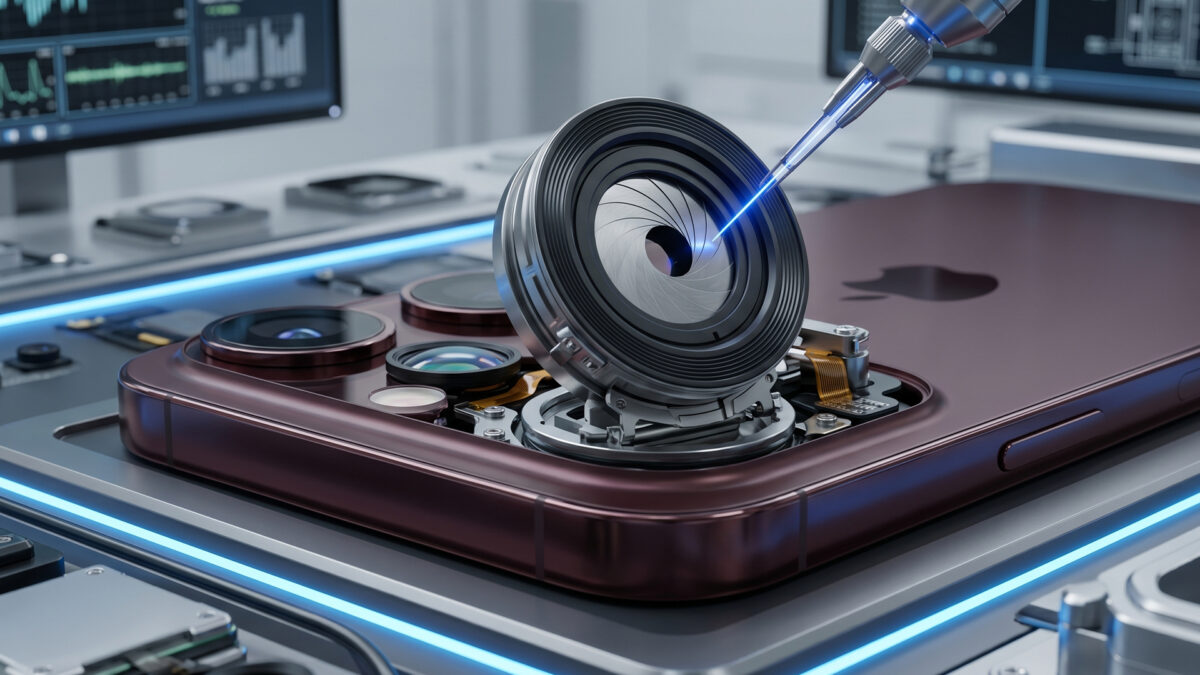
For users who care most about photography, the camera could be the biggest reason to watch the iPhone 18 Pro launch. Apple is reportedly preparing a variable-aperture main camera for the Pro models. Unlike the fixed aperture found on current iPhones, a variable aperture can adjust the amount of light reaching the camera sensor.

In practical terms, that could give the iPhone greater flexibility in bright and low-light conditions. It could also improve depth-of-field control, making portrait photographs look more natural. The feature may also help with video exposure in difficult lighting. However, it is not yet clear whether Apple will allow users to manually control the aperture or manage it automatically through the camera software.

The telephoto camera is also expected to receive improvements, particularly in aperture and low-light performance. Some reports have additionally pointed to a new stacked image sensor for at least one Pro model, which could help improve image processing and reduce noise. These camera changes, if they arrive, would give Apple another way to compete with increasingly capable Android camera phones.

Performance is another major focus. The iPhone 18 Pro models are expected to be powered by Apple’s A20 Pro chip, reportedly manufactured using TSMC’s first-generation 2nm process. Moving from the current 3nm generation to 2nm could deliver improvements in processing performance and power efficiency.

The smaller manufacturing process could allow Apple to fit more transistors into the chip while reducing energy consumption. That could be particularly useful for demanding tasks such as gaming, video editing and on-device artificial intelligence. Reports also suggest Apple may use an advanced chip-packaging method to improve performance further.

Connectivity could receive an upgrade through Apple’s second-generation C2 modem. The modem is expected to improve 5G performance and power efficiency. Some leaks also suggest support for satellite-based 5G connectivity, potentially allowing limited internet access without conventional cellular or Wi-Fi networks. The exact availability of such a feature could vary by market.

Battery life is another area where the iPhone 18 Pro Max could see a noticeable improvement. One report suggests the larger model could receive a battery close to 10% larger than its predecessor. Another estimate puts the capacity at around 5,200mAh. Combined with the efficiency gains expected from the A20 Pro chip and new modem, this could result in longer real-world battery life.

The Pro Max could, however, become slightly thicker to accommodate the larger battery. Leaks also suggest a refreshed rear finish and new colour options, including a dark cherry or deep red shade, along with lighter blue, dark grey and silver variants.

Apple may also tweak the Camera Control button, reportedly simplifying its design and reducing some touch and haptic functionality. The rear Ceramic Shield area could receive a more seamless, frosted appearance.

The biggest surprise may eventually be the price. Recent reports suggest the iPhone 18 Pro models could cost considerably more than their predecessors because of higher component, memory and manufacturing costs. Estimates have ranged from around $200 to $300 higher in some configurations. Indian pricing could therefore rise sharply, although no official figures are available yet.


Categories
Technology

Wikipedia rolls out history trivia game on iPhone

Wikipedia has expanded its viral trivia game, “What Came First?”, to iPhone users, making the popular feature available through its iOS app.

The game tests players’ knowledge by asking them to determine which of two events happened earlier. Questions cover a wide range of topics, including history, science, technology, culture and sports, often producing surprising comparisons that challenge common assumptions.

Since its launch as an experimental feature, the game has gained popularity online for turning Wikipedia’s vast knowledge base into a fun and interactive experience. Users have shared scores and unusual matchups on social media, helping the game attract a wider audience.

Players can access the feature through the latest version of the Wikipedia app on iPhone. The gameplay is simple: users are shown two events and must decide which came first. Correct answers build a streak, while mistakes end the round.

The Wikimedia Foundation says the feature is part of broader efforts to encourage people to explore knowledge in new ways. By combining learning with gameplay, the organisation hopes to make information more engaging and accessible.

Unlike many mobile games, “What Came First?” is free to play and contains no advertisements or in-app purchases. The content is drawn from Wikipedia’s extensive collection of articles, allowing users to learn more about the topics featured in the game.

The iPhone rollout is expected to increase the game’s reach and introduce it to more casual users who may not regularly visit Wikipedia. It also reflects a growing trend among digital platforms to use interactive features to make educational content more appealing.

With its blend of trivia, history and discovery, “What Came First?” has become one of Wikipedia’s most successful experimental projects, offering users a new way to engage with facts while having fun.

Also Read: Tata Group asks Air India to rein in losses

Categories
Technology

iPhone 18 Pro may get variable aperture camera

Apple’s upcoming iPhone 18 Pro series is reportedly moving closer to production, with early leaks pointing to a major upgrade in its camera system. The biggest expected change is the introduction of a variable aperture lens, a feature commonly seen in professional DSLR cameras but never used in an iPhone before.

According to industry reports, Apple is working on integrating this system into the main 48MP rear camera of the iPhone 18 Pro models. A variable aperture allows the camera to adjust how much light enters the lens depending on the surrounding conditions. In low light, the aperture opens wider to capture more detail, while in bright environments it narrows to prevent overexposure.

This upgrade is expected to significantly improve photo quality, especially in challenging lighting conditions. It could also give users more control over depth of field, making background blur more natural in portrait shots.

Along with the camera changes, leaks suggest Apple is testing improvements in zoom performance and optical systems. These upgrades may help deliver clearer long-range photography, addressing one of the key areas where smartphone cameras still face limitations compared to dedicated cameras.

In addition to camera enhancements, Apple is also expected to refresh the colour lineup for the iPhone 18 Pro series. While exact shades are not confirmed, reports indicate that the company may introduce deeper and more premium-looking finishes compared to current models.

Also Read: India’s crude imports fall 17% amid Hormuz crisis

Categories
Technology

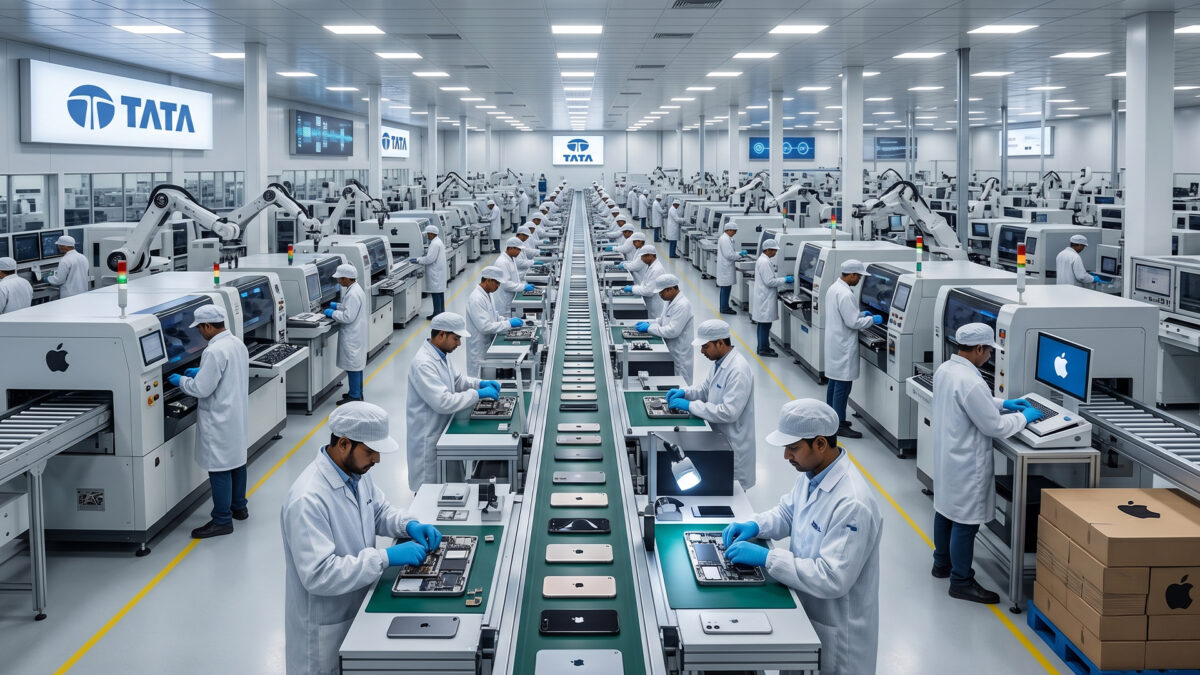
Tata invests ₹1,500 cr to expand iPhone production

Tata Group is stepping up its push in electronics manufacturing by investing an additional ₹1,500 crore into its iPhone production business.

The fresh funding will go into Tata Electronics, which has quickly become a key player in making iPhones in India. This investment is part of a larger plan to strengthen the company’s role in global supply chains and expand its manufacturing capacity.

Over the past few years, India has become an important base for smartphone production, especially for Apple. A growing number of iPhones are now being made in the country, and Tata is playing an increasing role in this shift alongside other global manufacturers.

The latest investment is expected to help Tata scale up operations, improve infrastructure, and support future expansion. It also reflects the group’s long-term commitment to the electronics sector, which is seen as a major growth area.

Tata has also been strengthening its position by taking control of existing manufacturing operations, including those previously run by international partners. This has helped the company quickly build capabilities and increase production.

Tata is aiming to build a broader presence in high-tech manufacturing, including semiconductors and advanced electronics. These sectors require large investments, but they are also key to the future of global technology.

The company’s growth in this space has been steady, with rising revenues and improving financial performance as production scales up. The new investment is expected to support this momentum.

Also Read: ₹10,000 cr fund 2.0 to boost India startups

Categories
Technology

DarkSword spyware threatens millions of iPhone users

A newly discovered spyware called DarkSword has sparked fresh concerns about the safety of iPhone users, with experts warning that millions of devices could be vulnerable to data theft.

The threat mainly affects iPhones that are not updated to the latest version of Apple’s iOS. Since many users delay updates, a large number of devices may still be exposed to this risk.

What makes DarkSword particularly worrying is how easily it can infect a device. Users don’t need to download an app or file, simply clicking on a malicious link or visiting a compromised website can trigger the attack. This means even careful users could unknowingly fall victim.

Once inside, the spyware can access a wide range of personal information. This includes messages, contacts, photos, call history, and even location data. In some cases, it may also steal login details for apps, putting users at risk of financial fraud or identity theft.

Experts say the spyware is difficult to detect because it uses advanced techniques that leave little to no trace. It can run quietly in the background and may even disappear after a device is restarted, making it harder to identify.

Although such tools were earlier used mainly for targeted surveillance, researchers warn that threats like DarkSword are now becoming more widespread, increasing risks for everyday users.

The good news is that Apple has already released security updates to fix the issue. Users who have updated their iPhones to the latest iOS version are largely protected from this threat.

Also Read: Iran hits the world’s largest LNG hub in Qatar

Categories
Technology

Apple’s made-in-India iPhones cross $50 bn in 2025

Apple’s iPhones made in India have hit a remarkable milestone, with exports reaching $50 billion (around ₹4.5 lakh crore) in 2025, the government has revealed. Union Minister Ashwini Vaishnaw called it a “historic achievement” and a testament to India’s growing stature in global electronics manufacturing.

This surge comes as a direct result of India’s Make in India initiative and the Production Linked Incentive (PLI) scheme, both aimed at attracting global companies to set up and expand their manufacturing operations locally. Apple joined the PLI program in 2022, and the results are already visible. In fact, in the first nine months of the current fiscal year alone, India shipped $16 billion worth of iPhones abroad.

Vaishnaw highlighted how India’s electronics industry has grown over the past decade, noting that production has increased six-fold and exports have jumped eight-fold since 2014. Today, smartphones and electronic goods are among the country’s top export categories, and Apple’s success is playing a big role in that story.

Much of this production comes from Apple’s assembly partners in India, including Foxconn and Tata Electronics. A network of around 45 component makers, including many small and medium enterprises, supports these plants. This ecosystem is not only helping Apple meet global demand but also creating local employment—currently supporting around 2.5 million jobs in electronics manufacturing.

For perspective, while Samsung’s mobile exports from India during a comparable period totaled about $17 billion, Apple’s iPhone shipments have more than doubled that, underlining India’s rising significance in the global supply chain.

For the thousands of workers on the assembly lines, and the millions in supporting industries, the $50 billion achievement represents both pride and promise for the future of “Made in India.”

Also Read: Unnati acquires Gramophone, Info Edge invests ₹35 cr

Categories
Corporate

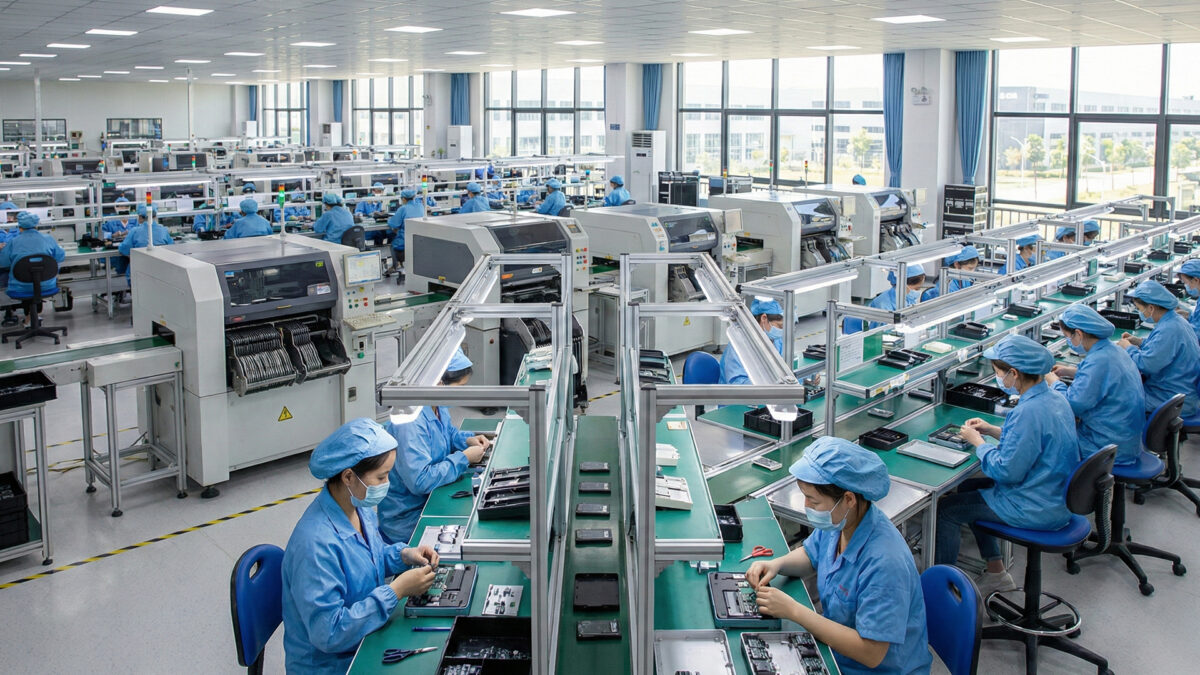
Foxconn hires 30,000 at women-led iPhone plant in Bengaluru

Taiwan-based electronics giant Foxconn has successfully recruited 30,000 employees at its new iPhone assembly plant in Devanahalli, near Bengaluru, achieving the feat in just eight to nine months,  the fastest factory hiring record in India. The development highlights India’s increasing role in global electronics manufacturing and Apple’s plan to reduce reliance on China.

The 300-acre plant is notable for its workforce composition, with around 80% women, mostly aged 19–24 and entering formal employment for the first time. This makes the facility one of the largest single-location women employer hubs in the country.

Trial production began in April–May, initially assembling iPhone 16 models, and the plant now produces the latest iPhone 17 Pro Max devices, with over 80% of phones exported, integrating the unit into Apple’s global supply chain.

To accommodate its staff, Foxconn has built six large dormitories, with plans for more. The company aims to develop the site into a self-contained mini township with residential, medical, educational, and recreational facilities. Employees receive free accommodation, subsidized meals, and an average monthly salary of ₹18,000, considered competitive for blue-collar manufacturing jobs for women.

The ₹20,000 crore investment positions the Devanahalli facility to become India’s largest factory in terms of production capacity and employment. Foxconn expects the workforce could rise to 50,000 once the plant reaches full capacity next year.

This rapid ramp-up aligns with Apple’s strategy to expand manufacturing outside China, supported by India’s production-linked incentive (PLI) scheme. With exports increasing, India is set to become a central hub in Apple’s global manufacturing network, while creating significant employment opportunities for women.

Also Read: ICICI Bank revises credit card charges, benefits from 2026

Categories
Technology

Chinese phone makers lure iPhone users with AI

Chinese smartphone makers are increasingly targeting iPhone users, seeking to convert those frustrated by Apple’s delayed AI rollout in China. With the tech giant’s new AI features still slow to arrive, rivals such as Honor, Oppo, Vivo, Xiaomi, and Huawei see an opportunity to lure customers with innovative tools and services.

One key strategy is making the switch from iPhone to their devices as seamless as possible. Honor, for instance, offers a “Device Clone” app that transfers contacts, photos, messages, and other data simply by scanning a QR code. Oppo provides a similar feature, allowing users to manage their calls, messages, and notifications from their new phones almost immediately after migration. Vivo and Xiaomi are also expanding tools that reduce the friction for iPhone users considering a move to their ecosystems.

Beyond migration apps, Chinese brands are rolling out advanced AI features to differentiate themselves. Oppo’s new AI assistant can analyze screenshots to track expenses, offer real-time workout guidance via the camera, and help users navigate daily routines more efficiently. Honor has launched AI tools that compare coupons across platforms, assist with ride-hailing, and even create short-form videos — features that could appeal to iPhone users looking for smarter, more interactive devices.

The timing of these initiatives comes at a moment when Apple is facing a slight slowdown in China. In the third quarter of 2025, iPhone shipments fell about 2% year-on-year, while local brands gained momentum. Vivo, for example, overtook Apple to lead the market with roughly 18.5% share, highlighting the competitive threat to the U.S. tech giant in its key premium market.

Analysts say these moves may entice some iPhone users to switch, especially those eager for AI enhancements that Apple has yet to deliver. However, Apple still maintains a strong hold on the premium segment globally, with brand loyalty and ecosystem advantages keeping many users invested.

For now, Chinese smartphone makers are betting that easy-switch tools combined with AI-powered features could be enough to tempt a wave of iPhone users toward their devices, potentially reshaping the premium smartphone landscape in China.

Also Read: ICICI Securities sees 21% upside in ITC Hotels shares