Categories
Beyond

China April growth slows as data misses forecasts

China’s economic growth slowed in April 2026 as key indicators including retail sales, industrial production and investment came in weaker than expected, according to official data, raising concerns about the strength of its recovery.

Industrial output rose 4.1% year-on-year in April, down from 5.7% in March and below market expectations. The slowdown suggests weaker manufacturing activity, reflecting softer domestic demand and uncertain global conditions affecting exports and production.

Retail sales, a key indicator of consumer spending, increased just 0.2% in April, sharply lower than the previous month and significantly below forecasts. The weak reading points to continued caution among households, with spending remaining subdued despite earlier signs of recovery.

Fixed-asset investment also disappointed, contracting 1.6% in the first four months of the year. Economists had expected more stable performance, and the decline highlights ongoing weakness in infrastructure, real estate and private investment activity.

Despite the slowdown in monthly data, China’s economy still grew around 5% in the first quarter of 2026, broadly in line with government targets. However, economists warn that maintaining this pace could become increasingly difficult without stronger domestic demand.

Experts believe policymakers may consider additional stimulus measures if economic momentum continues to weaken. Possible steps could include support for household consumption, infrastructure spending and measures to stabilise the property sector.

Exports have remained relatively resilient compared to domestic demand, but they are not enough to fully offset internal weaknesses. This imbalance is contributing to concerns about the sustainability of the recovery.

Also Read: Innovaccer lays off 340 employees during AI shift

Categories
Beyond

India plans to relax FDI rules for China-linked firms

India is planning to ease foreign direct investment (FDI) rules for overseas companies that have a small exposure to Chinese firms, in a move aimed at attracting more global investments.

Under the proposed change, foreign companies with up to 10% stake from Chinese entities may face fewer restrictions when investing in India. The final notification is expected soon from the Department of Economic Affairs.

The move comes as India looks to speed up approvals and make it easier for global businesses to invest, especially in key sectors. Current rules, introduced in 2020, require stricter scrutiny of investments linked to countries sharing land borders with India, including China.

Officials say the new approach will help remove delays for companies where Chinese ownership is minimal, without compromising on security concerns.

At the same time, investments with higher Chinese stakes are likely to continue facing tighter checks.

The step is seen as an effort to strike a balance, encouraging foreign investment and economic growth, while still keeping a close watch on sensitive inflows.

Also Read: Reliance retail acquires Anomaly haircare brand

Categories
Beyond

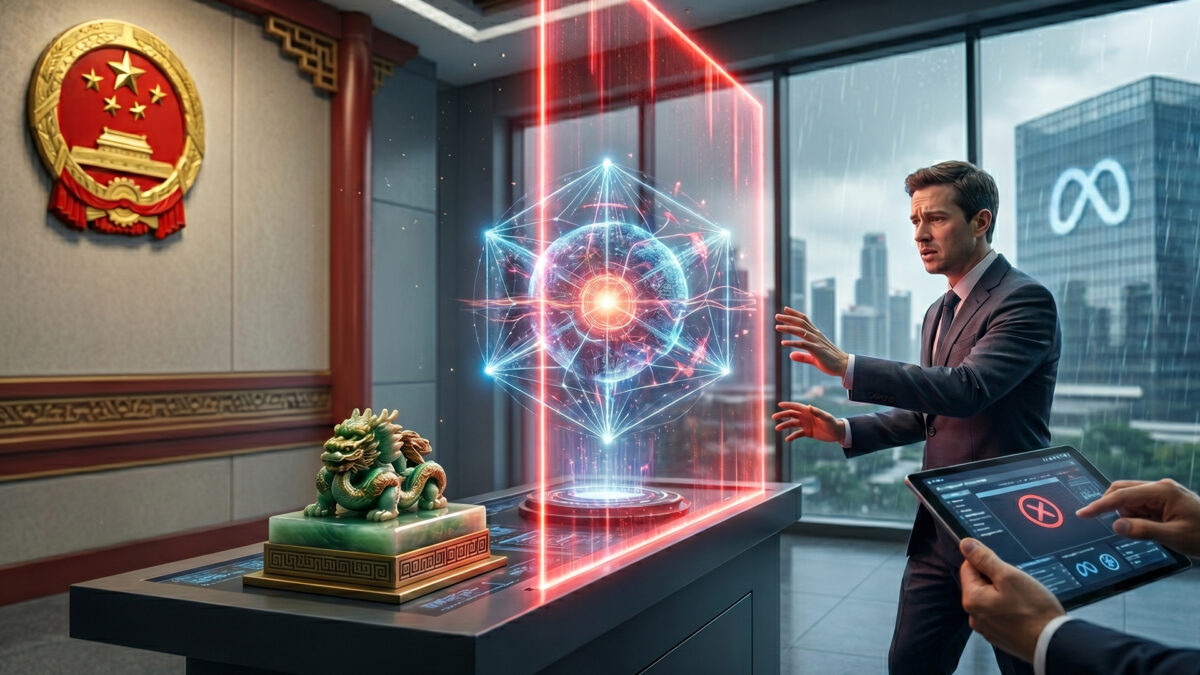
China blocks Meta’s $2 billion Manus deal

Meta’s plan to buy artificial intelligence startup Manus for $2 billion has been blocked by Chinese authorities, dealing a blow to the tech giant’s efforts to strengthen its AI business.

The decision shows how sensitive AI technology has become, with governments increasingly treating it as a strategic asset rather than just another business sector.

Meta had hoped the acquisition would help it move faster in the global AI race. Manus has attracted attention for building advanced AI systems that can perform tasks such as research, planning and customer support with limited human input.

For Meta, the startup was seen as a valuable opportunity to add both technology and talent at a time when competition is intensifying with rivals such as Google, Microsoft and OpenAI.

Chinese regulators reportedly opposed the deal on national security and foreign investment grounds. The move suggests Beijing is becoming more cautious about allowing promising domestic AI companies or their technology to come under foreign ownership.

Even though Manus had links outside mainland China, authorities appear to have taken a broad view of the company’s strategic importance.

For Meta, the setback is more than a lost acquisition. It means the company may now need to spend more time and money building similar capabilities internally or searching for other partnerships.

Chief Executive Mark Zuckerberg has made AI one of Meta’s top priorities, investing heavily in smart assistants, business tools, advertising technology and future digital platforms.

Also Read: UltraTech posts strong Q4, announces ₹240 dividend

Categories
Beyond

China, Iran use economy as tool in US rivalry

A new report highlights how China and Iran are increasingly using the global economy itself as a tool to counter US influence, showing how modern geopolitical tensions are moving beyond traditional warfare.

Instead of direct military confrontation, both countries are reportedly using trade, energy supplies, and critical resources to apply pressure on the United States and its allies. This approach reflects a growing trend where economic systems are being used as instruments of power.

China, for example, holds a strong position in the global supply of rare earth minerals, which are essential for electronics, electric vehicles, and defence equipment. By controlling or restricting access to these materials, it can influence global supply chains and affect industries that depend heavily on them.

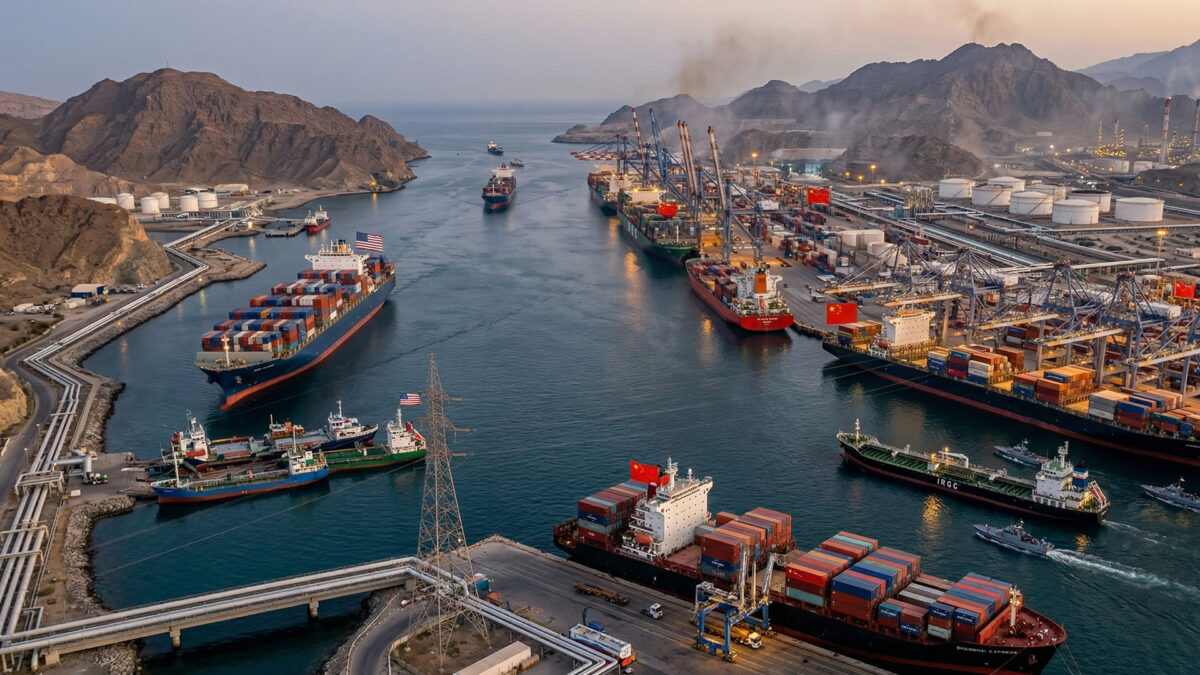
Iran, on the other hand, has used its strategic location near the Strait of Hormuz, one of the world’s most important oil routes, to create uncertainty in global energy markets. Even the threat of disruption in this narrow waterway has previously led to sharp rises in oil prices and global concern.

The report suggests that these strategies mark a shift from conventional conflict to what experts describe as “economic warfare,” where financial systems, trade routes, and commodities become tools of influence.

The United States, which has long used sanctions and its financial system as a source of global leverage, is now facing similar tactics being used against it. This growing balance of economic pressure is reshaping how countries compete and respond to each other.

The effects are already being felt worldwide. Energy prices have become more volatile, supply chains are under strain, and businesses are facing rising costs. These pressures are eventually passed on to consumers, affecting everyday prices.

Also Read: Bajaj Housing shares dip 3% as 25% lock-in ends

Categories
Beyond

India limits Chinese CCTV sales

India has introduced new rules from April 1 that limit the sale of many Chinese-made CCTV cameras. The decision is part of the government’s effort to improve cybersecurity and reduce reliance on foreign technology.

Under the new rules, all CCTV cameras that connect to the internet must get government approval before being sold. Companies whose products do not meet these standards will not be allowed to sell in India. Many Chinese brands are affected, as their devices have not received the required certification.

The main reason behind this move is concern over data safety. Officials worry that some imported cameras could have security risks, such as hidden access points that may allow outsiders to view or steal data.

For people who already have Chinese CCTV cameras installed at home or in offices, there is no need to worry immediately. These existing devices will continue to work as usual. The rules apply only to new sales and imports, not to cameras that are already in use.

However, there may be some problems in the future. As these companies reduce their presence in India, users might find it harder to get software updates, security fixes, or customer support. This could make the cameras less secure over time.

The new policy is expected to benefit Indian manufacturers, as it encourages the use of locally made products. Many domestic companies are likely to gain a larger share of the market as a result.

At the same time, experts say that fewer options in the market could lead to higher prices in the short term.

Also Read: Unilever–McCormick $65 billion food deal

Categories
Leaders

India appoints Vikram Doraiswami as envoy to China

India has appointed senior Indian Foreign Service officer Vikram K. Doraiswami as its next Ambassador to China, a significant diplomatic decision as New Delhi continues to navigate its sensitive and strategic ties with Beijing. The Ministry of External Affairs confirmed the appointment, noting that he will assume the role in the near future.

Doraiswami is currently serving as India’s High Commissioner to the United Kingdom and belongs to the 1992 batch of the IFS. Over the course of his three-decade-long career, he has held several key diplomatic assignments, including serving as Ambassador to Bangladesh and Uzbekistan, as well as postings in South Korea and other important missions. His extensive experience makes him one of India’s most seasoned diplomats.

Importantly, Doraiswami is regarded as a China expert. He has prior experience working in Beijing during the early years of his career and has also received training in the Chinese language. This background is expected to prove valuable as he steps into one of India’s most challenging diplomatic roles.

He will replace Pradeep Kumar Rawat, who served as India’s Ambassador to China during a period marked by both tensions and sustained diplomatic engagement. Rawat played a key role in maintaining communication between the two countries amid ongoing border issues and efforts to stabilize relations.

Doraiswami’s appointment comes at a time when India-China relations remain delicate. Tensions along the Line of Actual Control (LAC) in eastern Ladakh have persisted in recent years, even as both countries continue military and diplomatic discussions to ease the situation. At the same time, economic and regional considerations make continued engagement between the two nations essential.

By appointing a diplomat with deep regional expertise and prior China experience, India appears to be signaling its intent to maintain steady and informed engagement with Beijing. Doraiswami is expected to focus on strengthening dialogue mechanisms, managing differences, and identifying areas of cooperation where possible.

Also Read: Meta to pay $1,000–$3,000 per month to creators on Facebook

Categories
1 Minute-Read

China consumer inflation rises in February

China’s consumer prices increased in February, helped by higher spending during the Lunar New Year holiday. Data showed the country’s Consumer Price Index (CPI) rose 1.3% from a year earlier, marking the fastest rise in more than three years. Prices for services such as travel, dining and tourism increased as people spent more during the festive period.

However, price pressure at factories remained weak. China’s Producer Price Index (PPI) fell 0.9% year-on-year, though the decline was smaller than in the previous month. Economists say the data indicates some improvement in consumer demand, but the economy still faces challenges from weak industrial activity and slow domestic recovery.

Categories
1 Minute-Read

WTO panel to hear China’s challenge on India’s auto, EV incentives

The World Trade Organization (WTO) will set up a panel to examine China’s complaint against India’s production-linked incentives for automobiles, electric vehicles, and renewable energy.

Beijing claims the schemes discriminate against its exporters, while India insists the measures are fully WTO-compliant and aimed at boosting domestic manufacturing. After bilateral talks failed, the panel process was triggered.

Officials said India will vigorously defend its programmes, which follow WTO rules. Several countries, including the US and EU, may join as third parties.

Categories
1 Minute-Read

China urges banks to cut US treasury holdings

China has instructed its major banks to reduce their exposure to US Treasury bonds, aiming to manage risk amid market volatility. Banks are advised to limit new purchases and gradually scale down existing holdings, though no strict targets or deadlines were given.

The guidance focuses on commercial bank portfolios and does not affect China’s sovereign reserves.

Analysts say the decision reflects a broader trend of diversifying away from dollar-denominated assets, as Chinese holdings of US government debt have declined to multi-year lows.

Categories
Beyond

China’s BYD challenges Trump’s tariffs at US court

Chinese electric vehicle and clean-energy major BYD has taken a significant legal step in the United States, filing a lawsuit against the federal government to challenge tariffs imposed by President Donald Trump.

The case, filed in the US Court of International Trade in New York, seeks refunds for import duties paid since April and questions the legal basis used to impose the levies. BYD’s US subsidiaries argue that the tariffs were introduced under the International Emergency Economic Powers Act (IEEPA), a law meant for national security emergencies, not for imposing broad trade barriers.

The emergency law does not explicitly allow the government to levy import tariffs. BYD is asking the court to order the repayment of duties already paid and to safeguard its right to future refunds if the tariffs are ruled invalid.

While BYD does not sell passenger cars in the US, it has a growing footprint in the country through its electric buses, trucks, batteries, energy storage systems and solar products. Its manufacturing facility in Lancaster, California, employs around 750 workers, making the company an active contributor to local jobs and clean-energy infrastructure.

The legal move places BYD among a rising number of global companies challenging Trump’s trade policies. The dispute also comes as the US Supreme Court considers a separate case that could ultimately decide whether emergency powers can be used to justify such tariffs.

For Washington, the case revives a sensitive debate around trade protectionism and executive authority. For BYD, it is both a financial and strategic decision, aimed at recovering costs while seeking clarity on the rules governing global trade.

Also Read: Balaji Krishnamurthy named Uber CFO