Categories
Beyond

China’s trade surplus soars to $1.2 trillion in 2025

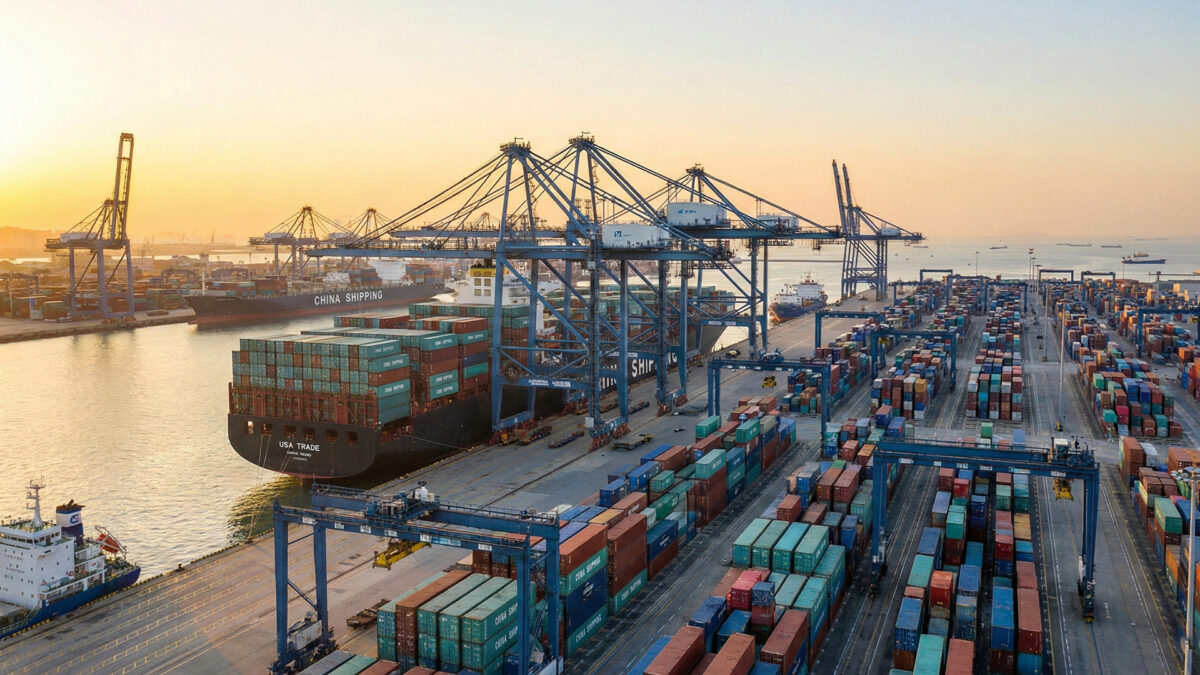
China closed 2025 with a record trade surplus of nearly $1.2 trillion, showing strong exports even amid U.S. tariffs and global tensions, official data released on January 14 revealed.

For the year, exports grew about 5.5 percent to $3.77 trillion, while imports remained nearly flat at $2.58 trillion. This created China’s largest trade gap ever, surpassing last year’s surplus of $992 billion.

December trade data was particularly strong. Exports in December rose 6.6 percent year-on-year, the fastest increase in months. Imports grew 5.7 percent, indicating continued demand for foreign goods and raw materials.

A major factor behind China’s trade performance was diversification of export markets. While exports to the United States dropped around 20 percent due to tariffs, shipments to other regions surged. Exports to Africa rose 26 percent, while sales to Southeast Asia, the EU, and Latin America grew by 13 percent, 8 percent, and 7 percent respectively.

Analysts say China’s strong export growth reflects global demand for electronics, machinery, and automobiles, as well as exporters’ efforts to reduce reliance on the U.S. market. Jacqueline Rong, chief China economist at BNP Paribas, noted, “Exports will continue to be a major growth driver in 2026.”

However, domestic challenges remain. Consumer demand is weak, and the property market is struggling. The International Monetary Fund has urged China to boost internal consumption to rely less on exports.

The strong trade numbers lifted Chinese markets, but experts cautioned that geopolitical tensions and future tariffs could affect growth. Despite this, China’s ability to expand trade with other regions helped it achieve record figures for 2025, showing resilience in a challenging global environment.

Also Read: Bajaj Housing raises ₹509 cr via bonds

Categories
Beyond

Trump blocks Chinese‑linked chip deal

US President Donald Trump has blocked a Chinese‑linked semiconductor deal, saying it could threaten national security. An executive order issued on January 2 requires HieFo Corporation to sell certain Emcore Corp. assets within 180 days. The move reflects growing concern over foreign access to sensitive US technology.

The deal, completed in 2024, involved HieFo, a Delaware‑registered company, buying Emcore’s computer chip business and wafer fabrication operations for $2.9 million. Emcore, based in New Jersey, was a public aerospace and defense technology company before the sale.

Trump’s order said there is “credible evidence” that HieFo is controlled by a Chinese national and that the deal could harm US security. The order did not give full details but shows the government’s worry about foreign control of important technology.

The Committee on Foreign Investment in the United States (CFIUS) reviewed the transaction and identified risks. HieFo now has six months to divest all rights and assets globally unless CFIUS allows more time.

The assets include technology and facilities used for chip design and wafer production, which are important for both commercial and defense purposes. The move highlights the US effort to stop Chinese-linked companies from accessing advanced semiconductor technology amid global tech competition.

Neither HieFo nor Emcore has commented publicly yet.

Also Read: BYD surpasses Tesla as global EV leader in 2025

Categories
Beyond

China’s DeepSeek reveals efficient AI training

Chinese AI startup DeepSeek has introduced a new way to train large AI models more efficiently. The approach, called Manifold‑Constrained Hyper‑Connections (mHC), helps models learn faster while using less computing power and energy. This is especially important as China faces limits on buying the latest AI chips from abroad due to US export restrictions.

The research paper, co‑authored by founder Liang Wenfeng and 18 other researchers, tested mHC on AI systems ranging from 3 to 27 billion parameters. The method stabilises training and avoids excessive computing costs, making it easier to build very large AI models without huge energy bills.

DeepSeek has a history of surprising the AI industry. Its 2025 R1 reasoning model was developed at a much lower cost than similar models from US companies. Experts now expect the next model, R2, to launch around China’s Spring Festival in February. The new mHC training method is expected to power this model, making it faster and more efficient.

China’s AI firms continue to face challenges due to limited access to advanced semiconductors. This has pushed companies like DeepSeek to create innovative, resource‑saving techniques to stay competitive globally.

Analysts suggest that R2 could make a significant impact internationally, even as companies like Google and OpenAI release high‑performance models. China’s lower-cost, efficient AI models are already gaining recognition in global rankings, showing the country’s growing technical capabilities.

DeepSeek has shared its research on open platforms like arXiv and Hugging Face, reflecting a trend of more openness and collaboration among Chinese AI developers.

The new method could set a benchmark for energy-efficient, large-scale AI training, helping China expand its AI capabilities despite hardware limitations.

Also Read: Aurobindo Pharma buys Khandelwal labs’ drugs for ₹325 cr

Categories
Beyond

Mexico hikes tariffs up to 50% on Asian imports

Mexico has approved higher import tariffs on products from several Asian countries, including India and China. The move is meant to protect local industries and increase government revenue. The new duties will come into effect in 2026 and will cover products such as vehicles, auto parts, textiles, plastics, steel, footwear, and clothing.

The bill was passed in the Mexican Senate with 76 votes in favour, five against, and 35 abstentions, after it was approved by the lower house. Most products will face tariffs of up to 35%, while some could see increases as high as 50%. The first version of the proposal included higher tariffs on around 1,400 products, but the final plan reduced duties for nearly two-thirds of them.

Officials say the tariff hike is needed to help Mexican manufacturers compete with cheaper imports from Asia. They believe the new duties will protect jobs, strengthen domestic production, and improve Mexico’s role in global supply chains.

The tariff increase is also expected to boost government revenue, with experts estimating an extra $3.76 billion next year. This is seen as an important step to reduce Mexico’s fiscal deficit.

The decision comes as global trade tensions rise and ahead of a review of the United States-Mexico-Canada Agreement (USMCA). Some trade analysts and business groups have warned that higher tariffs could disrupt supply chains, increase production costs, and raise prices for consumers.

Countries without free-trade agreements with Mexico, including India and China, are likely to feel the biggest impact, as higher duties could make their exports less competitive.

Overall, the move is considered one of the most significant changes in Mexico’s trade policy in recent years. It shows the government’s focus on protecting local industries while managing international trade. Businesses and exporters are now closely watching the changes and preparing for the impact of the new tariffs.

Also Read: Vi Business rolls out smart gas metering for CGD companies

Categories
Technology

Chinese phone makers lure iPhone users with AI

Chinese smartphone makers are increasingly targeting iPhone users, seeking to convert those frustrated by Apple’s delayed AI rollout in China. With the tech giant’s new AI features still slow to arrive, rivals such as Honor, Oppo, Vivo, Xiaomi, and Huawei see an opportunity to lure customers with innovative tools and services.

One key strategy is making the switch from iPhone to their devices as seamless as possible. Honor, for instance, offers a “Device Clone” app that transfers contacts, photos, messages, and other data simply by scanning a QR code. Oppo provides a similar feature, allowing users to manage their calls, messages, and notifications from their new phones almost immediately after migration. Vivo and Xiaomi are also expanding tools that reduce the friction for iPhone users considering a move to their ecosystems.

Beyond migration apps, Chinese brands are rolling out advanced AI features to differentiate themselves. Oppo’s new AI assistant can analyze screenshots to track expenses, offer real-time workout guidance via the camera, and help users navigate daily routines more efficiently. Honor has launched AI tools that compare coupons across platforms, assist with ride-hailing, and even create short-form videos — features that could appeal to iPhone users looking for smarter, more interactive devices.

The timing of these initiatives comes at a moment when Apple is facing a slight slowdown in China. In the third quarter of 2025, iPhone shipments fell about 2% year-on-year, while local brands gained momentum. Vivo, for example, overtook Apple to lead the market with roughly 18.5% share, highlighting the competitive threat to the U.S. tech giant in its key premium market.

Analysts say these moves may entice some iPhone users to switch, especially those eager for AI enhancements that Apple has yet to deliver. However, Apple still maintains a strong hold on the premium segment globally, with brand loyalty and ecosystem advantages keeping many users invested.

For now, Chinese smartphone makers are betting that easy-switch tools combined with AI-powered features could be enough to tempt a wave of iPhone users toward their devices, potentially reshaping the premium smartphone landscape in China.

Also Read: ICICI Securities sees 21% upside in ITC Hotels shares

Categories
Beyond

China eases export controls on auto chips

China’s Ministry of Commerce has announced that it is granting exemptions to its export controls on specific chips manufactured by Nexperia for civilian use. This is aimed at alleviating acute shortages in the automotive sector.

Nexperia, headquartered in the Netherlands but owned by Chinese company Wingtech, makes large volumes of simple but essential semiconductors used in vehicle electrical systems. The crisis began after the Dutch government took control of Nexperia on 30 September, citing economic‑security concerns that Wingtech would relocate production to mainland China. In response, China imposed export bans on finished chips made in China for foreign markets, triggering fears of shutdowns at car plants in Europe and Japan.

Beijing’s statement however does not specify exactly which chip types or uses qualify as “civilian use,” leaving some ambiguity for automakers and suppliers. According to industry reports, some German and Japanese companies say they have already received resumed deliveries of Nexperia chips from China under the new exemptions.

Despite the relief for automotive supply chains, the broader dispute between China, the Netherlands and the European Union over Nexperia’s ownership and operations remains unresolved. The Commerce Ministry has urged the EU to press the Netherlands to reverse its takeover of Nexperia.

Automakers and suppliers will now monitor how quickly and fully chip flows resume, and whether the exemption marks a stable shift or a temporary reprieve in what has become a high‑stakes tech and trade battleground.

Also Read: Lenskart lists at ₹390–₹395, below ₹402 IPO

Categories
Beyond

China lifts 24% US tariff, keeps 10%

China will suspend its 24% tariff on a wide range of US goods for one year, marking a cautious step toward easing trade tensions. However, it will continue to impose a 10% duty on certain products, keeping some restrictions in place.

The decision follows a high-profile meeting between President Xi Jinping and US President Donald Trump, indicating a possible thaw in the long-standing trade dispute.

US agricultural exports may benefit, as tariffs of up to 15% on some farm products will be lifted starting November 10. While the suspension of the higher tariff provides relief for American businesses, China’s decision to maintain certain duties signals that a full resolution remains a work in progress.

This step represents a measured approach from both sides, balancing economic interests with ongoing diplomatic negotiations.

Also Read: Mehli Mistry Steps Down from Tata Trusts