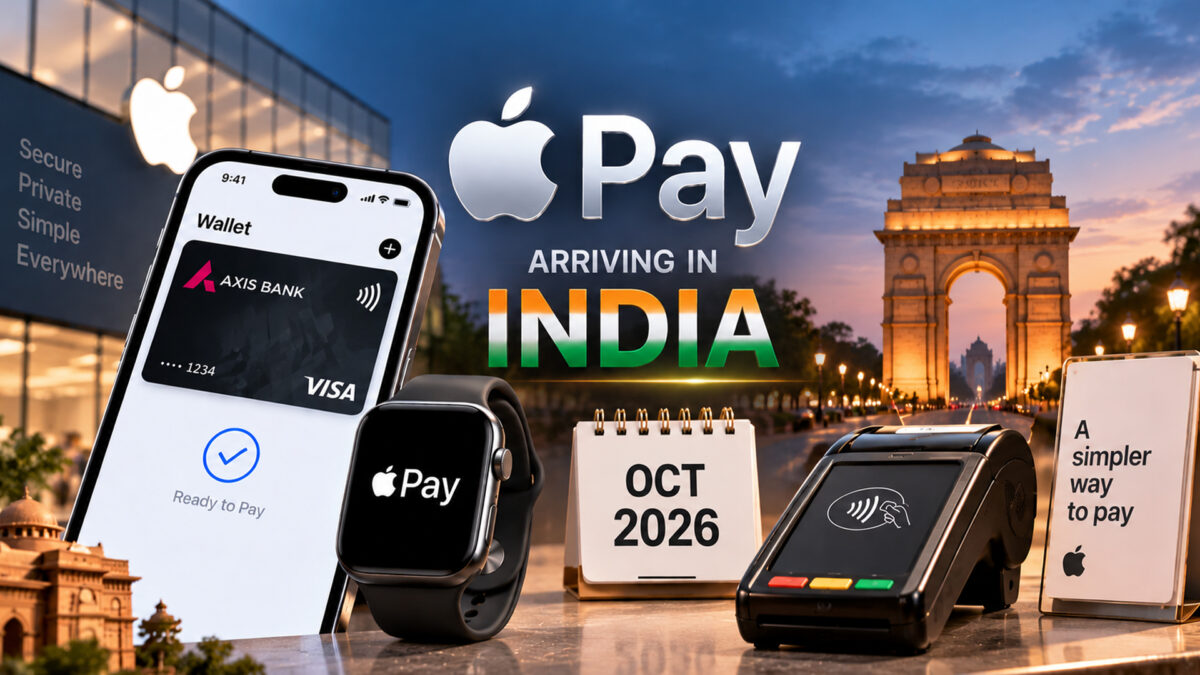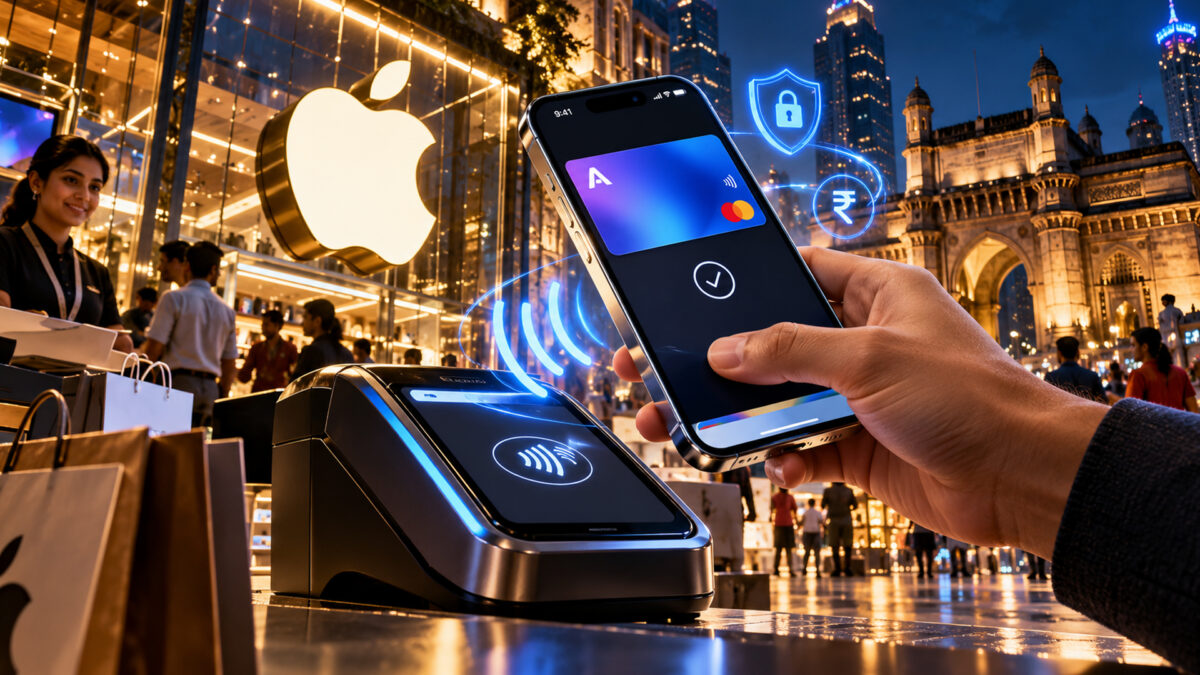
Apple has officially launched Apple Pay in India, bringing its contactless payment service to the country after years of anticipation. The service went live on September 30 and is initially available to customers with eligible Axis Bank-issued Visa and Mastercard credit cards. Apple Pay can be used on iPhone, iPad and Apple Watch, while Mac support is expected to arrive soon.
The India launch gives Apple users another way to make card payments without carrying a physical card or repeatedly entering card details. Users can add an eligible Axis Bank credit card to Apple Wallet and use their device to pay at participating stores, apps and websites. Apple says the service is available across thousands of merchants in India, with more expected to be added over time.
How Apple Pay Works in India
Apple Pay is designed to make contactless payments a simple tap-and-go experience. At a compatible payment terminal, iPhone users can double-click the side button or Home button, authenticate with Face ID, Touch ID or their device passcode, and hold the top of the iPhone near the contactless reader.
Apple Watch users can double-click the side button and hold the display close to the payment terminal. Once authenticated, the payment is processed through the linked card. Users do not need to enter a card PIN or OTP at checkout when using Apple Pay.
Apple Pay can also be used for purchases inside supported apps and on websites. Instead of entering card, billing and contact information each time, users can select Apple Pay at checkout and authenticate the transaction on their device.
For Axis Bank customers, the rewards and benefits associated with their eligible credit cards continue when those cards are used through Apple Pay.
Setting up Apple Pay is also straightforward. Users can open the Apple Wallet app on their iPhone, tap the plus button and follow the instructions to add an eligible Axis Bank card. The card can also be added through the latest version of the Axis Bank mobile banking app. Once the card is verified, it can be used through Apple Pay.
Where Apple Pay Can Be Used
Apple Pay’s initial rollout covers a range of physical stores, online platforms and apps. Apple says participating merchants include Apple Store locations, Blinkit, Chaayos, Comet, Croma, Interflora, Ixigo, Le15 Patisserie, Reliance brands, Tata 1mg and Zomato, among others.
The company has also partnered with payment service providers including Cashfree, JusPay, Mswipe, Paytm, PayU, Pine Labs, Razorpay and Worldline to extend Apple Pay across their merchant networks. More merchants and apps are expected to join the network as the rollout expands.
Apple Pay can also be used internationally at compatible NFC contactless terminals. This means eligible Indian users travelling abroad can use the service wherever their card and Apple Pay are supported.
At launch, however, the service has a limited banking and card-network footprint in India. Only eligible Axis Bank Visa and Mastercard credit cards are supported. India’s domestic RuPay cards are not part of the initial rollout, and Apple has not yet announced broader bank support. The company is expected to expand the service to additional banks and cards over time.
The limited initial rollout is notable because India has a highly developed digital payments ecosystem dominated by UPI. Apple Pay’s India offering is currently focused on card-based payments, rather than UPI transactions. Users therefore cannot use Apple Pay to make a direct UPI payment from a bank account through the service at launch.
Security and Privacy
Security and privacy are central to Apple’s Apple Pay model. The company says the actual card number is not stored on the device or on Apple’s servers and is not shared with merchants during a transaction.
Instead, Apple Pay creates a unique Device Account Number for the card. This number is encrypted and stored in the device’s Secure Element, a dedicated security component designed to protect payment information. Each payment is also authenticated on the user’s device.
Apple Pay is now available across more than 90 countries and regions, with more than 11,000 bank and network partners globally, according to the company. Its entry into India adds one of the world’s largest digital payments markets to that network.
The initial Axis Bank-only rollout is relatively narrow, but the addition of more banks, cards, merchants and apps could determine how widely Apple Pay is adopted in India’s competitive digital payments market.