
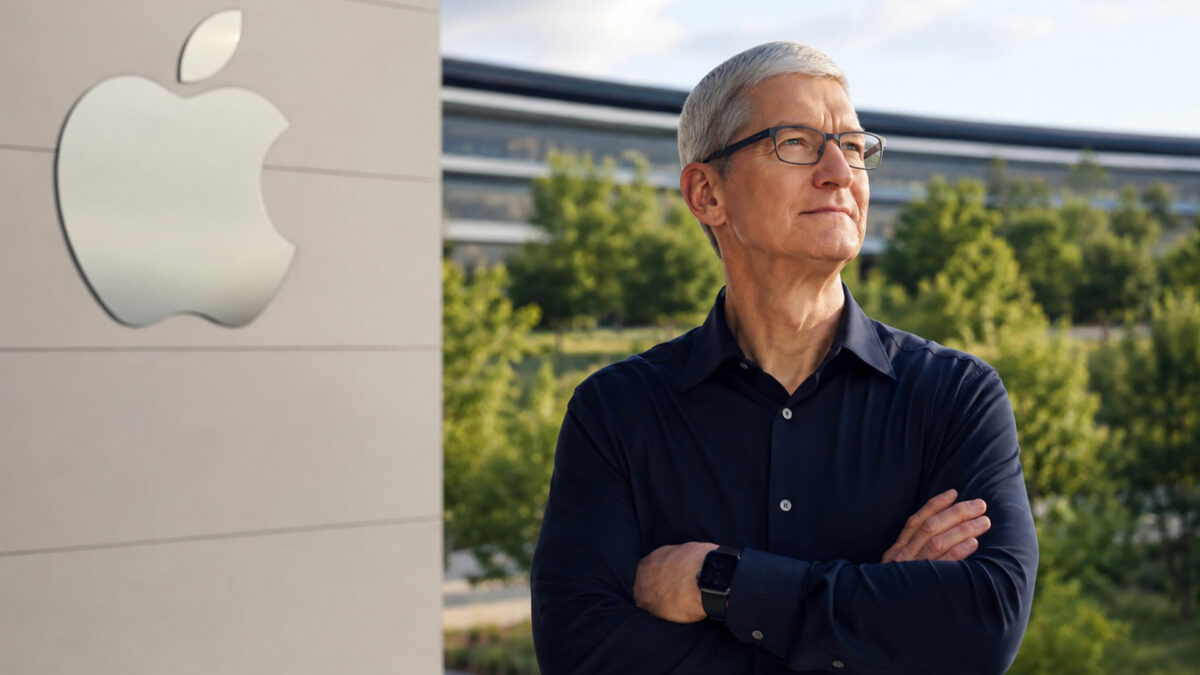
Apple has begun saying goodbye to Tim Cook as he prepares to step down as the company’s chief executive after 15 years. The company reportedly hosted a farewell gathering at Apple Park in Cupertino on August 23, bringing together around 200 employees and several senior figures from Cook’s time at the helm.
The celebration came just a day before Cook completed 15 years as Apple CEO. He took charge on August 24, 2011, succeeding Steve Jobs, and will officially hand over the CEO role to John Ternus on September 1, 2026. Cook, however, will not be leaving Apple. He will become executive chairman of the company’s board.
The farewell event offered a more personal glimpse of a leader who has generally kept his private life away from the spotlight. The gathering was held partly at Caffe Macs, Apple Park’s cafeteria, while the outdoor courtyard hosted a performance by American pop-rock band OneRepublic. Cook also addressed employees and thanked colleagues for their support during his long tenure.
Among those who reportedly paid tribute to Cook were Laurene Powell Jobs, widow of Apple co-founder Steve Jobs, former Apple chief operating officer Jeff Williams, Apple Services chief Eddy Cue and John Ternus, who currently leads Apple’s hardware engineering division. Cook also acknowledged his partner, Mike, during the event, offering an unusually personal moment in front of his colleagues.
For Apple, the farewell marks the closing of one of the longest and most consequential CEO tenures in the company’s history. Cook joined Apple in 1998 and initially focused on worldwide operations and the supply chain. His expertise in operations helped prepare him for the top job, particularly as Apple expanded its global manufacturing and distribution network.
When Cook became CEO, Apple was already one of the world’s most valuable technology companies. But the business grew dramatically during his leadership. According to Apple, its market capitalisation increased from about $350 billion in 2011 to around $4 trillion, while annual revenue rose from $108 billion in fiscal 2011 to more than $416 billion in fiscal 2025.
Cook’s Apple also moved beyond its traditional dependence on the iPhone, Mac and iPad. The company introduced products including the Apple Watch, AirPods and Apple Vision Pro, while expanding services such as Apple Music, Apple TV, Apple Pay and iCloud. The Services business grew into a more than $100-billion annual business during his tenure.
Another major part of Cook’s legacy has been Apple’s move towards controlling more of its core technology. The company transitioned to its own Apple-designed silicon, improving performance and power efficiency across Mac and other products. Cook also placed greater emphasis on privacy, security, accessibility and environmental initiatives. Apple says its carbon footprint has fallen by more than 60% from 2015 levels under his leadership.
The leadership change was formally announced by Apple in April after what the company described as a long-term succession planning process. Cook will continue working with Apple as executive chairman, including on selected matters such as engagement with policymakers around the world. The arrangement means his departure from the CEO position is not a complete break from the company.
Taking over will be John Ternus, a longtime Apple executive who joined the company in 2001. He became vice-president of Hardware Engineering in 2013 and joined Apple’s executive team as senior vice-president of Hardware Engineering in 2021. During his career, Ternus has worked on products across the iPhone, iPad, Mac, Apple Watch and AirPods lines.
Ternus will also join Apple’s board when he becomes CEO. His first major public test will arrive quickly, with Apple’s September product event expected to be one of the most closely watched moments of the company’s calendar.
The transition is therefore unlikely to look like a sudden change in direction. Apple has stressed continuity, and Ternus has spent much of his career inside the company. Cook is expected to remain available to guide the new leadership while taking a less prominent day-to-day style.