
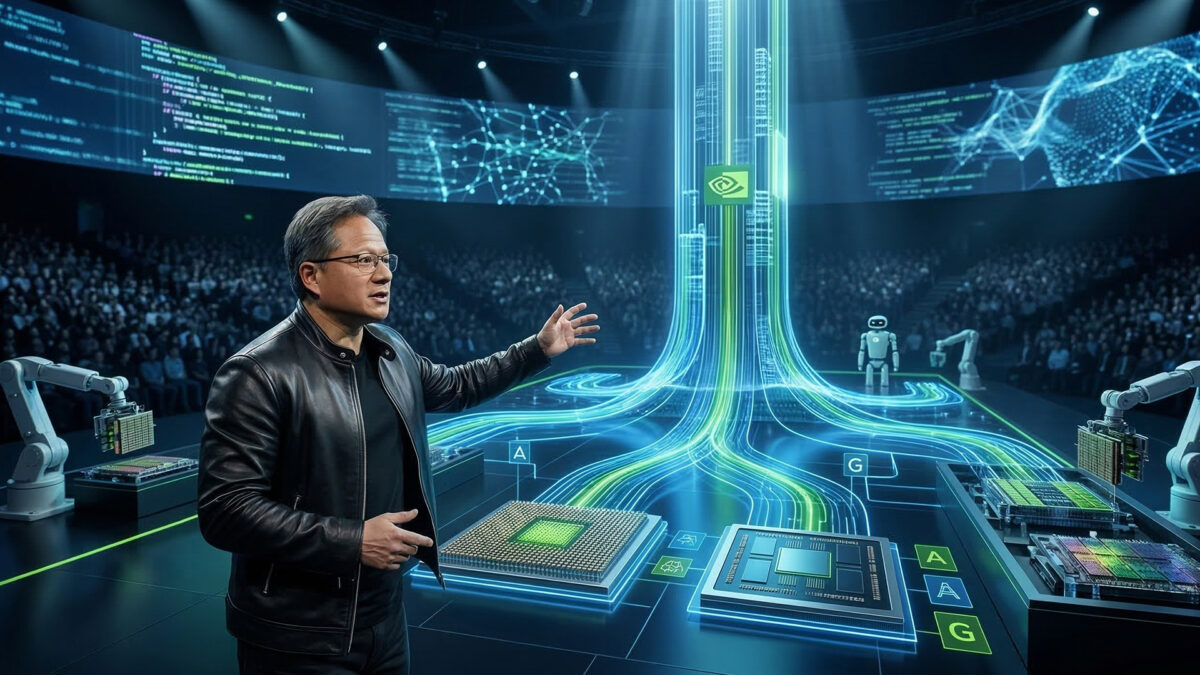
Nvidia chief executive Jensen Huang is facing mounting pressure after reports of two extramarital relationships triggered questions about his leadership, corporate governance and the future of the world’s leading artificial intelligence chipmaker. The controversy has placed Nvidia’s board of directors in a difficult position, with reports suggesting that it is considering whether Huang should continue as CEO.
The latest development involves an alleged relationship between Huang and Kimberly Powell, Nvidia’s vice president of healthcare. A report published by The New York Times on November 11 said the two had been involved in a relationship, citing five people familiar with the matter. Powell has worked at Nvidia for more than 18 years and is among the executives who report directly to Huang.
Neither Huang nor Powell has publicly confirmed the reported relationship. Nvidia has also declined to comment on the allegation.
The revelation comes just days after Huang acknowledged being unfaithful to his wife in a message to employees. His admission followed reports about his relationship with Alice Huang, a businesswoman suspected by US intelligence officials of having links to Chinese intelligence operations.
The latest allegations have intensified scrutiny of the 63-year-old executive, who co-founded Nvidia in 1993 and has led its transformation from a graphics processor manufacturer into a global powerhouse in artificial intelligence computing.
According to reports, Nvidia’s board met on Wednesday, November 11, to discuss Huang’s future. The Wall Street Journal reported that the company was preparing to remove him, while other reports said directors had engaged an outside firm to identify potential replacements.
The developments represent a significant change from the board’s earlier position. On November 8, Nvidia announced an independent investigation into whether Huang had been targeted by a foreign intelligence operation. At that time, the board had expressed confidence in his leadership.
Under Nvidia’s corporate bylaws, the chief executive can be removed with or without cause through a majority vote of the board. The company has 11 directors, with all except Huang considered independent.
However, removing the co-founder would not be a straightforward decision. Huang remains deeply involved in Nvidia’s business strategy, product development and relationships with major technology companies. His leadership has been closely associated with the company’s extraordinary growth during the global AI boom.
The board must therefore weigh concerns about executive conduct and corporate governance against the risks of disrupting the company’s operations.
The controversy initially emerged following reports about Huang’s relationship with Alice Huang, a businesswoman associated with Megaspeed, a Singapore-based data centre company and an important Nvidia customer.
US intelligence officials reportedly suspect that Alice Huang was involved in gathering information for China. Investigators are examining whether she had been recruited by Chinese intelligence and whether her relationship with Jensen Huang could have provided access to sensitive corporate or national security information.
The allegations have not been independently established in public, and China has rejected the espionage claims as groundless.
The issue has attracted attention because Nvidia’s advanced AI processors are strategically important to the United States. Washington has imposed restrictions on the export of certain high-performance chips to China over concerns about their potential military and technological applications.
Nvidia’s board appointed the law firm Wachtell, Lipton, Rosen and Katz to conduct an independent investigation into whether Huang had been targeted and whether company information or national security interests had been compromised.
Huang has said he would cooperate with the investigation and remains committed to protecting Nvidia and supporting US national security.
The controversy has also affected Nvidia’s stock market performance, with investors closely watching developments surrounding its chief executive.
Nvidia shares closed 2.92% higher at $173.73 on Wednesday, November 11. However, the stock fell more than 8% in extended trading after reports emerged that the board was considering removing Huang. The decline reflected growing uncertainty over the company’s leadership and the possible consequences of a sudden management change.
The market reaction has also extended to other technology companies. Shares of data centre infrastructure company CoreWeave and memory chipmaker Micron declined in after-hours trading, while rival semiconductor companies AMD and Broadcom recorded gains.
Although demand for Nvidia’s AI processors remains strong, analysts are concerned about the uncertainty surrounding its leadership. The company supplies advanced chips used by major technology firms to develop artificial intelligence models and expand data centre infrastructure.
Huang’s departure could potentially affect customer relationships, long-term business plans and investor confidence. His influence on Nvidia’s direction has made the succession question particularly important for shareholders.
One of the biggest challenges facing Nvidia’s board is the lack of an obvious successor. Huang has led the company for more than 30 years and remains closely involved in its strategic decisions.
The board has reportedly approached an external firm to identify potential candidates and examine interim leadership arrangements.
Chief Financial Officer Colette Kress is among the names being discussed as a possible interim replacement. Ian Buck, who oversees Nvidia’s data centre business, has also emerged as a potential candidate.
However, the company has not announced any leadership transition or confirmed a successor.
Huang also holds approximately 3.6% of Nvidia’s shares, giving him a significant ownership stake in the company. His position as co-founder, combined with his influence over its technology roadmap, makes any potential departure a major corporate development.
Nvidia’s growth has been driven largely by demand for its graphics processing units (GPUs), which power AI applications, machine learning systems and large-scale data centres. The company has become a key supplier to technology giants investing billions of dollars in artificial intelligence infrastructure.
Replacing Huang would therefore require Nvidia to maintain its competitive position while ensuring continuity in its business strategy.
The controversy has also attracted attention from US lawmakers, who are seeking answers about the allegations involving Alice Huang and the possible movement of advanced Nvidia chips to Chinese companies.
Members of Congress have raised concerns about the national security implications and are pushing for Huang to testify. Lawmakers are also examining whether existing restrictions on semiconductor exports to China are sufficient to prevent sensitive technology from reaching unauthorised buyers.
US President Donald Trump has publicly defended Huang, describing him as an honourable person and an important figure in the American technology industry.