Categories
Leaders

Jensen Huang’s iconic jacket auctioned for $1 mn

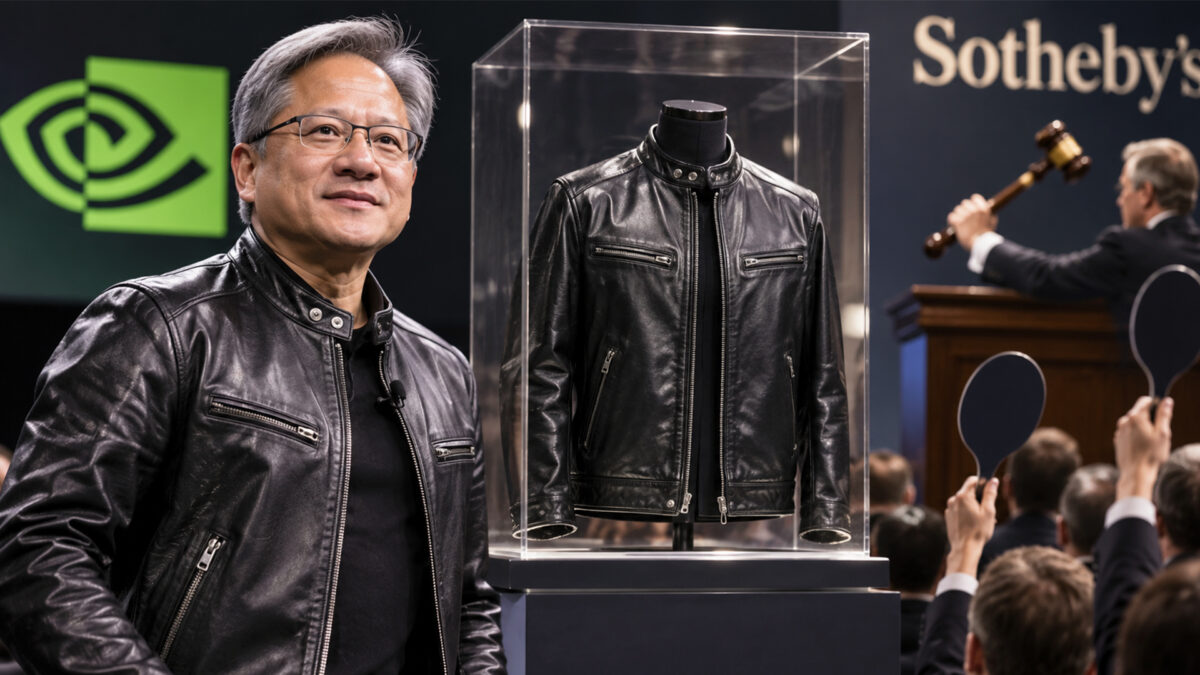
A black leather jacket worn by Nvidia CEO Jensen Huang has become one of the most valuable pieces of technology memorabilia ever sold after fetching an impressive $960,000 (around ₹8.2 crore) at a Sotheby’s auction in New York. The jacket, which had an estimated value of just $40,000 to $60,000, attracted intense bidding before selling for nearly 16 times its expected price.

The record-breaking sale has once again highlighted Huang’s growing influence in the technology world, where he is now regarded as one of the defining figures of the artificial intelligence revolution. What started as his personal style statement has evolved into a globally recognised symbol of Nvidia’s rise as the world’s leading AI chipmaker.

The jacket sold at auction is a Tom Ford leather jacket that Huang wore during a visit to Foxconn’s facility in Taipei in 2023. It also carries his autograph, making it even more desirable for collectors. The event itself was significant, coming at a time when Nvidia was rapidly expanding its partnerships to meet the soaring global demand for artificial intelligence infrastructure.

According to Sotheby’s, the auction drew 65 bids from 45 collectors, reflecting the growing demand for items associated with influential technology leaders. Auction officials said they expected strong interest, but the final price far exceeded all expectations.

The proceeds from the sale will benefit the Edge Institute, a non-profit organisation that supports innovation through fellowships, grants and educational programmes for emerging technology talent. This charitable aspect added greater significance to the auction, with the sale contributing to future research and innovation.

For years, Jensen Huang has rarely appeared in public without a black leather jacket. Whether unveiling Nvidia’s latest AI chips, speaking at global technology conferences or delivering keynote presentations, the jacket has become an unmistakable part of his identity.

His signature style has often been compared with Steve Jobs’ black turtleneck and Mark Zuckerberg’s grey T-shirt, both of which became closely associated with their public image. However, Huang’s leather jacket has gained even greater prominence in recent years as Nvidia emerged at the centre of the global artificial intelligence boom.

Under Huang’s leadership, Nvidia has transformed from a graphics chip manufacturer into one of the world’s most valuable technology companies. Its advanced AI processors now power everything from generative AI models and cloud computing platforms to autonomous vehicles and scientific research. As demand for AI computing continues to rise, Huang has become one of the most recognisable executives in the technology industry.

His keynote presentations regularly attract thousands of attendees, while videos of his product launches are watched by millions around the world. The leather jacket has become so closely linked to his image that many technology enthusiasts instantly associate it with Nvidia’s AI announcements.

The jacket also gained additional attention after Meta CEO Mark Zuckerberg jokingly remarked during a public conversation that one of Huang’s worn leather jackets would probably become a valuable collector’s item. That light-hearted comment has now proved surprisingly accurate following the nearly $1 million auction sale.

Sotheby’s described the jacket as more than just a fashion item. According to the auction house, it represents an important piece of technology history because it is associated with one of the leaders driving today’s AI revolution. As artificial intelligence continues transforming industries worldwide, memorabilia connected to its key pioneers is becoming increasingly valuable.

The sale also reflects a broader shift in the collectibles market. Traditional memorabilia such as sports jerseys, movie costumes and rare watches continue to attract buyers, but technology-related collectibles are now emerging as a fast-growing category. Items linked to influential innovators and landmark moments in computing are increasingly being viewed as cultural artefacts rather than ordinary personal belongings.

For Nvidia, the auction comes at a time when the company continues to dominate the global AI hardware market. Its chips remain in high demand from major technology companies building advanced artificial intelligence systems, while Huang himself has become one of Silicon Valley’s most influential voices.

Although the leather jacket is unlikely to affect Nvidia’s business, the auction reflects the extraordinary cultural status Huang has achieved. Few technology executives have seen personal belongings command such remarkable prices, placing him among a select group of business leaders whose memorabilia has become highly sought after.

From being a simple wardrobe choice to becoming a symbol of the AI era, Jensen Huang’s black leather jacket has taken on a life of its own. Its record-breaking sale not only celebrates the Nvidia CEO’s remarkable journey but also captures a moment in history when artificial intelligence has become one of the world’s most transformative technologies.

Also Read: Samsung launches Music Studio series

Categories
Corporate

Nvidia CEO Jensen Huang’s dance moves go viral

Nvidia CEO Jensen Huang has gone viral on social media after a video of him dancing with employees at a company event in Taiwan captured widespread attention online.

The video, which has been shared extensively across social media platforms, shows Huang enthusiastically joining staff members on stage during a celebratory event. Known globally for leading Nvidia’s rise as one of the world’s most valuable technology companies, Huang surprised many by showcasing his lighter side and participating in the dance performance.

The event took place in Taiwan, where Huang has been attending a series of engagements linked to the technology industry and Nvidia’s growing presence in the region. The video quickly gained traction online, with users praising the executive’s energy, confidence and willingness to interact with employees in an informal setting.

Many social media users described the moment as refreshing, noting that it highlighted Huang’s approachable leadership style. Others commented on the contrast between his role as a prominent technology executive and his relaxed, enthusiastic performance on stage.

The viral clip comes at a time when Nvidia continues to dominate headlines due to its leadership in artificial intelligence and semiconductor technology. Under Huang’s leadership, the company has emerged as a key player in the global AI boom, with its chips powering advanced AI systems used by businesses and research institutions worldwide.

Despite his status as one of the most influential figures in the technology industry, Huang is often recognised for maintaining a strong connection with employees and customers. Supporters said the dance performance reflected the company culture he has helped build over the years.

The video sparked a wave of positive reactions online, with many users sharing memes, comments and appreciation posts. Several viewers remarked that seeing a top executive participate in a fun employee event made him appear more relatable.

As the clip continues to circulate, it has become another memorable public moment for Huang, whose popularity extends beyond the technology sector. The viral video has added a human touch to the image of a business leader best known for driving innovation in the rapidly evolving AI industry.

Also Read: NLC India, Reliance partner for Gujarat Lignite gasification study

Categories
Leaders

Nvidia CEO tells graduates to learn from failure

Jensen Huang, the founder and CEO of Nvidia Corporation, delivered a personal and motivational message to graduating students at Carnegie Mellon University, encouraging them to accept failure as an important part of success.

Speaking at the university’s commencement ceremony, Huang shared lessons from his own journey building Nvidia into one of the world’s most influential technology companies. Instead of focusing only on achievements, he spoke openly about challenges, pressure and setbacks, telling students that difficult moments often shape people the most.

Huang said many people spend their lives trying to avoid failure, but real growth comes from learning how to handle it. He encouraged graduates to remain curious, take risks and continue learning even when things do not go according to plan.

The Nvidia chief also spoke about the rapid rise of artificial intelligence and how it is changing industries across the world. From healthcare and education to robotics and business, Huang said AI will transform the way people work and live. Because of this, he believes adaptability will become one of the most important skills for the next generation.

He reminded students that no career path will remain predictable for long and said people must be ready to constantly learn new skills. According to Huang, success in the future will depend not only on intelligence or technical knowledge, but also on resilience and the ability to adapt quickly.

His speech gained wide attention online as Nvidia continues to play a central role in the global AI boom. The company’s AI chips power many of the world’s leading artificial intelligence systems, helping Nvidia become one of the most valuable technology firms globally.

Students and professionals connected strongly with Huang’s message because of its honest and relatable tone. Rather than presenting success as perfect or effortless, he described it as a journey filled with uncertainty, mistakes and continuous learning.

Also Read: PM Modi urges pause in gold buying

Categories
Leaders

Jensen Huang projects $1 trillion AI revenue by 2027

Jensen Huang has projected that the artificial intelligence (AI) computing market could generate up to $1 trillion in revenue by 2027, reflecting the rapid expansion of AI infrastructure worldwide.

Speaking at the company’s annual developer conference, Nvidia GTC in San Jose, Huang said the demand for AI chips and data-center systems is rising much faster than previously expected. The estimate is significantly higher than earlier projections and even exceeds the most optimistic forecasts from analysts.

Just last year, Nvidia had suggested that the market opportunity for AI data-center hardware could reach about $500 billion. However, Huang said accelerating investments by major technology companies and cloud providers have pushed the potential market size much higher.

Large technology firms are rapidly building AI infrastructure to train and deploy increasingly powerful AI models. This has led to strong demand for Nvidia’s advanced processors and integrated computing systems used in data centers around the world.

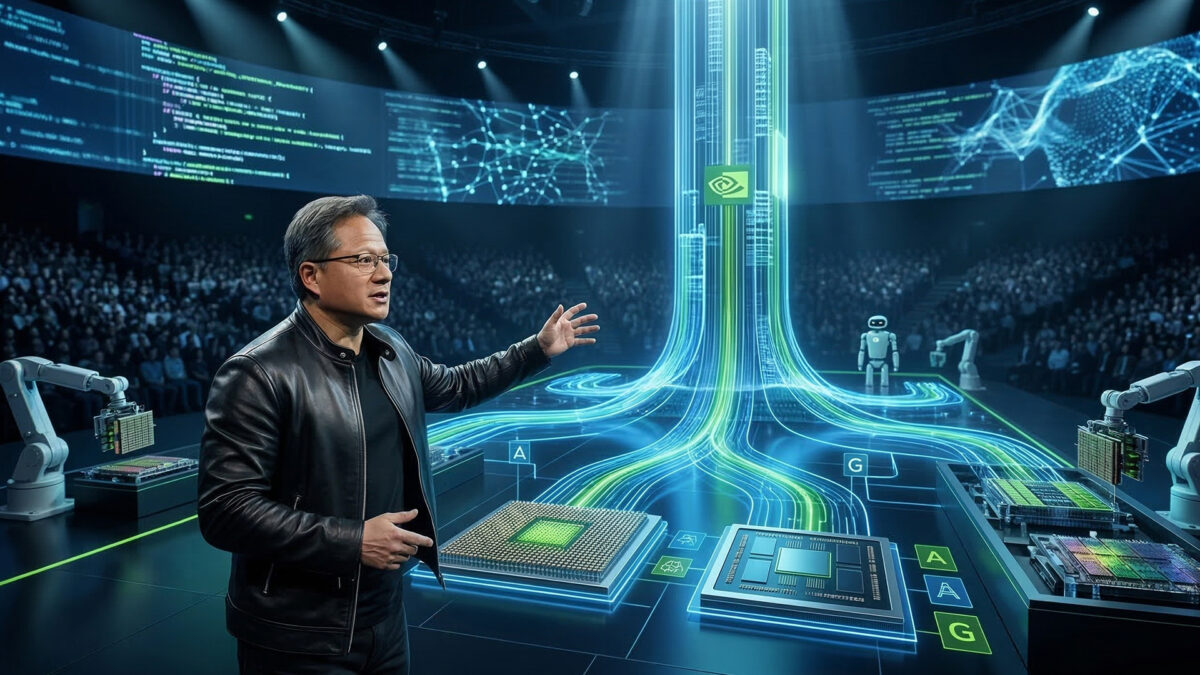
During his keynote address, Huang also introduced new AI platforms designed to support the next generation of computing workloads. These include systems based on Nvidia’s Blackwell architecture and future platforms such as Vera Rubin, aimed at powering large-scale AI data centers.

According to Huang, the AI industry is now entering a new phase focused on AI inference, the stage where trained models are deployed to perform real-time tasks. This includes applications such as digital assistants, automated software systems, robotics, and autonomous machines.

The shift toward inference computing is expected to significantly increase the demand for AI hardware and specialized data-center infrastructure. Nvidia believes this trend will drive the next wave of growth for the semiconductor industry.

Also Read: Chrome update brings bookmarks bar to Android

Categories
Leaders

India’s data centres seen as job engine, says Nvidia CEO

India is emerging as a global hotspot for artificial intelligence (AI) and digital infrastructure, drawing recognition and investment from international leaders. United Nations Secretary-General António Guterres praised India for its leadership in AI, noting the country’s role in shaping global AI discussions and promoting inclusive governance.

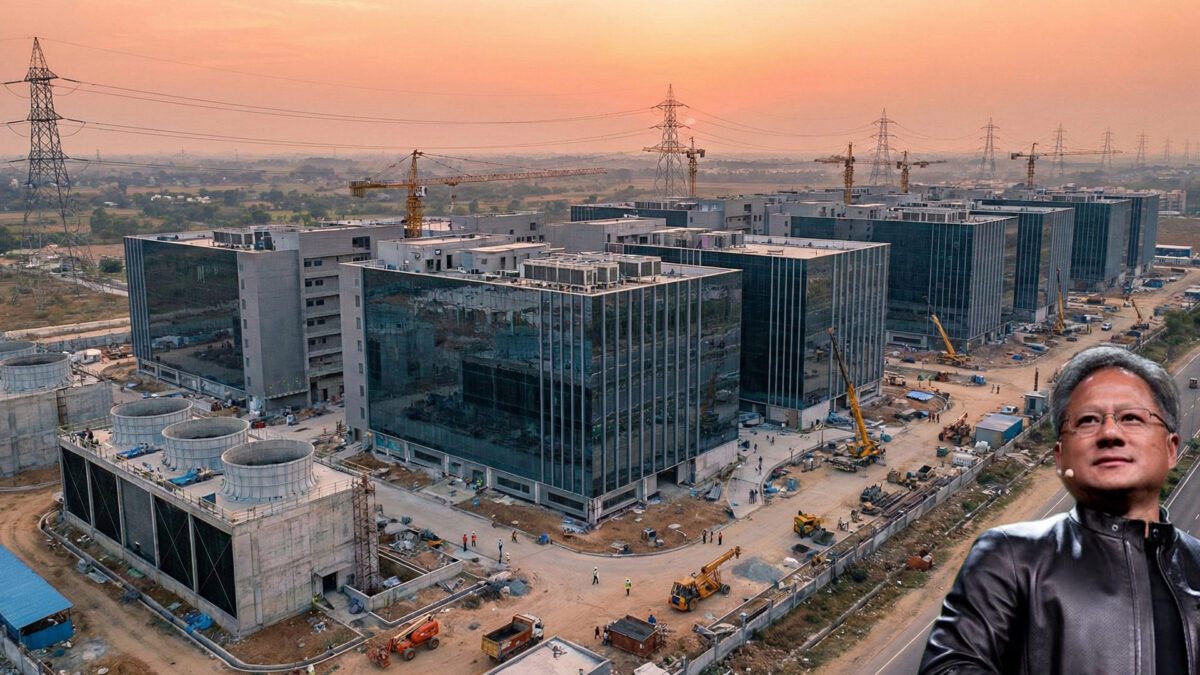
Nvidia CEO Jensen Huang predicted that India’s AI and data-centre expansion could create a surge in employment, reminiscent of the internet boom. According to Huang, constructing data centres will generate jobs for electricians, plumbers, architects, and project managers. Beyond that, a wide range of indirect roles in operations, supply chains, and startups could also emerge.

The Indian government is supporting this growth with strategic incentives. The 2026 Budget extended tax holidays for foreign companies setting up data centres in India through 2047, aiming to attract massive investment in cloud computing and AI services. Experts in the industry estimate that this could bring in billions of dollars, further strengthening India’s position in the global tech ecosystem.

India is also hosting the India AI Impact Summit 2026 in New Delhi, bringing together global leaders, ministers, technology executives, and academics. The summit will focus on AI governance, capacity building, and international collaboration, including platforms like the Global Digital Compact.

Also Read: Bengaluru startup founder’s US visa rejected in Delhi