
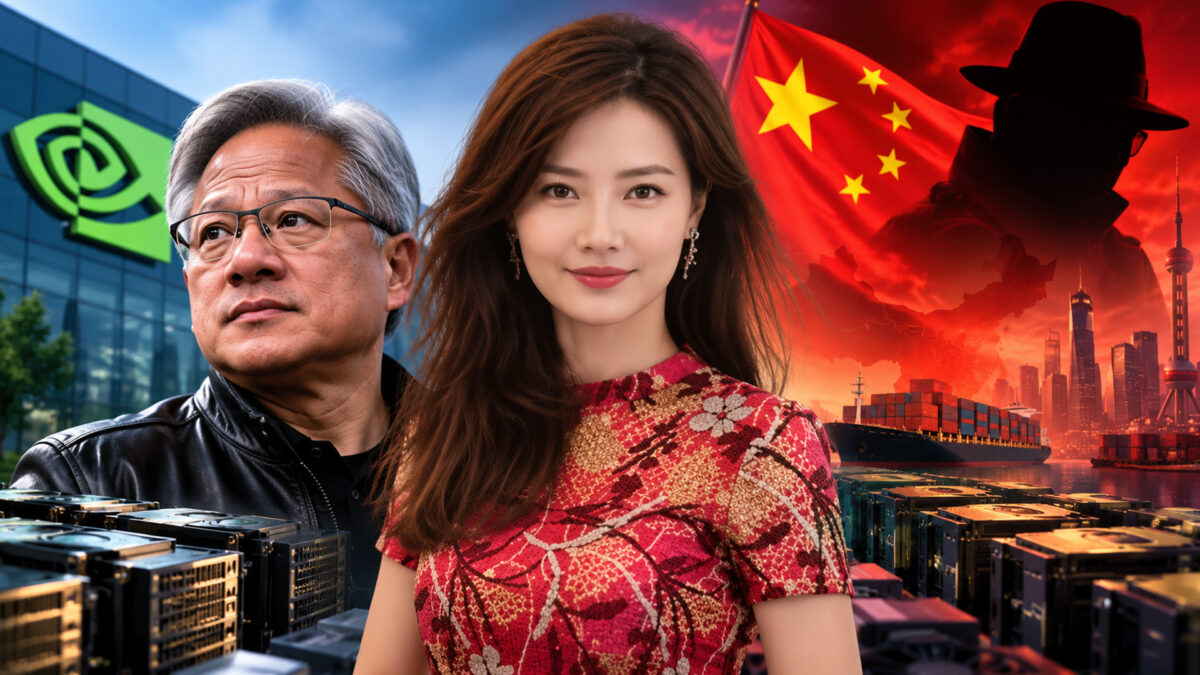
The growing technology rivalry between the United States and China has taken a new turn, with an alleged espionage investigation drawing attention to Nvidia chief executive Jensen Huang and a Chinese businesswoman who reportedly had close business ties with him.
At the centre of the controversy is Alice Huang, also known as Huang Le, a Chinese national and former senior executive at Singapore-based data centre company Megaspeed International. US intelligence agencies reportedly suspect that she acted as an intelligence source for Beijing while being associated with businesses involved in the supply of advanced artificial intelligence chips.
The allegations have raised concerns in Washington about the possibility of restricted American technology reaching China through third-party companies operating in Southeast Asia. They have also brought renewed scrutiny to Nvidia, whose powerful processors are central to the global artificial intelligence industry.
According to reports based on information from people familiar with the intelligence assessment, US officials suspected Alice Huang of passing commercial information to the Chinese government. Investigators also examined her reported relationship with Jensen Huang, raising questions about whether her business access could have exposed sensitive information about Nvidia or American technology policy.
Alice Huang is not related to Jensen Huang,
Megaspeed operates in the data centre business, purchasing computing equipment powered by Nvidia processors and renting computing capacity to customers. Its business network reportedly included companies serving major technology clients, including China’s Alibaba. This model has attracted attention because companies can purchase advanced chips, install them in data centres outside China and potentially allow Chinese customers to access computing power remotely.
Washington has imposed restrictions on exports of advanced artificial intelligence chips to China, arguing that the technology could strengthen Beijing’s military and advanced computing capabilities. Nvidia’s processors are particularly important because they are used to train and operate sophisticated AI models.
The investigation into Megaspeed reportedly began in late 2024, when American authorities examined whether Nvidia chips were being diverted to China through overseas facilities. A US Commerce Department official who visited a data centre operated by the company in Malaysia reportedly found Nvidia equipment still packed in boxes, raising questions about where the hardware was ultimately going.
Trade records cited in reports also indicated that a Malaysian sister company linked to Megaspeed purchased at least $4.8 billion worth of advanced computing equipment containing Nvidia technology between June 2024 and February 2026. US officials suspected that some equipment acquired through the network could have been redirected to China in violation of export restrictions. However, the reported purchases do not establish that the entire amount, or any specific quantity, was illegally transferred.
The scrutiny reportedly extended beyond the United States. Singaporean authorities questioned Alice Huang in 2025 before releasing her. US officials also examined her contacts and movements. A separate report said she disappeared into China for a period in late 2024 as surveillance activity intensified. Her current whereabouts and whether she continues to hold a senior position at Megaspeed remain unclear.
The intelligence investigation reportedly uncovered a close business relationship between Alice Huang and Jensen Huang. The two were photographed together in Taipei in June 2024 following a technology trade event. They were also reportedly seen together after a business dinner with artificial intelligence suppliers in May 2025.
The reported connection became particularly sensitive because Jensen Huang is one of the most influential figures in the American technology industry. Nvidia’s graphics processing units, commonly known as GPUs, have become essential for companies developing advanced AI systems. His position has also brought him into discussions with US President Donald Trump on semiconductor manufacturing, technology policy and America’s competitiveness against China.
US officials were reportedly concerned that Alice Huang’s access to the Nvidia chief could have provided opportunities to gather information about the company’s business plans or developments in American AI policy. There were also concerns about whether such access could offer Beijing insights into Washington’s approach to advanced chip exports.
Reports said Trump had been briefed about the intelligence findings approximately a year ago. However, the administration reportedly did not take aggressive action at the time. The decision was linked partly to concerns about disrupting Nvidia’s business interests and complicating trade relations with China. There is no reported evidence that Jensen Huang knowingly shared sensitive information with Alice Huang.
Nvidia has rejected suggestions that the chief executive’s interactions with the businesswoman were unusual or that sensitive information was passed to her. Company spokesperson John Rizzo said customer meetings were a normal part of Jensen Huang’s responsibilities, adding that he interacts with thousands of customer executives.
The company also maintained that regional cloud customers such as Megaspeed receive ordinary business information, not confidential Nvidia trade secrets or information relevant to national security. Nvidia said it was confident that US authorities would alert the company if they believed an individual posed a threat to American industry.
Megaspeed’s current leadership has said it takes the allegations seriously. The company reportedly appointed outside legal counsel to conduct an internal investigation and informed the US government that it was willing to cooperate. The company had previously said government reviews found no evidence of illegal chip transfers or other violations.
China has also rejected the espionage allegations. Its Foreign Ministry described the reports as groundless speculation and an attempt to discredit the country, maintaining that China’s technological development is based on independent innovation.
The case highlights the growing difficulty of enforcing semiconductor export controls as AI companies expand their data centre operations across international markets. It also shows how commercial relationships, technology supply chains and national security concerns are becoming increasingly connected in the US-China AI race.