
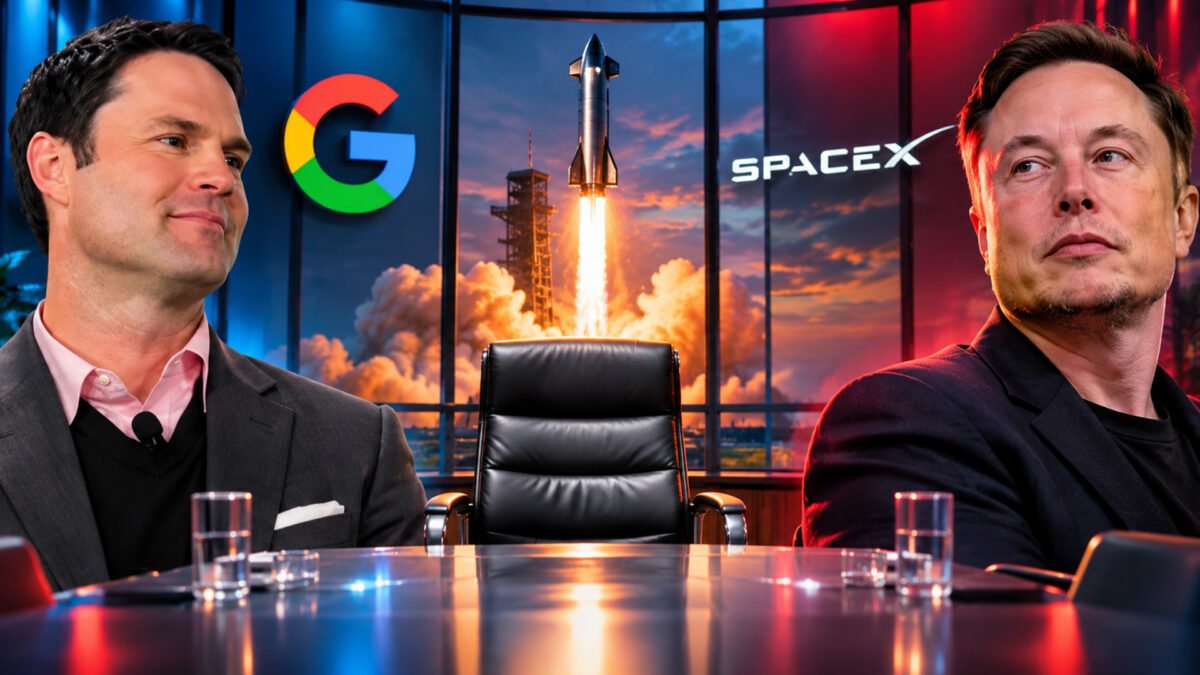
Donald Harrison, a senior Google executive, has resigned from the board of Elon Musk-led SpaceX after serving for more than 11 years. His departure comes amid growing business ties between Google and SpaceX across artificial intelligence, satellite communications and computing infrastructure.
Harrison’s resignation took effect on November 4, according to a regulatory filing submitted by SpaceX. The company disclosed the development on November 6, confirming that Harrison had informed it of his decision two days earlier. He stepped down as a Class B director with immediate effect, bringing an end to his long association with the space technology company.
SpaceX clarified in its filing that Harrison’s resignation was not the result of any disagreement with the company concerning its operations, policies or practices. It also acknowledged his contribution during his tenure and thanked him for his service on the board.
However, Elon Musk provided an additional explanation for the development, pointing to potential conflicts of interest involving Alphabet, Google’s parent company. Musk acknowledged Harrison’s contribution to SpaceX and described him as a valuable board member.
Harrison has been part of Google’s leadership team for more than two decades. He joined the company in 2005 and has held several senior positions during his career. Before becoming President of Global Partnerships and Corporate Development in 2017, he served as Vice-President of Corporate Development between 2012 and 2017. He previously worked as Vice-President and Deputy General Counsel from 2005 to 2012.
His association with SpaceX began in February 2015, when he joined its board following Google’s investment in the company. His tenure covered a major transformation in SpaceX’s business, from a rocket launch and space exploration company into a broader technology business with interests in satellite internet, artificial intelligence and advanced computing infrastructure.
The resignation is particularly noteworthy because of the financial relationship between Google and SpaceX. Alphabet invested around $900 million in SpaceX in 2015 as part of a funding round that valued the company at approximately $12 billion. The investment has grown significantly in value over the years as SpaceX expanded its operations and strengthened its position in the commercial space industry.
Alphabet is currently the largest single institutional shareholder in SpaceX, according to market data. Google’s reported holding increased to approximately 555 million shares from 551.2 million shares, reflecting a further increase in its investment position.
The overlapping business interests of the two companies also provide important context to Harrison’s departure. As Google’s senior executive responsible for global partnerships and corporate development, Harrison has been involved in strategic business relationships, while his position on SpaceX’s board gave him access to the company’s decision-making process.
Musk’s reference to conflicts of interest involving Alphabet indicates the challenges of maintaining such a dual role as the companies’ commercial and strategic interests expand. However, neither SpaceX nor Google has publicly detailed the specific conflicts that led to Harrison’s decision.
The development comes at a significant time for SpaceX, which is increasingly positioning itself beyond its traditional rocket-launch business. The company has expanded its Starlink satellite internet network and is investing in artificial intelligence infrastructure and next-generation space technology.
SpaceX is also facing growing attention over a possible merger with Tesla, another company led by Musk. Reports have indicated that the possibility of combining the two businesses has been discussed at the board level. Harrison was among the independent directors associated with discussions surrounding the potential transaction.
A merger between SpaceX and Tesla could bring together businesses operating in electric vehicles, space technology, satellite communications, robotics and artificial intelligence. Such a combination could have significant implications for Musk’s wider business ambitions. However, no completed merger agreement has been announced, and Harrison’s resignation should not automatically be interpreted as being directly connected to the proposal.
The timing of his departure has nevertheless attracted attention because of the corporate decisions SpaceX may have to consider as it expands its business and explores new opportunities. The company has not announced a replacement for Harrison on its board.
Google, meanwhile, has indicated that its wider relationship with SpaceX remains intact. The resignation does not mean that Alphabet intends to withdraw its investment or end its commercial association with the company.
The two companies have maintained business and technology connections since Alphabet’s initial investment. Their relationship reflects the growing overlap between the technology and space industries, particularly as satellite networks, cloud computing and artificial intelligence become increasingly interconnected.
For Google, SpaceX represents both a significant investment and a partner in an industry that could shape the next phase of technological development. For SpaceX, Google’s financial backing and commercial relationships have been part of its growth story over the past decade.
Harrison’s exit therefore marks an important change in the boardroom relationship between the two companies, even as their wider business ties continue. His departure also highlights the corporate governance challenges that can emerge when senior executives hold positions in companies with overlapping investments and strategic interests.
After more than 11 years on SpaceX’s board, Harrison’s resignation closes a significant chapter in the relationship between the Google executive and Musk’s space venture. The immediate reason cited by Musk is the growing number of conflicts involving Alphabet, although the specific nature of those conflicts remains undisclosed.
The development leaves questions about SpaceX’s future board composition as the company continues to expand into artificial intelligence, satellite communications and other technology businesses.