Categories
Beyond

RBI clears Kotak stakes in AU SFB, Federal Bank

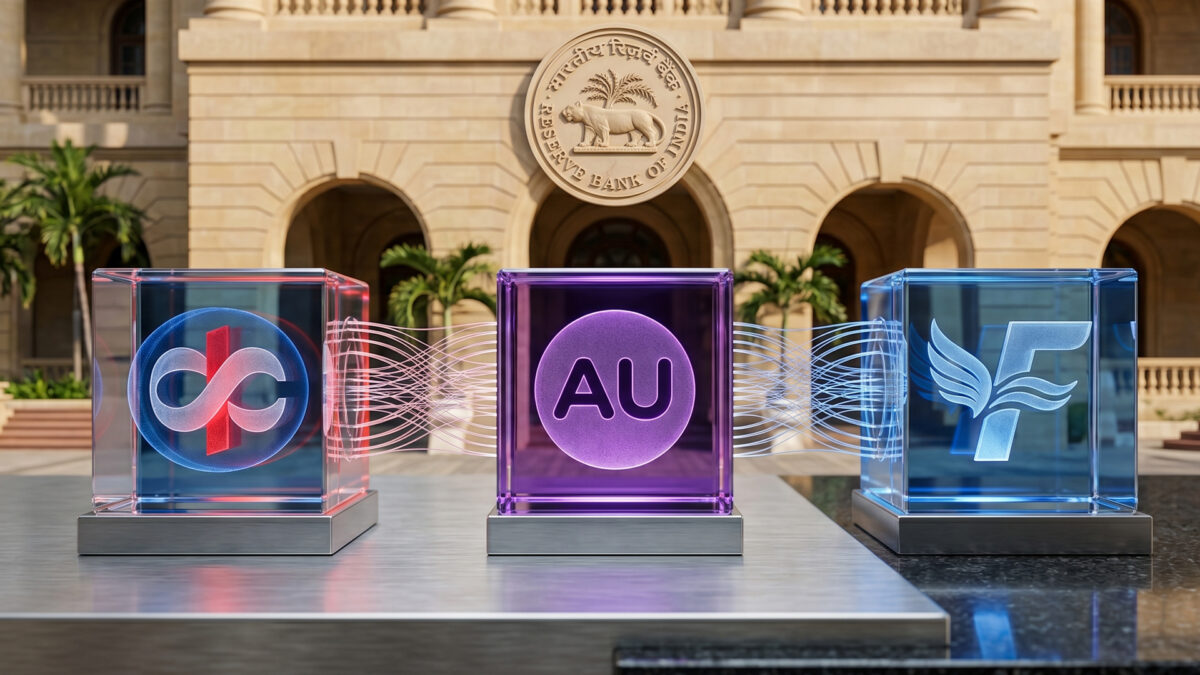
Kotak Mahindra Bank has received approval from the Reserve Bank of India (RBI) to acquire up to 9.99% stake each in AU Small Finance Bank and Federal Bank, strengthening its presence in India’s private banking sector.

The approval allows Kotak Mahindra Bank, along with its group entities and investment arms, to increase its holding in both banks within the permitted limit. The move is being viewed as a strategic investment aimed at expanding Kotak’s footprint across different segments of the banking industry.

Both AU Small Finance Bank and Federal Bank informed stock exchanges that the RBI granted the approval earlier this week. However, the acquisition will still need to comply with banking, market, and foreign investment regulations.

The development comes at a time when Indian banks are increasingly exploring partnerships, investments, and consolidation opportunities to strengthen growth and improve market reach. Analysts believe Kotak’s investments in the two lenders could open the door for closer strategic cooperation in the future.

Federal Bank has a strong presence in retail and SME banking, particularly in south India, while AU Small Finance Bank has built a significant franchise in the small finance and rural lending segment. By investing in both institutions, Kotak gains exposure to different customer segments and regional markets.

The announcement also received a positive response from investors, with shares of the three banks witnessing gains during trading sessions following the RBI approval.

Also Read: Google introduces AI-powered Fitbit Air

Categories
Technology

Google introduces AI-powered Fitbit Air

Google has entered the growing AI-driven wearable market with the launch of Fitbit Air, a new screenless fitness tracker designed to focus on health monitoring rather than smartwatch-style features. The company said the wearable combines passive health tracking with artificial intelligence-based wellness insights.

Priced at $99, Fitbit Air does not include a display, notifications, or apps. Instead, the lightweight wrist strap continuously tracks user health data in the background and delivers personalised recommendations through Google’s new Health app. The device is powered by Google’s Gemini AI technology, which analyses fitness and biometric information to provide coaching related to sleep, recovery, activity levels, and overall wellness.

The wearable includes features such as continuous heart-rate monitoring, sleep analysis, blood oxygen tracking, activity tracking, temperature sensing, and heart rhythm notifications. Google claims the device can offer up to seven days of battery life on a single charge.

According to the company, Fitbit Air is aimed at users who want health insights without the distractions associated with traditional smartwatches. The product reflects a growing trend in the wearable technology industry, where companies are shifting focus toward continuous biometric tracking and AI-powered health analysis.

Google has also announced a unified Google Health app that will replace the older Fitbit app experience. The new platform combines fitness, sleep, and wellness information in one interface while offering AI-generated recommendations based on user data patterns.

The company confirmed that Fitbit Air will support both Android and iPhone users, widening its potential customer base. Alongside the device, Google is also introducing a subscription-based AI Health Coach service that provides more advanced health analysis and customised wellness guidance.

Fitbit Air directly competes with popular screenless wearable brands such as Whoop and Oura, which have gained popularity among fitness-focused users and professional athletes.

Also Read: Tata Trusts postpones crucial board meeting

Categories
1 Minute-Read

Tata Trusts postpones crucial board meeting

Tata Trusts has postponed its key board meetings to May 16 amid ongoing legal challenges and governance concerns linked to Tata Sons.

The meetings of Sir Dorabji Tata Trust and Sir Ratan Tata Trust were earlier scheduled for May 8 and were expected to discuss important matters related to board representation and Tata Sons’ future structure.

The postponement follows petitions filed in the Bombay High Court challenging certain trustee decisions.

Although the court declined immediate intervention, the issue has intensified scrutiny around governance within the Trusts. Tata Trusts, chaired by Noel Tata, remains the largest shareholder in Tata Sons.

Categories
Leaders

Anthropic CEO says firm grew 80-fold with AI boom

Artificial intelligence company Anthropic has witnessed explosive growth in early 2026, with CEO Dario Amodei revealing that the company expanded nearly 80-fold in the first quarter compared to the same period last year.

Speaking at Anthropic’s developer event in San Francisco, Amodei said the surge in demand for the company’s AI tools far exceeded internal expectations. According to him, Anthropic had initially planned infrastructure and operations for around 10 times growth, but actual usage and revenue increased much faster than anticipated.

The rapid rise has been driven largely by growing adoption of Anthropic’s Claude AI models among businesses, software developers, and enterprise customers. Claude is increasingly being used for coding assistance, workflow automation, research, and customer support applications, helping Anthropic emerge as one of the strongest competitors in the global AI industry.

Amodei acknowledged that the company has faced challenges in handling such massive expansion, especially in securing enough computing power to support growing user demand. He joked during the event that the pace of growth had become difficult for the company to manage, highlighting one of the biggest issues facing AI firms today, access to large-scale computing infrastructure.

To address capacity constraints, Anthropic has reportedly expanded infrastructure partnerships and compute agreements in recent months. The company has been investing heavily in cloud and data centre access to support training and deployment of advanced AI models.

Founded in 2021 by former OpenAI executives, including siblings Dario and Daniela Amodei, Anthropic has quickly become a major player in the artificial intelligence sector. The company has attracted billions of dollars in investments from global technology firms and investors amid rising competition in generative AI.

Also Read: FMC to sell India Business to Crystal Crop for $252 mn

Categories
Corporate

FMC to sell India Business to Crystal Crop for $252 mn

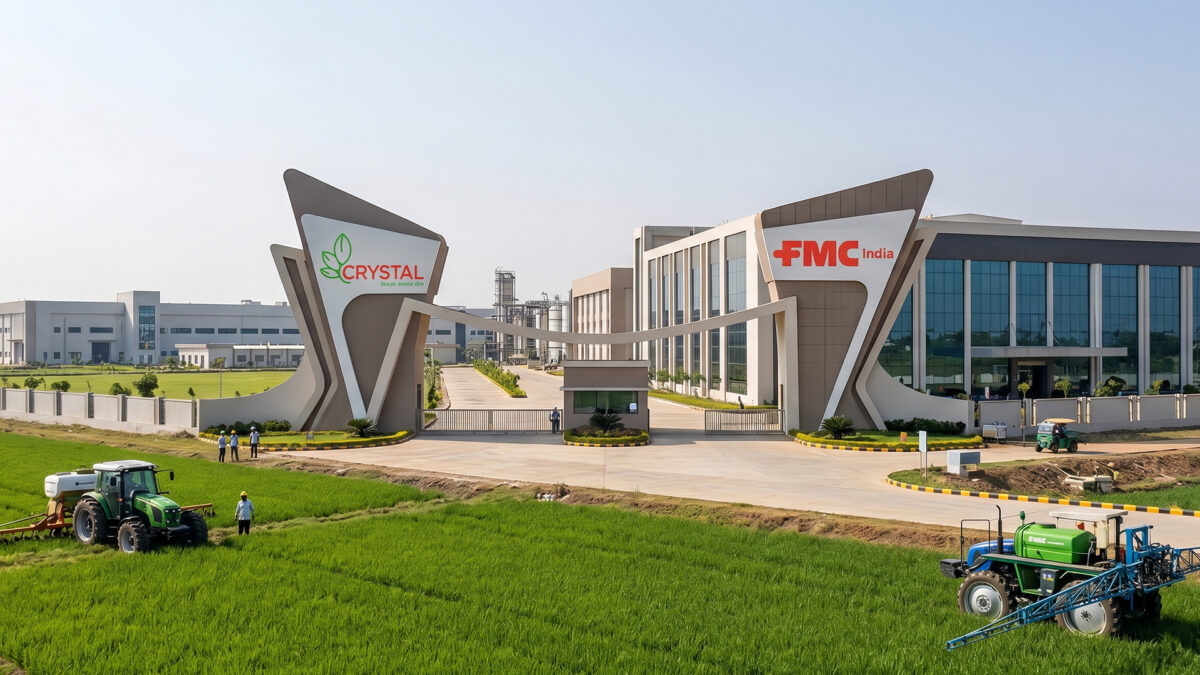
US-based agricultural sciences company FMC Corporation has agreed to sell its India commercial business to Crystal Crop Protection Limited in a deal valued at $252 million, marking a significant development in India’s agrochemical sector.

The agreement includes FMC India’s crop protection business, rights to market several FMC brands in the country, preferred supply arrangements, and access to FMC’s future product pipeline for the Indian market. The transaction is expected to strengthen Crystal Crop’s position in the domestic crop protection industry and expand its product offerings for farmers.

FMC said the move is part of its broader global restructuring strategy aimed at reducing debt and focusing on priority international markets. The company had earlier announced plans to explore strategic options for its India commercial operations as part of efforts to improve financial performance and streamline operations.

Despite the sale, FMC clarified that it will continue to maintain a presence in India through its manufacturing facilities and research and development activities. The company also said it would continue supplying certain products to Crystal Crop under long-term commercial arrangements after the deal is completed.

Crystal Crop Protection said the acquisition would help it expand access to advanced crop solutions and strengthen innovation across chemical and biological products. The company believes FMC’s established brands, market reach, and technology pipeline will improve its ability to serve Indian farmers and deepen its footprint in the agriculture sector.

Also Read: Gold near ₹1.53 lakh, Silver around ₹2.70 lakh

Categories
Beyond

Gold near ₹1.53 lakh, Silver around ₹2.70 lakh

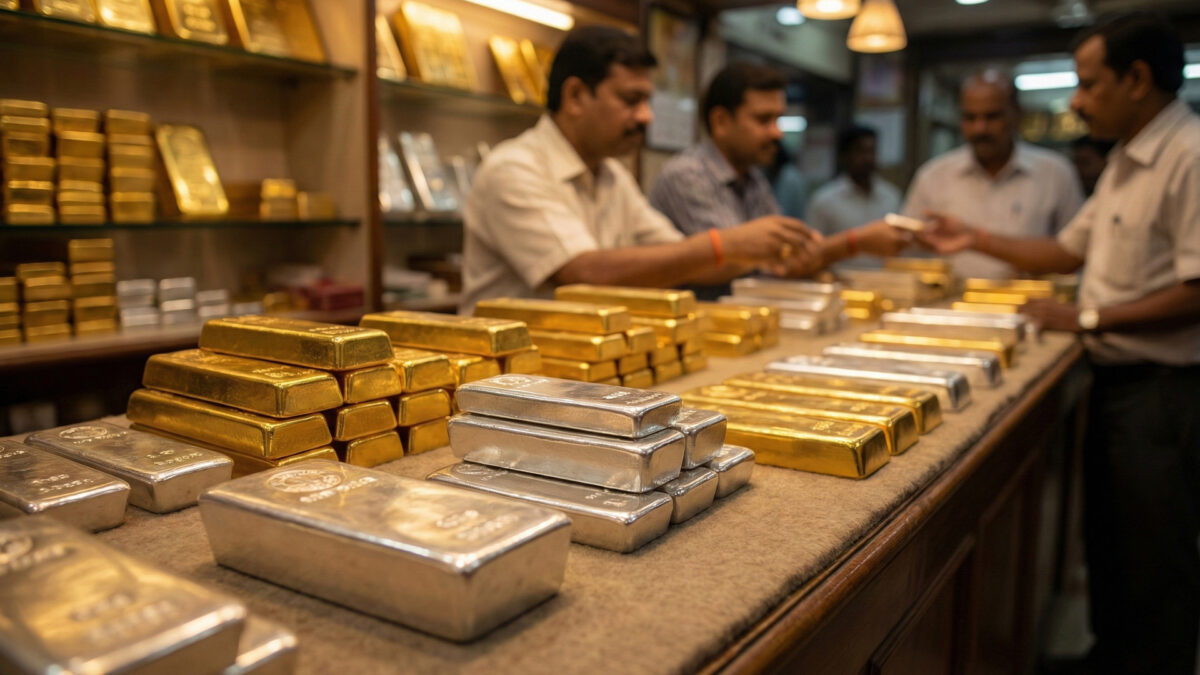
Gold and silver prices continued their upward trend on May 8, 2026, in both domestic and international markets, supported by strong safe-haven demand, geopolitical tensions, and expectations of easing monetary policy conditions globally.

In India, gold prices hovered close to ₹1.53 lakh per 10 grams on the MCX, reflecting sustained buying interest despite elevated price levels. Silver also remained strong, trading near ₹2.70 lakh per kilogram, extending its recent rally driven by both investment demand and industrial usage.

According to market data, MCX gold traded around the ₹1.52–1.53 lakh range, while silver stayed close to ₹2.59–2.70 lakh levels during intraday movement, showing firm underlying momentum in bullion markets.

The rise in precious metals is being driven by multiple global factors. Ongoing geopolitical tensions, particularly involving the Middle East, have increased demand for safe-haven assets. At the same time, concerns over inflation and uncertainty around interest rate direction have strengthened investor preference for gold and silver.

Internationally, gold remained firm near multi-month highs, supported by a softer US dollar and expectations of future rate cuts, while silver outperformed due to both investment inflows and industrial demand from sectors like electronics and renewable energy.

In India, physical demand has remained steady due to seasonal buying and wedding-related purchases, although high prices are beginning to impact retail volumes in some regions. ETF inflows and central bank purchases are also providing structural support to bullion prices.

Also Read: Sensex falls over 400 points, Nifty below 24,250

Categories
Corporate

Sensex falls over 400 points, Nifty below 24,250

Indian equity markets opened lower on Friday, with the Sensex falling over 400 points and the Nifty 50 slipping below the 24,250 mark amid sustained selling pressure across sectors.

On the sectoral front, the weakness was broad-based, with banking and financial stocks leading the decline. Heavyweights such as SBI, Infosys, Reliance Industries, and HDFC Bank were among the key laggards that dragged indices lower. In contrast, selective buying interest in defensive pockets helped cushion the fall, with Sun Pharma and ITC emerging as notable gainers during the session.

Rising geopolitical tensions and a spike in crude oil prices, with Brent crude moving above $83 per barrel, further dampened risk appetite. Higher oil prices have raised concerns over inflation and input costs for India, which imports a large share of its crude requirement.

Early indicators from Nifty, which hovered near 24,260, had already pointed to a soft opening for domestic equities. Persistent selling by foreign institutional investors added to pressure, while currency volatility kept sentiment subdued throughout the session.

Also Read: Zee sues Reliance–Disney, Nykaa over music use

Categories
Corporate

Sensex slips 114 points, flat close for Nifty at 24,326

Indian equity markets ended marginally lower on Thursday after a volatile session marked by profit booking and cautious global cues. The BSE Sensex fell 114 points to close at 77,844.52, while the NSE Nifty slipped 4.30 points to settle at 24,326.65. Both indices moved in a narrow range through the day, reflecting indecision among investors.

The session began on a positive note, with the Sensex rising over 200 points in early trade and the Nifty briefly crossing the 24,400 level. Sentiment was supported by favourable global cues and easing crude oil prices, which improved the outlook for import-heavy economies like India. Early optimism was also driven by expectations of easing geopolitical tensions, which lifted risk appetite.

However, the momentum faded as the day progressed. Investors turned cautious and booked profits after recent gains, leading to a gradual erosion of early advances. Concerns over sustained foreign institutional investor outflows and mixed global signals further weighed on sentiment. As a result, volatility remained elevated throughout the session.

Among sectoral trends, auto stocks stood out as key gainers. Shares of Bajaj Auto, Hero MotoCorp and Mahindra & Mahindra advanced on expectations of steady demand and a stable outlook for the automobile sector. Buying interest in these counters helped cushion broader market losses.

On the other hand, IT and banking stocks came under pressure and dragged the benchmarks lower. Heavyweights such as Infosys, TCS and State Bank of India witnessed selling as investors booked profits after recent rallies. Weakness in these sectors offset gains in autos and limited overall market upside.

Also Read: Zee sues Reliance–Disney, Nykaa over music use

Categories
1 Minute-Read

Zee sues Reliance–Disney, Nykaa over music use

Alleges unauthorised use of songs in streaming and Instagram promotions.

Zee Entertainment has filed separate copyright cases against Reliance–Disney joint venture and Nykaa, alleging unauthorised use of its music without valid licences.

In the Reliance–Disney case, Zee claims its songs were used on streaming and broadcast platforms even after agreements expired. It is seeking damages of about $3 million for multiple alleged violations.

In a second case, Zee has accused Nykaa of using its songs in Instagram promotional reels without permission. It has sought around ₹2 crore in damages. Nykaa has removed the content, while both matters are pending in court.

Categories
1 Minute-Read

Rupee dips on rising oil, US–Iran talk uncertainty

The Indian rupee fell 28 paise to 94.77 against the US dollar in early trade on Thursday, pressured by rising crude oil prices and global uncertainty.

Traders said the currency weakened after a brief recovery in the previous session as Brent crude climbed back above the $100 per barrel mark. Market sentiment was also affected by ongoing US–Iran talks, which created volatility in oil prices.

Since India relies heavily on oil imports, higher crude prices increase dollar demand and weigh on the rupee. Foreign fund outflows and cautious global sentiment added further pressure on the currency’s movement.