Categories
Corporate

Swiggy loss narrows as revenue surges 37% in Q1

Swiggy has started the new financial year on a stronger note, with revenue rising sharply and losses narrowing in the first quarter of FY27. The company’s latest earnings show that its efforts to improve operating efficiency are beginning to make a difference, even as it continues to spend heavily on expanding its quick-commerce business.

For the quarter ended June 30, 2026, Swiggy reported a consolidated net loss of ₹791 crore, nearly 34% lower than the ₹1,197 crore loss recorded in the same quarter last year. The loss was also slightly lower than the ₹800 crore reported in the March quarter.

Revenue from operations increased 37.31% year-on-year to ₹6,812 crore from ₹4,961 crore in Q1 FY26. On a sequential basis, revenue was up 6.72% from ₹6,383 crore in the March quarter. Total revenue, including other income, stood at ₹7,023 crore, up 39.12% from ₹5,048 crore a year earlier.

The improvement is particularly significant because Swiggy is still investing aggressively in quick commerce, where competition remains intense. Yet, the company managed to grow revenue faster than expenses. Total expenses stood at ₹7,813 crore in Q1 FY27, compared with ₹6,244 crore a year earlier and ₹7,448 crore in the previous quarter.

That has helped improve the company’s operating performance. EBITDA loss narrowed to ₹650 crore from ₹954 crore in Q1 FY26. The EBITDA margin improved to negative 9.54%, compared with negative 19.23% a year earlier. The numbers suggest that Swiggy is getting more operating leverage as its businesses scale.

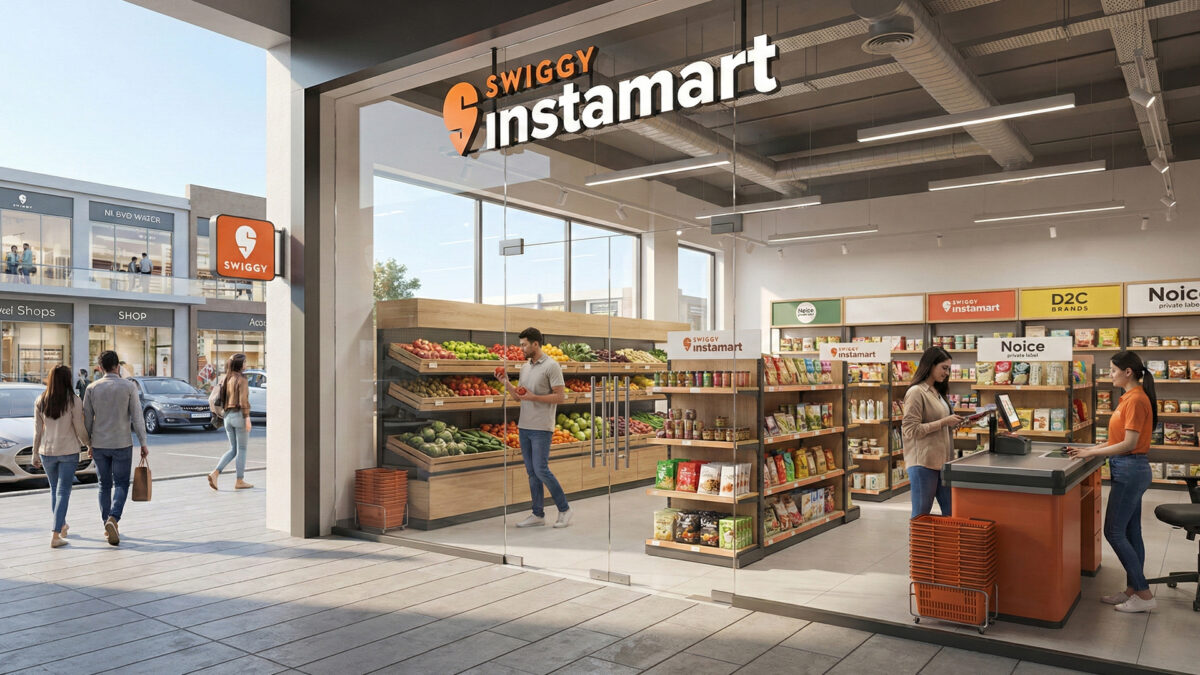
The biggest positive development came from Instamart, Swiggy’s quick-commerce business. The company said the vertical achieved contribution breakeven during the quarter, an important milestone in its effort to make the business financially sustainable.

Instamart’s Gross Order Value, or GOV, rose 39.8% year-on-year to ₹7,907 crore. Its contribution margin improved to negative 0.2%, a 440-basis-point improvement from the year-ago period. Instamart’s adjusted EBITDA loss also declined by ₹80 crore sequentially.

For Swiggy, this is an important shift. Quick commerce has been one of the biggest sources of losses for the company as it raced to add dark stores and compete with rivals in the fast-growing online grocery and convenience market. Reaching contribution breakeven means the business is now covering its variable costs at the contribution level, although it has not yet become fully profitable.

Swiggy management believes the next phase of Instamart’s growth will come from a wider and more differentiated product assortment, along with efficiencies created by increasing scale. Managing Director and Group CEO Sriharsha Majety said the contribution-breakeven milestone marked an important inflection point for the business.

The company’s traditional food delivery business also continued to perform well. Food delivery GOV increased 17.4% year-on-year to ₹9,490 crore during the quarter. Adjusted EBITDA from the segment stood at ₹292 crore, an improvement of ₹100 crore from the year-ago period.

Swiggy said its food delivery economics continued to strengthen as it worked on affordability and consumer-focused offerings. The company is also looking to expand adoption and reach what Majety described as the next 100 million users in the category.

Segment revenue data also underline the broad-based nature of the growth. Food delivery revenue rose 22.67% year-on-year to ₹2,208 crore, while quick-commerce revenue jumped 52.85% to ₹1,232 crore. Supply Chain and Distribution revenue increased 41.43% to ₹3,195 crore. Revenue from Out-of-Home Consumption rose 63.64% to ₹126 crore.

The Out-of-Home business, which includes dining and related experiences, also remained profitable. Its GOV grew 44.8% year-on-year, while its adjusted EBITDA margin improved to 0.9% of GOV.

Another initiative, Toing, Swiggy’s budget-focused food delivery offering, expanded to 50 cities. The company said around two-thirds of new users coming through the platform were first-time customers in the category, suggesting that affordability-focused offerings could help Swiggy reach a wider consumer base.

Despite the improved earnings, investors have not completely bought into the story yet. Swiggy shares initially responded positively to the results, closing about 3% higher at ₹293.80 on July 30. However, the stock came under pressure in Friday’s trading session, falling more than 3% during the day.

Swiggy’s Q1 FY27 results therefore offer a mixed but encouraging picture. Food delivery continues to generate healthy economics, Instamart is showing signs of maturing, and overall losses are narrowing. The challenge now is to turn these improvements into consistent profitability without sacrificing growth in India’s fiercely competitive food delivery and quick-commerce markets.

For investors, the coming quarters will be important. The focus is likely to remain on Instamart’s path towards EBITDA profitability, food delivery margins, customer growth and whether Swiggy can maintain strong revenue growth while keeping costs under control. For now, the latest results suggest the company is moving in the right direction, but the journey to sustained profits is not over yet.

Categories
Beyond

Bengaluru restaurants warn Swiggy, Zomato

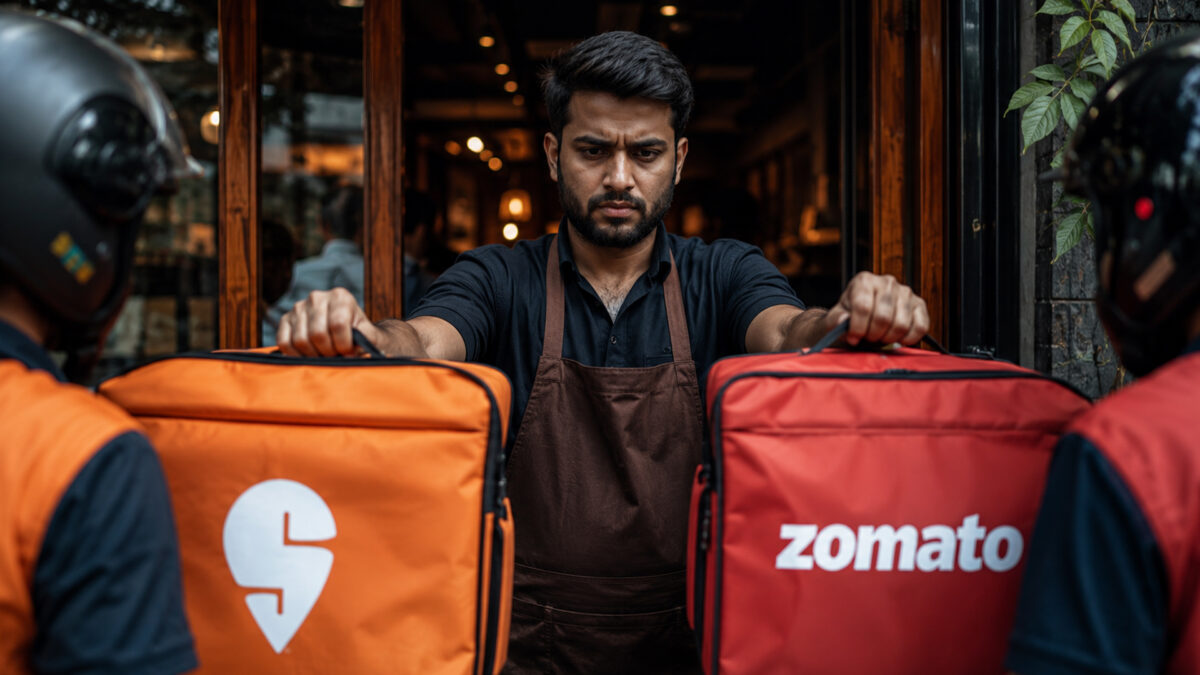
Bengaluru’s restaurant industry is preparing for a possible showdown with food delivery giants Swiggy and Zomato. Restaurant owners have warned that they could stop accepting orders through the two platforms from August 15 unless their concerns over high commissions and other charges are addressed.

The warning comes after months of discussions between restaurant representatives and the food delivery companies. The Bangalore Hotels Association (BHA) has said the talks have not produced the changes restaurants are looking for. It has now given Swiggy and Zomato a deadline to respond to their demands.

For restaurants, the biggest concern is the amount of money that disappears from every online order before the final payment reaches them. While commissions can typically be in the 15% to 30% range, restaurant owners say the actual deduction can become much higher once taxes, promotional costs, advertising expenses and other charges are included.

This has become a major issue for restaurants operating on already tight margins. An order may generate good revenue on paper, but the restaurant still has to pay for ingredients, kitchen staff, rent, electricity, packaging and other expenses. After platform-related deductions, owners say there is often very little left as profit.

Restaurant owners are also questioning the way discounts are handled on food delivery apps. They argue that restaurants are sometimes expected to bear part of the cost of promotional offers, even when the discounts are designed to attract customers to the platform.

The restaurant industry wants greater transparency over these deductions. Owners are seeking detailed settlement statements that clearly explain how much has been charged for commissions, advertising, promotions, taxes and other services.

Another major concern is the treatment of cancelled orders and customer complaints. Restaurants say they can suffer losses when food has already been prepared but an order is cancelled. They want clearer rules and compensation in cases where the restaurant has incurred the cost of preparing the meal.

Restaurant associations are also asking platforms to ensure that promotional campaigns are voluntary. They want restaurants to have a simple way to opt out of discounts and advertising programmes instead of being automatically included.

The issue has been building for several years. Restaurant owners have repeatedly argued that their dependence on large food delivery platforms has reduced their bargaining power. At the same time, restaurants cannot easily leave these platforms because Swiggy and Zomato provide access to millions of customers.

That dependence is at the heart of the current dispute. For a small restaurant, being listed on a food delivery app can bring in customers who may never visit the outlet physically. But the same platform can also take a significant share of the order value.

The Bangalore Hotels Association estimates that Bengaluru has around 34,000 hotels and restaurants, with nearly 20,000 using online food delivery platforms. If a large number of establishments participate in the proposed boycott, customers could see fewer restaurants available on Swiggy and Zomato from August 15.

The National Restaurant Association of India (NRAI) has supported the concerns raised by Bengaluru’s restaurant community. However, the wider industry body has also stressed the importance of dialogue and finding a workable solution rather than allowing the dispute to escalate.

Restaurant owners insist that the proposed boycott is not necessarily an attempt to permanently sever ties with Swiggy and Zomato. Instead, they want to push for what they describe as a more sustainable relationship between restaurants and food delivery platforms.

The financial pressure on restaurants has become more noticeable as operating costs have increased. Ingredients, wages, rent, electricity and packaging expenses have all become important components of a restaurant’s cost structure. Owners argue that high platform commissions make it increasingly difficult to absorb these expenses without raising menu prices.

Customers can also feel the impact. Prices on delivery apps are often higher than those offered directly at restaurants, partly because businesses need to account for delivery commissions and other platform costs. A prolonged dispute could therefore affect not only restaurants and delivery companies but also consumers.

The growing competition in the food delivery space could give restaurants more alternatives. Rapido-backed Ownly has entered the market with a zero-commission approach for restaurants, while several businesses are also exploring the Open Network for Digital Commerce, or ONDC.

For Swiggy and Zomato, restaurant partners remain an essential part of the business. But running large delivery networks involves technology, logistics, customer support and marketing costs. The companies therefore have to balance restaurant demands with the economics of operating their platforms.

The next few weeks will be important for both sides. If Swiggy, Zomato and restaurant associations manage to reach an agreement, the August 15 boycott could be avoided. If discussions fail, Bengaluru could witness a significant disruption in online food ordering.

The dispute ultimately comes down to the economics of a single food order. Restaurants want a larger share of the money they earn, while delivery platforms need enough revenue to maintain their technology and delivery networks. Finding a middle ground will be crucial if both sides want the online food delivery business to continue growing.

For Bengaluru’s restaurants, the message is clear: access to customers matters, but so does profitability. With August 15 approaching, the focus is now on whether the two sides can find common ground before the threatened boycott becomes reality.

Categories
Corporate

Swiggy, HPCL roll out LPG service

Swiggy Instamart has partnered with Hindustan Petroleum Corporation Ltd. (HPCL) to introduce India’s first on-demand LPG cylinder delivery service through a quick-commerce platform. The pilot project has been launched in Bengaluru, allowing customers to order 5kg and 10kg LPG cylinders for doorstep delivery in just a few clicks.

The service is aimed at making cooking gas more accessible, especially for households, students, working professionals and small businesses that need smaller LPG cylinders at short notice. Customers can place orders through the Swiggy Instamart app, just as they would for groceries or daily essentials.

The initiative marks a new step in India’s growing quick-commerce sector, which has expanded beyond groceries to include medicines, electronics and now cooking gas. By adding LPG cylinders to its offerings, Swiggy hopes to provide greater convenience to urban consumers who increasingly rely on app-based deliveries.

Initially, the service will be available only in selected parts of Bengaluru as part of a pilot programme. Based on customer response and operational performance, the companies may consider expanding it to other cities in the future.

HPCL said the partnership combines its fuel distribution network with Swiggy Instamart’s fast delivery infrastructure, making it easier for customers to access LPG cylinders when needed. The companies added that all deliveries will comply with safety guidelines and regulatory requirements.

Also Read: Patanjali Foods shares sink 19% in trade

Categories
1 Minute-Read

Swiggy, Zepto move court against gig workers law

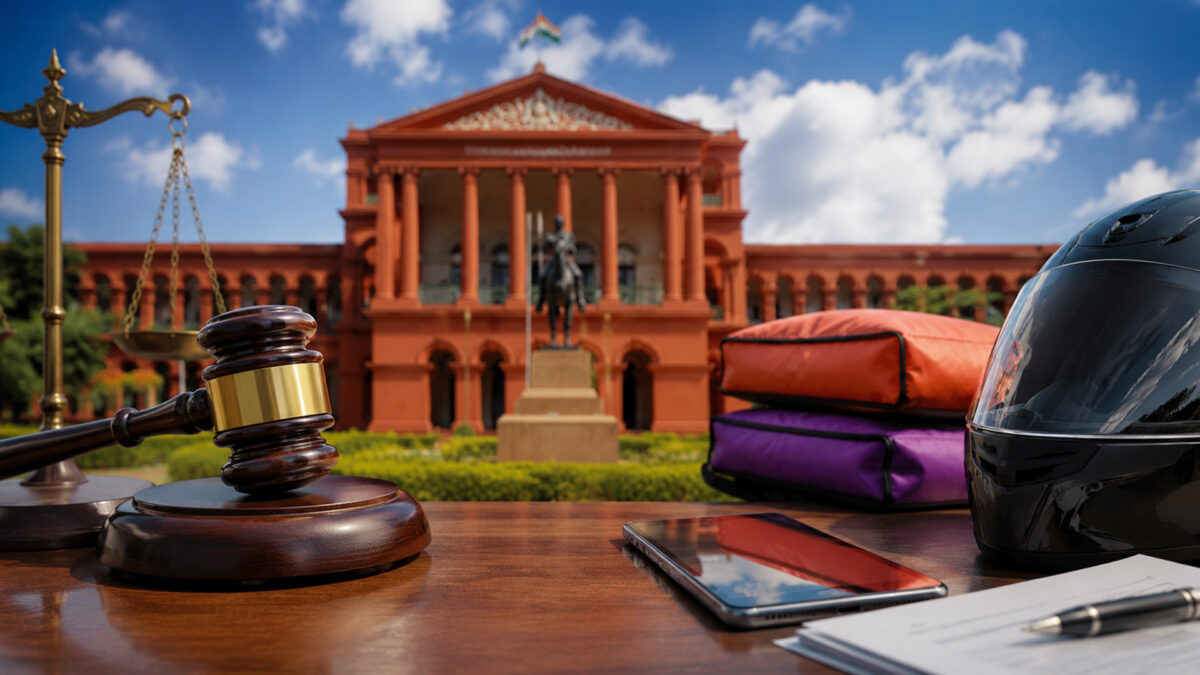
Food delivery and quick-commerce platforms, including Swiggy and Zepto, have approached the Karnataka High Court challenging the Karnataka Platform-based Gig Workers (Social Security and Welfare) Act, 2025.

The companies argue that the law imposes an excessive financial and compliance burden while raising constitutional concerns over certain provisions. They have sought a stay on the Act’s implementation, claiming it could impact business operations.

The legislation aims to provide social security benefits, including welfare measures, for gig workers. The High Court is expected to hear the petitions in the coming days.

Categories
Corporate

Swiggy Q4 loss narrows to ₹800 cr

Swiggy posted strong fourth-quarter results for FY26, reporting higher revenue and lower losses as demand for online food delivery and quick commerce services remained strong.

The company’s net loss narrowed to ₹800 crore during the January–March quarter, compared to ₹1,081 crore a year earlier. Revenue from operations rose 45% year-on-year to ₹6,383 crore, reflecting strong growth across its businesses.

Swiggy said both its food delivery platform and Instamart contributed significantly to the improved performance. The company witnessed higher order volumes, more active users and increased customer spending during the quarter.

Instamart, Swiggy’s quick commerce arm, remained one of the biggest growth drivers. The service, which delivers groceries and essentials within minutes, continued expanding into more cities and neighbourhoods as consumer demand for instant delivery increased.

The company also focused on improving efficiency and reducing operational losses. Swiggy said better cost management and improved margins in food delivery helped narrow losses during the quarter.

CEO Sriharsha Majety said the company is seeing healthy growth while continuing to invest in technology, logistics and expansion. He added that Swiggy remains focused on building a sustainable long-term business.

India’s quick commerce market has become highly competitive, with companies like Blinkit, Zepto and Flipkart increasing investments and expanding their delivery networks aggressively. Analysts say companies are now under pressure not only to grow quickly but also to improve profitability.

Also Read: ₹30,000 cr blow to state-run oil firms in India

Categories
Corporate

Swiggy Q3 loss widens to ₹1,065 cr despite 54% revenue growth

Food delivery and quick-commerce platform Swiggy reported a consolidated net loss of ₹1,065 crore in the third quarter (Q3) of FY26, up 33% from ₹799 crore in the same period last year. The widening losses reflect heavy spending on expansion, marketing, and operational costs, even as the company’s revenue showed strong growth.

Swiggy’s revenue from operations jumped 54% year-on-year to ₹6,148 crore, compared with ₹3,993 crore in Q3 FY25. Sequentially, revenue also increased from ₹5,561 crore in the previous quarter, signaling robust demand across its services.

The food delivery business remained the main revenue driver. Its gross order value (GOV) grew 20.5% YoY to ₹8,959 crore, marking the fastest growth for this segment in three years. Monthly transacting users rose 22% to 18.1 million, showing sustained consumer adoption. Margins improved modestly, with adjusted EBITDA for food delivery reaching about 3% of GOV, the highest in two years.

Swiggy’s Instamart quick-commerce division also posted strong growth, with GOV more than doubling to ₹7,938 crore. The network expanded to 1,136 dark stores across 131 cities, adding 34 new stores in the quarter. Average order value increased 40% YoY to ₹746, driven by higher demand for groceries and other essentials. However, Instamart continues to operate at a loss, contributing to the overall widening net loss.

Also Read: Apple earnings soar as iPhone sales jump in China

Categories
Corporate

Swiggy’s Instamart opens first mini-offline store in Gurugram

Swiggy’s quick-commerce platform, Instamart, is trying something new. For the first time, it has opened a small offline store in Gurugram, giving customers a chance to browse and pick products in person rather than just ordering through the app. The store is located at M3M 65th Avenue and is about 400 square feet, much smaller than Instamart’s usual dark stores that stock thousands of items.

The offline store carries a limited selection of 100–200 products, focusing on items that people often like to check physically before buying, fresh fruits and vegetables, daily essentials, new product launches, private-label items, and select D2C brands. Customers can see the quality, compare products, and get a feel for them before deciding to purchase.

Unlike traditional retail stores, this outlet is seller-operated under the Instamart brand. This means sellers directly receive the sales proceeds, instead of money going through the app’s usual transaction process. It also helps Swiggy test the concept without heavy operational investment.

The move comes at a time when India’s quick commerce sector is evolving. Companies like Instamart have grown popular for ultra-fast deliveries, but now they are exploring ways to build stronger connections with customers. By opening an offline store, Instamart aims to combine the convenience of online shopping with the trust and experience of physical retail.

For now, this is just a pilot store, and there’s no plan to open many more immediately. Swiggy will see how customers respond before deciding the next steps. If successful, more experience stores could appear, offering a unique way to shop while still enjoying the speed and convenience of quick commerce.

Categories
Corporate

Swiggy raises ₹10,000 crore through fresh share sale

Swiggy, India’s leading food and grocery delivery platform, has kicked off a ₹10,000 crore Qualified Institutional Placement (QIP) to raise funds from institutional investors. The floor price for the shares is set at ₹390.51, and reports indicate that investor demand is already strong, with the subscription book fully covered.

The company is offering 269.5 million new shares, roughly 10.8% of its pre‑issue equity base. This is Swiggy’s first major capital-raising effort since its IPO in November 2024, which raised around ₹11,327 crore. Analysts say the fresh capital gives the company the firepower to scale operations and strengthen its foothold in India’s competitive food-tech market.

Swiggy plans to channel the funds into expanding its delivery network, upgrading technology systems, and boosting its quick-commerce services, including groceries and essentials. The company has already been investing in warehouses and dark stores nationwide to ensure faster, more reliable deliveries. The QIP also gives Swiggy financial flexibility for strategic initiatives, including potential acquisitions.

The strong response from domestic and international institutional investors signals confidence in Swiggy’s growth strategy. Industry experts see the move as a vote of trust in the company’s ability to capture a larger share of India’s booming online food and grocery delivery market.

Facing competition from rivals like Zomato and Dunzo, Swiggy’s diversified services and quick-commerce focus provide a clear edge. With this infusion, the company aims to improve efficiency, expand coverage, and innovate further in the digital delivery space.

This QIP marks a key milestone, reinforcing Swiggy’s position as a market leader and preparing it to meet the rising demand for online food and grocery deliveries across India.

Also Read: Hinge CEO steps down to lead new AI dating app