
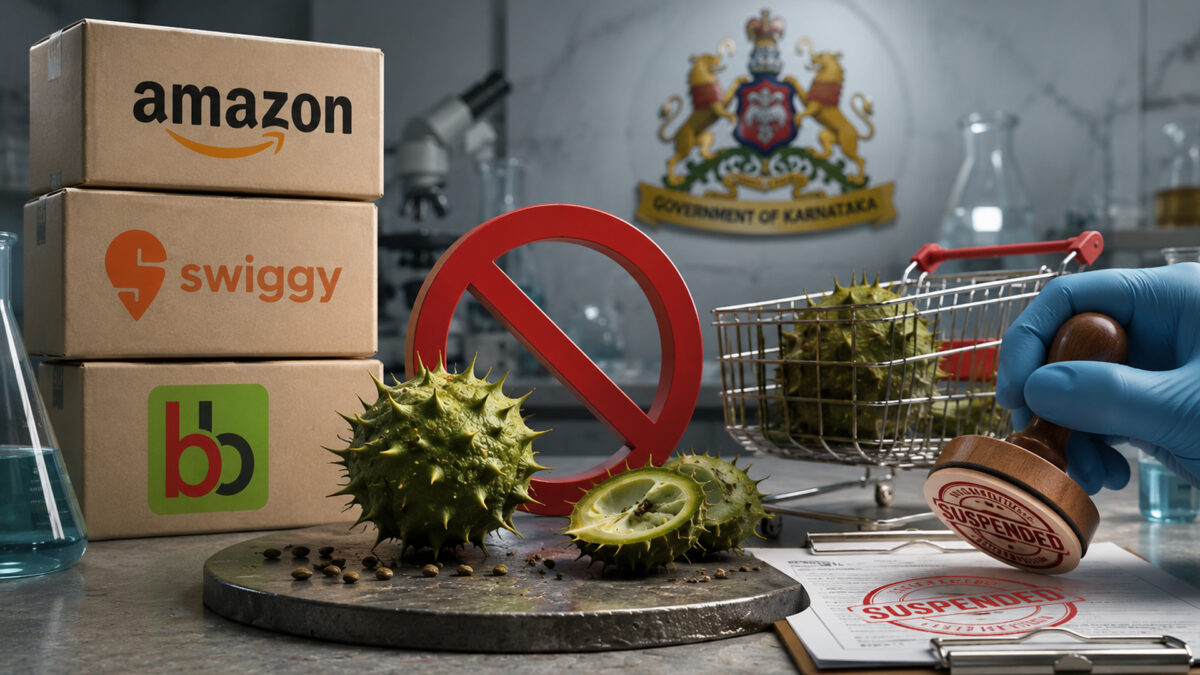
The Karnataka government has suspended the food licences and registrations of Amazon, Swiggy Instamart and BigBasket after toxic Datura fruits and seeds were found being sold through their online platforms as food products. The action, taken by the Karnataka Food Safety and Drugs Administration (KFSDA), will remain in force until further orders.
The department has also ordered immediate action against the suppliers and sellers who provided Datura products to the three e-commerce platforms. Their food licences and registrations have also been ordered to be suspended.
The crackdown follows inspections by food safety officials, who found Datura fruits and seeds being stored, packed and offered for sale through online platforms. In some cases, the products were found carrying Food Safety and Standards Authority of India (FSSAI) licence or registration numbers, raising concerns over how a poisonous plant came to be listed and handled as a food product.
Datura, also known as Dhatura or thorn apple, is a poisonous plant. Its fruits and seeds contain toxic compounds that can cause serious health problems if consumed. Depending on the amount ingested, poisoning can affect the nervous system and heart and may become life-threatening. The Karnataka food safety department said the nature of the plant made its sale, distribution or promotion for human consumption a serious public health concern.
The issue came to the authorities’ attention after complaints and subsequent inspections revealed that Datura products were being offered online. Officials found packets containing the fruits and seeds in warehouses, with some carrying food-related licence or registration details. The products were then being sold or distributed through e-commerce channels.
The department subsequently initiated proceedings against the companies and sought explanations from the platforms. Representatives of the companies appeared before the authority during the hearing on August 24.
According to the proceedings, Amazon did not submit a response to the notice. Swiggy Instamart sought additional time to provide documents explaining the action it had taken after the department raised the issue. BigBasket, meanwhile, told the authority that it had stopped selling the Datura products. The company also said it would change the labelling to clearly indicate that the products were “not for human consumption”.
The regulator, however, was not satisfied with the explanations. Given the poisonous nature of Datura and the potential risk to consumers, it concluded that the products could not be treated as food items or sold through food channels.
The latest order directs the three platforms and other concerned food business operators to immediately remove or suspend every online listing, advertisement and promotional material relating to Datura fruits and seeds when offered for food or human consumption. They have also been instructed to stop selling, distributing, displaying or promoting the products as food in the future.
The action is based on provisions of the Food Safety and Standards Act, 2006, along with the relevant food safety rules and regulations. The Karnataka Food Safety and Drugs Administration has directed the concerned authorities to submit compliance reports without delay.
The suspension does not necessarily mean the action is permanent. The department has said the question of revoking the suspension will be considered separately after compliance reports are received and the concerned companies are given an opportunity to present their case. The platforms will therefore have to demonstrate that they have complied with the directions and addressed the food safety concerns raised by the regulator.
The order also widens the regulatory action beyond the large e-commerce companies. Suppliers, vendors and establishments linked to the Datura listings have been brought under scrutiny, with their food licences and registrations also facing suspension.
The episode has highlighted a growing challenge for online grocery and quick-commerce platforms, where thousands of products can be listed and delivered with little physical interaction between sellers and consumers. While platforms generally rely on seller networks and product catalogues, the Karnataka action underlines that food safety responsibilities do not end with the seller.