Categories
Corporate

Swiggy shares sink as brokerages cut Q2 targets

Swiggy shares came under heavy selling pressure on Friday, October 23, after the food delivery and quick-commerce company reported its September-quarter results, prompting brokerages to lower their target prices. Although the company recorded strong revenue growth and narrowed its net loss compared with a year earlier, rising losses in its Instamart business and concerns about competition weighed on investor sentiment.

The stock fell as much as 15% during the session, touching a fresh 52-week low of around Rs 179.70 on the BSE and hitting the lower circuit. The sharp decline reflected investors’ concerns about how long Swiggy may take to achieve sustainable profitability, particularly in quick commerce.

The market reaction also showed that revenue growth alone may not be enough to reassure investors when operating losses remain high and rivals continue to expand aggressively.

Swiggy reported a consolidated net loss of Rs 922 crore for the July-September quarter of FY27, compared with Rs 1,092 crore in the corresponding period last year. However, the loss widened from Rs 792 crore in the June quarter.

Revenue from operations increased 36.1% year-on-year to Rs 7,571 crore from Rs 5,561 crore in the year-ago period. The company’s total expenses also rose to Rs 8,703 crore from Rs 6,711 crore a year earlier.

The results presented a mixed picture. Swiggy continued to expand its business, but higher costs and losses in quick commerce raised questions about how quickly that growth could translate into better financial performance.

Its consolidated adjusted EBITDA loss widened to Rs 760 crore from Rs 695 crore in the corresponding quarter last year. Adjusted EBITDA is a measure of operating performance that excludes certain expenses and adjustments.

Instamart remains central to the debate around Swiggy’s profitability. The quick-commerce platform is expanding its customer base and order volumes, but that growth comes with significant spending on dark stores, delivery operations, product availability and customer acquisition.

Instamart’s gross order value rose 31.4% year-on-year to Rs 9,230 crore in the September quarter. Its net order value increased 13.4% sequentially to Rs 6,954 crore.

The company added 69 dark stores during the quarter, taking its total network to 1,240. Expanding this network can improve delivery coverage and help Swiggy serve more customers, but it also adds to operating costs.

Instamart’s adjusted EBITDA loss widened to Rs 895 crore from Rs 849 crore a year earlier and Rs 778 crore in the June quarter. The sequential increase in losses was a key reason investors questioned the pace of the business’s turnaround.

Competition is another challenge. Blinkit, operated by Eternal, and Zepto are competing for customers through wider product selection, rapid delivery and investments in their store networks. Investors are watching whether Instamart can grow quickly enough to improve its economics without requiring prolonged heavy spending.

Several brokerages reduced their Swiggy share price targets following the results, although most remained positive about the company’s longer-term prospects.

Jefferies retained its Buy rating but cut its target price to Rs 330. It said the widening quick-commerce losses remained a key concern and that reducing these losses would be important for unlocking value. The brokerage also argued that Swiggy’s current share price did not fully reflect the value of its food delivery business and cash holdings.

Nomura maintained its Buy rating but reduced its target price to Rs 300 from Rs 435. It expects competition and reinvestment by rivals to limit margin expansion over the next 12 months. The brokerage continues to view food delivery as a cash-generating business but remains cautious about the company’s overall earnings outlook.

Bernstein retained its Outperform rating while cutting its target price to Rs 350 from Rs 430. It highlighted slower growth in Swiggy’s core food delivery business compared with rival Eternal and concerns about Instamart’s path to profitability. Bernstein also pointed to Toing, Swiggy’s affordable-meal offering, as a factor affecting reported growth in the core food delivery business.

Motilal Oswal lowered its target price to Rs 280, citing weaker-than-expected quick-commerce growth and an extended period before Instamart can achieve profitability. Elara Capital, meanwhile, upgraded Swiggy to Buy from Accumulate but reduced its target price to Rs 300 from Rs 350.

The differing recommendations indicate that analysts continue to see value in Swiggy’s established food delivery business, even as they reassess the costs and growth assumptions attached to quick commerce.

Swiggy’s next challenge is to demonstrate that expanding order volumes can lead to better margins and lower cash burn. Investors will closely track Instamart’s losses, the pace of dark-store expansion and food delivery growth in the coming quarters.

For now, the company’s strong revenue growth offers a positive sign, but the widening quarterly loss and mounting competitive pressure remain significant concerns. A clearer path towards quick-commerce profitability will be crucial if Swiggy is to rebuild investor confidence and support a recovery in its share price.
 

Categories
1 Minute-Read

Karnataka halts e-commerce food licences over Datura sales

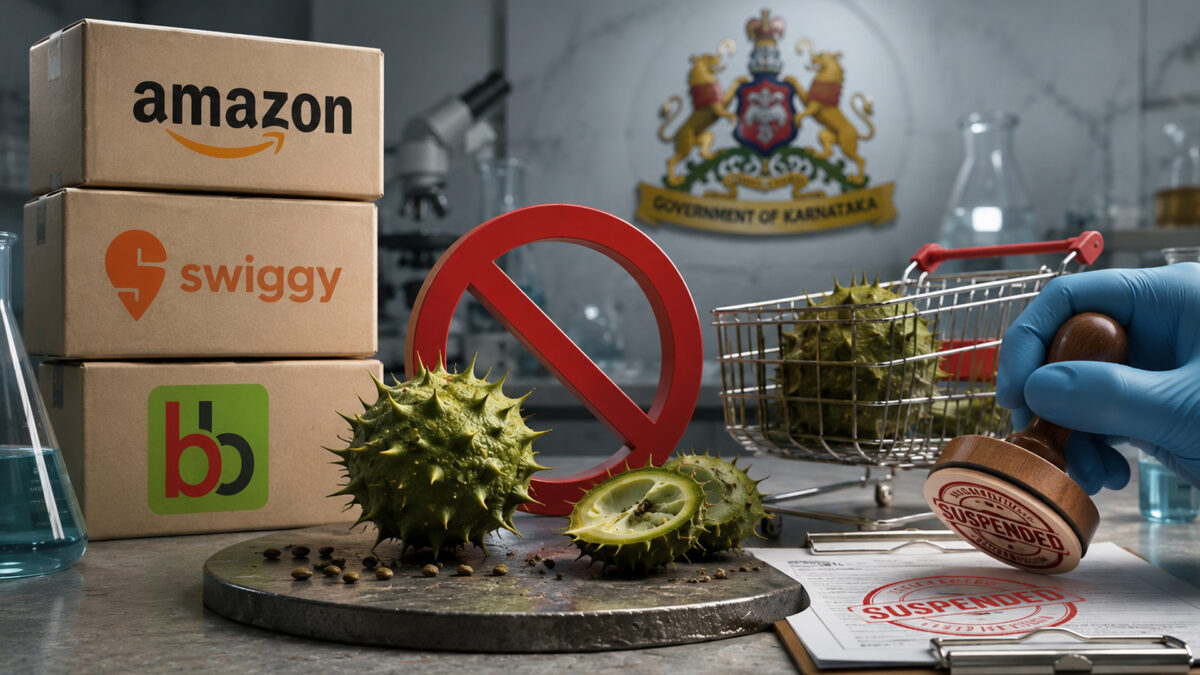
Karnataka has suspended the food licences of Amazon, Swiggy Instamart and BigBasket after Datura fruits and seeds were found listed as food products on their platforms.

The Karnataka Food Safety and Drugs Administration also ordered action against suppliers involved in the sales. Officials said Datura is poisonous and can cause serious health complications if consumed.

The companies have been directed to remove all Datura listings, advertisements and promotional material and stop selling the products as food. The regulator will review the suspension after receiving compliance reports from the companies.

Read More

Categories
Beyond

Karnataka cracks down on toxic Datura sales online

The Karnataka government has suspended the food licences and registrations of Amazon, Swiggy Instamart and BigBasket after toxic Datura fruits and seeds were found being sold through their online platforms as food products. The action, taken by the Karnataka Food Safety and Drugs Administration (KFSDA), will remain in force until further orders.

The department has also ordered immediate action against the suppliers and sellers who provided Datura products to the three e-commerce platforms. Their food licences and registrations have also been ordered to be suspended.

The crackdown follows inspections by food safety officials, who found Datura fruits and seeds being stored, packed and offered for sale through online platforms. In some cases, the products were found carrying Food Safety and Standards Authority of India (FSSAI) licence or registration numbers, raising concerns over how a poisonous plant came to be listed and handled as a food product.

Datura, also known as Dhatura or thorn apple, is a poisonous plant. Its fruits and seeds contain toxic compounds that can cause serious health problems if consumed. Depending on the amount ingested, poisoning can affect the nervous system and heart and may become life-threatening. The Karnataka food safety department said the nature of the plant made its sale, distribution or promotion for human consumption a serious public health concern.

The issue came to the authorities’ attention after complaints and subsequent inspections revealed that Datura products were being offered online. Officials found packets containing the fruits and seeds in warehouses, with some carrying food-related licence or registration details. The products were then being sold or distributed through e-commerce channels.

The department subsequently initiated proceedings against the companies and sought explanations from the platforms. Representatives of the companies appeared before the authority during the hearing on August 24.

According to the proceedings, Amazon did not submit a response to the notice. Swiggy Instamart sought additional time to provide documents explaining the action it had taken after the department raised the issue. BigBasket, meanwhile, told the authority that it had stopped selling the Datura products. The company also said it would change the labelling to clearly indicate that the products were “not for human consumption”.

The regulator, however, was not satisfied with the explanations. Given the poisonous nature of Datura and the potential risk to consumers, it concluded that the products could not be treated as food items or sold through food channels.

The latest order directs the three platforms and other concerned food business operators to immediately remove or suspend every online listing, advertisement and promotional material relating to Datura fruits and seeds when offered for food or human consumption. They have also been instructed to stop selling, distributing, displaying or promoting the products as food in the future.

The action is based on provisions of the Food Safety and Standards Act, 2006, along with the relevant food safety rules and regulations. The Karnataka Food Safety and Drugs Administration has directed the concerned authorities to submit compliance reports without delay.

The suspension does not necessarily mean the action is permanent. The department has said the question of revoking the suspension will be considered separately after compliance reports are received and the concerned companies are given an opportunity to present their case. The platforms will therefore have to demonstrate that they have complied with the directions and addressed the food safety concerns raised by the regulator.

The order also widens the regulatory action beyond the large e-commerce companies. Suppliers, vendors and establishments linked to the Datura listings have been brought under scrutiny, with their food licences and registrations also facing suspension.

The episode has highlighted a growing challenge for online grocery and quick-commerce platforms, where thousands of products can be listed and delivered with little physical interaction between sellers and consumers. While platforms generally rely on seller networks and product catalogues, the Karnataka action underlines that food safety responsibilities do not end with the seller.


Categories
Corporate

Swiggy’s Instamart opens first mini-offline store in Gurugram

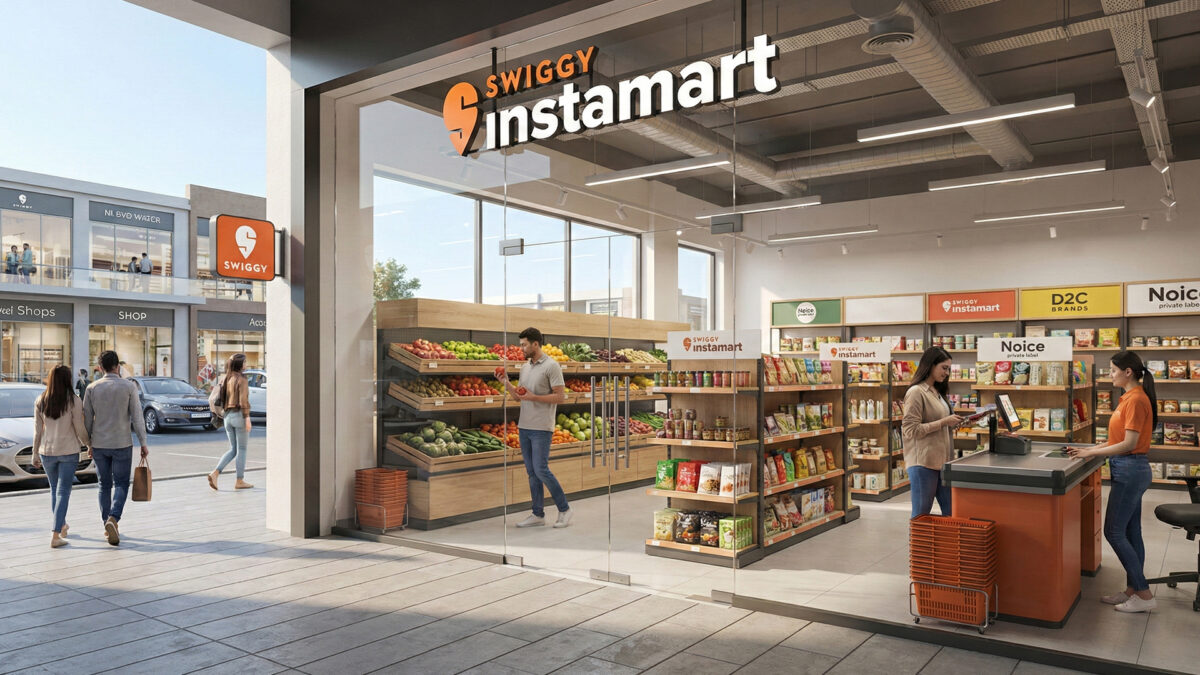
Swiggy’s quick-commerce platform, Instamart, is trying something new. For the first time, it has opened a small offline store in Gurugram, giving customers a chance to browse and pick products in person rather than just ordering through the app. The store is located at M3M 65th Avenue and is about 400 square feet, much smaller than Instamart’s usual dark stores that stock thousands of items.

The offline store carries a limited selection of 100–200 products, focusing on items that people often like to check physically before buying, fresh fruits and vegetables, daily essentials, new product launches, private-label items, and select D2C brands. Customers can see the quality, compare products, and get a feel for them before deciding to purchase.

Unlike traditional retail stores, this outlet is seller-operated under the Instamart brand. This means sellers directly receive the sales proceeds, instead of money going through the app’s usual transaction process. It also helps Swiggy test the concept without heavy operational investment.

The move comes at a time when India’s quick commerce sector is evolving. Companies like Instamart have grown popular for ultra-fast deliveries, but now they are exploring ways to build stronger connections with customers. By opening an offline store, Instamart aims to combine the convenience of online shopping with the trust and experience of physical retail.

For now, this is just a pilot store, and there’s no plan to open many more immediately. Swiggy will see how customers respond before deciding the next steps. If successful, more experience stores could appear, offering a unique way to shop while still enjoying the speed and convenience of quick commerce.