Categories
Leaders

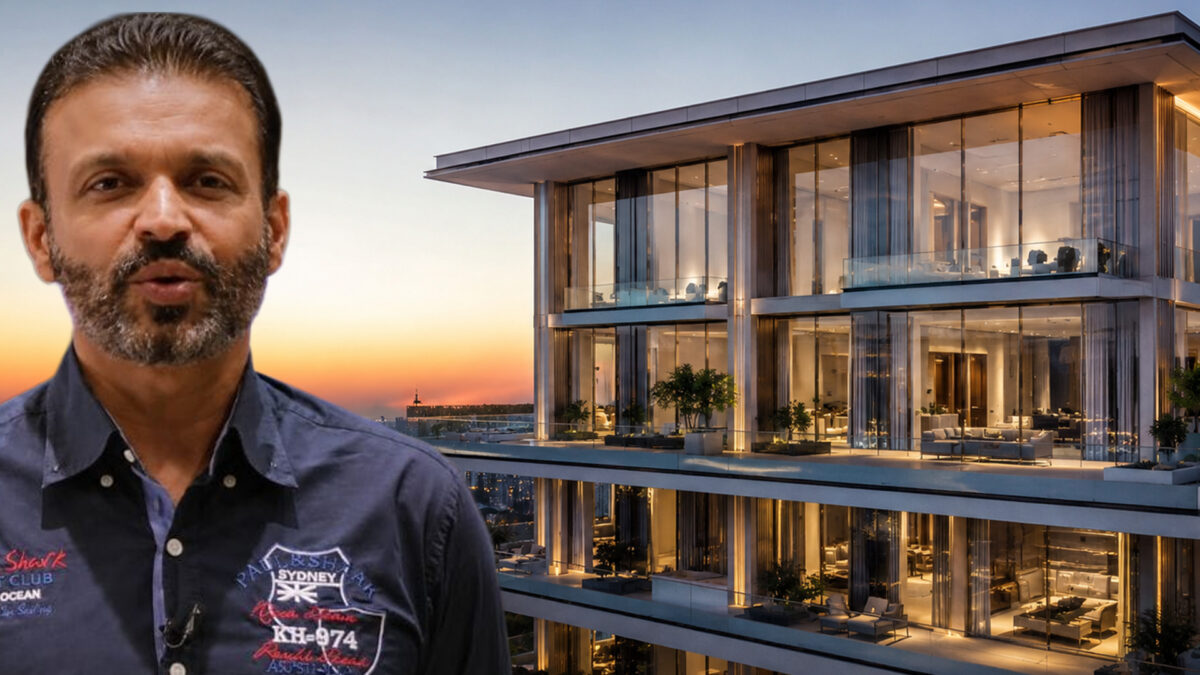
Manav Sardana buys Rs 271 cr DLF penthouse

Entrepreneur Manav Sardana has bought a penthouse at DLF’s The Dahlias in Gurugram for ₹271 crore, making it one of the most expensive residential property deals reported in India and setting a new benchmark for the luxury project.

The transaction involves a penthouse spread across about 17,200 square feet of super area, with a carpet area of nearly 10,500 square feet. The deal translates to roughly ₹1.58 lakh per square foot on a super-area basis and about ₹2.6 lakh per square foot based on carpet area.

The purchase was registered in Gurugram and has brought fresh attention to the rapid growth of the city’s ultra-luxury housing market.

Sardana is associated with the automotive components industry and comes from a business family with a long history in manufacturing. His father, SB Sardana, co-founded Imperial Auto Industries with Jagjit Singh in 1969.

Imperial Auto developed into a major manufacturer of automotive components, supplying products to vehicle manufacturers and other customers. The company later attracted investment from global private equity firm Warburg Pincus.

Sardana’s business background is significant because his wealth comes from an established manufacturing enterprise rather than the technology or consumer sectors that have produced many of India’s newer wealthy entrepreneurs.

His latest purchase puts him among the growing number of high-net-worth individuals investing heavily in premium residential real estate.

The property is part of The Dahlias, DLF’s super-luxury residential development in DLF Phase 5, one of Gurugram’s most sought-after neighbourhoods. The project was launched in 2024 and is spread across about 17 acres.

The development comprises around 420 apartments and penthouses across multiple towers. It was planned as a more exclusive offering than DLF’s earlier luxury project, The Camellias, which is located nearby.

The Dahlias has attracted several prominent buyers since its launch, with individual apartments commanding prices running into tens of crores. Sardana’s ₹271-crore transaction, however, stands out because of both the size of the residence and the value of the purchase.

The property is significantly larger than a conventional luxury apartment. Its carpet area of around 10,500 square feet provides extensive internal living space, while the larger super-area figure includes additional areas considered under the project’s property calculation.

The transaction comes at a time when Gurugram’s luxury real estate market is experiencing strong demand. The city has developed into a major corporate and commercial centre, with multinational companies, financial firms and technology businesses maintaining large operations across its business districts.

DLF’s premium developments have played a major role in this transformation. The Camellias established a high-end residential market in the area, with several properties changing hands for exceptionally high values.

The Dahlias has taken that positioning further by offering large-format residences with high-end facilities and limited inventory.

Sardana’s purchase illustrates how the top end of India’s housing market is operating differently from the broader residential sector. While most homebuyers remain sensitive to mortgage rates, affordability and property prices, ultra-luxury buyers are often more focused on location, privacy, space, amenities and exclusivity.

Transactions of this scale provide an important indicator of demand among India’s wealthiest households for real estae developers. A single sale worth hundreds of crores can also significantly influence perceptions of a project and its surrounding market.

The deal highlights the widening gap between mainstream housing and the ultra-luxury segment. Properties in this category are increasingly being treated not only as homes but also as long-term assets and symbols of wealth.

Gurugram is also emerging as a stronger competitor to Mumbai in the luxury housing market. Mumbai remains the country’s dominant market for high-value residential transactions, particularly in areas such as South Mumbai and central luxury neighbourhoods.

However, the availability of larger plots and newer developments has allowed Gurugram to offer expansive homes that can be difficult to find in Mumbai.

The transaction could further strengthen the project’s profile among India’s high-net-worth buyers. Luxury developers increasingly rely on a limited pool of affluent customers, making visibility and exclusivity important parts of the sales strategy.

The ₹271-crore penthouse at The Dahlias therefore represents more than an unusually expensive home purchase. It is another sign that Gurugram is becoming an important destination for India’s ultra-wealthy and that the country’s luxury housing market continues to set new price benchmarks at its highest end.

Categories
Leaders

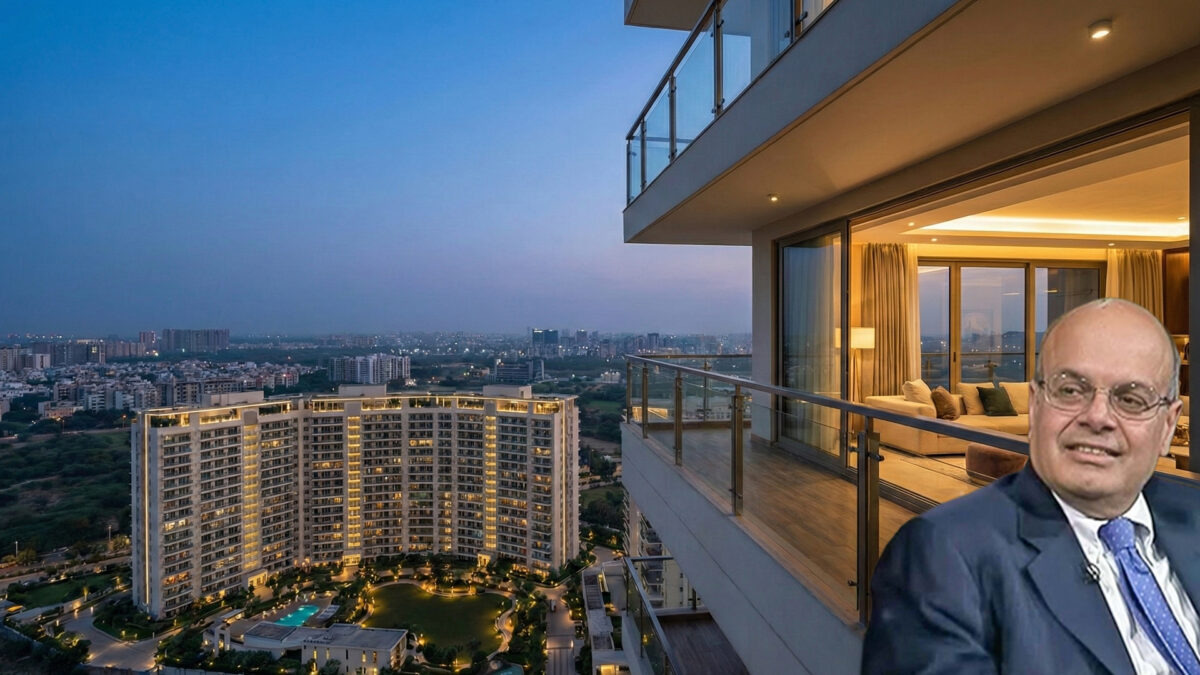
Berkshire Hathaway VC buys ₹85-cr apartment in Gurugram

Ajit Jain, Vice-Chairman of insurance operations at Berkshire Hathaway, has acquired a super-luxury apartment worth around ₹85 crore in Gurugram, in one of the country’s most exclusive residential developments, DLF Camellias.

The apartment, spread across roughly 7,400 square feet, is part of a gated community known for its high-end amenities, privacy and strong security. Sources indicated that Jain was recently in India to complete the transaction. The purchase places him among a growing list of global Indian business leaders and ultra-high-net-worth individuals investing in premium homes in the National Capital Region.

The deal highlights the continued boom in India’s luxury housing segment, particularly in Gurugram, which has emerged as a preferred destination for high-value real estate investments. Industry observers say the city has seen a sharp rise in sales of homes priced above ₹10 crore over the past year, driven by strong demand from top executives, entrepreneurs and non-resident Indians.

Real estate experts note that many wealthy buyers now prefer luxury condominiums in integrated townships over independent houses. Such projects offer managed services, lifestyle facilities, and the convenience of a secure lock-and-leave format for owners who live abroad but visit India periodically.

Non-resident Indians account for a significant share of purchases in projects like The Camellias, with buyers largely coming from the United States, the United Kingdom, Singapore and the Middle East. Apart from lifestyle considerations, these properties are increasingly seen as long-term investments and a base in India amid global economic and geopolitical uncertainties.

Jain is regarded as one of the most influential Indian-origin executives in global finance and a key aide to legendary investor Warren Buffett. An alumnus of IIT Kharagpur and Harvard Business School, he joined Berkshire Hathaway in 1986 and built its reinsurance operations into a major profit centre.

Also Read: Haryana recovers ₹578 cr in IDFC First Bank fraud in 24 hrs

Categories
Beyond

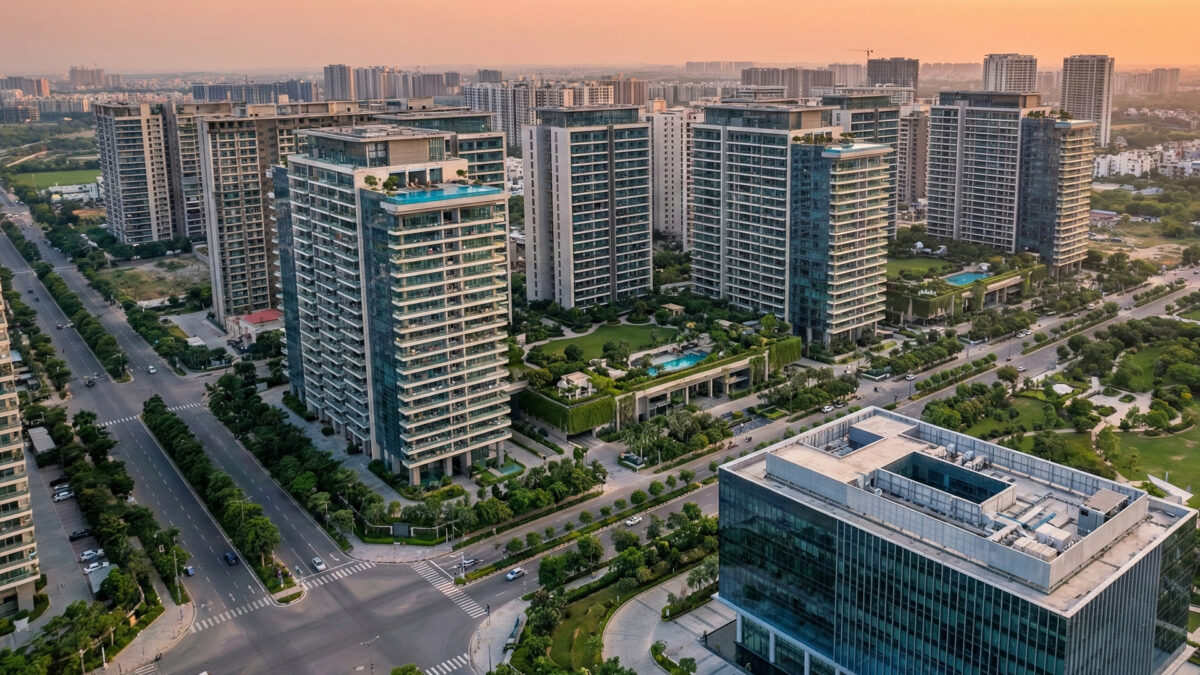
Gurugram tops Mumbai with ₹24,000 cr ultra-luxury home sales

Gurugram has overtaken Mumbai to become India’s largest market for ultra-luxury homes, signalling a major shift in the country’s high-end property landscape. Homes priced at ₹10 crore and above saw record sales in the NCR city in 2025, both in terms of value and the number of units sold.

According to a recent industry report, Gurugram registered sales of around 1,494 ultra-luxury homes worth more than ₹24,000 crore during the year. This pushed it ahead of Mumbai, which has traditionally dominated the premium housing segment. The sharp rise highlights growing demand for spacious, high-end homes among wealthy buyers, including top executives, entrepreneurs and non-resident Indians.

Real estate experts say the trend is being driven by several factors. Gurugram offers larger apartments and villas, modern gated communities, and newer projects with luxury amenities. Compared to Mumbai, buyers also get more space at a relatively lower price per square foot. Improved infrastructure, proximity to Delhi, and the presence of major corporate offices have further boosted the city’s appeal.

Developers have responded with branded residences, penthouses and high-rise luxury projects, many of which were sold even before completion. Strong interest from NRI investors and high-income professionals has helped maintain steady demand despite high property prices.

Mumbai, while moving to second place, continues to see strong traction in its premium micro-markets such as South Mumbai and parts of the western suburbs. However, limited land availability and higher costs have made large luxury developments more challenging compared to Gurugram.

The report notes that the overall ultra-luxury housing segment in India is expanding rapidly, reflecting rising wealth and a post-pandemic preference for bigger, more exclusive homes.

Also Read: Bharti Airtel earmarks ₹20,000 crore for digital lending push

Categories
Corporate

Swiggy’s Instamart opens first mini-offline store in Gurugram

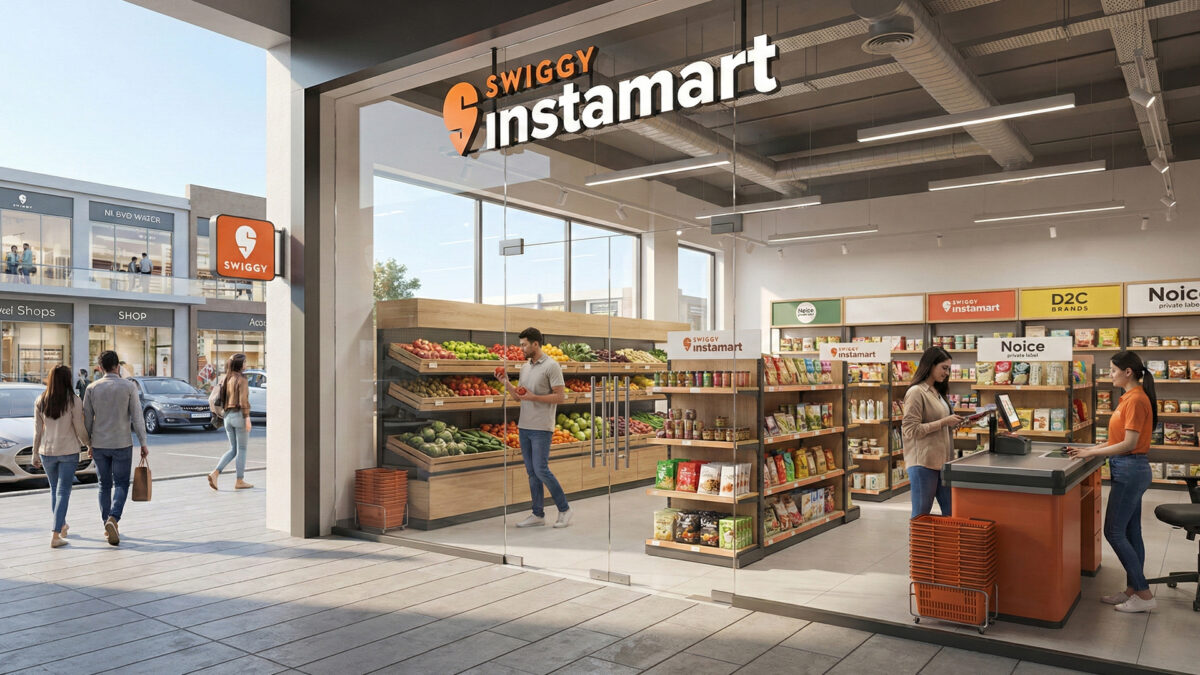
Swiggy’s quick-commerce platform, Instamart, is trying something new. For the first time, it has opened a small offline store in Gurugram, giving customers a chance to browse and pick products in person rather than just ordering through the app. The store is located at M3M 65th Avenue and is about 400 square feet, much smaller than Instamart’s usual dark stores that stock thousands of items.

The offline store carries a limited selection of 100–200 products, focusing on items that people often like to check physically before buying, fresh fruits and vegetables, daily essentials, new product launches, private-label items, and select D2C brands. Customers can see the quality, compare products, and get a feel for them before deciding to purchase.

Unlike traditional retail stores, this outlet is seller-operated under the Instamart brand. This means sellers directly receive the sales proceeds, instead of money going through the app’s usual transaction process. It also helps Swiggy test the concept without heavy operational investment.

The move comes at a time when India’s quick commerce sector is evolving. Companies like Instamart have grown popular for ultra-fast deliveries, but now they are exploring ways to build stronger connections with customers. By opening an offline store, Instamart aims to combine the convenience of online shopping with the trust and experience of physical retail.

For now, this is just a pilot store, and there’s no plan to open many more immediately. Swiggy will see how customers respond before deciding the next steps. If successful, more experience stores could appear, offering a unique way to shop while still enjoying the speed and convenience of quick commerce.