Categories
Beyond

Zomato delists analogue dairy dishes from menu

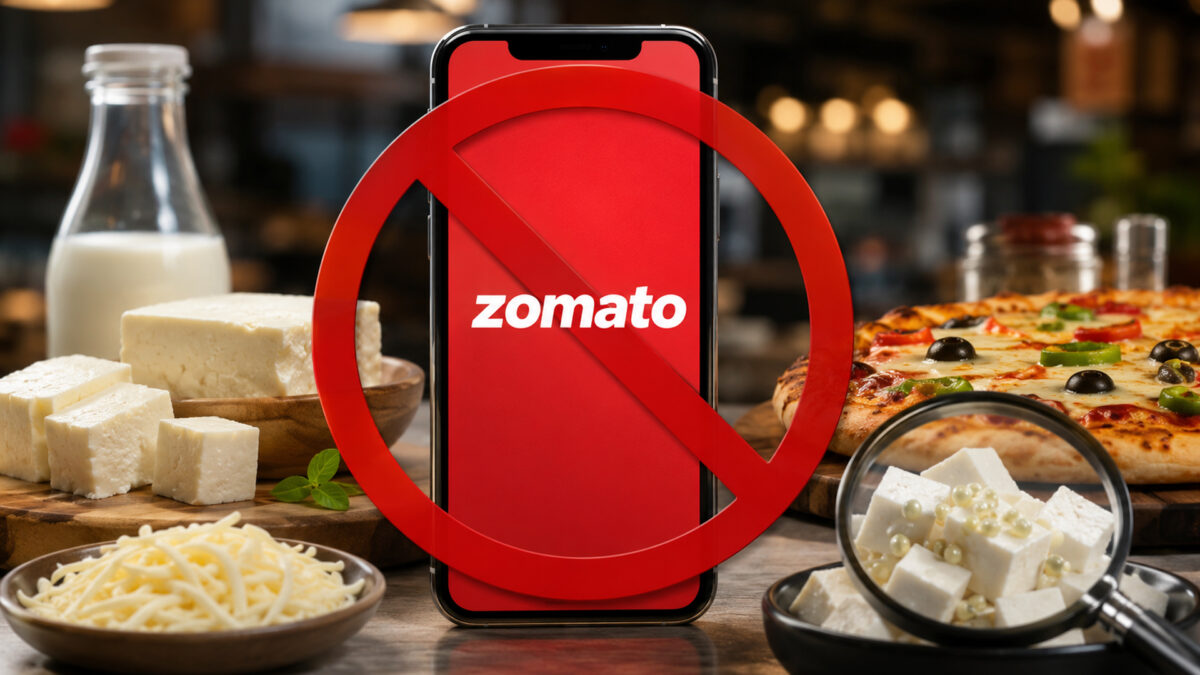
Zomato has introduced a zero-tolerance policy against dishes made with analogue dairy products, immediately removing such items from its food-delivery platform and directing restaurant partners to take corrective action.

The move covers food prepared using analogue cheese, analogue paneer and other dairy substitutes that are designed to resemble traditional dairy products. Zomato said dishes that restaurant partners have declared as containing analogue dairy have already been delisted from the platform. Restaurants have also been asked to review their menus and ingredient declarations to ensure that customers are accurately informed about what they are ordering.

Under the new policy, restaurants using analogue dairy have been asked to replace these ingredients with natural dairy products. Where an immediate switch is not possible, the affected dishes must be removed from their online menus. Zomato has warned that restaurant partners that fail to comply with the policy could be removed from the platform.

The decision comes at a time when food safety and transparency around ingredients have come under greater scrutiny across the food-service industry. Several states have recently taken action against non-dairy products being sold or described as traditional dairy items, particularly analogue paneer and similar substitutes.

Analogue dairy products are designed to replicate the taste, appearance and texture of products such as cheese or paneer but can use ingredients other than traditional milk-based dairy. Depending on the product, manufacturers may use vegetable fats, starches, proteins and other ingredients to achieve a similar texture and appearance.

Such products can offer a lower-cost alternative to conventional dairy ingredients for restaurants. But the growing concern is whether customers are clearly told when a dish contains an analogue product rather than genuine dairy.

That distinction is particularly important for dishes sold under names that consumers commonly associate with dairy ingredients. A customer ordering a paneer dish, for instance, may reasonably expect the food to contain dairy paneer unless the menu clearly states otherwise.

Zomato’s new policy puts the responsibility on restaurants to check their ingredients and ensure that menu descriptions accurately reflect what is being served. The platform has asked restaurant partners to review supplier product labels and ingredient declarations as part of the compliance process.

The company said the action is part of its broader focus on food quality, healthier choices and greater transparency for customers, while also aligning with applicable food-safety requirements. The policy is intended to strengthen consumer confidence in the information available on the platform.

The move is significant because Zomato acts as an important link between restaurants and millions of consumers. While the food delivery platform does not prepare the food itself, its menus are often the first place customers see information about a restaurant’s dishes and ingredients. Ensuring that those descriptions are accurate can therefore play an important role in consumer choice.

The policy also puts greater pressure on restaurant operators to understand exactly what goes into the products they purchase from suppliers. Restaurants may need to check invoices, packaging labels and ingredient declarations before continuing to list dishes that use cheese, paneer or other dairy-based ingredients.

The issue has gained wider attention in recent days following regulatory action by state authorities. Punjab, for example, has imposed a one-year ban on the manufacture, storage, transportation, distribution and sale of analogue or non-dairy paneer when it is sold under the name paneer. Haryana has also announced restrictions on non-dairy paneer and margarine being sold as butter.

Maharashtra has similarly stepped up scrutiny of food businesses, with action against eateries over food-safety concerns. This broader regulatory focus has increased pressure on restaurants and food businesses to ensure that ingredients are correctly labelled and represented.

Zomato’s decision could make food ordering more transparent, particularly for people who specifically want traditional dairy products. Customers may increasingly see clearer ingredient information on restaurant menus as businesses adjust to the new requirements.

However, the change could also create challenges for restaurants that have been using analogue dairy products as a cost-saving measure. Switching to natural dairy could increase ingredient costs and force restaurants to reconsider menu prices, portion sizes or margins.

The immediate impact will vary across restaurants depending on their suppliers and the extent to which analogue dairy is used in their kitchens. Some businesses may be able to switch quickly, while others could temporarily remove certain dishes until they find suitable alternatives.

Zomato’s action also signals a wider shift in the online food-delivery sector towards greater accountability for restaurant listings. As consumers increasingly rely on digital platforms to decide what and where to eat, accurate descriptions and ingredient information are becoming an important part of the customer experience.

Enforcing the policy will now be the key challenge for Zomato. The company will need to rely on information provided by restaurant partners while ensuring that businesses comply with the new rules. Restaurants that knowingly continue listing non-compliant dishes risk losing access to the platform.

The ban does not mean that all processed or alternative food products are prohibited. The central issue is the use of analogue dairy in dishes listed on Zomato and whether those ingredients are appropriately represented. Restaurants have been told to use natural dairy products or remove affected dishes where they cannot make the switch immediately.
 

Categories
Beyond

Bengaluru restaurants warn Swiggy, Zomato

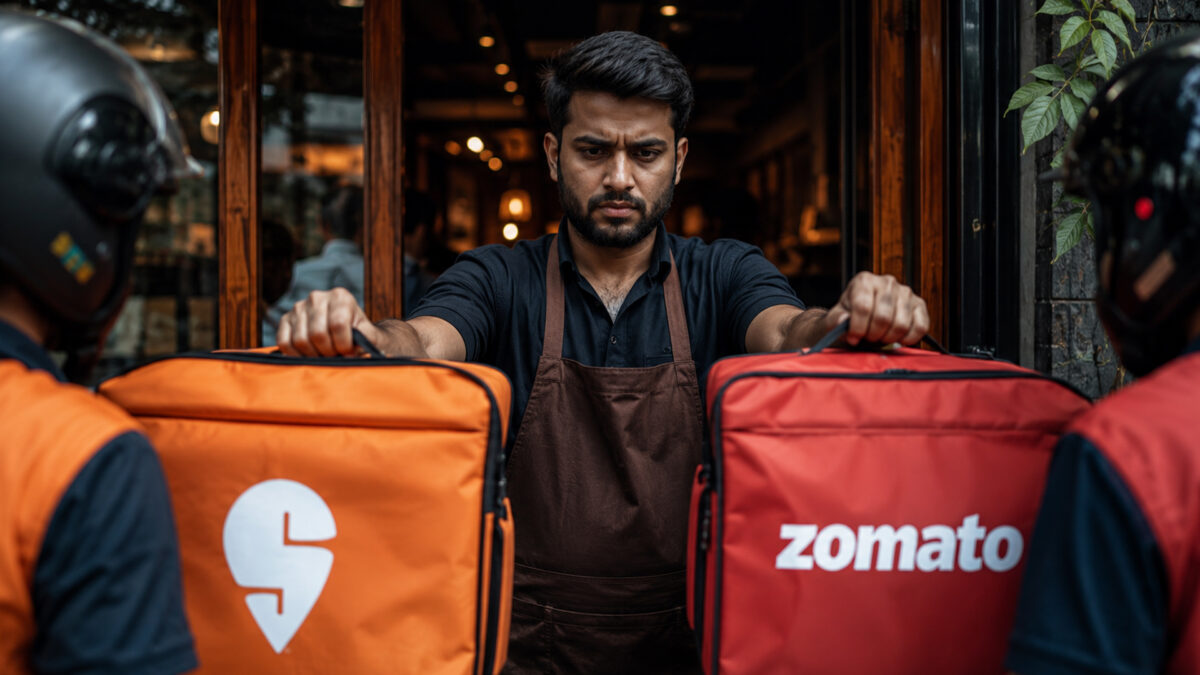
Bengaluru’s restaurant industry is preparing for a possible showdown with food delivery giants Swiggy and Zomato. Restaurant owners have warned that they could stop accepting orders through the two platforms from August 15 unless their concerns over high commissions and other charges are addressed.

The warning comes after months of discussions between restaurant representatives and the food delivery companies. The Bangalore Hotels Association (BHA) has said the talks have not produced the changes restaurants are looking for. It has now given Swiggy and Zomato a deadline to respond to their demands.

For restaurants, the biggest concern is the amount of money that disappears from every online order before the final payment reaches them. While commissions can typically be in the 15% to 30% range, restaurant owners say the actual deduction can become much higher once taxes, promotional costs, advertising expenses and other charges are included.

This has become a major issue for restaurants operating on already tight margins. An order may generate good revenue on paper, but the restaurant still has to pay for ingredients, kitchen staff, rent, electricity, packaging and other expenses. After platform-related deductions, owners say there is often very little left as profit.

Restaurant owners are also questioning the way discounts are handled on food delivery apps. They argue that restaurants are sometimes expected to bear part of the cost of promotional offers, even when the discounts are designed to attract customers to the platform.

The restaurant industry wants greater transparency over these deductions. Owners are seeking detailed settlement statements that clearly explain how much has been charged for commissions, advertising, promotions, taxes and other services.

Another major concern is the treatment of cancelled orders and customer complaints. Restaurants say they can suffer losses when food has already been prepared but an order is cancelled. They want clearer rules and compensation in cases where the restaurant has incurred the cost of preparing the meal.

Restaurant associations are also asking platforms to ensure that promotional campaigns are voluntary. They want restaurants to have a simple way to opt out of discounts and advertising programmes instead of being automatically included.

The issue has been building for several years. Restaurant owners have repeatedly argued that their dependence on large food delivery platforms has reduced their bargaining power. At the same time, restaurants cannot easily leave these platforms because Swiggy and Zomato provide access to millions of customers.

That dependence is at the heart of the current dispute. For a small restaurant, being listed on a food delivery app can bring in customers who may never visit the outlet physically. But the same platform can also take a significant share of the order value.

The Bangalore Hotels Association estimates that Bengaluru has around 34,000 hotels and restaurants, with nearly 20,000 using online food delivery platforms. If a large number of establishments participate in the proposed boycott, customers could see fewer restaurants available on Swiggy and Zomato from August 15.

The National Restaurant Association of India (NRAI) has supported the concerns raised by Bengaluru’s restaurant community. However, the wider industry body has also stressed the importance of dialogue and finding a workable solution rather than allowing the dispute to escalate.

Restaurant owners insist that the proposed boycott is not necessarily an attempt to permanently sever ties with Swiggy and Zomato. Instead, they want to push for what they describe as a more sustainable relationship between restaurants and food delivery platforms.

The financial pressure on restaurants has become more noticeable as operating costs have increased. Ingredients, wages, rent, electricity and packaging expenses have all become important components of a restaurant’s cost structure. Owners argue that high platform commissions make it increasingly difficult to absorb these expenses without raising menu prices.

Customers can also feel the impact. Prices on delivery apps are often higher than those offered directly at restaurants, partly because businesses need to account for delivery commissions and other platform costs. A prolonged dispute could therefore affect not only restaurants and delivery companies but also consumers.

The growing competition in the food delivery space could give restaurants more alternatives. Rapido-backed Ownly has entered the market with a zero-commission approach for restaurants, while several businesses are also exploring the Open Network for Digital Commerce, or ONDC.

For Swiggy and Zomato, restaurant partners remain an essential part of the business. But running large delivery networks involves technology, logistics, customer support and marketing costs. The companies therefore have to balance restaurant demands with the economics of operating their platforms.

The next few weeks will be important for both sides. If Swiggy, Zomato and restaurant associations manage to reach an agreement, the August 15 boycott could be avoided. If discussions fail, Bengaluru could witness a significant disruption in online food ordering.

The dispute ultimately comes down to the economics of a single food order. Restaurants want a larger share of the money they earn, while delivery platforms need enough revenue to maintain their technology and delivery networks. Finding a middle ground will be crucial if both sides want the online food delivery business to continue growing.

For Bengaluru’s restaurants, the message is clear: access to customers matters, but so does profitability. With August 15 approaching, the focus is now on whether the two sides can find common ground before the threatened boycott becomes reality.

Categories
Corporate

Eternal profit jumps 346% in Q4 to ₹174 cr

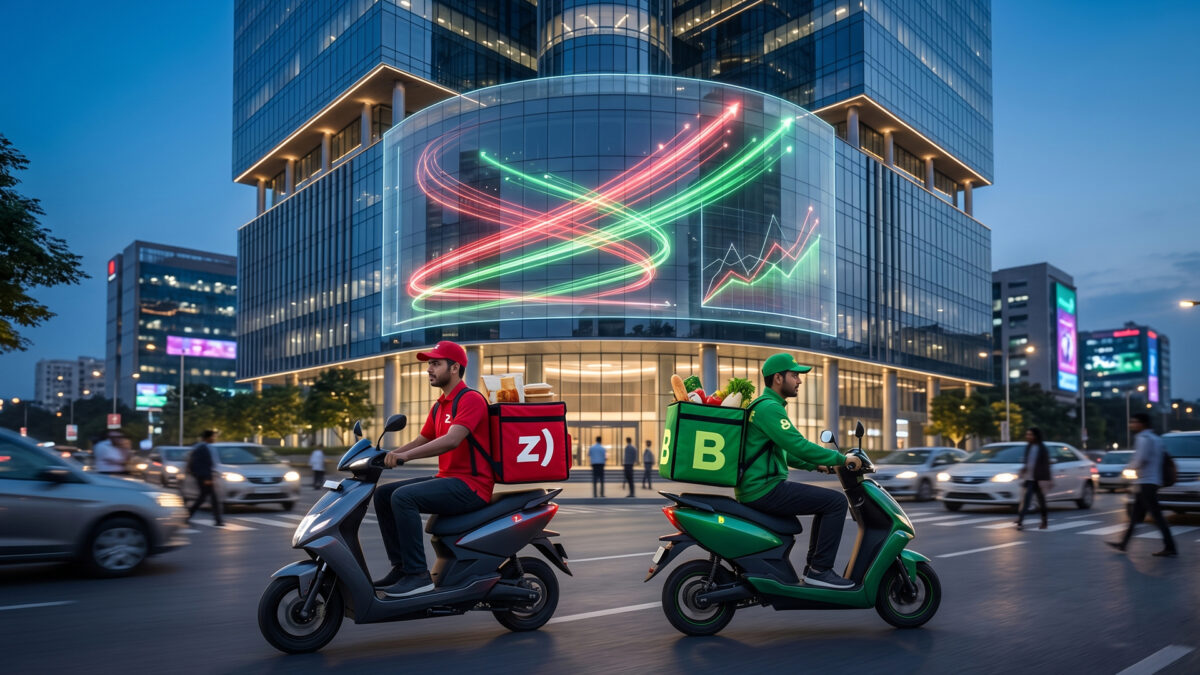
Eternal, the parent company of Zomato and Blinkit, reported a sharp rise in profit for the January-March quarter, with net profit surging 346% year-on-year to ₹174 crore. The strong earnings were supported by rapid growth in its quick commerce arm Blinkit and steady performance in food delivery.

Revenue from operations also saw a major jump, rising 196% to ₹17,292 crore during the quarter compared with the same period last year. The results underline strong demand across Eternal’s businesses as more consumers continue to rely on app-based food, grocery and convenience services.

Blinkit remained the company’s biggest growth driver. The platform, which offers quick delivery of groceries and daily essentials, has expanded aggressively as demand for instant delivery services rises in urban markets. Analysts said Blinkit’s wider network, improving efficiency and growing order volumes played an important role in boosting the group’s overall performance.

Along with Blinkit, Eternal’s food delivery business also continued to provide stable growth. Zomato remains one of India’s largest food ordering platforms and continues to benefit from higher order frequency and a broader restaurant network.

Eternal, which recently changed its corporate identity from Zomato, now operates multiple consumer-focused businesses. These include food delivery, quick commerce, restaurant supplies through Hyperpure and lifestyle services under District. The broader portfolio is helping the company diversify beyond its original food delivery model.

The company’s shares remained in focus after the earnings announcement, with investors reacting positively to the stronger numbers. Analysts believe Blinkit’s continued growth and the mature food delivery business could support future earnings momentum.

Market experts said the latest quarter reflects a more balanced business strategy, where Eternal is focusing not only on expansion but also on profitability. This has been a key concern for investors in India’s highly competitive internet commerce sector.

Also Read: Ex-Twitter CEO Parag Agrawal’s startup hits $2 bn

Categories
1 Minute-Read

Zomato founder flooded with 8,000 emails

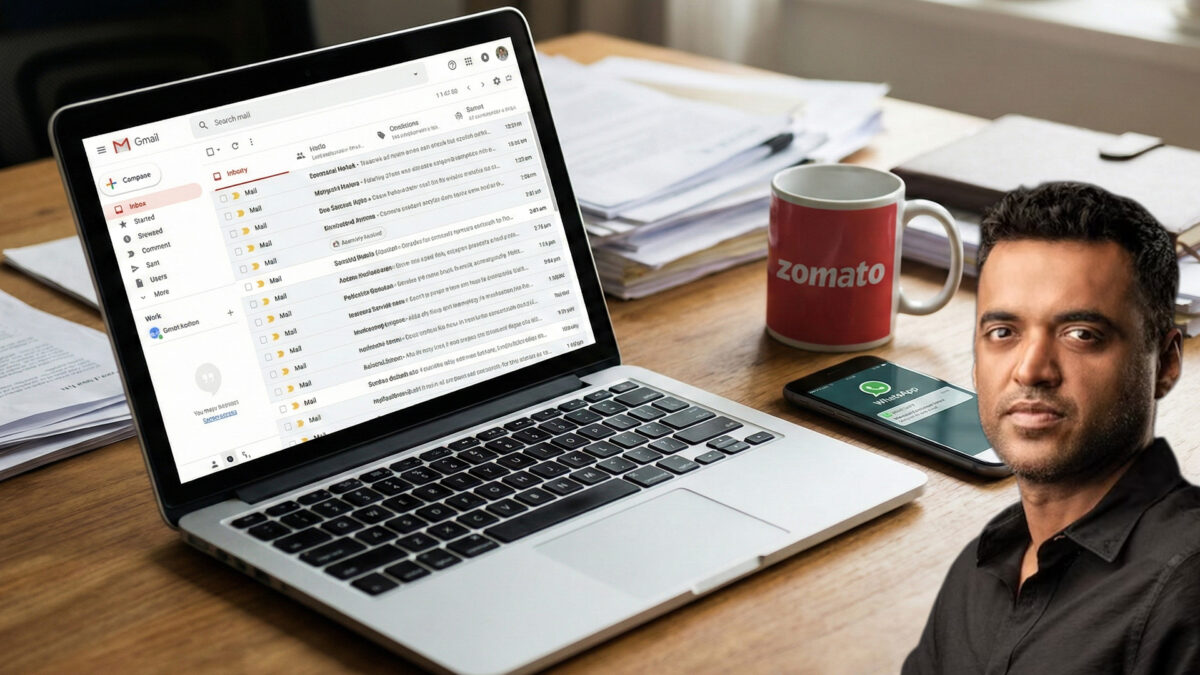
Zomato founder Deepinder Goyal said he received over 8,000 emails after reaching out to former employees via a dedicated email.

About half were from past staff, the rest from hopeful new joiners, many sharing personal stories.

Calling the responses “full of emotions and honesty,” Goyal said it’s hard to reply to all quickly and suggested those who know him well to contact him via WhatsApp for faster responses.

Categories
Leaders

Zomato CEO says New Year’s eve deliveries smooth

Zomato CEO Deepinder Goyal has clarified that the food delivery platform’s record-breaking performance on New Year’s Eve was achieved without offering any extra incentives beyond standard pay. Despite some gig workers calling for a nationwide strike, over 4.5 lakh delivery partners completed more than 75 lakh orders for over 63 lakh customers across India, marking the busiest day in the company’s history.

Goyal explained that standard New Year’s Eve pay rates, combined with strong support from local authorities, were sufficient to keep operations running smoothly. He acknowledged that a small number of disruptions occurred due to “miscreants” but said these were effectively managed, ensuring minimal impact on customers.

The CEO also addressed criticisms about the gig economy. He argued that if the system were fundamentally unfair, large numbers of people would not choose to work in it. Highlighting the flexibility and earning potential of gig work, he said it has become an important source of organised employment in India, benefiting both workers and their families.

On calls for more regulation, Goyal stated that the gig economy does not need additional rules. He emphasised that existing measures, including pay transparency, insurance, and safety provisions, make the current model sustainable. He suggested that further regulation could inadvertently reduce opportunities for workers while limiting the industry’s growth potential.

Goyal’s remarks come amid ongoing debate about delivery pressures, pay structures, and social security for gig workers, especially in light of initiatives like the 10‑minute delivery promise and growing competition from quick-commerce platforms.

Thanking delivery partners and ground teams, Goyal said their dedication and resilience made the record-breaking day possible. He urged the public not to be influenced by “narratives pushed by vested interests” and described the performance as a testament to the professionalism and commitment of India’s gig workforce.

Also Read: Vision Pro hits sales snag, Apple halts production