Categories
Technology

Goyal says Temple targets global wearable market

Deepinder Goyal, founder of Zomato and Eternal, has responded to growing criticism surrounding his wearable technology product Temple, saying it was developed for the global market rather than Indian consumers. Defending its premium price tag of ₹85,000 and addressing questions about its scientific claims, Goyal said the company expects India to account for no more than 1% of Temple sales.

In a series of posts on X on November 8, coinciding with Diwali, Goyal addressed concerns raised by consumers, technology enthusiasts and medical professionals over the device’s pricing, purpose and scientific credibility. He said the criticism and feedback received since its launch had helped the company understand which aspects of the product needed further explanation.

“Temple is not made for India. It’s made for the world,” Goyal said, making it clear that the wearable was intended to compete in international markets. His remarks came amid growing discussions online about whether the device justified its relatively high price, particularly for Indian buyers.

Goyal defends Temple’s ₹85,000 price

Temple’s ₹85,000 price has been one of the biggest talking points since the company opened pre-orders on November 1. Many social media users questioned whether the device offered enough value to justify the investment, especially when compared with established fitness trackers and smartwatches.

Responding to the criticism, Goyal said considerable effort had gone into developing Temple and that the company had priced it according to what it believed the product was worth. He acknowledged that some customers might find it expensive but suggested that those uncertain about its value could wait for independent user reviews before making a purchase.

He also rejected the idea that Indian consumers should support Temple simply because it was developed by an Indian startup.

Goyal said the company wanted to compete internationally and did not need support based on national pride. Instead, he said, the startup wanted people to support its work because they believed in early-stage innovation and its potential to improve people’s lives.

Scientific claims face questions

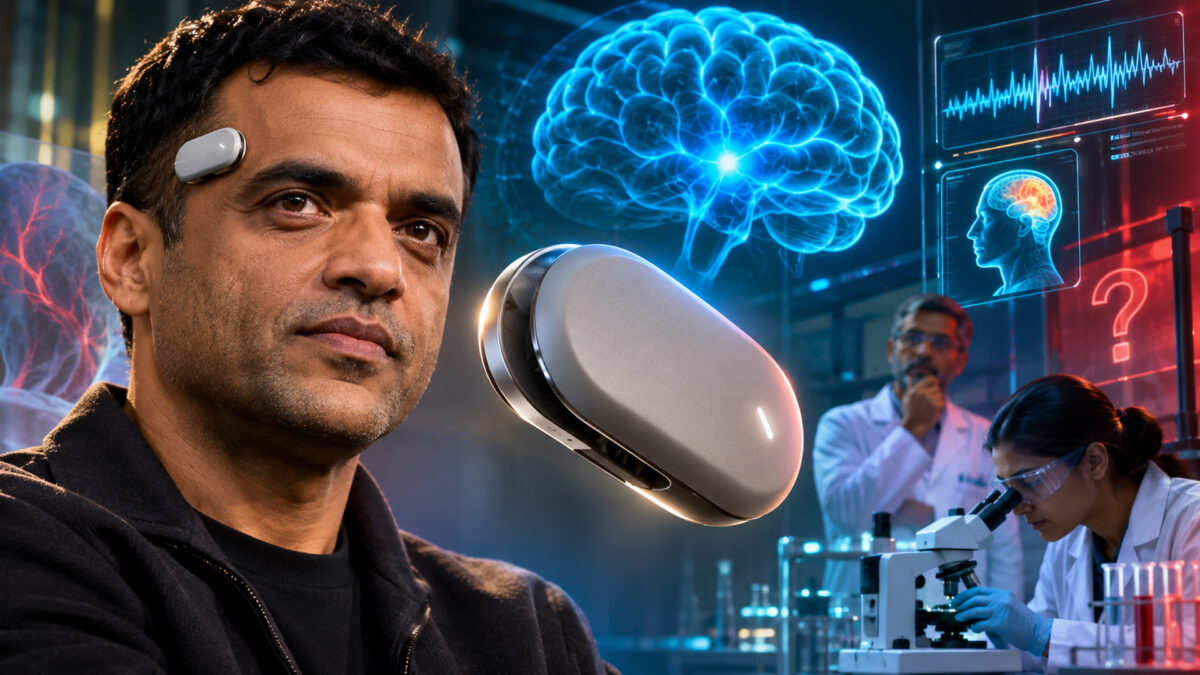
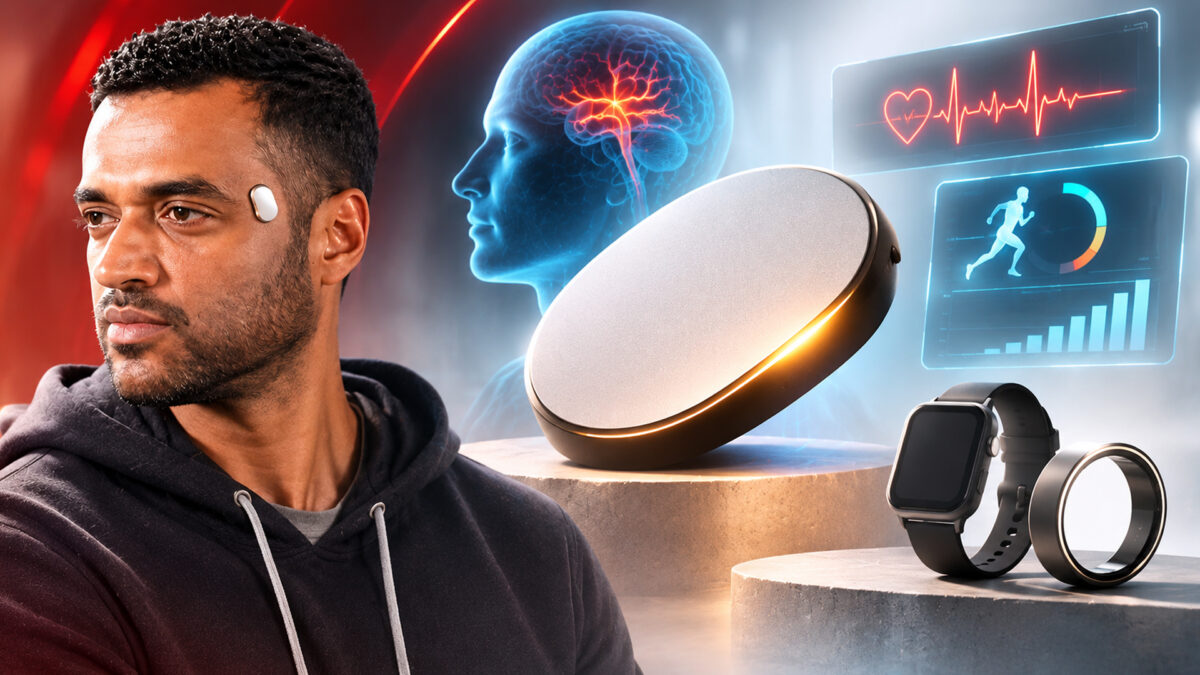
Beyond the pricing debate, Temple has attracted scrutiny over the scientific evidence supporting its features, particularly its Brain Flow measurement. The wearable is designed to collect physiological signals from the area around the forehead and provide information about changes associated with blood circulation.

Several doctors and healthcare professionals have questioned whether the technology can accurately measure blood flow within the brain and whether the available research sufficiently supports the company’s claims.

Hepatologist Dr Cyriac Abby Philips, popularly known as The Liver Doc on social media, has been among the prominent critics. He has questioned the scientific basis of Temple’s brain-monitoring claims and called for closer scrutiny of the research and technology behind the product.

Responding to concerns about scientific validation, Goyal said research develops through different stages, beginning with white papers and preprints before progressing to peer-reviewed publications.

He maintained that consumers were free to wait until stronger scientific evidence became available before purchasing Temple. He also acknowledged that some people might remain unconvinced even after peer-reviewed research is published.

Goyal said the company would continue sharing research and stressed that regulatory authorities, rather than social media discussions, would determine whether the product’s claims met the necessary standards.

Temple is a fitness and AI device, says Goyal

Addressing concerns about whether Temple was being marketed as a medical product, Goyal clarified that it was strictly a fitness and artificial intelligence device.

He said the company had not claimed that Temple could diagnose, prevent or treat any disease. The wearable was also not intended to replace medical consultations or professional healthcare advice.

This distinction is important because some of the questions surrounding Temple relate to its potential applications in monitoring brain health and understanding physiological changes. Goyal maintained that the device should be evaluated as a consumer wellness product rather than a medical diagnostic instrument.

He also said the company would obtain regulatory clearances wherever required before making claims that needed such approvals.

Entropy, not Brain Flow, is Temple’s main focus

Another important clarification concerned the device’s central feature. Goyal said much of the public discussion had focused on Brain Flow, even though it was not the primary proposition behind Temple.

According to him, the main focus of the wearable is a metric called Entropy. He said the initial development work began with Brain Flow, which explains why the first studies released by the company focused on that measurement.

However, Goyal acknowledged that the company had not yet published research explaining Entropy in detail. He said communications sent to people on Temple’s waiting list had largely focused on this feature and promised that more information would be released.

He also addressed questions about Roomdeaf AI, describing it as an expansion of Temple’s capabilities and the company’s broader vision rather than a change in strategy.

Scientific evidence remains central to the debate

Temple’s launch has generated considerable interest because it attempts to move wearable technology beyond conventional measurements such as heart rate, sleep patterns and physical activity.

However, the questions surrounding its Brain Flow measurements and Entropy metric highlight the challenges faced by companies introducing new health and fitness technologies.

Goyal has promised to publish a detailed explanation of how Brain Flow is calculated, its potential applications and, importantly, its limitations on November 9. This explanation is expected to provide further clarity on the technology behind the wearable.

For now, the debate over Temple reflects two competing expectations: the ambition to develop new wearable technology and the need for transparent, independently verifiable scientific evidence.

While Goyal remains confident about the product’s global potential, its long-term acceptance will depend on how effectively the company addresses questions about its performance, scientific validation and practical benefits.
Categories
Technology

Temple claims heart rate edge over Apple watch

Deepinder Goyal’s latest venture, Temple, is seeking to make its mark in the competitive wearable technology market with a claim that could put it alongside some of the biggest names in fitness tracking. The device, developed by the Zomato founder, has reportedly recorded more accurate heart rate readings than the Apple Watch and other leading wearables in a company-funded study.

Goyal shared the findings of the study on social media, comparing Temple with five popular devices: Apple Watch Series 12, Fitbit Air, WHOOP MG, Garmin Forerunner 970 and Oura Ring 5. According to the results released by the company, Temple recorded the lowest average measurement error among the six devices.

The study measured heart rate accuracy using mean absolute error (MAE), which indicates the average difference between a device’s readings and those of a reference instrument. A lower figure suggests greater accuracy. Temple recorded an MAE of 1.18 beats per minute (bpm), compared with 1.94 bpm for the Apple Watch Series 12.

Fitbit Air recorded an error of 2.96 bpm, while WHOOP MG and Garmin Forerunner 970 registered 3.14 bpm and 3.18 bpm, respectively. Oura Ring 5 recorded the highest error among the devices tested, at 5.21 bpm.

The company also highlighted Temple’s performance during high-intensity exercise. Heart rate tracking becomes particularly challenging when people run, sprint or exercise at higher intensity, as movement and changes in skin contact can affect readings from wrist-based and finger-worn devices.

Temple recorded an average error of 1.16 bpm across exercise heart rate Zones 4 and 5, according to the study. In Zone 5, which represents the highest intensity level, its error fell to 0.95 bpm. The company said only 1.8% of its exercise readings had an error greater than 5 bpm. The corresponding share for competing devices ranged from 9% to 36.1%.

The research involved 43 healthy adults between the ages of 20 and 35. Participants completed treadmill sessions covering resting conditions and five different heart rate zones. A Polar H10 chest strap was used as the reference for checking the readings. The company said the strap was taped to the participants’ skin to prevent it from losing contact during intense movement and affecting the measurements.

Goyal attributed Temple’s reported performance to two factors: its adhesive-based design and the location where it is worn. Unlike conventional fitness trackers that sit on the wrist or finger, Temple is attached to the side of the head, close to the temple area and a major artery.

The company believes this placement allows its optical sensors to capture physiological signals more consistently, particularly during strenuous activity. It said it tested the same sensor at four different body locations and found the temple to be the most suitable for heart rate tracking.

However, the findings need to be viewed with some caution. Temple funded, conducted and analysed the study itself. The research was carried out at a single indoor location in Gurugram and involved one treadmill session per participant. It did not examine performance during outdoor running, cycling, strength training or regular everyday activities.

The white paper has also not been peer-reviewed. This means the findings have not yet undergone the independent scientific scrutiny that would help establish whether the results can be reproduced under different conditions.

Goyal has said that independent researchers are conducting an extended study. He has also invited other researchers to replicate the findings under additional conditions and offered to fund further testing. He has encouraged potential buyers to wait for independent validation before making a decision.

Temple is not just another wrist-based fitness tracker. The device is designed to monitor signals associated with cerebral blood flow and uses the company’s BrainFlow technology. It also provides an Entropy score, intended to indicate how hard the body is working to manage heat and physical demands. The company hopes these measurements will offer users a broader understanding of their response to exercise, sleep and stress.

The wearable has attracted attention from athletes as well. Olympic badminton medallist PV Sindhu has publicly praised the device, saying she has been using it and working with Goyal’s team to identify meaningful performance measurements for athletes. Her endorsement came as Temple opened pre-orders in India on November 1.

The device is priced at around ₹85,000, placing it in the premium segment of the wearable market. Its unusual design and focus on performance-related measurements have generated interest, but the price also raises expectations about accuracy, reliability and the practical value it can offer consumers.

Goyal has also addressed questions surrounding the company’s public image and promotional strategy. He has said that being widely recognised as the person behind Zomato can work against Temple because consumers may find it difficult to associate him with a hardware and science-led venture. He has denied claims that influencers received the device for free to promote it, saying recipients of beta units paid for them.


Categories
Technology

Deepinder Goyal’s Temple unveils new health biomarker

Deepinder Goyal’s health-tech startup Temple has announced what it describes as a major breakthrough in wearable technology with the discovery of a new biomarker called “Entropy”. The company claims the metric can measure the body’s real-time metabolic activity and provide a more accurate picture of energy expenditure than conventional heart-rate monitoring.

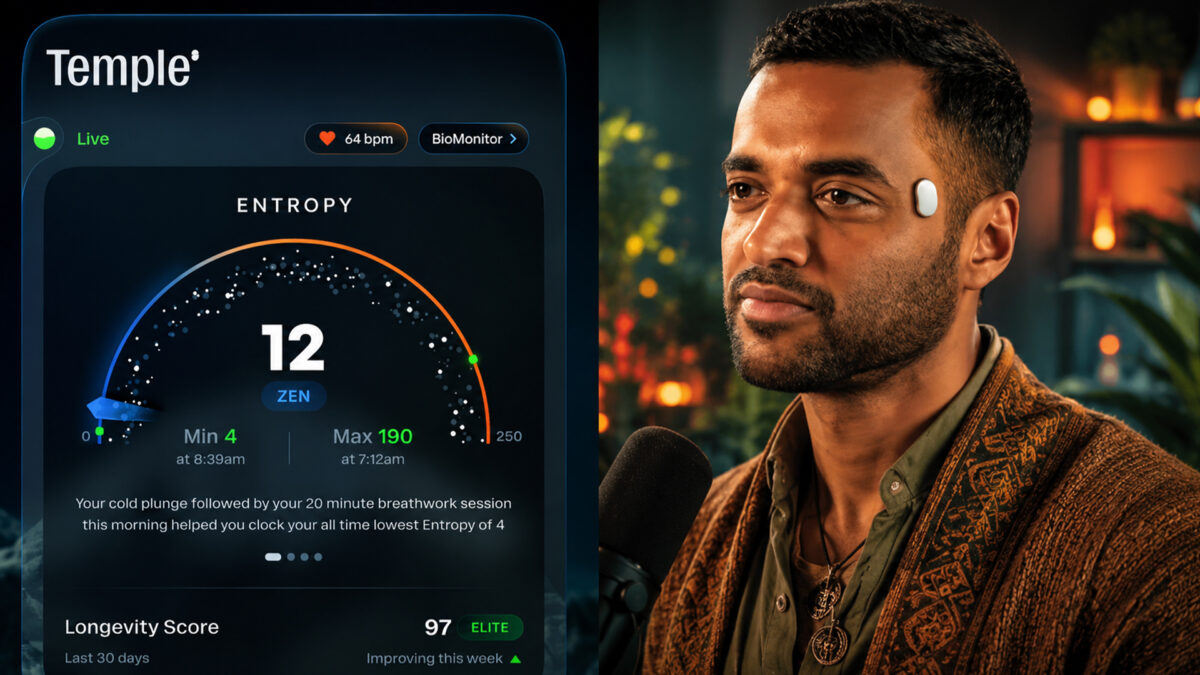
According to Temple, Entropy is a live score ranging from 1 to 250 that updates every second. The biomarker is designed to track the body’s “cost of being alive” by monitoring changes in metabolism triggered by everyday activities such as exercise, sleep, stress, meals, caffeine intake and meditation.

The startup says the biomarker can only be measured from the temple region of the head using its wearable device. Founder Deepinder Goyal revealed that Temple benchmarked Entropy against a laboratory-grade metabolic cart, widely regarded as a gold standard for measuring calorie expenditure. In internal testing involving more than 100 cardio sessions, Entropy reportedly showed a stronger correlation with metabolic readings than heart rate.

Temple has also introduced two related metrics,  Entropy Maxima and Entropy Minima. While Maxima reflects peak physical output during exertion, Minima measures the body’s lowest resting metabolic state. The company believes these indicators could help users better understand fitness, recovery and long-term health.

The announcement has generated significant interest within the health-tech community. However, experts have also called for greater transparency around the underlying science, methodology and peer-reviewed validation supporting the claims.

As wearable technology increasingly shifts from activity tracking to predictive health monitoring, Temple’s Entropy could represent a new frontier in personal health analytics. Whether it becomes a widely accepted health metric will depend on future scientific validation and real-world adoption.

Also Read: Amarendu Prakash takes charge as Hindustan Zinc CEO

Categories
1 Minute-Read

Deepinder Goyal raises $54mn for brain‑monitoring wearable

Weeks after stepping down from Zomato, Deepinder Goyal launched Temple, raising $54 million at a $190 million valuation. The startup develops a wearable tracking cerebral blood flow for athletes. Investors include Steadview, InfoEdge, and angel backers like Vijay Shekhar Sharma and Kunal Shah.

Temple plans major hires in neuroscience, embedded systems, and brain-computer interfaces. The device aims to provide metrics beyond existing wearables, entering a competitive market with Whoop, Oura, and Garmin.

This reflects Goyal’s shift toward high-risk, health-tech ventures, following previous investments in longevity and performance startups.

Categories
1 Minute-Read

Zomato founder flooded with 8,000 emails

Zomato founder Deepinder Goyal said he received over 8,000 emails after reaching out to former employees via a dedicated email.

About half were from past staff, the rest from hopeful new joiners, many sharing personal stories.

Calling the responses “full of emotions and honesty,” Goyal said it’s hard to reply to all quickly and suggested those who know him well to contact him via WhatsApp for faster responses.

Categories
Leaders

Deepinder Goyal steps down as Eternal CEO

Deepinder Goyal, founder and Chief Executive Officer of Eternal Limited, has announced his decision to step down as CEO with effect from February 1, 2026. The company’s board has approved the appointment of Albinder Dhindsa, currently CEO of quick-commerce platform Blinkit, as his successor.

Goyal will continue to remain associated with Eternal in a strategic capacity and is set to take on the role of Vice Chairman and Director, subject to shareholder approval. In this role, he will focus on long-term vision, governance and new initiatives, while moving away from daily operational responsibilities.

In his communication to stakeholders, Goyal said the decision was driven by his desire to explore new ideas and undertake higher-risk experimentation that is difficult to pursue while running a large, listed company. He added that separating operational leadership from strategic oversight would help Eternal maintain sharper execution as it scales its businesses.

Eternal is the parent company of Zomato and Blinkit and has been expanding its footprint across food delivery and quick commerce. The leadership change comes at a time when the company has reported strong financial performance, with steady growth in revenues and profitability in recent quarters, supported by improved efficiencies and rising demand across its platforms.

Albinder Dhindsa’s elevation is seen as a move towards leadership continuity. Since joining the group, Dhindsa has played a key role in building Blinkit into a major quick-commerce player following its acquisition. As Group CEO, he will oversee day-to-day operations, execution of business strategies, and coordination across Eternal’s various verticals.

Also Read: Adani Group unveils $66 billion Maharashtra plan at WEF

Categories
Leaders

Zomato CEO says New Year’s eve deliveries smooth

Zomato CEO Deepinder Goyal has clarified that the food delivery platform’s record-breaking performance on New Year’s Eve was achieved without offering any extra incentives beyond standard pay. Despite some gig workers calling for a nationwide strike, over 4.5 lakh delivery partners completed more than 75 lakh orders for over 63 lakh customers across India, marking the busiest day in the company’s history.

Goyal explained that standard New Year’s Eve pay rates, combined with strong support from local authorities, were sufficient to keep operations running smoothly. He acknowledged that a small number of disruptions occurred due to “miscreants” but said these were effectively managed, ensuring minimal impact on customers.

The CEO also addressed criticisms about the gig economy. He argued that if the system were fundamentally unfair, large numbers of people would not choose to work in it. Highlighting the flexibility and earning potential of gig work, he said it has become an important source of organised employment in India, benefiting both workers and their families.

On calls for more regulation, Goyal stated that the gig economy does not need additional rules. He emphasised that existing measures, including pay transparency, insurance, and safety provisions, make the current model sustainable. He suggested that further regulation could inadvertently reduce opportunities for workers while limiting the industry’s growth potential.

Goyal’s remarks come amid ongoing debate about delivery pressures, pay structures, and social security for gig workers, especially in light of initiatives like the 10‑minute delivery promise and growing competition from quick-commerce platforms.

Thanking delivery partners and ground teams, Goyal said their dedication and resilience made the record-breaking day possible. He urged the public not to be influenced by “narratives pushed by vested interests” and described the performance as a testament to the professionalism and commitment of India’s gig workforce.

Also Read: Vision Pro hits sales snag, Apple halts production