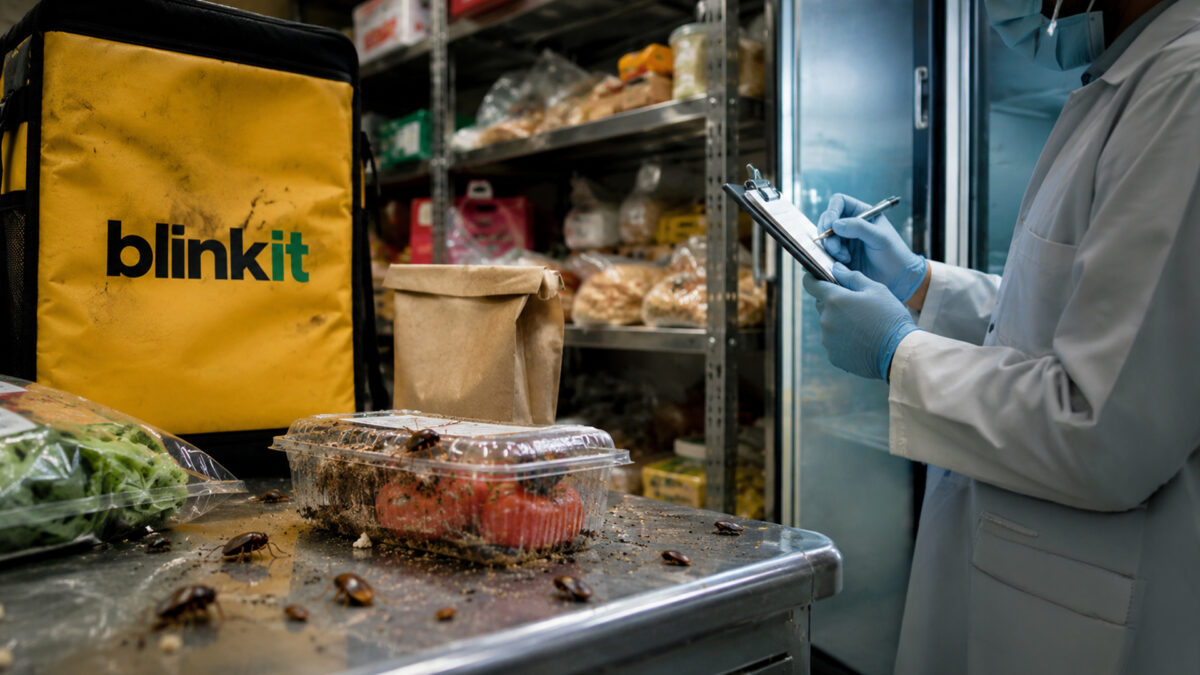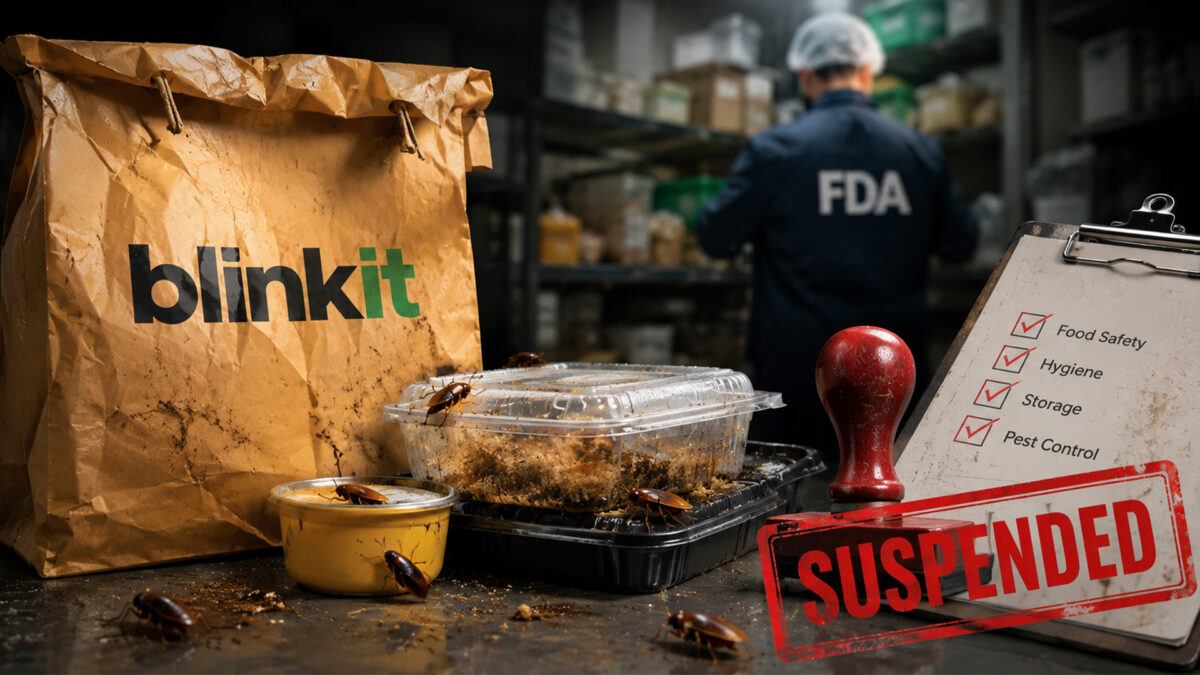
The Maharashtra Food and Drug Administration (FDA) has suspended the food licence of a Blinkit facility in Malad West, Mumbai, after an inspection found serious food safety and hygiene violations, including a large cockroach infestation, expired products and improper storage conditions.
Food safety officers inspected the Blink Commerce Pvt Ltd facility at Sarvodaya Bhuvan on Ramchandra Lane, Malad West, on August 7. The inspection found conditions that the regulator considered severely unhygienic, prompting immediate action against the facility.
Among the most serious findings was a cockroach infestation in areas where fruits and vegetables were stored. Inspectors also found food products kept improperly, including items placed on the floor and stock stored on rusted racks. Such conditions can increase the risk of contamination and raise concerns about the safety of food being supplied to consumers.
The inspection also uncovered expired, damaged and tampered packaged food products. These items were reportedly being stored alongside other stock instead of being properly segregated and removed from circulation.
Proper inventory management is particularly important for quick-commerce warehouses, where thousands of products move through compact storage facilities every day. The FDA found that the facility was not adequately following the required First-In, First-Out (FIFO) and First-Expired, First-Out (FEFO) systems. These practices are designed to ensure older and soon-to-expire products are dispatched first and expired products do not remain in active inventory.
Pest control was another major concern. The facility did not meet the required standards for controlling pests and rodents, while waste management and general cleanliness were also found to be inadequate.
Officials also flagged shortcomings related to employees handling food. Required medical examination and health records for food handlers were not properly maintained. Inspectors further found gaps in personal hygiene and the use of protective equipment by workers.
The FDA has suspended the facility’s food business licence under Section 32(3) of the Food Safety and Standards Act, 2006. The suspension remains effective until further orders, preventing the facility from conducting food-related business during the period of suspension.
The action comes amid a wider food safety enforcement drive by the Maharashtra FDA. The regulator has been conducting inspections of food businesses, warehouses, retailers and other establishments across the state, with particular attention to hygiene, storage, pest control and compliance with food safety regulations.
The action against Blinkit also highlights the growing scrutiny of quick-commerce companies and their dark-store networks. Platforms such as Blinkit have expanded rapidly by operating neighbourhood warehouses that allow groceries and other products to reach customers within minutes.
The convenience comes with a significant operational responsibility. Unlike conventional supermarkets, dark stores process orders at high speed and handle a large variety of products in limited spaces. Maintaining proper refrigeration, stock rotation, pest control and hygiene is therefore essential to prevent food safety problems.
For consumers, the episode raises a basic but important question about the standards maintained behind the convenience of rapid grocery delivery. Food ordered through an app must meet the same safety and quality requirements as products purchased from a physical store.
The incident is also significant because food safety problems at a storage facility can affect multiple categories of products. Fresh produce, packaged food, dairy products and other perishables require different storage conditions, and lapses in temperature control, cleanliness or stock management can affect their quality.
A weaker system of expiry monitoring can be particularly risky. Products approaching or past their expiry dates need to be identified and removed promptly. If inventory systems fail, there is a possibility that unsuitable products could remain available for sale.
The FDA‘s action sends a clear message to businesses operating food warehouses that speed of delivery cannot come at the expense of hygiene and regulatory compliance. As quick commerce becomes a larger part of India’s grocery market, regulators are increasingly focusing on the conditions inside the facilities that customers rarely see.
The development also comes after food safety authorities took action against other establishments in Maharashtra over hygiene and storage violations. The wider enforcement activity indicates that regulators are paying closer attention to how food is stored, handled and sold across both traditional and digital retail channels.
For Blinkit, the immediate priority will be to address the deficiencies identified during the inspection and meet the regulator’s requirements before the facility can resume normal food-related operations.
The incident could also increase pressure on quick-commerce platforms to strengthen internal checks across their dark-store networks. Regular pest-control inspections, automated expiry monitoring, proper stock segregation, employee hygiene checks and clean storage areas are critical to maintaining consumer confidence.
For customers, the case is a reminder that convenience should not replace basic food safety. The expectation is simple: groceries delivered within minutes should be stored, handled and supplied under conditions that protect their quality and safety.
As India’s quick-commerce sector continues to expand, maintaining those standards will become increasingly important. The Malad action shows that regulators are prepared to intervene when facilities fail to meet the required food safety norms.