
Categories
Beyond

Maharashtra FDA flags steep hospital prices

A Maharashtra government survey has brought a sharp focus on the prices patients pay for basic medical consumables in hospitals. The survey found huge differences between the prices at which some products were procured and their printed maximum retail prices (MRPs), with markups reaching as high as 2,841% in one case.

The issue has now reached the Centre. The government has sought a report from the National Pharmaceutical Pricing Authority (NPPA) after Maharashtra Food and Drug Administration (FDA) Commissioner Tukaram Mundhe flagged the pricing gaps and called for a review of the existing system. The Department of Pharmaceuticals is expected to examine the NPPA’s analysis before deciding on further action.

One example cited by Mundhe involved an intravenous (IV) infusion set. The product was procured at a trade price of Rs 11.05 but carried a printed MRP of Rs 325. The difference works out to a markup of about 2,841%.

Other hospital consumables also showed wide gaps. A syringe purchased for Rs 6.75 carried an MRP of Rs 57.20, while a catheter procured for Rs 29.41 had an MRP of Rs 310. The survey covered hospitals in the Mumbai Metropolitan Region, Pune and Chhatrapati Sambhajinagar.

Mundhe has argued that the problem is not limited to the price of individual products. Patients admitted to hospitals often have little opportunity to compare the prices of medical supplies used during treatment or question the basis of the charges. Unlike elective purchases, many of these items are used as part of routine medical care, leaving patients with limited choice.

The Maharashtra FDA has therefore recommended a review of the pricing structure and clearer rules on the permissible difference between trade procurement prices and declared MRPs. Mundhe has said the issue needs to be examined at the policy level rather than through arbitrary price-setting.

A key part of the debate is the regulatory treatment of medical devices and consumables. Scheduled medicines are subject to price ceilings under the Drugs (Prices Control) Order, 2013. Many medical devices and hospital consumables, however, do not face the same type of price controls. This has raised questions about how large differences between procurement costs and MRPs should be monitored.

The Maharashtra FDA has made clear that it does not have the authority to regulate hospital bills. Its survey was aimed at highlighting the pricing gap and bringing the matter before the appropriate central authorities. The final decision on any price controls or changes to the regulatory framework rests with the Centre and the NPPA.

The issue has also drawn a response from the healthcare industry. Hospitals and healthcare organisations have argued that procurement prices alone cannot be used to determine the final cost of providing a medical product to a patient. They point to additional expenses such as maintaining emergency stocks, ensuring sterile storage, product traceability, trained staff, infrastructure and the risk of unused products expiring.

Industry representatives have also called for a differentiated approach. They argue that simple, routinely used consumables should be examined differently from sophisticated medical technologies that require specialised infrastructure and clinical support. At the same time, healthcare bodies have acknowledged that unusually high margins on basic consumables warrant scrutiny.

The debate is therefore moving beyond a single hospital or product. It raises broader questions about transparency in hospital billing, medical device pricing and the information available to patients.

The figures highlighted by the Maharashtra FDA have also renewed discussion around trade-margin rationalisation. If a product is purchased by a hospital at a fraction of its printed MRP, regulators need to determine how the difference is created, who benefits from it and what portion, if any, is reflected in the final patient bill.

Mundhe has stopped short of suggesting a fixed percentage for permissible margins, saying that such a decision falls within the remit of the NPPA and policymakers. He has instead called for a transparent framework that takes into account manufacturers, distributors, hospitals and patients.

The Centre’s request for an NPPA report is now the next step. The regulator’s analysis could help determine whether the price gaps identified in Maharashtra point to a wider problem requiring changes in medical device pricing rules.

Any new framework will have to balance affordability with the costs involved in safely supplying medical products. The immediate question, however, remains straightforward: when patients are billed for basic hospital consumables, how much of the price should they reasonably be expected to pay, and how clearly should that cost be explained?

The Maharashtra survey has put that question firmly on the healthcare policy agenda, with patients, hospitals, manufacturers and regulators now waiting for the Centre’s next move.
 

Categories
Beyond

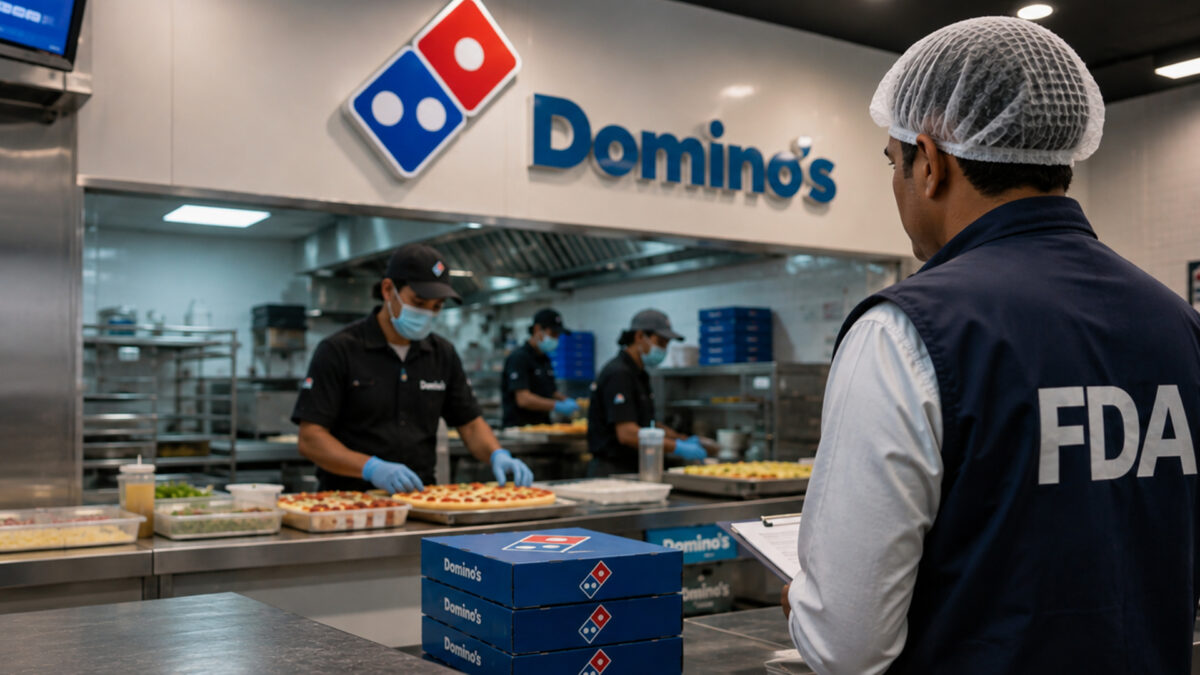
Maharashtra FDA suspends four Domino’s outlets

The Maharashtra Food and Drug Administration (FDA) has suspended the food-business licences of four Domino’s Pizza outlets after inspections found several violations of food safety and hygiene standards.

Three of the affected outlets are in Mumbai, while the fourth is in Satara district. The action followed a special inspection drive targeting major restaurant chains across Maharashtra and comes as the state food regulator steps up checks on restaurants, hotels, eateries and other establishments.

The four Domino’s outlets are operated by Jubilant FoodWorks Ltd. The Mumbai outlets are located in Vile Parle West, Borivali West and R-City Mall in Ghatkopar West. The fourth outlet is in Malkapur, Karad, in Satara district. Officials said the inspections found shortcomings ranging from poor sanitation and pest-control measures to improper food storage and inadequate temperature monitoring.

The FDA conducted the inspections on August 11 as part of a wider drive covering 104 establishments operated by major restaurant brands. The exercise included Domino’s Pizza, KFC, Pizza Hut, McDonald’s, Subway, Burger King, Starbucks and Monginis.

During the drive, two establishments were ordered to stop operations immediately, 95 received improvement notices and five food-business licences were suspended. Four of those suspended licences belonged to Domino’s outlets, while the fifth was linked to another fast-food establishment.

The action against the Domino’s outlets was taken under the Food Safety and Standards (Licensing and Registration of Food Businesses) Regulations, 2011. The inspections focused on whether the outlets were meeting prescribed standards for food handling, storage, sanitation, pest control and record keeping.

At the Vile Parle West outlet, inspectors found deficiencies involving the display of the FSSAI licence, potable water testing, food storage, pest control and general hygiene facilities.

The outlet was directed to improve temperature monitoring for frozen and other food products and ensure proper separation of food and non-food items. The FDA also called for repairs to parts of the kitchen, including the back door, flooring and chilling room.

Measures to prevent rodents and other pests were also ordered. The outlet was asked to improve food-preparation facilities, equipment sanitisation and hand-washing arrangements for food handlers.

The Borivali West outlet was also found to be significantly non-compliant. The FDA assigned it a compliance score of 54%.

Inspectors identified problems with food storage, temperature monitoring, food testing, hygiene and pest control. The outlet was instructed to properly separate raw and cooked food, as well as vegetarian and non-vegetarian food. Raw materials also had to be stored separately from non-food items.

The inspection further found the need for better cleaning and sanitisation of equipment and utensils. Oily residue and food scraps were reported in the pizza preparation area, prompting directions for immediate cleaning. Improvements were also ordered for flooring, lighting, overall cleanliness and pest-control systems.

The Ghatkopar West outlet at R-City Mall faced action over inadequate cleanliness and sanitation arrangements. According to the FDA, the outlet did not maintain a proper cleaning and sanitation schedule and had deficiencies in pest control.

The inspection also found problems with FIFO (First In, First Out) and FEFO (First Expired, First Out) practices, which are important for ensuring that older or earlier-expiring food products are used first. Temperature control in food storage was also found to be inadequate.

The FDA additionally flagged missing food-grade certificates and gaps in records related to equipment calibration, preventive maintenance, food and water testing and food safety procedures.

The Satara outlet, located in Malkapur, Karad, recorded an even lower compliance score of 47%. The FDA cited deficiencies in basic infrastructure, equipment, cleanliness and pest control.

The outlet was directed to improve storage arrangements for raw food materials, including the use of proper racks. It was also instructed to conduct laboratory testing of food products and maintain the required records.

The latest action is part of a much wider food safety crackdown in Maharashtra under FDA Commissioner Tukaram Mundhe. The department has been increasing inspections of food establishments since Mundhe took charge in May.

According to figures reported by India Today, the FDA inspected 3,137 hotels, restaurants, eateries and other food establishments across Mumbai between May 25 and July 31. During that period, it issued 764 improvement notices and suspended 165 licences. Officials also seized or destroyed 28.66 lakh kg of food products valued at ₹55.72 crore.

The intensified enforcement has already affected other food businesses. The FDA recently suspended the licence of a Blink Commerce facility in Mumbai after inspectors reported extensive cockroach infestation, poor food storage and other hygiene problems.

The regulator has also taken action against establishments outside Mumbai. Recent inspections resulted in licence suspensions involving restaurants, bakeries, sweet shops and other food businesses across Maharashtra. The broader enforcement effort shows that the FDA is increasingly focusing on compliance rather than limiting inspections to individual consumer complaints.


Categories
Beyond

Maharashtra bans 3 toxic beauty products

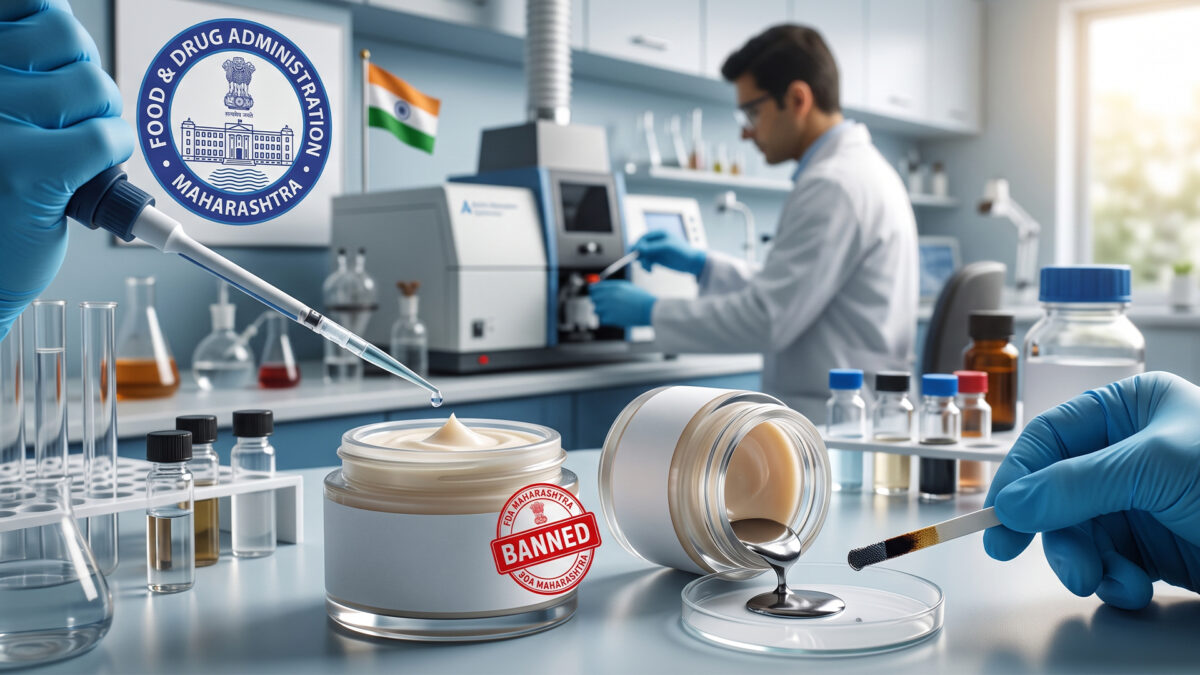
The Maharashtra Food and Drug Administration (FDA) has banned the sale and distribution of three cosmetic products after laboratory tests detected dangerous levels of toxic heavy metals, including mercury and lead. Officials said the products were being sold illegally and posed a serious health risk to consumers.

Among the banned products is a Pakistan-made fairness cream, which was found to contain high levels of mercury, a toxic substance that can cause severe health complications with prolonged use. The FDA also detected unsafe levels of lead in two other beauty products during routine testing.

The action follows an inspection and sampling drive carried out by the state regulator to ensure the safety and quality of cosmetic products available in the market. Officials said the products were not authorised for sale in Maharashtra and had entered the market through illegal channels.

According to the FDA, prolonged exposure to mercury through cosmetic products can damage the skin, kidneys and nervous system. Lead exposure, meanwhile, may affect the brain, liver and other vital organs, particularly in children and pregnant women. Health experts warn that repeated use of products containing these toxic metals can lead to long-term health problems.

The regulator has directed manufacturers, distributors and retailers to immediately stop selling the identified products and remove existing stocks from the market. Enforcement teams have also intensified inspections to identify shops and suppliers dealing in unauthorised cosmetics.

Consumers have been advised to avoid purchasing fairness creams and other beauty products from unverified sources or without proper labelling. Officials urged buyers to check whether products carry valid manufacturing details and regulatory approvals before use.

The FDA said it will continue market surveillance and testing to prevent the circulation of unsafe cosmetic products. Authorities have also appealed to the public to report suspicious or unlabelled beauty products being sold in local markets.

Also Read: Sanand emerges with ₹7,600-cr chip plant