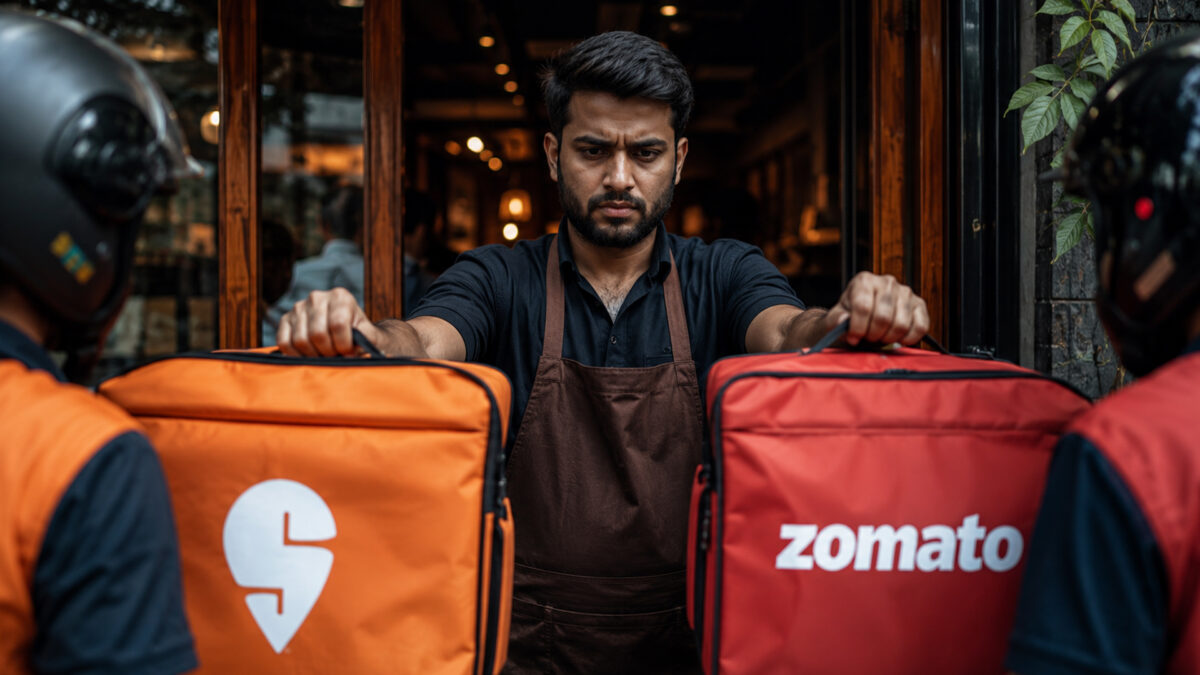
Bengaluru’s restaurant industry is preparing for a possible showdown with food delivery giants Swiggy and Zomato. Restaurant owners have warned that they could stop accepting orders through the two platforms from August 15 unless their concerns over high commissions and other charges are addressed.
The warning comes after months of discussions between restaurant representatives and the food delivery companies. The Bangalore Hotels Association (BHA) has said the talks have not produced the changes restaurants are looking for. It has now given Swiggy and Zomato a deadline to respond to their demands.
For restaurants, the biggest concern is the amount of money that disappears from every online order before the final payment reaches them. While commissions can typically be in the 15% to 30% range, restaurant owners say the actual deduction can become much higher once taxes, promotional costs, advertising expenses and other charges are included.
This has become a major issue for restaurants operating on already tight margins. An order may generate good revenue on paper, but the restaurant still has to pay for ingredients, kitchen staff, rent, electricity, packaging and other expenses. After platform-related deductions, owners say there is often very little left as profit.
Restaurant owners are also questioning the way discounts are handled on food delivery apps. They argue that restaurants are sometimes expected to bear part of the cost of promotional offers, even when the discounts are designed to attract customers to the platform.
The restaurant industry wants greater transparency over these deductions. Owners are seeking detailed settlement statements that clearly explain how much has been charged for commissions, advertising, promotions, taxes and other services.
Another major concern is the treatment of cancelled orders and customer complaints. Restaurants say they can suffer losses when food has already been prepared but an order is cancelled. They want clearer rules and compensation in cases where the restaurant has incurred the cost of preparing the meal.
Restaurant associations are also asking platforms to ensure that promotional campaigns are voluntary. They want restaurants to have a simple way to opt out of discounts and advertising programmes instead of being automatically included.
The issue has been building for several years. Restaurant owners have repeatedly argued that their dependence on large food delivery platforms has reduced their bargaining power. At the same time, restaurants cannot easily leave these platforms because Swiggy and Zomato provide access to millions of customers.
That dependence is at the heart of the current dispute. For a small restaurant, being listed on a food delivery app can bring in customers who may never visit the outlet physically. But the same platform can also take a significant share of the order value.
The Bangalore Hotels Association estimates that Bengaluru has around 34,000 hotels and restaurants, with nearly 20,000 using online food delivery platforms. If a large number of establishments participate in the proposed boycott, customers could see fewer restaurants available on Swiggy and Zomato from August 15.
The National Restaurant Association of India (NRAI) has supported the concerns raised by Bengaluru’s restaurant community. However, the wider industry body has also stressed the importance of dialogue and finding a workable solution rather than allowing the dispute to escalate.
Restaurant owners insist that the proposed boycott is not necessarily an attempt to permanently sever ties with Swiggy and Zomato. Instead, they want to push for what they describe as a more sustainable relationship between restaurants and food delivery platforms.
The financial pressure on restaurants has become more noticeable as operating costs have increased. Ingredients, wages, rent, electricity and packaging expenses have all become important components of a restaurant’s cost structure. Owners argue that high platform commissions make it increasingly difficult to absorb these expenses without raising menu prices.
Customers can also feel the impact. Prices on delivery apps are often higher than those offered directly at restaurants, partly because businesses need to account for delivery commissions and other platform costs. A prolonged dispute could therefore affect not only restaurants and delivery companies but also consumers.
The growing competition in the food delivery space could give restaurants more alternatives. Rapido-backed Ownly has entered the market with a zero-commission approach for restaurants, while several businesses are also exploring the Open Network for Digital Commerce, or ONDC.
For Swiggy and Zomato, restaurant partners remain an essential part of the business. But running large delivery networks involves technology, logistics, customer support and marketing costs. The companies therefore have to balance restaurant demands with the economics of operating their platforms.
The next few weeks will be important for both sides. If Swiggy, Zomato and restaurant associations manage to reach an agreement, the August 15 boycott could be avoided. If discussions fail, Bengaluru could witness a significant disruption in online food ordering.
The dispute ultimately comes down to the economics of a single food order. Restaurants want a larger share of the money they earn, while delivery platforms need enough revenue to maintain their technology and delivery networks. Finding a middle ground will be crucial if both sides want the online food delivery business to continue growing.
For Bengaluru’s restaurants, the message is clear: access to customers matters, but so does profitability. With August 15 approaching, the focus is now on whether the two sides can find common ground before the threatened boycott becomes reality.