Categories
Beyond

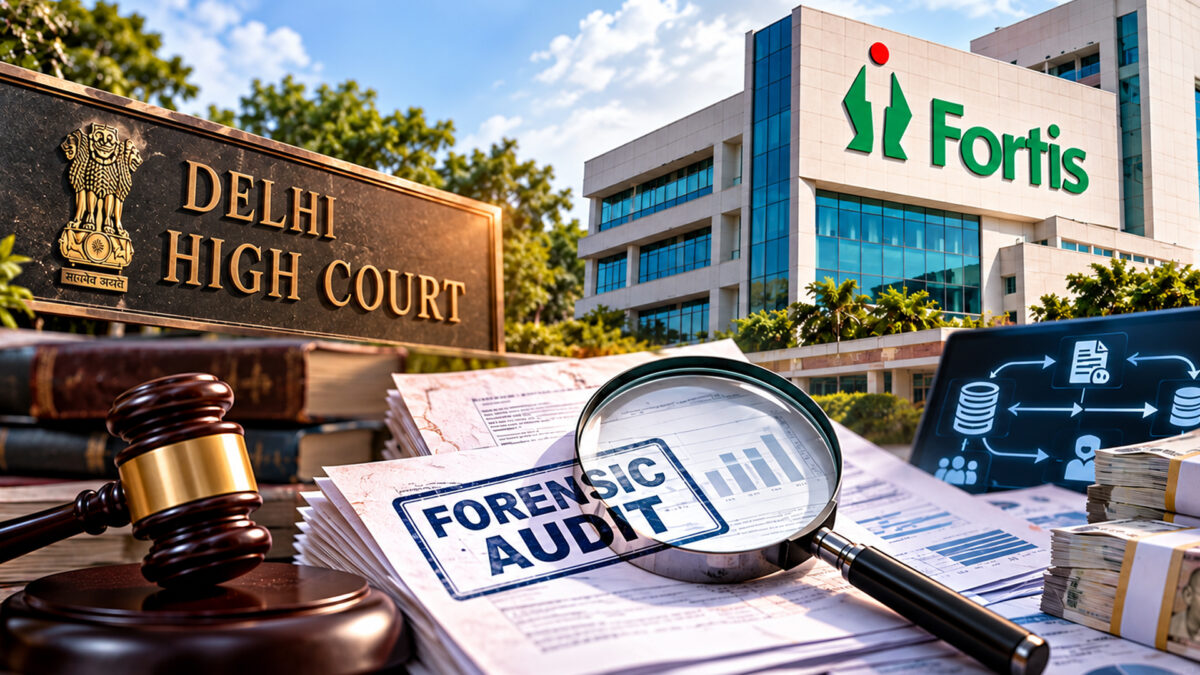
Fortis faces forensic audit in Daiichi dispute

The Supreme Court has refused to interfere with a Delhi High Court order directing a forensic audit of transactions involving Fortis Healthcare and its former promoters Malvinder Mohan Singh and Shivinder Mohan Singh. The case is part of Daiichi Sankyo’s long-running efforts to enforce a ₹3,500 crore arbitral award against the Singh brothers.

A bench headed by Chief Justice Surya Kant and comprising Justices Joymalya Bagchi and V Mohana allowed the audit to continue. At the same time, the court clarified that the observations made by the Delhi High Court against Fortis were only tentative and prima facie. The findings, therefore, cannot be treated as a final determination of Fortis’ liability in the dispute.

The dispute has its roots in the 2008 sale of Ranbaxy Laboratories to Daiichi Sankyo by the Singh brothers. Daiichi later alleged that material information relating to regulatory investigations into Ranbaxy had not been disclosed during the transaction. An international arbitration process eventually resulted in a ₹3,500 crore award in favour of the Japanese pharmaceutical company in 2016.

The Singh brothers challenged the award in Indian courts, but the Delhi High Court upheld it in January 2018. The Supreme Court subsequently dismissed their challenge, leaving the award enforceable in India. Daiichi has since pursued legal proceedings to identify and trace assets that could potentially be used to satisfy the award.

Fortis became part of the enforcement proceedings because Daiichi sought examination of transactions involving the healthcare company, the Singh brothers and other entities. The Delhi High Court, in its August 31 order, directed a comprehensive forensic audit to examine the movement of Fortis shares and other assets.

The audit will look at the sequence of transactions, identify the entities and individuals involved and examine whether assets that could have been available to meet Daiichi’s award were allegedly transferred or otherwise dissipated. Chartered accountancy firm S Ramanand Aiyar & Co has been appointed as the forensic auditor and has been given six months to complete the exercise.

The transactions also involve Fortis’ ownership changes and the subsequent investment by Malaysian healthcare group IHH Healthcare. Fortis argued before the Supreme Court that the company was not a party to the original arbitration and should not be treated as a judgment debtor for the Singh brothers’ obligations.

Senior advocate Abhishek Manu Singhvi, appearing for Fortis, also pointed to the Singh brothers’ exit from the company in 2018 and IHH’s subsequent investment of about ₹4,000 crore. The company challenged the forensic audit order on the grounds that it should not be made part of proceedings concerning a liability arising from the former promoters’ separate dispute with Daiichi.

The Supreme Court, however, found no reason to interfere with the Delhi High Court’s direction. This means the forensic investigation can now move ahead and examine the transactions identified by the lower court.

The clarification on the High Court’s observations is significant for Fortis. While the Supreme Court has permitted the audit, it has not endorsed the underlying allegations as established facts. The observations that supported the audit were described as tentative and prima facie, and the forensic auditor is expected to conduct an independent examination.

The development also highlights the wider legal and corporate implications of the Daiichi-Fortis dispute. The proceedings are examining whether transactions involving a listed company and its former promoters have any connection with efforts to recover liabilities arising from the promoters’ personal legal dispute.

The forensic audit is expected to reconstruct the relevant transactions and establish the movement of shares and other assets. Its findings could provide the Delhi High Court with further material while it considers Daiichi’s efforts to enforce the arbitral award.

The Supreme Court’s order does not settle the larger dispute or establish that Fortis is responsible for the Singh brothers’ award. Instead, it clears the way for the fact-finding process ordered by the Delhi High Court.

The next stage will therefore focus on the forensic examination of the transactions. The auditor’s report and subsequent court proceedings will determine what conclusions, if any, can ultimately be drawn from the transactions involving Fortis, the former promoters and other entities.

 

Categories
Beyond

Delhi HC orders forensic audit In Fortis case

The Delhi High Court has ordered a six-month forensic audit into financial transactions involving Fortis Healthcare, its former promoters Malvinder Mohan Singh and Shivinder Mohan Singh, Malaysia’s IHH Healthcare and Singapore-based RHT Health Trust.

The court’s decision is part of the long-running legal battle between Japanese pharmaceutical company Daiichi Sankyo and the Singh brothers. Daiichi is seeking to enforce an arbitration award against the former Ranbaxy promoters, and the latest audit is aimed at tracing assets and transactions that could have been used to meet the award.

Justice Subramonium Prasad appointed chartered accountancy firm S Ramanand Aiyar & Co as the forensic auditor and directed it to complete the exercise within six months. The audit will reconstruct the movement of Fortis shares and funds and examine the sequence of transactions involving the companies and individuals connected with the dispute.

At the centre of the case is a ₹3,500-crore arbitration award in favour of Daiichi Sankyo. The dispute goes back to 2008, when Daiichi acquired Ranbaxy Laboratories from the Singh brothers for $4.6 billion. Daiichi later alleged that important information had been concealed during the transaction, leading to arbitration proceedings in Singapore.

A Singapore tribunal eventually awarded compensation to Daiichi. The Japanese company has since been pursuing enforcement of the award in India and has argued that assets linked to the Singh brothers were reduced or transferred during the enforcement process.

The Delhi High Court’s latest order seeks to establish what happened to those assets.

One major area of investigation will be the sharp decline in the Fortis shareholding held by Fortis Healthcare Holdings Pvt Ltd, the company through which the Singh brothers held their stake in the hospital chain. The auditor will examine the transfer and sale of these shares and trace where the money generated from those transactions went.

The court has also asked the auditor to examine transactions involving RHT Health Trust. Daiichi has alleged that ₹4,666 crore was transferred to the Singapore-based trust, which held hospital assets associated with the former Fortis promoters. The audit will examine the nature of the transfer, the flow of funds and their eventual utilisation.

Another important part of the investigation concerns IHH Healthcare’s acquisition of a controlling stake in Fortis. IHH acquired a 31% stake in Fortis for around ₹4,000 crore in July 2018 through a bidding process.

The court has directed the auditor to examine the entire transaction, including approvals, regulatory filings, the flow of consideration, the role of intermediaries and the subsequent changes in Fortis’ shareholding. It will also identify the people and entities that proposed, negotiated, approved, facilitated or recorded the transactions.

The audit will not stop with Fortis, IHH and RHT. The court has also permitted scrutiny of dealings involving the Singh brothers and companies belonging to the Religare Group, which they had founded.

Daiichi had additionally sought an examination of transactions involving 17 banks and financial institutions. The allegations include the sale of pledged Fortis shares and claims that some lenders acted despite court orders and undertakings given during the legal proceedings.

The Supreme Court had in September 2022 asked the Delhi High Court to consider forensic audits into transactions involving banks, financial institutions, Fortis, RHT and other related entities. The latest order follows that direction and seeks to create a detailed financial trail.

The High Court said a forensic audit would help reconstruct the chronology of transactions, trace the movement of shares and funds and provide a clearer factual record for deciding the competing claims.

The court also indicated that the audit could examine whether there was any involvement by Fortis or violations of SEBI regulations by companies, the Singh brothers or financial institutions. Any violations identified could potentially lead to separate consequences under applicable laws.

Fortis Healthcare has said the court order does not impose any monetary liability on the company. It pointed out that Fortis was neither a party to the original dispute nor a judgment debtor in the enforcement proceedings. The company said it was reviewing the judgment with its legal advisers.

IHH has also said it is not a party to the underlying legal proceedings. However, the court-monitored audit will examine aspects of its acquisition of the Fortis stake because of questions raised by Daiichi regarding the movement of funds and shares.

The case has been running for years, and the latest order reflects the court’s concern over the difficulty of enforcing the arbitration award. The court noted that despite years of proceedings, Daiichi has yet to receive the amount awarded to it.

The forensic audit could now provide a clearer picture of how Fortis shares, funds and other assets moved during the period under scrutiny.


Categories
Corporate

Fortis Healthcare to acquire Bengaluru’s People Tree Hospital for ₹430 cr

Fortis Healthcare has announced that it will acquire People Tree Hospital in Bengaluru for ₹430 crore. The purchase will be made through its wholly owned subsidiary, International Hospital Limited, which will take full ownership of TMI Healthcare Private Limited, the company that runs the hospital.

People Tree Hospital is a 125-bed, multi-specialty hospital located in Yeshwanthpur, Bengaluru. It is accredited by the National Accreditation Board for Hospitals (NABH) and offers treatment in areas such as heart care, orthopaedics, brain and nerve care, kidney treatment, gastroenterology and critical care. The hospital reported revenue of about ₹74 crore in the last financial year.

The deal includes the hospital building, the land on which it stands and an additional nearby land parcel. This extra land will allow Fortis to expand the hospital in the future. Fortis plans to invest around ₹410 crore over the next three years to upgrade the facility. This money will be used to add more beds, improve medical equipment and introduce new services, including radiation therapy for cancer care. After expansion, the hospital is expected to have more than 300 beds.

Fortis said the acquisition is part of its plan to strengthen its presence in key cities. Bengaluru is an important market for the company. At present, Fortis operates seven hospitals in the city, with around 900 beds across owned and managed facilities. With the addition of People Tree Hospital and future investments, Fortis aims to increase its total bed capacity in Bengaluru to over 1,500 beds.

The company believes the deal will help improve patient care by sharing medical expertise and resources across its hospitals in the city. The transaction is expected to be completed by the end of January 2026, after receiving required approvals.

The acquisition highlights Fortis Healthcare’s focus on growing its hospital network and improving access to quality healthcare in fast-growing urban centres.

Also Read: Piramal exits Shriram Life as Sanlam raises stake for ₹600 cr