Categories
Beyond

PepsiCo, Monster, Reliance get relief on energy drink labels

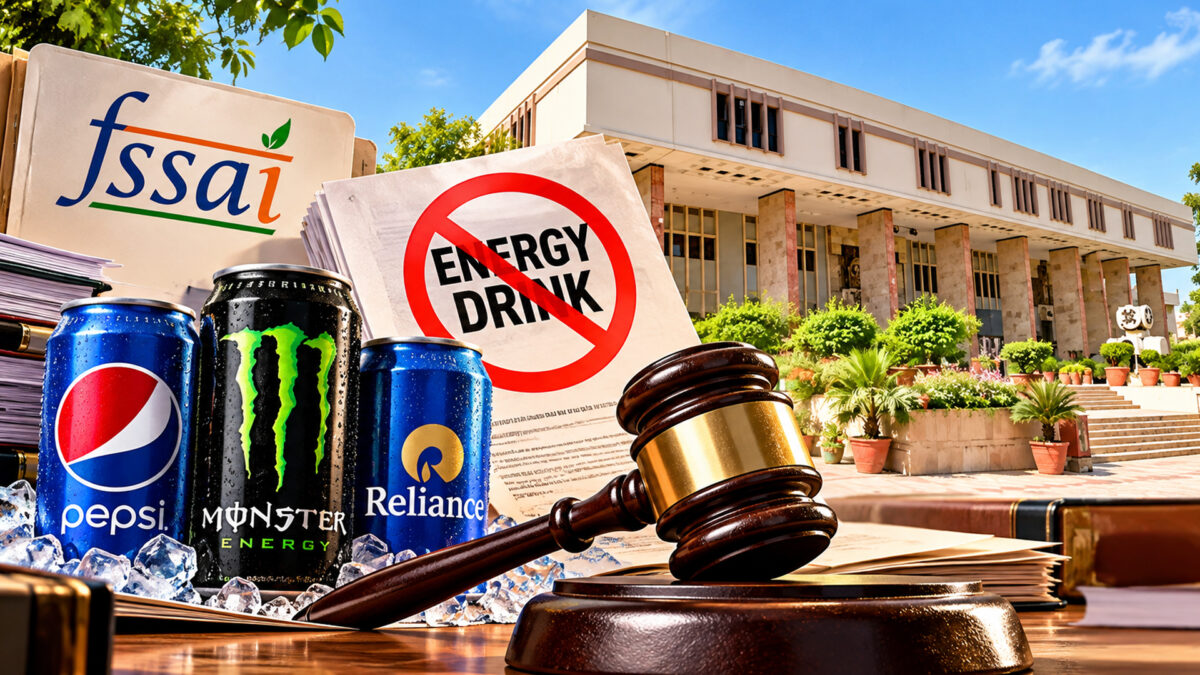
PepsiCo, Monster Beverage and Reliance Consumer Products have received temporary relief in their battle with India’s food safety regulator over the use of the term “energy drink” on high-caffeine beverages, easing immediate pressure on three major companies operating in the country’s fast-growing drinks market.

The Delhi High Court on Tuesday put on hold the Food Safety and Standards Authority of India’s (FSSAI) directive for the companies, allowing them to sell existing products carrying the disputed “energy drink” label. However, PepsiCo and Monster have been told they cannot manufacture fresh products with the same description while the legal proceedings continue. The matter is scheduled for further hearing on November 5.

The dispute dates back to June 30, when FSSAI directed manufacturers of high-caffeine beverages being marketed as “energy drinks” to stop using the description. The regulator also directed food safety officials to take action against products carrying the label.

The decision quickly turned into a business issue for beverage companies, which said they already had large quantities of finished products and packaging carrying the disputed description. Removing the label or replacing packaging at short notice could mean significant costs, while products already moving through distributors and retailers could be affected.

Reliance Consumer Products was among the first companies to challenge the action. The company told the court that the FSSAI directive had disrupted its operations and put a substantial amount of inventory and packaging at risk.

Reliance said it had 168 million cans and 120 million plastic bottles of finished products carrying the “Energy Drink” label. It also had pre-printed packaging for another 400 million cans and 360 million bottles. The company said some stock had been seized by state authorities and that e-commerce platforms had been asked to remove affected products.

The Delhi High Court had earlier granted Reliance interim protection and questioned why the company had not received a notice from FSSAI before the order was passed. The court subsequently extended relief to PepsiCo and Monster as their separate petitions came up for hearing.

The order gives Reliance more breathing room for its Campa beverage business, which has become an important part of the company’s consumer products strategy. Reliance revived the Campa brand in 2023 and has since used its large retail network and competitive pricing to take on established players such as Coca-Cola and PepsiCo.

The energy drink segment is particularly important because it has been expanding rapidly in India. Retail sales in the category are growing at about 12.6% a year, according to Euromonitor data cited by Reuters, putting India among the faster-growing major markets for such beverages. The market is projected to reach around $1.6 billion by 2028.

That growth has also increased the importance of branding and product positioning. PepsiCo sells products including Sting Energy and Adrenaline Rush, while Monster markets Monster Energy. Reliance has been building its presence with Campa Energy Drink, making the labelling dispute relevant to companies competing for a larger share of the same consumer market.

The FSSAI, meanwhile, has defended its broader regulatory approach by pointing to concerns around the way high-caffeine beverages are presented to consumers. The regulator’s action forms part of a wider food safety push involving product labelling, ingredient disclosures and consumer protection. FSSAI has argued that the “energy drink” description can create an impression that caffeine provides nutritional energy, while caffeine primarily acts as a stimulant.

The companies have challenged the regulator’s approach, particularly its implementation and the potential commercial consequences. PepsiCo had earlier told the court that hundreds of millions of labelled bottles and cans were already in circulation, making an abrupt change particularly costly.

The dispute has now expanded beyond Reliance, PepsiCo and Monster. Red Bull has also received judicial relief in a separate case, highlighting the wider uncertainty facing the energy drink industry over product descriptions and regulatory compliance.

Tuesday’s court intervention does not settle the underlying question. It simply gives companies time to continue selling affected inventory while the legal challenge proceeds. The distinction between existing stock and new manufacturing is also significant, particularly for companies planning production and packaging schedules.

The outcome could have wider implications for India’s beverage industry. A final ruling may influence how manufacturers describe caffeinated drinks, how packaging is designed and how companies manage regulatory changes across their supply chains.

The immediate focus will be keeping Campa products moving through its extensive retail network without another major disruption. PepsiCo and Monster face a similar challenge as they manage existing inventory while waiting for greater clarity.

The November 5 hearing could therefore become an important point for the industry. Until then, the court’s interim relief offers the beverage companies some stability, but the larger question over how India should regulate and label high-caffeine drinks remains unresolved.

 

Categories
Beyond

Delhi HC puts Beco’s HUL campaign on hold

The Delhi High Court has temporarily stopped Beco from running an advertising campaign that targeted Hindustan Unilever’s popular household brands Surf Excel and Vim, saying the campaign appeared to make claims that could harm the rival company’s reputation without adequate scientific support.

The order has brought a fresh focus on the limits of comparative advertising in India, particularly when brands use claims about the safety or performance of competing products to promote their own products.

The dispute involves Kwick Living (India) Pvt Ltd, which operates the home-care brand Beco, and Hindustan Unilever Ltd (HUL), the company behind Surf Excel and Vim. HUL approached the Delhi High Court seeking an interim injunction against Beco’s campaign, arguing that the advertisements were misleading and disparaging.

The court found, at the preliminary stage, that Beco’s advertisements conveyed the impression that HUL’s products could cause skin irritation, itching and eczema. The court also noted that such claims could affect the reputation of the brands if they were presented to consumers without adequate evidence.

The campaign was promoted under the theme “War on What’s Hidden”, with Beco drawing attention to ingredients and chemicals used in household cleaning products. The advertisements compared Beco’s products with established brands and questioned the safety of products used by consumers in their homes.

Such advertising can be a powerful way for newer consumer brands to stand out in a crowded market. However, the legal difficulty begins when comparisons move beyond highlighting a product’s own features and start making potentially damaging claims about a competitor.

The Delhi High Court’s intervention reflects that distinction. At this stage, the court has not finally decided whether every allegation made by HUL is correct. The proceedings concern interim relief, meaning the court is assessing whether immediate restrictions are necessary while the larger dispute continues.

The court’s concern was also linked to the overall impression created by the campaign. Even if individual statements in an advertisement appear capable of being defended, the way they are presented together can influence how consumers understand the message.

That becomes especially important when an advertisement deals with health or safety. Claims involving skin irritation, allergies or eczema can influence purchasing decisions because consumers may interpret them as warnings about the safety of a product.

The case therefore goes beyond a routine fight between two FMCG companies. It raises a broader question about how far brands can go when comparing themselves with market leaders.

Comparative advertising itself is not prohibited. Companies can point out differences between their products and competitors’ products, provided the claims are not misleading or unfairly damaging. The problem arises when a comparison crosses into product disparagement, where an advertisement creates an unjustifiably negative impression about another company or its products.

HUL argued that Beco’s campaign crossed that line. The company sought protection for its brands and asked the court to prevent the continued publication and dissemination of the advertisements.

The court has now restrained the campaign at the interim stage. A recent report said Beco has been directed to withdraw the disputed advertisements within a week, putting an immediate pause on the campaign while the legal proceedings continue.

The development is significant for India’s fast-growing home-care and personal-care market. Established brands such as Surf Excel and Vim compete with a growing number of newer companies that market themselves around natural, eco-friendly or chemical-conscious products.

Beco has built its positioning around environmentally conscious household products, while large FMCG companies have increasingly responded to changing consumer preferences around sustainability, ingredients and product safety.

This competition has made advertising an important part of the battle for consumers. Brands are increasingly using social media and digital campaigns to communicate directly with shoppers, making controversial advertising capable of reaching large audiences very quickly.

That also increases the legal risks. A claim that once appeared in a limited print campaign can now spread rapidly through social media, videos and online marketplaces.

The court’s order sends a message that advertising claims, particularly those involving health and safety, need to be backed by credible evidence. Businesses cannot necessarily rely on creative presentation if the overall message gives consumers a potentially misleading impression.

The dispute also highlights the importance of evidence in comparative advertising. A company seeking to say that its product is safer, better or healthier than a competing product needs to be able to support that claim.


Claims made in a campaign should not automatically be treated as established scientific facts, particularly when they concern health effects.

The legal battle between Beco and HUL is not over with the interim order. The court will eventually have to consider the wider issues raised by the parties and determine whether the disputed advertising violates the applicable legal standards.

Until then, the campaign remains restricted, giving HUL temporary protection against advertisements that the court found could damage its brands and mislead consumers.

The case could become an important reference point for the FMCG sector because it comes at a time when established companies and challenger brands are increasingly competing not only on price and performance, but also on claims around sustainability, ingredients, health and safety.

The Beco-HUL dispute shows how quickly an advertising strategy can move from a marketing campaign into a courtroom battle when a competitor believes its brand reputation is at stake.


Categories
Beyond

Delhi HC orders forensic audit In Fortis case

The Delhi High Court has ordered a six-month forensic audit into financial transactions involving Fortis Healthcare, its former promoters Malvinder Mohan Singh and Shivinder Mohan Singh, Malaysia’s IHH Healthcare and Singapore-based RHT Health Trust.

The court’s decision is part of the long-running legal battle between Japanese pharmaceutical company Daiichi Sankyo and the Singh brothers. Daiichi is seeking to enforce an arbitration award against the former Ranbaxy promoters, and the latest audit is aimed at tracing assets and transactions that could have been used to meet the award.

Justice Subramonium Prasad appointed chartered accountancy firm S Ramanand Aiyar & Co as the forensic auditor and directed it to complete the exercise within six months. The audit will reconstruct the movement of Fortis shares and funds and examine the sequence of transactions involving the companies and individuals connected with the dispute.

At the centre of the case is a ₹3,500-crore arbitration award in favour of Daiichi Sankyo. The dispute goes back to 2008, when Daiichi acquired Ranbaxy Laboratories from the Singh brothers for $4.6 billion. Daiichi later alleged that important information had been concealed during the transaction, leading to arbitration proceedings in Singapore.

A Singapore tribunal eventually awarded compensation to Daiichi. The Japanese company has since been pursuing enforcement of the award in India and has argued that assets linked to the Singh brothers were reduced or transferred during the enforcement process.

The Delhi High Court’s latest order seeks to establish what happened to those assets.

One major area of investigation will be the sharp decline in the Fortis shareholding held by Fortis Healthcare Holdings Pvt Ltd, the company through which the Singh brothers held their stake in the hospital chain. The auditor will examine the transfer and sale of these shares and trace where the money generated from those transactions went.

The court has also asked the auditor to examine transactions involving RHT Health Trust. Daiichi has alleged that ₹4,666 crore was transferred to the Singapore-based trust, which held hospital assets associated with the former Fortis promoters. The audit will examine the nature of the transfer, the flow of funds and their eventual utilisation.

Another important part of the investigation concerns IHH Healthcare’s acquisition of a controlling stake in Fortis. IHH acquired a 31% stake in Fortis for around ₹4,000 crore in July 2018 through a bidding process.

The court has directed the auditor to examine the entire transaction, including approvals, regulatory filings, the flow of consideration, the role of intermediaries and the subsequent changes in Fortis’ shareholding. It will also identify the people and entities that proposed, negotiated, approved, facilitated or recorded the transactions.

The audit will not stop with Fortis, IHH and RHT. The court has also permitted scrutiny of dealings involving the Singh brothers and companies belonging to the Religare Group, which they had founded.

Daiichi had additionally sought an examination of transactions involving 17 banks and financial institutions. The allegations include the sale of pledged Fortis shares and claims that some lenders acted despite court orders and undertakings given during the legal proceedings.

The Supreme Court had in September 2022 asked the Delhi High Court to consider forensic audits into transactions involving banks, financial institutions, Fortis, RHT and other related entities. The latest order follows that direction and seeks to create a detailed financial trail.

The High Court said a forensic audit would help reconstruct the chronology of transactions, trace the movement of shares and funds and provide a clearer factual record for deciding the competing claims.

The court also indicated that the audit could examine whether there was any involvement by Fortis or violations of SEBI regulations by companies, the Singh brothers or financial institutions. Any violations identified could potentially lead to separate consequences under applicable laws.

Fortis Healthcare has said the court order does not impose any monetary liability on the company. It pointed out that Fortis was neither a party to the original dispute nor a judgment debtor in the enforcement proceedings. The company said it was reviewing the judgment with its legal advisers.

IHH has also said it is not a party to the underlying legal proceedings. However, the court-monitored audit will examine aspects of its acquisition of the Fortis stake because of questions raised by Daiichi regarding the movement of funds and shares.

The case has been running for years, and the latest order reflects the court’s concern over the difficulty of enforcing the arbitration award. The court noted that despite years of proceedings, Daiichi has yet to receive the amount awarded to it.

The forensic audit could now provide a clearer picture of how Fortis shares, funds and other assets moved during the period under scrutiny.


Categories
Corporate

Apple challenges $38 billion India antitrust penalty law

Apple Inc. has filed a petition in the Delhi High Court challenging India’s 2024 amendment to the Competition Act, which allows fines based on a company’s global turnover. The move could expose Apple to a potential penalty of up to $38 billion (around ₹3 lakh crore).

The legal dispute stems from a 2022 antitrust probe by the Competition Commission of India (CCI), which accused Apple of abusing its dominance on the iOS App Store by restricting third-party payment options. Apple denies any wrongdoing and says its Indian market share remains small compared to Android, despite significant user growth.

In a detailed 545-page petition, Apple described the law as “arbitrary, unconstitutional, grossly disproportionate and unjust,” arguing that any fine should be limited to revenue earned in India from the specific business under investigation. The company warned that retroactive application of the law could unfairly penalise past practices.

A hearing is scheduled for 3 December 2025, marking the first major test of India’s revised competition-law penalty system against a global technology company.

Also Read: Tesla plans deeper India push with full EV ecosystem